
The global financial landscape is a complex, interconnected system, perpetually influenced by a myriad of forces. When markets experience a downturn, it’s rarely due to a single cause, but rather a confluence of factors, each feeding into and amplifying the others. Understanding these dynamics is crucial for investors, policymakers, and anyone keen on deciphering the economic signals that shape our financial realities. From the whisper of inflationary pressures to the roar of geopolitical tensions, market declines are an inherent, albeit often painful, part of the economic cycle. This article will delve into the primary drivers behind market downturns, offering insights into their mechanisms and implications for financial well-being.
Macroeconomic Headwinds: The Big Picture Drivers
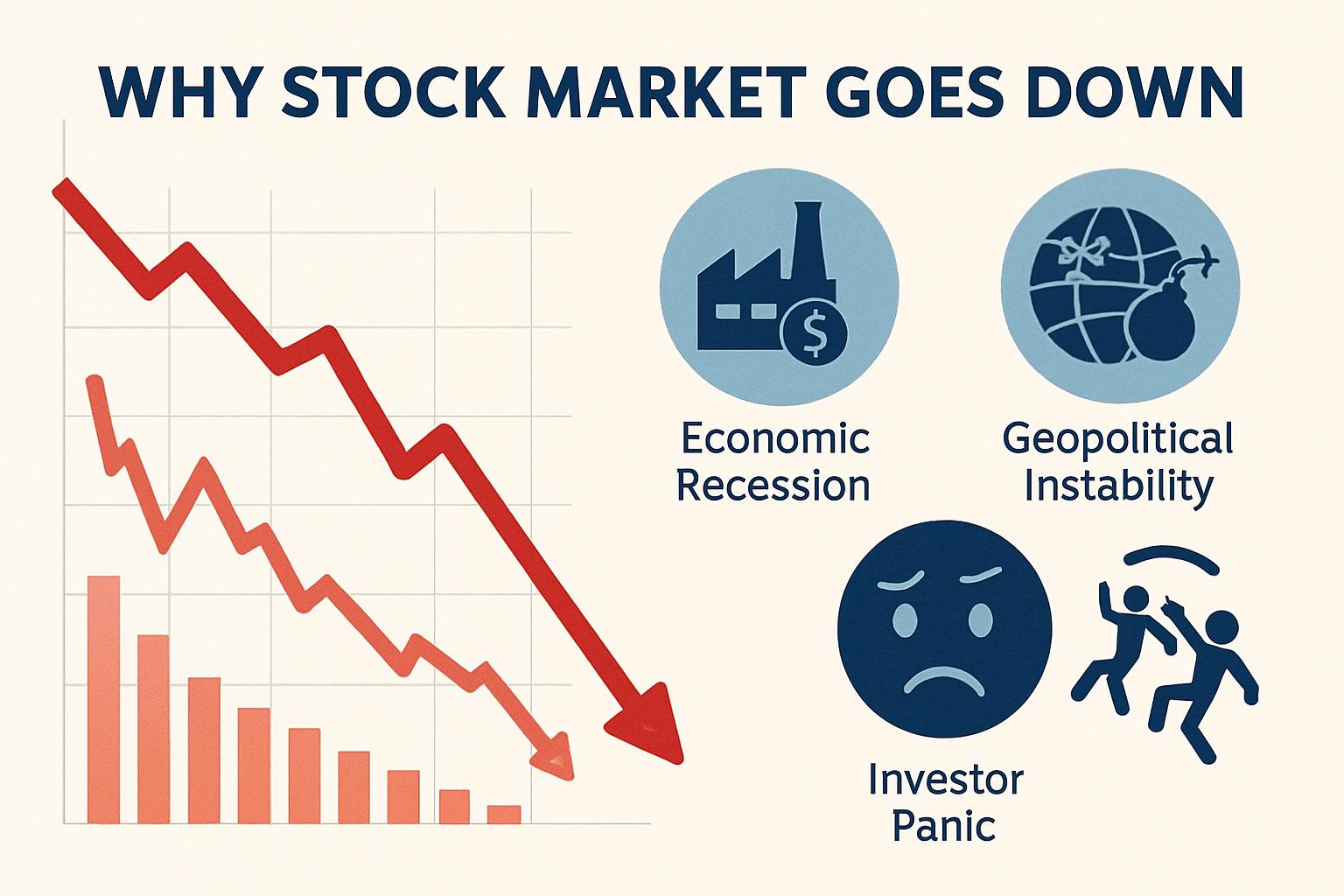
At the broadest level, market downturns are often triggered or exacerbated by shifts in the macroeconomic environment. These are the large-scale economic trends and events that influence entire economies, rather than individual companies or sectors.
Inflationary Pressures and Central Bank Responses
One of the most persistent and impactful macroeconomic challenges leading to market declines is high inflation. Inflation erodes the purchasing power of money, meaning consumers can buy less with the same amount, and it increases the cost of doing business for companies. When inflation becomes rampant, it can significantly eat into corporate profit margins, even if revenues are stable or growing, as input costs (materials, labor, energy) rise.
Central banks, such as the U.S. Federal Reserve, the European Central Bank, or the Bank of England, are tasked with maintaining price stability. When inflation spirals out of control, their primary tool is to raise interest rates. Higher interest rates make borrowing more expensive for businesses, deterring investment and expansion. For consumers, it increases the cost of mortgages, car loans, and credit card debt, leading to reduced discretionary spending. This tightening of monetary policy is designed to cool down an overheating economy and bring inflation back to target levels, but it often comes at the cost of slower economic growth and, consequently, lower corporate earnings and stock market valuations. Growth stocks, in particular, which derive much of their value from future projected earnings, are often hit harder by rising interest rates, as the present value of those future earnings is discounted more heavily.
Economic Slowdown and Recession Fears
Closely intertwined with inflationary pressures and monetary policy is the specter of an economic slowdown or, worse, a recession. A recession is typically defined as a significant decline in economic activity spread across the economy, lasting more than a few months, normally visible in real GDP, real income, employment, industrial production, and wholesale-retail sales.
As central banks raise rates to combat inflation, the risk of tipping the economy into a recession increases. Consumers, facing higher borrowing costs and uncertainty about the future, tend to cut back on spending. Businesses, anticipating weaker demand and higher financing costs, may pause hiring, delay capital expenditures, or even initiate layoffs. This creates a negative feedback loop: reduced consumer spending leads to lower corporate revenues, which in turn leads to less investment and potentially more layoffs, further dampening consumer confidence and spending. Investors, anticipating reduced corporate profits during an economic contraction, tend to sell off stocks, driving market prices down. Sectors sensitive to economic cycles, like consumer discretionary, industrials, and real estate, are particularly vulnerable during such times.
Geopolitical Instability and Supply Chain Disruptions
Global events, often outside the direct control of any single nation or economic policy, can also significantly rattle markets. Geopolitical instability, such as wars, trade disputes, or political unrest in key regions, introduces profound uncertainty. These events can disrupt global trade flows, impact commodity prices (especially energy and food), and lead to increased defense spending or sanctions that distort economic activity. Investors, averse to uncertainty, often pull capital out of riskier assets like stocks and into safer havens like government bonds or gold during such periods.
Furthermore, supply chain disruptions, whether caused by geopolitical events, natural disasters, or pandemics, can have a pervasive impact. When the production or transportation of goods is hindered, it can lead to shortages, increased costs for manufacturers, and ultimately higher prices for consumers (contributing to inflation). For example, a shortage of semiconductor chips can impact everything from automobiles to consumer electronics, leading to production slowdowns and reduced sales for companies reliant on those components. These disruptions directly hit corporate profitability and overall economic output, providing a strong rationale for market sell-offs.
Corporate Performance and Investor Sentiment
While macroeconomic factors set the stage, the actual decline in market value is a reflection of how these broader forces impact corporate performance and, critically, investor psychology.
Weaker Earnings Reports and Future Projections
Ultimately, the value of a stock is derived from the future earnings potential of the company it represents. When companies report weaker-than-expected quarterly earnings (Earnings Per Share, or EPS), it signals that their profitability is declining or not growing as fast as anticipated. This immediately puts downward pressure on their stock price.
Even more impactful than past earnings can be a company’s future guidance or projections. If a company lowers its outlook for upcoming quarters or the full year, it suggests that management foresees continued challenges, whether due to a slowing economy, rising costs, or increased competition. This forward-looking pessimism can cause a significant sell-off, as investors adjust their valuation models to account for a less optimistic future. Furthermore, analysts, who follow companies closely and issue ratings, often downgrade their recommendations when earnings falter or guidance is weak, further fueling negative sentiment. Different sectors react differently; tech companies, often valued on high growth expectations, can see steep declines if their growth trajectory slows even slightly.
Investor Fear, Uncertainty, and Doubt (FUD)
Markets are not purely rational entities; human psychology plays a profound role. During periods of economic stress or uncertainty, investor fear, uncertainty, and doubt (often abbreviated as FUD) can become contagious. This psychological aspect can amplify market downturns. As prices begin to fall, some investors panic and sell their holdings, not wanting to incur further losses. This “panic selling” puts more downward pressure on prices, which in turn triggers more fear among other investors, creating a self-reinforcing cycle.
Herd mentality, where investors follow the actions of the majority rather than conducting independent analysis, is common during downturns. The constant barrage of negative news headlines, expert warnings, and social media chatter can heighten anxiety and lead even long-term investors to question their strategies. This widespread risk aversion means that investors demand a higher premium to hold risky assets like stocks, leading to lower valuations across the board. The VIX (Volatility Index), often called the “fear gauge,” typically spikes during such periods, reflecting increased expected market volatility.
Valuation Concerns and Profit-Taking
Sometimes, a market downturn isn’t solely initiated by bad news but by the market simply becoming “overvalued.” After a prolonged period of growth, asset prices can detach from their underlying fundamentals. Valuation metrics, such as the price-to-earnings (P/E) ratio, price-to-sales (P/S) ratio, or enterprise value to EBITDA, may reach historically high levels. This indicates that investors are paying a premium for future earnings, often driven by optimism or low interest rates that make future earnings appear more valuable.
When valuations become stretched, the market becomes more vulnerable to any negative news or shift in sentiment. Investors who have enjoyed significant gains may decide to “take profits,” selling off some of their holdings to lock in returns. This profit-taking can initiate a correction. If there’s no fresh catalyst for further price increases, or if the economic outlook darkens, the market may reprice assets to more historically grounded valuations, leading to a natural and often healthy pullback. This unwinding of speculative positions can also contribute to the speed and depth of a market decline.
Market Mechanics and Technical Factors
Beyond the fundamental economic and psychological drivers, certain market mechanics and technical factors can also contribute to, and accelerate, market downturns.
Liquidity Constraints and Margin Calls
Liquidity refers to how easily an asset can be converted into cash without affecting its market price. In a healthy market, there’s ample liquidity, meaning buyers and sellers can transact easily. However, during times of stress, liquidity can dry up. If there are few buyers and many sellers, prices can fall rapidly as sellers are forced to accept lower bids to offload their assets. This illiquidity can exacerbate a downturn, as even small selling pressures can lead to disproportionately large price drops.
A significant contributing factor to forced selling during rapid declines is margin calls. Many investors buy stocks using borrowed money (on margin). If the value of their portfolio falls below a certain threshold, their brokerage firm issues a margin call, demanding that the investor deposit additional funds or sell securities to bring their account back to the required maintenance margin. If the investor cannot meet the margin call, the brokerage will liquidate their positions, leading to involuntary selling that further fuels the market decline. This can create a domino effect, especially during sharp market corrections.
Algorithmic Trading and Program Selling
In today’s highly computerized markets, algorithmic trading plays a massive role. Algorithms are sophisticated computer programs designed to execute trades automatically based on pre-defined criteria, such as price movements, volume, news sentiment, or technical indicators. While they can provide liquidity and efficiency, they can also accelerate market downturns.
If a large number of algorithms are programmed to sell when certain conditions are met (e.g., a stock falls below a specific moving average, or a macroeconomic indicator turns negative), they can collectively unleash a massive wave of selling orders in a very short period. This “program selling” can cause rapid and significant price drops, sometimes leading to “flash crashes” where markets plunge dramatically in minutes, only to recover partially later. The speed and scale of algorithmic trading mean that human investors often have little time to react, intensifying the feeling of helplessness during a market rout.
Technical Breakdowns and Support Levels
Technical analysis is a method of evaluating securities by analyzing statistics generated by market activity, such as past prices and volume. Many traders and institutions use technical indicators to guide their decisions. In this framework, “support levels” are price points where a falling stock or index is expected to find buyers and potentially reverse its downward trend. Conversely, “resistance levels” are where an advancing stock is expected to find sellers and potentially reverse its upward trend.
When a major stock index or a significant stock breaks below a key support level, it can trigger further selling. This is because many traders have placed “stop-loss” orders just below these support levels to limit their potential losses. Once the price breaches the support, these stop-loss orders are automatically executed, adding to selling pressure and causing the price to fall even further. This technical breakdown can be a self-fulfilling prophecy, as the breach of a perceived important level prompts more selling, accelerating the market’s decline independently of fundamental news.
Navigating the Downturn: Strategies for Investors
Market downturns are an inevitable part of investing. While they can be unsettling, they also present opportunities for prepared and disciplined investors.
The Importance of Long-Term Perspective
Perhaps the most crucial strategy during a market downturn is to maintain a long-term perspective. Historically, financial markets have always recovered from every downturn, eventually reaching new highs. Panic selling during a decline often locks in losses and prevents investors from participating in the subsequent recovery. Focusing on long-term financial goals, rather than short-term fluctuations, helps temper emotional responses. Reviewing historical market data and understanding that corrections and bear markets are normal phases of the economic cycle can provide reassurance.
Rebalancing and Diversification
Downturns are excellent times to review and potentially rebalance your portfolio. Over time, asset allocations can drift due to varying performance. Rebalancing involves selling assets that have performed well (and may now be overrepresented) and buying assets that have underperformed (and may now be undervalued). This disciplined approach helps maintain your desired risk profile. Diversification across different asset classes (stocks, bonds, real estate, commodities), geographies, and sectors remains a cornerstone of prudent investing, helping to mitigate the impact of any single area performing poorly. A well-diversified portfolio is inherently more resilient to specific market shocks.
Dollar-Cost Averaging and Identifying Opportunities
For those with steady income, dollar-cost averaging can be a highly effective strategy during a downturn. This involves investing a fixed amount of money at regular intervals, regardless of market conditions. When prices are high, your fixed investment buys fewer shares; when prices are low (during a downturn), it buys more shares. Over time, this averages out your purchase price and reduces the risk of trying to time the market. Moreover, significant market downturns often present rare opportunities to acquire high-quality assets at discounted prices. Identifying fundamentally sound companies with strong balance sheets and sustainable business models that are temporarily beaten down by broader market sentiment can lead to substantial long-term gains.
Risk Management and Financial Planning
Finally, robust risk management and sound financial planning are paramount. Ensure you have an adequate emergency fund (typically 3-6 months of living expenses) in a highly liquid, low-risk account. This prevents you from being forced to sell investments at a loss to cover unexpected expenses. Understand your personal risk tolerance and align your investment portfolio accordingly. A portfolio that causes you undue stress during market volatility is likely too aggressive for your comfort level. Regularly consulting with a qualified financial advisor can help tailor strategies to your specific circumstances, ensuring your financial plan can withstand market turbulence.
In conclusion, market downturns are complex phenomena driven by a sophisticated interplay of macroeconomic headwinds, corporate performance, investor psychology, and technical market mechanics. While they can be challenging, understanding their underlying causes empowers investors to approach them with discipline, strategic foresight, and a long-term perspective, ultimately transforming periods of fear into potential opportunities for future growth.
aViewFromTheCave is a participant in the Amazon Services LLC Associates Program, an affiliate advertising program designed to provide a means for sites to earn advertising fees by advertising and linking to Amazon.com. Amazon, the Amazon logo, AmazonSupply, and the AmazonSupply logo are trademarks of Amazon.com, Inc. or its affiliates. As an Amazon Associate we earn affiliate commissions from qualifying purchases.