
For investors, traders, and anyone with a keen eye on financial markets, the daily closing bell isn’t just a sound—it’s a critical moment marking the official end of regular trading sessions. Understanding when the stock market closes today, and indeed every day, is fundamental to effective financial planning, investment strategy, and risk management. While the question might seem simple on the surface, its answer unveils layers of market mechanics, global interdependencies, and the strategic considerations vital for navigating the complex world of finance. This article delves into the intricacies of stock market closing times, offering a comprehensive guide for both seasoned investors and curious newcomers.

Understanding Market Hours: A Global Perspective
The concept of “the stock market” often conjures images of Wall Street, but the reality is a vast, interconnected network of exchanges operating across different time zones and regulatory frameworks. Knowing the standard operating hours of these markets is the first step in understanding their daily rhythm.
Standard U.S. Market Hours
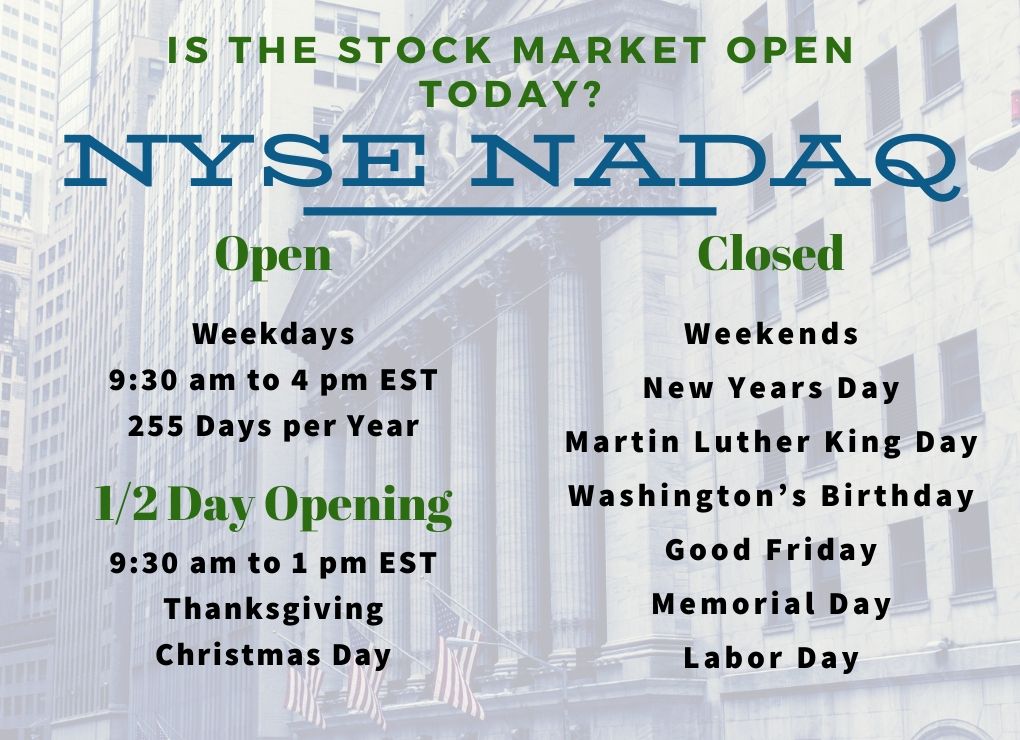
In the United States, the primary stock exchanges, the New York Stock Exchange (NYSE) and the Nasdaq Stock Market (Nasdaq), generally operate on a consistent schedule. Regular trading hours for both markets are from 9:30 AM to 4:00 PM Eastern Time (ET), Monday through Friday. This 6.5-hour window is when the vast majority of trading volume occurs, characterized by high liquidity and tight bid-ask spreads. For someone asking “when did the stock market close today?”, assuming they are referring to U.S. markets, the answer for a standard trading day is 4:00 PM ET. However, it’s crucial to remember that this refers to the regular session. Financial news outlets typically report market performance based on these closing prices.
International Market Variations
While U.S. hours are well-known, the global nature of finance means that markets around the world operate on their own distinct schedules. For instance:
- Europe: The London Stock Exchange (LSE) trades from 8:00 AM to 4:30 PM Greenwich Mean Time (GMT), while the Frankfurt Stock Exchange (Xetra) operates from 9:00 AM to 5:30 PM Central European Time (CET). These markets close significantly earlier than U.S. markets due to time zone differences.
- Asia: The Tokyo Stock Exchange (TSE) has a split session, trading from 9:00 AM to 11:30 AM and then 12:30 PM to 3:00 PM Japan Standard Time (JST). The Shanghai Stock Exchange (SSE) also follows a similar split, from 9:30 AM to 11:30 AM and 1:00 PM to 3:00 PM China Standard Time (CST). These markets open and close well before U.S. trading even begins, often influencing pre-market sentiment in New York.
- Other Regions: Markets in Australia, India, Brazil, and countless other countries each have their unique opening and closing times, shaped by local business culture, daylight hours, and regulatory decisions.
Understanding these international variations is particularly important for investors with diversified portfolios that include global assets, or for those engaged in currency trading, which often operates on a 24-hour cycle across various financial centers.
Why Hours Matter for Investors
Market hours are not arbitrary; they are designed to concentrate liquidity, facilitate price discovery, and provide a structured environment for transactions. For investors, awareness of these hours is crucial for several reasons:
- Timing of Trades: Executing trades within regular hours typically offers the best prices due to high liquidity.
- Information Flow: Major news announcements, earnings reports, and economic data releases are often scheduled before market open, during lunch breaks for some international markets, or after market close to allow investors time to digest the information without immediate, volatile reactions during live trading.
- Risk Management: Unforeseen events occurring outside regular hours can lead to significant price gaps when the market reopens, posing risks for positions held overnight or over weekends.
- Work-Life Balance: Defining clear market hours allows professionals in the financial industry to maintain a semblance of work-life balance, while also giving individual investors defined periods to focus on their portfolios.
Beyond Regular Hours: After-Hours and Pre-Market Trading
While the official closing bell signifies the end of the regular trading day, the exchange of shares doesn’t always grind to a complete halt. The advent of electronic trading platforms has made “extended-hours trading”—both before the market opens (pre-market) and after it closes (after-hours)—increasingly accessible to individual investors.
The Mechanics of Extended Trading
Extended trading sessions typically run from 4:00 AM to 9:30 AM ET for pre-market and 4:00 PM to 8:00 PM ET for after-hours for U.S. exchanges, though these times can vary slightly depending on the brokerage firm and the specific electronic communication networks (ECNs) they use. These sessions take place outside the main exchange floor, relying on electronic networks that match buy and sell orders.
- How it Works: Investors submit orders electronically, and if a matching order exists from another party, the trade is executed. Unlike regular hours where market makers provide continuous liquidity, extended hours often see fewer participants and less centralized order flow.
- Why it’s Used: Extended trading allows investors to react quickly to news released outside regular market hours. For example, a company’s earnings report published at 4:30 PM ET might prompt immediate trading activity in the after-hours session, rather than waiting until 9:30 AM the next day. This can be critical for managing risk or capitalizing on early information.
Advantages and Disadvantages for Investors
While extended-hours trading offers flexibility, it comes with a distinct set of characteristics that investors must understand:
-
Advantages:
- Timely Reactions: Ability to respond to breaking news or earnings reports immediately.
- Convenience: For investors in different time zones, or those with busy daytime schedules, extended hours offer alternative trading windows.
- Early Positioning: Opportunity to enter or exit positions ahead of the broader market, potentially securing better prices before the regular session opens with higher volume.
-
Disadvantages:
- Lower Liquidity: Fewer participants mean wider bid-ask spreads and potentially larger price swings on smaller volumes. It can be harder to execute large orders without significantly impacting the price.
- Increased Volatility: News-driven trading in a low-liquidity environment can lead to exaggerated price movements that might not reflect fundamental value.
- Price Disparity: The price at which a stock trades in extended hours might be significantly different from its opening price in the regular session.
- Order Limitations: Many brokers only allow limit orders (orders to buy or sell at a specific price or better) during extended hours to protect investors from unfavorable market orders in illiquid conditions.
- Professional Dominance: Institutional investors and high-frequency traders often have an edge in extended hours due to sophisticated tools and direct access to ECNs.
For most individual investors, regular market hours remain the safest and most liquid time to execute trades. Extended hours are best utilized with caution, a clear strategy, and a deep understanding of the associated risks.
Factors Influencing Market Closure Times
The establishment of stock market hours is not arbitrary; it’s a carefully considered decision influenced by a confluence of regulatory, operational, and practical factors designed to ensure fair, orderly, and efficient markets.
Regulatory Frameworks and Exchange Operations
Stock exchanges operate under the strict oversight of regulatory bodies, such as the Securities and Exchange Commission (SEC) in the U.S. These bodies establish rules governing trading practices, market integrity, and investor protection. Part of this regulatory framework involves setting standard market hours.
- Investor Protection: Defined hours create a concentrated period of trading, which enhances liquidity and transparency, making it easier for regulators to monitor activity and detect manipulation.
- Operational Logistics: Exchanges require time for maintenance, system updates, and processing daily trades. The “after-hours” period allows for crucial back-office functions like clearing and settlement of transactions to occur without interrupting live trading. It also provides a buffer for firms to reconcile their daily trading positions and manage risk.
- Fair Access: Standardized hours ensure that all market participants have equal access to the market at the same time, reducing potential information asymmetry that could arise if different groups had varying trading windows.
Time Zones and Global Trading Interplay
In an increasingly globalized financial world, time zones play a significant role in market scheduling. While each national market sets its own hours, there’s an implicit consideration of how these hours interact with major global financial centers.
- Sequential Trading: The succession of major market openings and closings around the globe creates a continuous flow of trading activity that follows the sun. As Asian markets close, European markets open, followed by North American markets. This allows for constant price discovery and reaction to global events.
- Impact on U.S. Markets: For instance, the closing performance of Asian and European markets often sets the tone for U.S. pre-market trading and the subsequent open. A strong close in Tokyo and London might lead to an optimistic opening in New York, and vice versa. This interconnectedness means that “when did the stock market close today” for a U.S. investor might indirectly involve observing the prior closures of other global markets.
Market Holidays and Early Closures
Not every weekday is a full trading day. Stock markets observe a number of holidays throughout the year, during which they remain completely closed. Additionally, some days may feature early closures, typically in observance of a holiday or a major national event.
- Major U.S. Stock Market Holidays: The NYSE and Nasdaq generally close for federal holidays such as New Year’s Day, Martin Luther King, Jr. Day, Presidents’ Day, Good Friday, Memorial Day, Juneteenth National Independence Day, Independence Day, Labor Day, Thanksgiving Day, and Christmas Day. These closures are announced well in advance by the exchanges.
- Early Closure Events: On certain days, such as the day before Independence Day or Thanksgiving Eve, the market might close early, often at 1:00 PM ET. This allows market participants to prepare for extended holiday weekends. These early closures are also pre-announced.
- Impact on Planning: Investors must be aware of these non-standard days to avoid unexpected delays in trade executions or to adjust their strategies around extended periods of market inactivity. Brokerage firms typically provide calendars of market holidays and early closures to help clients plan accordingly.
The Impact of Market Closure on Investors
The daily market closure has profound implications for how investors manage their portfolios, assess risk, and execute their strategies. It defines periods of activity and inactivity, shaping liquidity, information flow, and volatility.
Liquidity Concerns and Order Execution
During regular market hours, high trading volume ensures ample liquidity, meaning there are many buyers and sellers for most stocks. This allows investors to buy or sell shares easily without significantly moving the price, resulting in tight bid-ask spreads.
- Impact of Closure: As the market approaches its close, liquidity can sometimes decline slightly, though it usually remains robust. However, in after-hours trading, the drop in liquidity is significant. This directly affects order execution. A market order (an order to buy or sell immediately at the best available price) placed during a low-liquidity period in after-hours can execute at a much less favorable price than intended.
- Strategic Implications: Investors with large positions might strategically spread their trades throughout the regular day to minimize market impact. As the market closes, careful consideration of order types (e.g., using limit orders instead of market orders) becomes even more crucial, especially if trying to participate in extended trading. The closing price itself is a reference point for many daily financial instruments and derivatives.
Information Asymmetry and News Digests
The scheduling of market hours also dictates the timing of critical information releases. Companies often choose to release significant news, such as quarterly earnings reports, mergers and acquisitions announcements, or major product updates, either before the market opens or after it closes.
- Purpose: This practice is designed to give all investors an equal opportunity to digest the information and assess its implications before trading resumes. It prevents a scenario where early access to information could give an unfair advantage during live trading.
- Investor’s Role: For investors, the period after market close and before the next open becomes a critical window for research and analysis. This is when financial news channels often dissect earnings calls, and analysts publish their immediate reactions. Failing to stay informed during these periods can lead to being caught off guard by significant price movements at the next market open. Being aware of when the market closed helps frame when to expect these crucial information dumps.
Planning Your Trading and Investment Day
Ultimately, understanding market closure times is integral to prudent financial planning. It’s not just about knowing a specific hour; it’s about integrating that knowledge into a broader investment discipline.
- Set Realistic Expectations: Recognize that trading activity outside regular hours carries higher risks.
- Stay Informed: Regularly check market calendars for holidays and early closures.
- Manage Risk: Avoid holding overly speculative positions overnight or over weekends if you’re uncomfortable with potential gap openings.
- Time Your Decisions: Plan your entry and exit points for trades strategically around market hours to leverage optimal liquidity.
- Review and Rebalance: The market close provides a natural breakpoint for investors to review their portfolio’s performance, assess market sentiment, and consider any adjustments needed for the next trading day or week. For long-term investors, the closing bell signifies a moment to step back from the daily fluctuations and evaluate their broader investment goals.
In conclusion, the question “when did the stock market close today?” transcends a simple time stamp. It’s a gateway to understanding the intricate rhythm of global finance, the regulatory safeguards that protect investors, and the strategic considerations that differentiate successful market participants. By appreciating the nuances of market hours—from standard sessions and extended trading to global variations and holiday closures—investors can better navigate the complexities of the financial world, making informed decisions that align with their investment objectives.
aViewFromTheCave is a participant in the Amazon Services LLC Associates Program, an affiliate advertising program designed to provide a means for sites to earn advertising fees by advertising and linking to Amazon.com. Amazon, the Amazon logo, AmazonSupply, and the AmazonSupply logo are trademarks of Amazon.com, Inc. or its affiliates. As an Amazon Associate we earn affiliate commissions from qualifying purchases.