
The financial world often feels like a complex, pulsating organism, and at its heart beats the rhythm of key market indicators. Among these, the Dow Jones Industrial Average (DJIA), affectionately known as “the Dow,” stands as one of the oldest and most frequently cited barometers of the U.S. stock market and broader economic health. While its daily movements are often distilled into simple headlines—”Dow up 200 points,” “Dow plunges on inflation fears”—the underlying mechanics and implications are far more nuanced. Understanding what the Dow “does” today, and indeed every day, requires looking beyond the immediate figures to grasp the forces at play, the sentiment of investors, and the broader economic landscape.
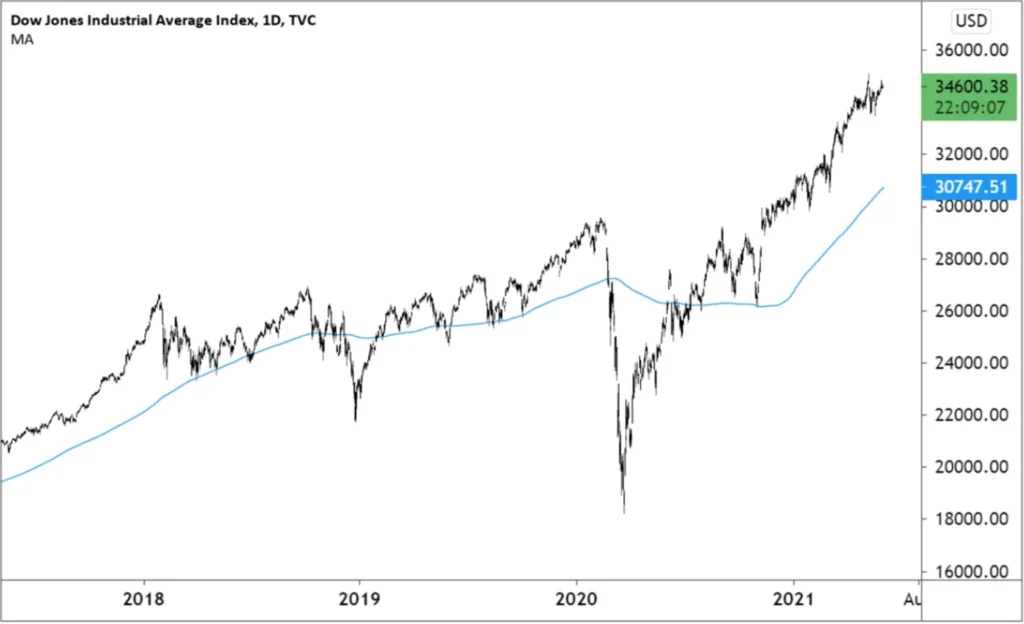
For both seasoned investors and curious observers, the Dow’s performance provides a snapshot of the market’s current mood and direction. It’s not just a number; it’s a reflection of corporate health, consumer confidence, geopolitical shifts, and the intricate dance of supply and demand for capital. This article delves into the core aspects of the Dow’s daily fluctuations, exploring its significance, the myriad factors that drive its movements, and how investors can interpret and react to its dynamic nature within a comprehensive financial strategy.
The Dow Jones Industrial Average: An Enduring Economic Barometer
To truly appreciate what the Dow does today, one must first understand what it is and its historical significance. Far from being a mere collection of stock prices, the DJIA embodies a century of American economic evolution and continues to serve as a pivotal reference point for financial discourse.
Defining the Dow: Composition and Calculation
The Dow Jones Industrial Average is a price-weighted index that tracks the stock performance of 30 large, publicly traded companies based in the United States. Unlike market-capitalization-weighted indices (like the S&P 500) where larger companies have a greater impact, the Dow gives more weight to stocks with higher share prices. This means a percentage change in a higher-priced stock will have a larger impact on the index’s total value than the same percentage change in a lower-priced stock, regardless of the companies’ overall market values.
Established in 1896 by Charles Dow, co-founder of Dow Jones & Company, it initially comprised just 12 industrial stocks. Over time, its composition has evolved dramatically, shedding pure “industrial” focus to include a diverse range of companies that represent various sectors of the modern economy, from technology giants like Apple and Microsoft to consumer staples like Coca-Cola and healthcare leaders like UnitedHealth Group. The selection of these 30 “blue-chip” companies aims to represent the broad health of the U.S. economy, chosen for their size, stability, and influence within their respective industries. Changes to the Dow’s constituents are rare but occur when a company’s significance to the U.S. economy shifts, or if there’s a major corporate event like a merger or bankruptcy.
Its Role as an Indicator: What the Dow Signals
The Dow’s daily movements are more than just numbers; they act as a potent signal for various stakeholders. For investors, it offers a quick glance at the direction of the market, influencing sentiment and potentially short-term trading decisions. A surging Dow can instill confidence, signaling robust corporate earnings and economic growth, while a steep decline can trigger caution or even panic, pointing to potential economic headwinds or underlying systemic issues.
Beyond individual investors, economists and policymakers closely monitor the Dow as a leading indicator of economic health. While not a perfect proxy for the entire economy (given its limited number of constituents and price-weighted methodology), its performance often correlates with broader economic trends such as GDP growth, consumer spending, and corporate profitability. A sustained uptrend can suggest a healthy economy, while a prolonged downturn might signal an impending recession or significant challenges. Moreover, the Dow’s movements can influence consumer confidence, which in turn can impact spending habits and business investment, creating a self-reinforcing cycle within the economic landscape. It’s a barometer that, while not measuring every molecule in the air, gives a solid indication of whether a storm is brewing or clear skies lie ahead.
Key Drivers Behind the Dow’s Daily Movements
The Dow’s daily performance is rarely attributable to a single factor. Instead, it’s the culmination of a complex interplay of macroeconomic forces, company-specific news, and the unpredictable ebb and flow of market psychology. Understanding these drivers is crucial for interpreting what “the Dow do today” with greater insight.
Macroeconomic Forces: Global and Domestic Influences
Global and domestic economic data are paramount in shaping the Dow’s trajectory. Key indicators such as Gross Domestic Product (GDP) reports, inflation rates (Consumer Price Index, Producer Price Index), employment figures (non-farm payrolls, unemployment rate), and consumer confidence surveys provide a mosaic of the economy’s strength and direction. Strong GDP growth or positive employment data often signal a healthy economy, bolstering corporate profits and generally leading to an upward push for the Dow. Conversely, signs of inflation can prompt the Federal Reserve to raise interest rates, making borrowing more expensive for businesses and consumers, which can dampen economic activity and weigh on stock prices.
Geopolitical events also play a significant role. International trade disputes, political instability in key regions, major global health crises, or even significant policy shifts by central banks around the world can create ripple effects that transcend national borders, impacting supply chains, commodity prices, and investor confidence globally. For instance, a rise in oil prices due to Middle East tensions can increase operational costs for many Dow components, ultimately affecting their profitability and subsequently the index’s performance.
Corporate Earnings and Sectoral Performance: The Micro View
While the Dow represents a broad cross-section of the economy, the individual performance of its 30 constituent companies holds immense sway. Quarterly earnings reports are particularly impactful. When a major Dow component like Microsoft or Johnson & Johnson beats or misses earnings expectations, or provides strong or weak forward guidance, its stock price reacts sharply, and this movement is magnified due to the Dow’s price-weighted nature. Positive earnings generally signal strong business health and demand for products/services, encouraging investment. Negative reports can signal headwinds or competitive pressures, leading to sell-offs.
Furthermore, sectoral performance contributes significantly. If a particular sector, such as technology or healthcare, experiences a boom or bust, and several Dow components operate within that sector, their collective movements can disproportionately affect the index. For example, a global push towards renewable energy could boost companies like Chevron (if it diversifies) or others in related industrial sectors, while a slowdown in consumer spending might hit retail-focused Dow companies. Analysts often dissect these sectoral trends to understand the underlying currents driving the overall market.
Market Psychology and Investor Sentiment: The Human Element
Beyond tangible economic data and corporate performance, market psychology—the collective mood of investors—is a powerful, albeit intangible, driver of the Dow’s daily shifts. Concepts like “fear and greed” are not just abstract notions but manifest in tangible buying and selling pressures. During periods of optimism (greed), investors might overlook negative news or overvalue growth prospects, pushing the Dow higher. Conversely, during periods of pessimism (fear), even minor negative news can trigger sharp sell-offs as investors rush to protect capital.
This sentiment can be influenced by a myriad of factors, including news cycles, social media trends, and even expert commentary. A well-known analyst’s downgrade of a major Dow stock, or a widely publicized economic forecast, can shift sentiment across the market. Behavioral finance studies highlight how cognitive biases, herd mentality, and emotional responses can lead to market inefficiencies and exaggerated movements, often creating volatility that seems disconnected from fundamental value. Understanding this human element is crucial because markets are not just algorithms; they are reflections of human hope and anxiety.

Navigating the Daily Fluctuations: A Strategic Approach for Investors
The Dow’s daily ups and downs can be captivating, but for most investors, an effective strategy involves looking beyond the immediate noise and adopting a disciplined, long-term perspective. Reacting impulsively to every market swing can be detrimental to financial goals.
Beyond the Headlines: The Long-Term Perspective
One of the most critical lessons for investors is not to overreact to daily or even weekly fluctuations in the Dow. While a 500-point drop might grab headlines and induce panic, it often represents a relatively small percentage change in the grand scheme of a diversified portfolio. Historically, the stock market, including the Dow, has trended upwards over extended periods, despite numerous corrections and bear markets. Focusing on long-term goals—retirement planning, wealth accumulation, funding education—and understanding the power of compounding returns can help investors weather short-term volatility.
Successful long-term investing emphasizes the underlying fundamentals of the companies within the Dow and the broader economy, rather than momentary market sentiment. A company’s innovation, management quality, competitive advantage, and consistent profitability are far more significant drivers of long-term value than its stock’s performance on a given Tuesday. Dollar-cost averaging, where investors commit to investing a fixed amount regularly regardless of market conditions, is a strategy that leverages market volatility by buying more shares when prices are low and fewer when they are high, smoothing out the average purchase price over time.
Diversification and Risk Management: Protecting Your Portfolio
Relying solely on the Dow Jones Industrial Average as an indicator for one’s entire investment strategy would be a mistake. The Dow, despite its prominence, is just one index. A robust investment strategy emphasizes diversification across various asset classes (stocks, bonds, real estate), different market capitalizations (small-cap, mid-cap, large-cap), and geographical regions. Within equities, diversification across sectors and industries is also crucial to avoid overexposure to any single segment of the economy, even those represented by Dow components.
Risk management involves setting clear financial goals, establishing a suitable asset allocation based on one’s risk tolerance and time horizon, and regularly rebalancing the portfolio to maintain desired allocations. For instance, if stocks have performed exceptionally well and now represent a larger percentage of the portfolio than initially planned, an investor might sell some stocks and buy bonds to return to their target allocation, thereby locking in some gains and reducing risk. This disciplined approach ensures that daily market movements, including those of the Dow, are seen as part of a larger, evolving strategy rather than standalone events demanding immediate, emotional responses.
Utilizing Financial Tools and Expert Insights: Informed Decision-Making
In today’s interconnected financial world, a wealth of tools and resources are available to help investors make informed decisions. Reputable financial news outlets, economic data providers, and investment platforms offer real-time data, historical charts, analytical reports, and expert commentary on the Dow and its components. Learning to discern reliable information from speculative hype is a critical skill.
Financial advisors, whether human or robo-advisors, can also play a vital role. They can help construct personalized financial plans, explain market dynamics (including the Dow’s relevance), and provide guidance during volatile periods. Understanding economic indicators, corporate financial statements, and basic investment principles empowers investors to engage more meaningfully with their portfolios and avoid common pitfalls like chasing hot stocks or panicking during downturns. Leveraging these tools and insights transforms raw data from “what the Dow do today” into actionable knowledge for long-term wealth building.
The Dow in a Broader Market Context
While the Dow provides valuable insights, it’s essential to view its movements within the context of other market indices and the evolving nature of global finance. A comprehensive understanding requires a broader perspective than just 30 stocks.
Comparing the Dow to Other Major Indices: A Holistic View
The Dow is frequently discussed alongside other major indices like the S&P 500 and the Nasdaq Composite. Each index offers a different lens through which to view the market.
- S&P 500 (Standard & Poor’s 500): This is a market-capitalization-weighted index of 500 large U.S. companies across various sectors. Because of its broader coverage and market-cap weighting, many consider the S&P 500 a more accurate representation of the overall U.S. stock market’s health than the Dow. Its movements often reflect a wider array of market sentiment and economic trends.
- Nasdaq Composite: This index comprises over 3,000 stocks, heavily weighted towards technology and growth companies, both U.S. and international. The Nasdaq is often a key indicator for the tech sector’s performance and is highly sensitive to innovation cycles and investor appetite for growth stocks.
Comparing the Dow’s performance against these indices provides a more holistic view. If the Dow is up but the Nasdaq is down, it might indicate that value stocks or traditional industrial companies are outperforming growth-oriented tech stocks. Conversely, if the Nasdaq is surging while the Dow lags, it could signal a strong tech rally that isn’t fully reflected across the broader economy. Savvy investors look at these relative performances to understand which segments of the market are leading or lagging, offering clues about underlying economic shifts and investor preferences.
The Future of Market Indices: Evolution and Relevance
The world economy and financial markets are constantly evolving, and so too are the ways we measure them. The Dow, despite its age, has adapted by regularly updating its components to remain relevant. However, the rise of passive investing through Exchange Traded Funds (ETFs) and index funds has shifted how many interact with these benchmarks. Investors can now easily gain exposure to the Dow, S&P 500, or Nasdaq through low-cost funds, rather than having to pick individual stocks.
Furthermore, the proliferation of specialized indices—from ESG (Environmental, Social, Governance) indices to thematic indices focused on areas like AI, cybersecurity, or clean energy—reflects an increasing desire for more granular insights into specific market niches. While these specialized indices offer targeted views, the Dow and its counterparts will likely retain their status as foundational benchmarks, serving as initial touchpoints for understanding the market’s overall direction. Their continued relevance hinges on their ability to adapt and accurately reflect the companies that truly drive the modern economy.

Conclusion
“What the Dow do today” is a question that resonates daily across financial news channels and investor forums, encapsulating the market’s dynamic pulse. While a single day’s movement might seem like a simple statistic, it is in fact a complex interplay of macroeconomic forces, corporate performance, and human psychology. The Dow Jones Industrial Average, as a venerable economic barometer, offers valuable insights into the health of the U.S. stock market and broader economy, yet it is crucial to interpret its daily actions within a comprehensive, long-term investment framework.
For the informed investor, understanding the Dow means more than just knowing if it went up or down. It involves appreciating its composition, dissecting the myriad factors that influence its direction, and critically assessing its performance relative to other market benchmarks. By adopting a strategic approach rooted in diversification, risk management, and continuous learning, investors can navigate the Dow’s daily fluctuations with confidence, transforming short-term market noise into meaningful insights for achieving their long-term financial objectives. The Dow will continue its daily dance, and with a nuanced understanding, we can better interpret its steps.
aViewFromTheCave is a participant in the Amazon Services LLC Associates Program, an affiliate advertising program designed to provide a means for sites to earn advertising fees by advertising and linking to Amazon.com. Amazon, the Amazon logo, AmazonSupply, and the AmazonSupply logo are trademarks of Amazon.com, Inc. or its affiliates. As an Amazon Associate we earn affiliate commissions from qualifying purchases.