
In the vast and often complex landscape of modern finance, few innovations have democratized investing quite like Exchange Traded Funds (ETFs). Among the titans of this revolution stands iShares, a family of ETFs managed by BlackRock, the world’s largest asset manager. For seasoned investors and novices alike, understanding “what is iShares” is not merely about recognizing a brand; it’s about grasping a fundamental tool that has reshaped how individuals and institutions build portfolios, manage risk, and pursue financial goals.
iShares represents a powerful nexus where simplicity meets sophistication. At its core, an iShares ETF is a collection of securities—stocks, bonds, commodities, or a mix thereof—that trades on stock exchanges, much like individual stocks. This elegant structure offers investors instant diversification, often at a lower cost than traditional mutual funds, with the flexibility to buy and sell throughout the trading day. From broad market exposure to highly specific thematic investments, iShares provides an expansive universe of options, empowering investors to craft strategies that align with their unique objectives, risk tolerance, and ethical considerations. Delving into iShares means exploring accessibility, efficiency, and a strategic pathway to navigating the global financial markets.
The Genesis and Evolution of iShares: A BlackRock Legacy
The story of iShares is inextricably linked to the broader narrative of the ETF revolution and the strategic vision of BlackRock. What began as a nascent idea to offer investors more transparent and cost-effective ways to access markets has burgeoned into a global phenomenon, with iShares leading the charge.
BlackRock’s Vision: Democratizing Investing
BlackRock, founded in 1988, rapidly grew into a financial powerhouse, driven by a philosophy of leveraging technology and scale to provide superior investment solutions. Recognizing the potential of ETFs in the late 1990s, BlackRock acquired Barclays Global Investors (BGI) in 2009, a pivotal moment that brought the iShares product line under its extensive umbrella. This acquisition wasn’t just about expanding assets; it was about solidifying BlackRock’s commitment to democratizing investing. The vision was clear: to make institutional-quality investment strategies accessible to a wider audience, from individual retail investors to large pension funds, by offering diversified portfolios in a cost-effective, transparent, and liquid format. BlackRock’s technological prowess and global distribution network have since propelled iShares to the forefront of the ETF industry, making it synonymous with innovation and reliability in passive and active investment management.
The Rise of ETFs: A Paradigm Shift in Asset Management
Before ETFs gained widespread traction, mutual funds dominated the collective investment space. While mutual funds offered diversification, they often came with higher expense ratios, less trading flexibility (only priced once a day after market close), and sometimes opaque holdings. The introduction of ETFs in the early 1990s, with their real-time trading capabilities, transparent portfolios, and generally lower fees, presented a disruptive alternative. The iShares brand capitalized on this paradigm shift, rapidly expanding its product offerings to cover virtually every asset class and geographical region imaginable. This expansion facilitated not just passive investing (tracking an index) but also opened avenues for strategic asset allocation, tactical trading, and specialized thematic investments. The rise of ETFs, with iShares at the vanguard, fundamentally altered how investors approach diversification, cost management, and market exposure, moving the industry towards greater efficiency and investor empowerment.
Understanding iShares: The Core Mechanics
To fully appreciate the utility of iShares, it’s essential to grasp the fundamental mechanics that define ETFs and differentiate them from other investment vehicles. This understanding illuminates why iShares products have become indispensable tools for modern portfolio construction.
ETFs Explained: How They Differ from Mutual Funds
At their heart, iShares ETFs are professionally managed baskets of securities. However, their operational structure sets them apart from traditional mutual funds. The key distinction lies in how they are traded. Unlike mutual funds, which are bought and sold directly from the fund company at a net asset value (NAV) calculated once a day after market close, iShares ETFs trade on stock exchanges throughout the day, just like individual stocks. This means investors can place market orders, limit orders, and stop-loss orders, giving them precise control over their entry and exit points. This real-time liquidity is a significant advantage, particularly for active traders or those needing to adjust their portfolios quickly. Furthermore, ETFs generally boast lower expense ratios than their mutual fund counterparts, largely due to their passive management style (tracking an index rather than actively trying to beat it), which translates to lower operational costs that are passed on to investors.
The Diversification Advantage: Spreading Risk Across Assets
One of the most compelling reasons to invest in iShares ETFs is the inherent diversification they offer. Instead of purchasing individual stocks or bonds, which exposes investors to significant idiosyncratic risk (risk specific to a single company or bond issuer), an iShares ETF provides exposure to a broad array of securities within a single investment. For instance, an iShares S&P 500 ETF holds stocks of the 500 largest U.S. companies, instantly diversifying an investor’s equity exposure across various sectors and industries. This diversification mitigates risk by ensuring that the poor performance of one or a few securities does not disproportionately impact the overall portfolio. It allows investors to gain exposure to entire markets, sectors, or asset classes with a single transaction, making it a highly efficient way to build a robust and resilient portfolio.
Liquidity and Trading: Buying and Selling Like Stocks
The ability to trade iShares ETFs on exchanges throughout the day like stocks underpins their appeal. This intraday liquidity is a hallmark of ETFs and a significant advantage over mutual funds. Investors can buy or sell shares at any point during market hours, reacting to market news or rebalancing their portfolios as needed. This flexibility is supported by an intricate ecosystem of market makers who ensure that ETF prices closely track their underlying net asset value. Market makers facilitate trading by continuously offering to buy and sell ETF shares, thereby providing liquidity and ensuring tight bid-ask spreads. This mechanism ensures that investors can enter or exit their positions efficiently, without significant price discrepancies from the underlying assets. For many investors, this combination of diversification, transparency, and real-time tradability makes iShares ETFs an ideal component for both long-term investment strategies and more tactical allocations.
The Diverse World of iShares Products
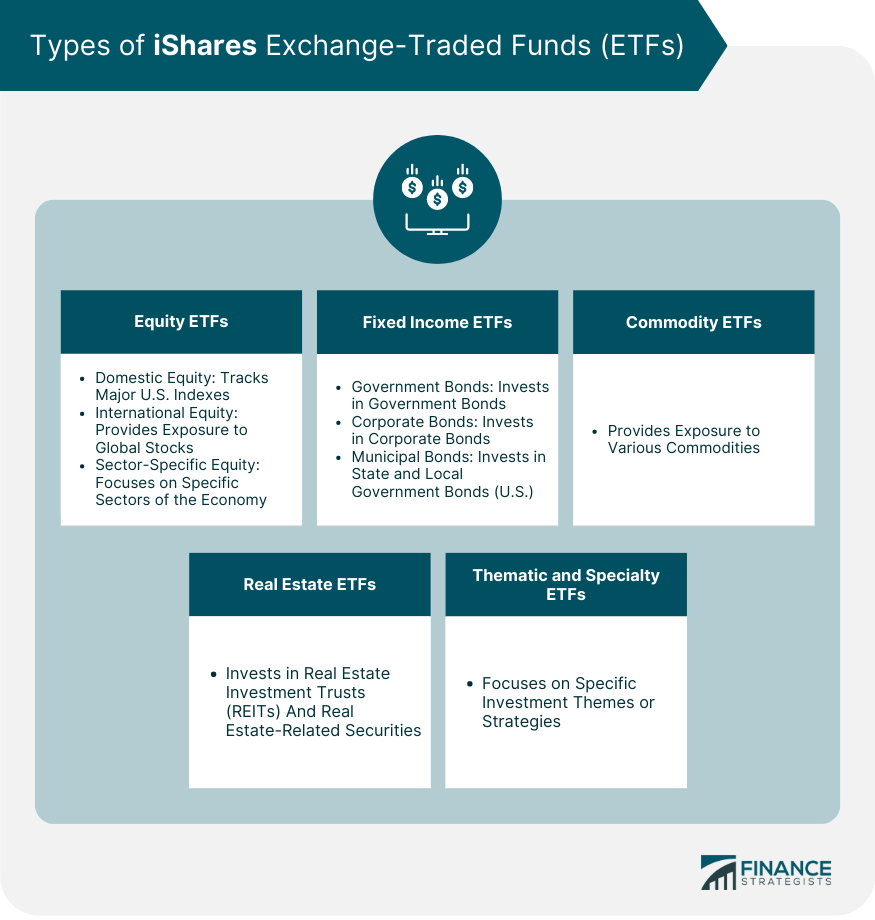
The true power of iShares lies in the sheer breadth and depth of its product offerings. BlackRock has meticulously developed a comprehensive suite of ETFs designed to cater to virtually every investment objective, risk profile, and market outlook. This expansive universe empowers investors to gain targeted exposure to specific segments of the global economy or broad market indices with unprecedented ease.
Equity ETFs: Tapping into Stock Markets
Equity iShares ETFs are perhaps the most popular category, allowing investors to gain exposure to stock markets across the globe. These funds track a wide array of indices, from broad market benchmarks like the S&P 500 (e.g., IVV) or the MSCI World Index to more specialized segments. Investors can find equity ETFs focused on specific countries (e.g., emerging markets like EEM), regions, market capitalizations (e.g., large-cap, mid-cap, small-cap), sectors (e.g., technology, healthcare, financials), or even investment styles (e.g., growth, value). This granularity enables investors to implement precise equity strategies, whether it’s building a core portfolio diversified across global indices or making tactical bets on specific industries poised for growth. The beauty of these ETFs is that they provide instant diversification across hundreds or even thousands of companies through a single investment.
Fixed Income ETFs: Stability and Income Generation
For investors seeking stability, income generation, and diversification away from equities, iShares offers a robust selection of fixed income ETFs. These funds invest in various types of bonds, providing exposure to government bonds, corporate bonds (investment-grade and high-yield), municipal bonds, and even global bonds. Fixed income ETFs can be tailored by duration (short-term, intermediate-term, long-term), credit quality, and geographical focus. They serve as essential components in balanced portfolios, offering a counterbalance to the volatility of stocks and providing a relatively stable stream of income through coupon payments. iShares fixed income ETFs allow individual investors to access bond markets with the same ease and liquidity typically reserved for institutional players, making complex bond strategies accessible and manageable.
Commodity and Alternative ETFs: Expanding Investment Horizons

Beyond traditional stocks and bonds, iShares provides ETFs that delve into alternative asset classes, offering further diversification and unique investment opportunities. Commodity ETFs, for instance, allow investors to gain exposure to raw materials like gold, silver, oil, or broad commodity baskets without directly owning the physical assets. These can serve as inflation hedges or strategic allocations during specific economic cycles. Furthermore, iShares offers alternative ETFs that invest in areas like real estate (REITs), private equity, or multi-asset strategies, which can enhance portfolio diversification and potentially offer different risk-return profiles than conventional assets. These more specialized funds enable sophisticated investors to fine-tune their portfolios and explore niche markets efficiently.
ESG and Thematic ETFs: Investing with Purpose
In response to evolving investor preferences, iShares has also pioneered a strong lineup of Environmental, Social, and Governance (ESG) ETFs and thematic ETFs. ESG funds invest in companies that meet certain sustainability criteria, allowing investors to align their financial goals with their personal values. This segment is growing rapidly as more investors seek to make a positive impact alongside financial returns. Thematic ETFs, on the other hand, focus on long-term structural trends or disruptive innovations, such as artificial intelligence, clean energy, cybersecurity, or biotechnology. These funds offer targeted exposure to specific future-oriented industries, enabling investors to capitalize on powerful macro trends that are reshaping the global economy. Both ESG and thematic iShares ETFs represent the cutting edge of investment product development, catering to a new generation of investors looking for more than just traditional market exposure.
Why Investors Choose iShares: Benefits and Considerations
The widespread adoption of iShares ETFs stems from a compelling array of benefits that address key investor needs. However, like any investment, they come with considerations that astute investors must weigh.
Cost-Efficiency: Lower Expense Ratios
One of the most significant advantages of iShares ETFs is their cost-efficiency. Compared to actively managed mutual funds, which often carry higher management fees (expense ratios) to cover the costs of research and trading by fund managers, most iShares ETFs are passively managed. This means they aim to track a specific index rather than outperform it, leading to significantly lower operational costs. These savings are passed on to investors in the form of lower expense ratios, which can have a profound impact on long-term returns, especially given the power of compounding. Over decades, even a small difference in expense ratios can translate into tens of thousands of dollars more in an investor’s pocket.
Transparency: Knowing What You Own
Transparency is another cornerstone of iShares ETFs. Unlike many actively managed mutual funds that only disclose their holdings periodically (e.g., quarterly), iShares ETFs typically disclose their underlying portfolios daily. This means investors always know exactly which securities their fund holds. This level of transparency allows investors to conduct thorough due diligence, understand the risk exposure of their investments, and ensure that the fund aligns with their investment objectives. It also helps in avoiding unexpected overlaps or concentrations within a broader portfolio. This clarity fosters trust and empowers investors with the information they need to make informed decisions.
Accessibility: Investing for Everyone
iShares ETFs have democratized investing by making sophisticated portfolio construction accessible to nearly everyone. With typically low minimum investment amounts (often just the price of one share), investors of all sizes can gain exposure to diverse markets, sectors, and asset classes that were once the exclusive domain of institutional investors. Whether you have $500 or $5 million, you can invest in an iShares ETF that provides instant diversification across hundreds or thousands of securities. This accessibility, combined with the ease of trading through standard brokerage accounts, has significantly lowered the barriers to entry for global financial markets, empowering individuals to take control of their financial futures.
Portfolio Building: Strategic Asset Allocation
For strategic investors, iShares ETFs are invaluable tools for asset allocation. Their modular nature allows investors to combine various ETFs to construct highly customized portfolios tailored to specific risk tolerances and financial goals. For example, an investor might combine an iShares U.S. total stock market ETF for core equity exposure, an iShares international developed markets ETF for global diversification, and an iShares aggregate bond ETF for fixed income stability. This “building block” approach simplifies the process of creating a well-diversified, risk-adjusted portfolio. Furthermore, the ability to trade ETFs throughout the day facilitates tactical adjustments, allowing investors to rebalance their portfolios efficiently or capitalize on short-term market opportunities without incurring significant transaction costs or complexities.
Navigating iShares: Key Considerations for Investors
While iShares ETFs offer numerous advantages, a thoughtful approach requires understanding critical considerations to ensure they align with individual financial strategies and objectives.
Research and Due Diligence: Understanding Underlying Holdings
Before investing in any iShares ETF, thorough research and due diligence are paramount. While transparency is a hallmark, it’s crucial for investors to go beyond the ticker symbol and understand the fund’s underlying holdings, its investment objective, and the index it tracks. For instance, an “emerging markets” ETF can vary significantly in its country and sector allocations depending on the specific index it follows. Understanding the composition helps in assessing potential risks and ensuring the fund provides the desired exposure without unintended concentrations or biases. Resources on the BlackRock iShares website, fund prospectuses, and independent financial analysis sites are essential for this deep dive.
Expense Ratios and Trading Costs: Impact on Returns
While iShares ETFs are renowned for their cost-efficiency, investors must pay attention to both the expense ratio and potential trading costs. The expense ratio, expressed as a percentage, is an annual fee deducted from the fund’s assets, and even seemingly small differences can compound over time. Beyond this, trading ETFs involves brokerage commissions (though many brokers now offer commission-free ETF trading) and bid-ask spreads. For frequent traders or those investing small amounts, these transaction costs can erode returns. Therefore, it’s vital to choose a brokerage with favorable fee structures and to consider the liquidity of the specific ETF to minimize bid-ask spread impact, especially for less commonly traded funds.
Tax Implications: Understanding ETF Tax Efficiency
iShares ETFs are generally considered more tax-efficient than traditional mutual funds, particularly for taxable accounts. This efficiency primarily stems from their unique creation/redemption mechanism, which allows the fund manager to remove low-cost-basis shares from the fund in-kind when creating new shares or fulfilling redemptions. This process minimizes capital gains distributions to shareholders. However, investors still need to be aware of how distributions (dividends and capital gains) are taxed and how selling ETF shares can trigger capital gains or losses. The tax implications can vary based on the type of ETF (e.g., bond ETFs versus equity ETFs) and the investor’s individual tax situation. Consulting with a tax advisor is always recommended to understand the specific impact on one’s personal financial planning.

Volatility and Risk Management: Aligning with Investment Goals
Despite the diversification inherent in iShares ETFs, they are not without risk. The value of an ETF can fluctuate based on market conditions, the performance of its underlying assets, and broader economic factors. For example, an equity ETF tracking a volatile sector will likely exhibit higher price swings than a short-term government bond ETF. Investors must align their choice of iShares ETFs with their individual risk tolerance and investment horizon. A comprehensive risk management strategy involves understanding the volatility of each ETF, its correlation with other assets in the portfolio, and regularly rebalancing to maintain the desired asset allocation. Utilizing iShares as building blocks in a well-thought-out portfolio, rather than viewing them as standalone solutions, is key to successful long-term investing.
In conclusion, iShares has cemented its position as a cornerstone of modern investing, offering an unparalleled suite of ETFs that blend diversification, cost-efficiency, transparency, and accessibility. By understanding “what is iShares” and meticulously navigating its vast offerings, investors are empowered to construct robust portfolios that can withstand market fluctuations and steadily advance towards their financial aspirations.
aViewFromTheCave is a participant in the Amazon Services LLC Associates Program, an affiliate advertising program designed to provide a means for sites to earn advertising fees by advertising and linking to Amazon.com. Amazon, the Amazon logo, AmazonSupply, and the AmazonSupply logo are trademarks of Amazon.com, Inc. or its affiliates. As an Amazon Associate we earn affiliate commissions from qualifying purchases.