
In the intricate tapestry of global finance, few indicators command as much attention and evoke as much discussion as the Dow Jones Industrial Average (DJIA). Colloquially known as “the Dow,” this venerable index serves as a daily barometer for the health and sentiment of the U.S. stock market, and by extension, the broader economy. For investors, economists, and even casual observers, the question “What’s the Dow doing now?” is more than mere curiosity; it’s a prompt for understanding the forces shaping wealth, commerce, and future prospects. This article delves into the significance of the Dow, explores the dynamics influencing its movements, and offers insights for navigating the ever-changing financial landscape it represents.
Decoding the Dow: An Investor’s Primer
To truly grasp the Dow’s daily gyrations, one must first understand its composition and historical context. It’s more than just a number; it’s a window into the performance of America’s industrial giants.
What is the Dow Jones Industrial Average (DJIA)?
Established in 1896 by Charles Dow, the Dow Jones Industrial Average is one of the oldest and most widely recognized stock market indices in the world. Despite its name, it’s not solely comprised of “industrial” companies in the traditional sense, but rather 30 large, publicly-owned companies based in the United States. These “blue-chip” firms are selected for their long-standing reputation, substantial size, and representation of key sectors of the U.S. economy. Examples often include giants like Apple, Boeing, Coca-Cola, Disney, Goldman Sachs, Johnson & Johnson, Microsoft, and Walmart.
Crucially, the DJIA is a price-weighted average, meaning stocks with higher share prices have a greater influence on the index’s value than those with lower prices. This contrasts with market-capitalization-weighted indices like the S&P 500, where larger companies (by total market value) have more sway. While its price-weighted methodology sometimes draws criticism for not fully reflecting market breadth, its longevity and the caliber of its constituents ensure its continued relevance as a benchmark for large-cap U.S. stocks. The composition of the Dow changes only infrequently, with adjustments made by the S&P Dow Jones Indices committee to ensure it remains a relevant reflection of the U.S. market.
Why the Dow Matters
The Dow’s significance extends far beyond its mathematical calculation. It serves several critical functions in the financial world:
- Economic Bellwether: Historically, the Dow has been viewed as a leading indicator of the overall health of the U.S. economy. Its components are often at the forefront of economic activity, and their collective performance can signal trends in manufacturing, consumer spending, technological innovation, and global trade. When the Dow moves significantly, it often reflects shifts in investor confidence regarding corporate profitability and economic growth.
- Investor Sentiment: The index acts as a powerful barometer of investor sentiment. A rising Dow often suggests optimism about future earnings and economic stability, encouraging further investment. Conversely, a sharp decline can indicate fear, uncertainty, and a flight to safety, influencing both institutional and retail investor behavior.
- Simplicity and Recognition: For many, the Dow is the simplest and most recognizable proxy for “the stock market.” Its daily movements are reported widely in mainstream media, making it an accessible entry point for understanding market trends, even for those without deep financial expertise. This broad recognition makes it a focal point for daily financial news and analysis.
- Historical Context: With over a century of data, the Dow provides a rich historical context for analyzing long-term market trends, economic cycles, and the impact of various historical events, from world wars to technological revolutions and financial crises.
Navigating Current Market Dynamics
To answer “What’s the Dow doing now?” effectively requires an appreciation of the real-time forces at play. While specific daily movements are fleeting, underlying trends and influences offer deeper insight.
Recent Performance Snapshot
(Illustrative discussion – as specific real-time data is unavailable)
In recent periods, the Dow, much like the broader market, has been subject to a fascinating interplay of bullish and bearish forces. We’ve seen phases of robust growth, often fueled by strong corporate earnings and anticipation of economic recovery. For instance, periods following major economic stimulus or breakthroughs in specific industries (like AI or renewable energy) have sometimes provided significant uplift. However, this upward momentum has frequently been punctuated by bouts of volatility, where the index experiences sharp intraday swings or multi-day corrections. These downturns often stem from emerging concerns about inflation, geopolitical tensions, or shifts in central bank policy.
For example, a typical pattern might involve the Dow trending upward over several months, driven by optimistic earnings reports from a few key components, only to face a sudden correction prompted by an unexpected inflation report or a hawkish statement from the Federal Reserve. Then, a subsequent recovery might be spurred by strong employment data or a positive resolution to a geopolitical issue. Understanding this ebb and flow, rather than fixating on any single day’s close, is crucial.
Key Economic Indicators at Play
The Dow doesn’t move in a vacuum; its trajectory is heavily influenced by a confluence of macroeconomic factors:
- Inflation: Persistent inflation erodes purchasing power and corporate profit margins, often leading central banks to raise interest rates, which can dampen economic activity and make stocks less attractive relative to bonds.
- Interest Rates: The Federal Reserve’s monetary policy, particularly its stance on interest rates, is a colossal driver. Higher rates increase borrowing costs for businesses and consumers, potentially slowing growth, and reducing the present value of future corporate earnings. Conversely, lower rates can stimulate economic activity and boost stock valuations.
- Employment Data: Robust job growth and low unemployment rates typically signal a healthy economy, bolstering consumer spending and corporate revenues. Conversely, rising unemployment can portend an economic slowdown or recession.
- Consumer Sentiment: Surveys of consumer confidence are critical because consumer spending accounts for a significant portion of GDP. Optimistic consumers are more likely to spend, benefiting companies within the Dow.
- Geopolitical Events: International conflicts, trade disputes, and political instability can introduce uncertainty, disrupt supply chains, and impact commodity prices, all of which ripple through global markets and affect Dow components.
Sectoral Influences on the Dow
While the Dow comprises diverse companies, certain sectors often take the lead in driving its performance:
- Technology: Giants like Apple and Microsoft, despite being classified as “industrial” in the Dow context, represent the technology sector’s enormous influence. Innovation, product cycles, and software services often play a significant role in their stock performance and, by extension, the Dow’s.
- Financials: Companies like Goldman Sachs or JPMorgan Chase are highly sensitive to interest rate changes, economic growth, and regulatory environments. Their performance can reflect the health of the broader financial system.
- Healthcare: Constituents like Johnson & Johnson or Merck are often seen as more defensive, offering stability due to consistent demand for their products. However, they are also influenced by drug approvals, healthcare policy, and scientific breakthroughs.
- Consumer Discretionary/Staples: Companies like Walmart or Coca-Cola reflect consumer spending patterns. Discretionary firms are more sensitive to economic cycles, while staples tend to be more resilient.
- Industrials: While the definition has expanded, traditional industrials like Boeing or Caterpillar remain sensitive to global trade, infrastructure spending, and manufacturing output.
Understanding which of these sectors are experiencing tailwinds or headwinds provides a more nuanced answer than simply observing the Dow’s net change.
Factors Shaping the Dow’s Trajectory
The Dow’s movements are not random; they are the cumulative outcome of complex interactions between macroeconomic policy, corporate performance, and global events.
Monetary Policy and Central Bank Actions
The Federal Reserve is arguably the most powerful entity influencing the Dow. Its primary tools are:
- Interest Rate Adjustments: Raising the federal funds rate aims to cool an overheating economy and combat inflation, but can slow growth and make equity investments less attractive. Lowering rates stimulates borrowing and spending, but risks fueling inflation.
- Quantitative Easing (QE) and Tightening (QT): QE involves the Fed buying government bonds and other securities to inject liquidity into the financial system, lowering long-term interest rates and encouraging investment. QT, conversely, involves reducing the Fed’s balance sheet, withdrawing liquidity. These actions significantly impact market liquidity and investor appetite for risk.
- Forward Guidance: The Fed’s communication about its future policy intentions can preemptively influence market expectations and investor behavior, often leading to immediate reactions in the Dow.
Corporate Earnings and Guidance
At its core, stock market performance is tied to corporate profitability. The 30 companies in the Dow release quarterly earnings reports, which include their past performance and future guidance.
- Earnings Beat/Miss: When companies report earnings better or worse than analyst expectations, their stock prices react, affecting the overall index.
- Future Guidance: Perhaps even more critical than past earnings is a company’s outlook for future quarters. Positive guidance can signal strong future growth, while negative guidance can trigger a sell-off, even if current earnings were solid.
- Analyst Revisions: Investment bank analysts frequently update their earnings estimates and stock ratings, influencing institutional investors and contributing to market sentiment.
Geopolitical and Global Economic Headwinds
The interconnectedness of the global economy means that events far from U.S. shores can profoundly impact the Dow:
- Supply Chain Disruptions: Events like pandemics, natural disasters, or international conflicts can snarl global supply chains, increasing costs for Dow companies and reducing their ability to meet demand.
- Trade Wars and Tariffs: Imposing tariffs on goods can increase costs for importers and consumers, reduce corporate profitability, and harm international relations, impacting multinational Dow components.
- Energy Prices: Fluctuations in oil and gas prices, often driven by geopolitical events, affect everything from manufacturing costs to consumer spending power and airline profitability.
- Global Growth Concerns: A slowdown in major economies like China or Europe can reduce demand for goods and services produced by U.S. companies, impacting their international revenues.
Technological Innovation and Disruptions
While the “industrial” in DJIA is historic, technology plays an increasingly central role. Breakthroughs and disruptions can redefine industries and companies within the index:
- AI and Automation: Advances in artificial intelligence and automation can significantly boost productivity for some companies while potentially disrupting traditional labor markets or business models for others.
- Digital Transformation: Companies that successfully adapt to digital models often outperform, while those slow to innovate can fall behind, leading to changes in the Dow’s composition over time.
- Cybersecurity Threats: The increasing reliance on digital infrastructure also brings heightened cybersecurity risks, which can impact company operations, consumer trust, and stock performance.
Strategies for Engaging with the Dow’s Movement
Understanding “what the Dow is doing” is the first step; deciding how to react, or not react, is the next. A thoughtful, disciplined approach is crucial for investors.
Long-Term vs. Short-Term Perspectives
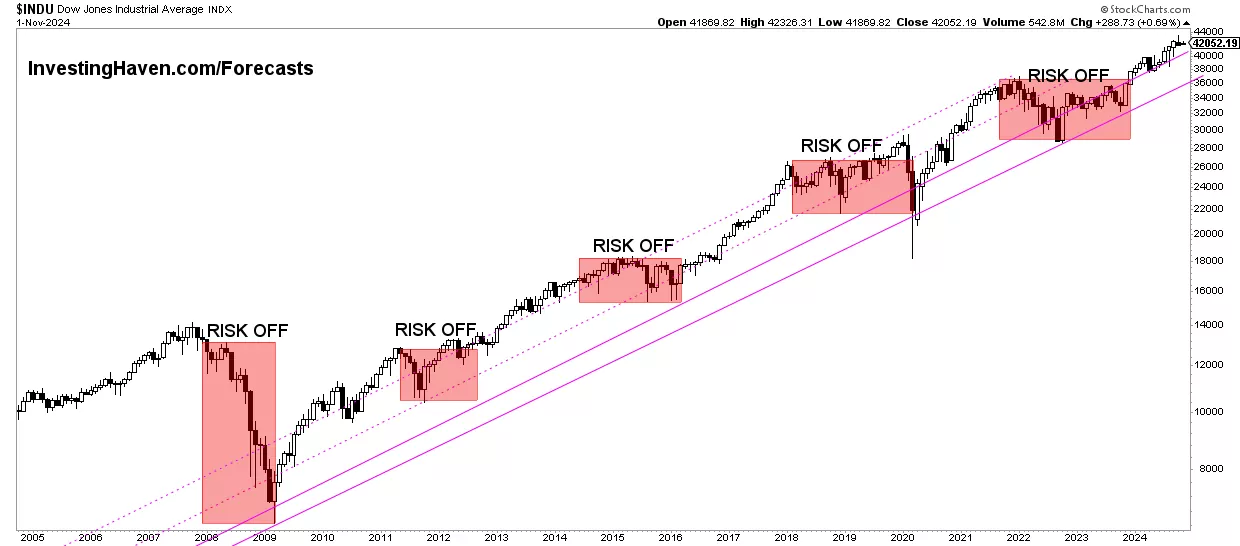
- Long-Term Investing: For most individuals, the Dow is best viewed through a long-term lens. Over decades, the index has demonstrated a strong upward bias, reflecting economic growth and corporate innovation. Attempting to time daily fluctuations is notoriously difficult and often leads to suboptimal returns. Long-term investors focus on consistent contributions, diversification, and riding out market volatility. They understand that a 1% daily move in the Dow, while newsworthy, is often just noise in a multi-year investment horizon.
- Short-Term Trading: For active traders, the Dow’s intraday and short-term movements offer opportunities for speculation. This strategy requires deep market knowledge, technical analysis skills, risk management, and a willingness to accept higher volatility and potential for significant losses. It is not suitable for most individual investors.
Diversification Beyond the Dow
While the Dow comprises strong companies, it’s just 30 stocks. A truly diversified portfolio will look beyond this index:
- Other Indices: Investing in broader market indices like the S&P 500 (500 large-cap U.S. companies) or a total U.S. stock market fund (thousands of companies across market caps) provides wider exposure and reduces concentration risk.
- International Stocks: Global diversification offers exposure to different economies and growth drivers, further reducing reliance on any single market.
- Asset Classes: Beyond stocks, incorporating bonds, real estate (via REITs), and potentially commodities can help smooth out portfolio returns and provide different risk-return profiles. The Dow tells a story about U.S. large-cap equities, but it’s only one chapter of the financial narrative.
The Role of Professional Guidance
Navigating the complexities of the Dow and the broader financial markets can be daunting. A qualified financial advisor can provide invaluable assistance:
- Personalized Strategy: An advisor can help assess your risk tolerance, financial goals, and time horizon to create a personalized investment plan that aligns with your unique situation.
- Risk Assessment: They can help you understand and manage the inherent risks of investing, ensuring your portfolio is appropriately structured.
- Emotional Discipline: In times of market volatility, an advisor can help you avoid making impulsive decisions driven by fear or greed, keeping you focused on your long-term objectives.
- Tax Efficiency: Advisors can offer strategies for tax-efficient investing and withdrawal planning, optimizing your returns over time.
Staying Informed: Essential Resources
For those who wish to track the Dow and its influences, access to reliable information is key:
- Reputable Financial News Outlets: Major financial publications and news channels provide daily updates, in-depth analysis, and expert commentary.
- Economic Calendars: Websites offering economic calendars highlight upcoming releases of key economic data (e.g., inflation reports, jobs numbers, GDP figures) that often move the market.
- Company Earnings Reports: Directly reviewing the earnings transcripts and investor calls of Dow components can offer first-hand insights into their performance and outlook.
- Analyst Reports: While often proprietary, aggregated analyst sentiment and ratings can provide a pulse on professional expectations for specific stocks and sectors.
In conclusion, “What’s the Dow doing now?” is a question that opens a window into the dynamic interplay of corporate performance, economic policy, and global events. While its daily fluctuations can be a source of anxiety or excitement, a deeper understanding of its composition, influences, and historical context reveals its enduring role as a key barometer of financial health. For investors, the Dow serves as a reminder that informed, disciplined decision-making, coupled with a long-term perspective and broad diversification, remains the most prudent path to navigating the ever-evolving world of money and markets.
aViewFromTheCave is a participant in the Amazon Services LLC Associates Program, an affiliate advertising program designed to provide a means for sites to earn advertising fees by advertising and linking to Amazon.com. Amazon, the Amazon logo, AmazonSupply, and the AmazonSupply logo are trademarks of Amazon.com, Inc. or its affiliates. As an Amazon Associate we earn affiliate commissions from qualifying purchases.