
The Dow Jones Industrial Average (DJIA), often simply referred to as “the Dow,” is one of the most recognizable and frequently cited stock market indices in the world. For over a century, it has served as a critical barometer for the health and direction of the U.S. economy and its stock market. Yet, despite its ubiquity in financial news, many investors and the general public might not fully grasp what the Dow truly represents, or more specifically, which companies constitute this elite group of 30 industrial giants. Understanding the composition of the Dow is not merely an exercise in trivia; it offers crucial insights into the sectors driving the economy, the criteria for corporate success, and the pathways for investors to engage with these leading enterprises.
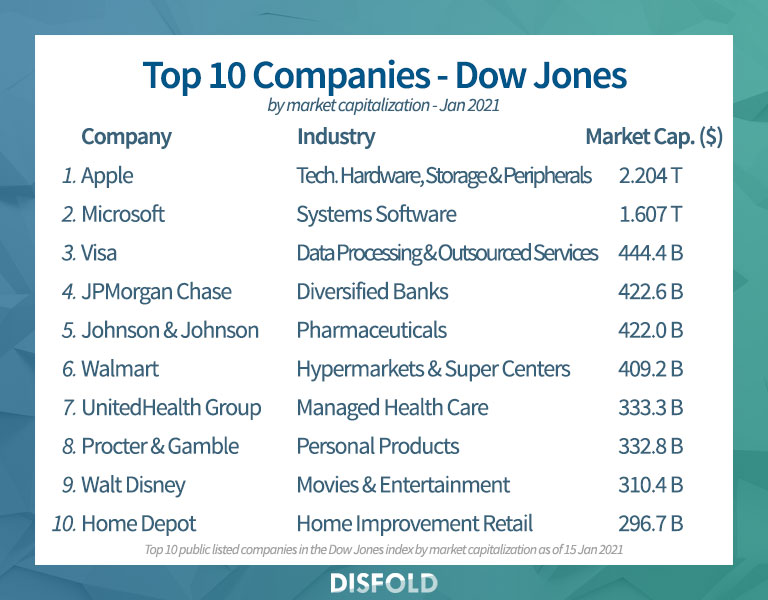
This article delves into the core of the Dow, exploring its historical significance, the dynamic process behind its constituent selection, and critically, providing a lens through which to view the companies that currently define this iconic index. We’ll examine why these specific companies matter, how their inclusion impacts market perception, and what role they play in a diversified investment strategy.
Understanding the Dow Jones Industrial Average
Before delving into the specific companies, it’s essential to grasp the fundamental nature and methodology of the Dow Jones Industrial Average. Unlike many modern indices, the Dow is not weighted by market capitalization, which means larger companies by market value don’t automatically exert greater influence.
More Than Just an Average: Price-Weighting and the Dow Divisor
The DJIA is a price-weighted index, a distinction that sets it apart from the more common market-capitalization-weighted indices like the S&P 500. In a price-weighted index, stocks with higher share prices have a greater impact on the index’s value than those with lower share prices, regardless of the company’s overall market value. For instance, if a company trading at $300 per share moves up by $10, it will affect the Dow more than a company trading at $100 per share that also moves up by $10.
To account for stock splits, dividends, and other structural changes that would otherwise distort the index’s continuity, the Dow uses a “Dow Divisor.” This divisor is a constantly adjusted number that ensures the index’s value remains comparable day-to-day, irrespective of changes in its components or their share structures. This unique methodology, while simpler in concept than market-cap weighting, often leads to debates about its representativeness in modern markets.
A Legacy of Market Representation
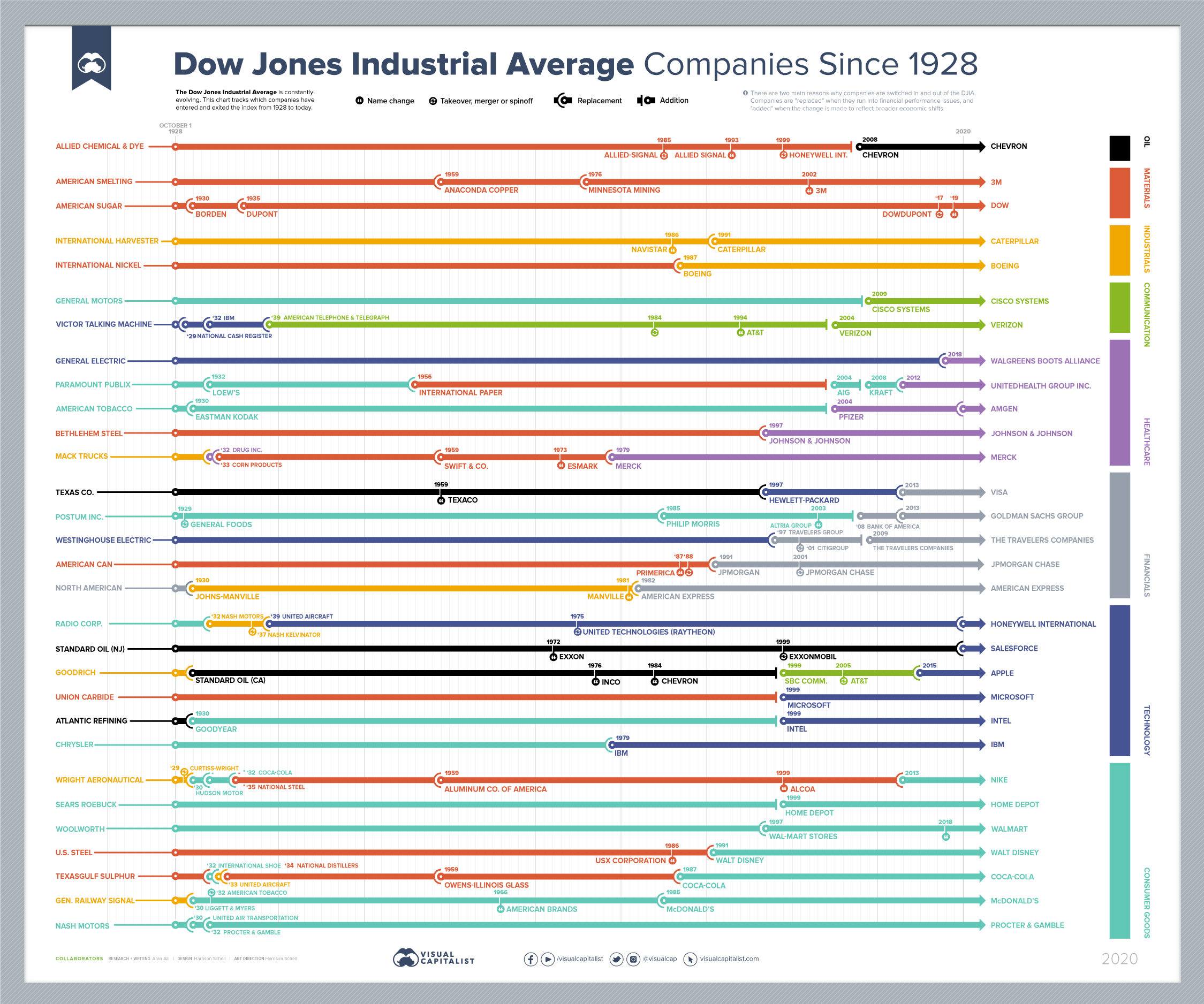
The Dow was created in 1896 by Charles Dow, editor of The Wall Street Journal and co-founder of Dow Jones & Company. Initially composed of just 12 industrial companies, it was designed to provide a clear, concise snapshot of the overall health of the U.S. economy, which was then heavily reliant on heavy industry. Over the decades, it has expanded to 30 companies and evolved significantly, moving beyond pure “industrial” firms to include technology, healthcare, finance, and consumer goods companies. This evolution reflects the changing landscape of the American economy itself, making the Dow a living history book of U.S. economic dominance. Its enduring value lies in its historical continuity and its widely recognized status as a daily pulse check for investors and policymakers alike.
Why the Constituents Matter
The companies within the Dow are generally considered blue-chip stocks – large, well-established, and financially sound companies with a long history of stable earnings and dividends. Their inclusion signals a certain level of prestige and perceived stability. For investors, monitoring the Dow’s constituents can offer insights into:
- Sector Leadership: Which sectors are currently deemed most influential or representative of the broader economy.
- Economic Barometer: The collective performance of these 30 companies often correlates with broader economic trends.
- Portfolio Diversification: While not a comprehensive index for diversification, understanding the industries represented can inform sector allocation within a larger portfolio.
The Dynamic Roster: Who Makes the Cut?
The list of companies in the Dow is not static. It changes over time to ensure the index remains relevant and representative of the U.S. economy. These changes are infrequent but significant, signaling shifts in economic power and industrial leadership.
Criteria for Inclusion: Reputation and Relevance
The selection of companies for the Dow is not governed by a rigid quantitative formula but rather by the S&P Dow Jones Indices’ Averages Committee. Their decisions are based on qualitative factors, focusing on companies with:
- Excellent Reputation: Well-established, financially sound companies with a strong national and international reputation.
- Sustained Growth: A history of consistent earnings, growth, and investor interest.
- Broad Representation: The company’s business should represent a significant portion of the U.S. stock market and economy. The goal is to ensure the index reflects the overall structure of the U.S. market, not just one or two sectors.
- Ability to Attract Investors: Companies that are widely held by institutional and individual investors.
The committee also considers maintaining adequate sector representation and ensuring the index is sufficiently diversified across industries. When a company is removed, it’s often because it no longer meets these criteria, its industry is declining in economic importance, or another company is deemed more representative of current economic trends.
The Evolving Landscape: Recent Changes and Historical Shifts
The Dow’s history is punctuated by removals and additions that reflect the dynamism of the American economy. Iconic names like General Electric, which was an original member of the index, were eventually replaced as the economy shifted away from heavy manufacturing towards services and technology. Recent changes have highlighted the growing importance of tech, healthcare, and consumer services. For instance, in recent years, companies like Salesforce, Amgen, and Honeywell have been added, replacing older constituents such as ExxonMobil, Pfizer, and Raytheon Technologies, demonstrating a clear shift towards modern growth sectors. These changes are crucial because they ensure the Dow doesn’t become an anachronism, but rather continues to reflect the engines of economic progress.
Current Snapshot: A Look at Notable Constituents (as of recent understanding)
While the exact list can shift, here’s a look at some of the prominent companies that typically make up the 30-stock Dow Jones Industrial Average, representing a diverse cross-section of the U.S. economy:

- Technology & Communications: Apple (AAPL), Microsoft (MSFT), Salesforce (CRM), Cisco Systems (CSCO), Intel (INTC), Verizon (VZ)
- Financial Services: JPMorgan Chase (JPM), Goldman Sachs (GS), Visa (V), American Express (AXP), Travelers (TRV)
- Healthcare: Johnson & Johnson (JNJ), UnitedHealth Group (UNH), Amgen (AMGN), Merck (MRK)
- Consumer Discretionary/Staples: The Home Depot (HD), McDonald’s (MCD), Nike (NKE), Coca-Cola (KO), Walmart (WMT), Walt Disney (DIS), Procter & Gamble (PG)
- Industrials & Materials: Boeing (BA), Caterpillar (CAT), 3M (MMM), Honeywell (HON)
- Energy: Chevron (CVX)
This diverse composition highlights the Dow’s attempt to capture broad economic activity, from high-tech innovation and global financial services to consumer goods and heavy industry. It’s a testament to the fact that while “industrial” remains in its name, its scope has broadened considerably.
Investing Through the Lens of the Dow
For investors, the Dow Jones Industrial Average serves multiple purposes. It’s a performance benchmark, a source of potential investment ideas, and an index that can be invested in directly.
Diversification and Sector Exposure
While investing solely in the 30 companies of the Dow can offer some level of diversification across major sectors, it’s crucial to understand its limitations. Being price-weighted and limited to only 30 companies, it may not provide the broad market exposure or true diversification offered by market-capitalization-weighted indices like the S&P 500 (500 large-cap companies) or even broader total market indices. However, for those looking to invest in a collection of highly stable, blue-chip American companies, the Dow offers a focused approach. It allows investors to gain exposure to leading companies that are often dominant players in their respective industries, providing a proxy for the performance of established U.S. corporate giants.
ETFs and Index Funds: Direct Dow Exposure
Investors don’t need to buy individual shares of all 30 Dow companies to gain exposure to the index. Exchange-Traded Funds (ETFs) and index mutual funds specifically designed to track the performance of the DJIA are readily available. The most well-known of these is the SPDR Dow Jones Industrial Average ETF (DIA), often referred to as “Diamonds.” Investing in such funds offers several advantages:
- Instant Diversification: Immediate exposure to all 30 companies in their respective weightings.
- Low Cost: Index funds and ETFs typically have lower expense ratios compared to actively managed funds.
- Liquidity: ETFs trade like stocks on an exchange, offering flexibility for buying and selling.
These financial tools make it simple and cost-effective for individual investors to align their portfolios with the performance of the Dow.
Beyond the Dow: A Balanced Perspective
While the Dow holds historical significance and offers exposure to top-tier companies, a truly balanced investment strategy should look beyond this single index. Financial advisors often recommend a broader approach, incorporating:
- S&P 500: For comprehensive exposure to 500 large-cap U.S. companies.
- Nasdaq Composite/Nasdaq 100: For a greater emphasis on technology and growth stocks.
- Russell 2000: For exposure to small-cap U.S. companies.
- International Indices: To diversify globally.
The Dow is an excellent starting point for understanding market trends and investing in established giants, but it should be viewed as one component within a more expansive and diversified investment strategy. Relying solely on the Dow for market analysis or portfolio construction can lead to an incomplete picture of overall market health and potential investment opportunities.
The Future of the Dow: Maintaining Relevance
The Dow Jones Industrial Average has faced its share of criticism, primarily for its price-weighted methodology and its limited number of constituents. However, its longevity and widespread recognition attest to its enduring value.
Adapting to Economic Shifts
The ongoing commitment of the S&P Dow Jones Indices committee to periodically review and update the index is crucial for its continued relevance. As the global economy evolves, driven by new technologies, shifting consumer preferences, and geopolitical dynamics, the Dow must adapt to truly reflect the leading companies of the era. The recent emphasis on adding more technology, healthcare, and services companies underscores this adaptive nature, ensuring the index remains a credible snapshot of the U.S. corporate landscape.
Critiques and Enduring Value
Critics argue that the Dow’s price-weighted system makes it less representative than market-cap weighted indices, where companies like Apple and Microsoft might have less individual impact than their actual market value would suggest. They also point to the mere 30 companies as insufficient to capture the complexity of the vast U.S. economy.
Despite these valid critiques, the Dow’s legacy and simplicity ensure its continued prominence. It remains an accessible and easily understood benchmark for millions, and its movements are often the first reported indicator of market sentiment. For many, its value isn’t just in its statistical accuracy but in its historical continuity and its ability to communicate market trends in a straightforward manner.
Conclusion
The Dow Jones Industrial Average is more than just a number; it’s a dynamic reflection of American corporate power and economic progress. Its 30 constituent companies represent some of the most established, influential, and financially robust enterprises in the world. While its methodology and limited scope invite critical discussion, the ongoing efforts to update its roster ensure its continued relevance as a key economic indicator.
For investors, understanding what companies are in the Dow provides a valuable window into the blue-chip segment of the U.S. stock market. Whether through direct stock purchases or via index-tracking ETFs, the Dow offers a distinct pathway to invest in a curated selection of leading companies. However, a holistic investment strategy recognizes the Dow as one important piece within a broader mosaic, encouraging diversification across various indices and asset classes to achieve long-term financial goals. Ultimately, the Dow remains a powerful symbol of economic health and a testament to the enduring innovation and resilience of American industry.
aViewFromTheCave is a participant in the Amazon Services LLC Associates Program, an affiliate advertising program designed to provide a means for sites to earn advertising fees by advertising and linking to Amazon.com. Amazon, the Amazon logo, AmazonSupply, and the AmazonSupply logo are trademarks of Amazon.com, Inc. or its affiliates. As an Amazon Associate we earn affiliate commissions from qualifying purchases.