
The S&P 500 index is an icon of the American economy, a benchmark that encapsulates the performance of 500 of the largest publicly traded companies in the United States. For decades, it has served as a bellwether for the stock market’s health and a cornerstone for countless investment portfolios. Its consistent long-term growth, coupled with inherent diversification, makes it an attractive target for both novice and seasoned investors seeking broad market exposure.
However, a common misconception is that one can “buy” the S&P 500 directly, similar to purchasing a single stock. In reality, the S&P 500 is an index, a theoretical portfolio of stocks, not a tradable asset itself. To invest in the S&P 500, you need to purchase investment vehicles designed to track its performance. This guide will demystify the process, outlining the primary methods, practical steps, and crucial considerations for gaining exposure to this powerful index.
Understanding the S&P 500 and Why It Matters
Before diving into how to invest, it’s essential to grasp what the S&P 500 truly represents and why it holds such significance in the investment world.
What is the S&P 500?
The S&P 500, short for the Standard & Poor’s 500, is a market-capitalization-weighted index. This means that companies with larger market values (share price multiplied by the number of outstanding shares) have a greater impact on the index’s performance. It comprises 500 leading publicly traded companies across various sectors of the U.S. economy, selected by a committee at S&P Dow Jones Indices based on criteria such as market size, liquidity, and sector representation. While often referred to as representing the “500 largest U.S. companies,” it’s more accurate to say it represents a diverse cross-section of large-cap American businesses that meet specific eligibility requirements. It covers approximately 80% of the total market capitalization of the U.S. equity market, making it an excellent proxy for the overall health of the American corporate sector.
The Allure of S&P 500 Investing
Investing in a fund that tracks the S&P 500 offers a compelling suite of advantages that make it a cornerstone of many successful investment strategies:
- Broad Diversification: By owning a single fund, you instantly gain exposure to 500 different companies across 11 major sectors. This inherent diversification significantly reduces the risk associated with individual stock picking. The poor performance of one or a few companies is typically offset by the strong performance of others within the index.
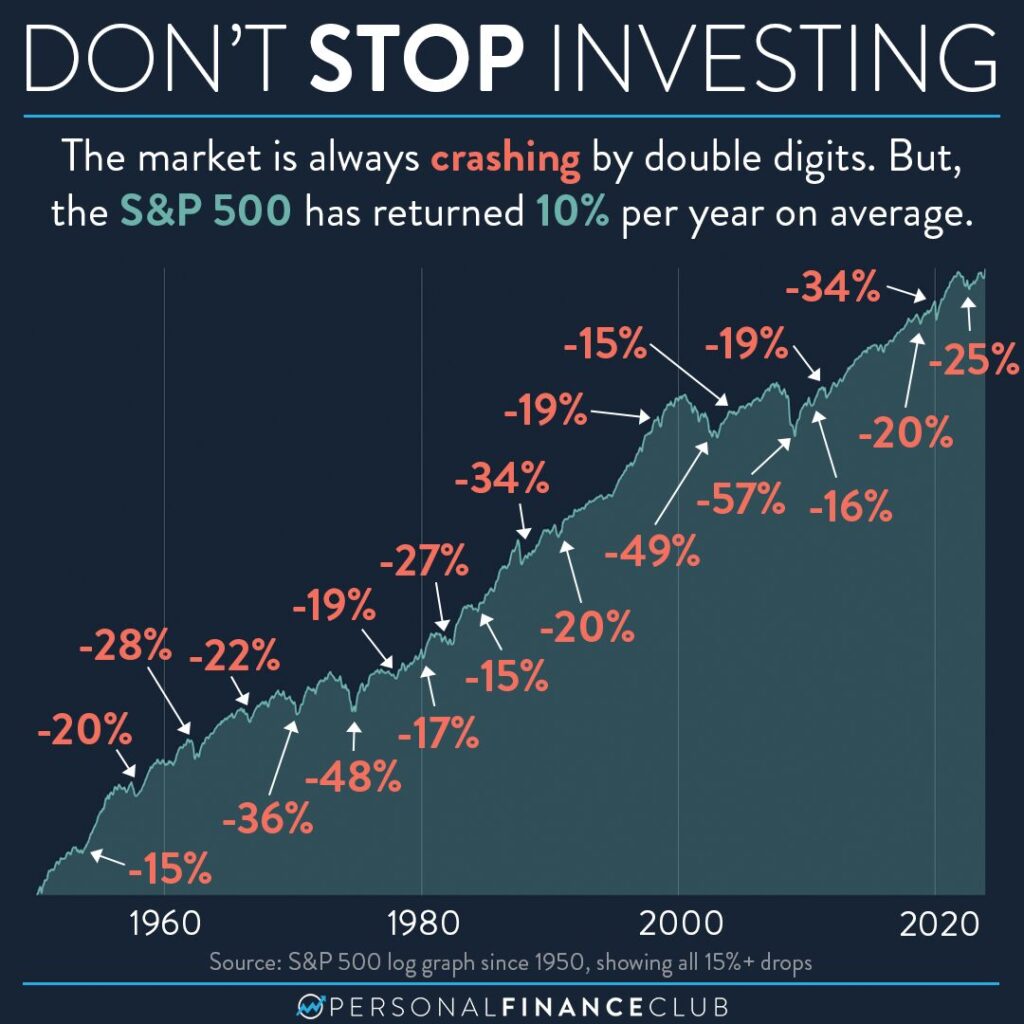
- Historical Performance: Over extended periods, the S&P 500 has demonstrated impressive average annual returns, historically around 10-12% before inflation, making it a powerful engine for long-term wealth creation. While past performance is no guarantee of future results, its track record is a testament to the resilience and growth of American capitalism.
- Simplicity and Passive Investing: For many investors, particularly those new to the market or those who prefer a hands-off approach, S&P 500 index funds offer an incredibly simple way to invest. There’s no need to research individual companies, analyze financial statements, or constantly monitor market news. You’re essentially betting on the aggregate success of America’s largest corporations.
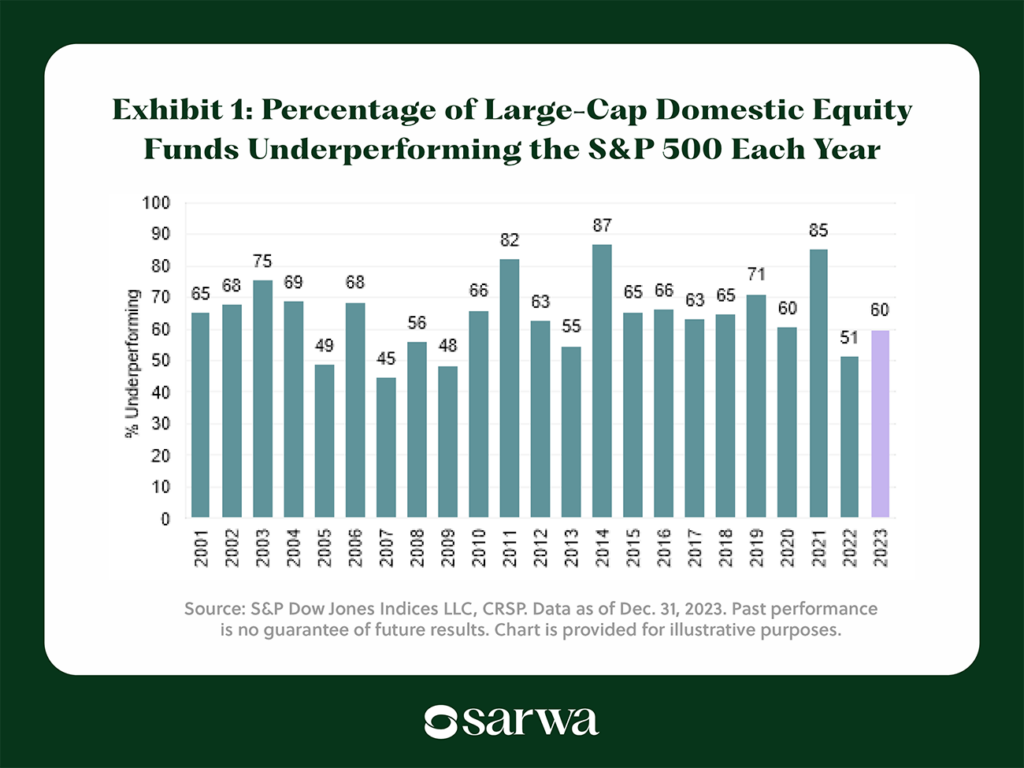
- Lower Costs: Funds that track an index like the S&P 500 are passively managed. This means they don’t require an expensive team of analysts making active trading decisions. As a result, they typically have significantly lower expense ratios (annual fees) compared to actively managed mutual funds, allowing more of your returns to stay in your pocket.
Direct vs. Indirect Investment: Clarifying the Process
Understanding that you cannot directly buy the S&P 500 is the first crucial step in learning how to invest in it. The pathways to gaining exposure are through specific investment products designed to mirror its performance.
You Can’t “Buy” the S&P 500 Directly
As an index, the S&P 500 is a statistical measure, a numerical representation of the performance of a basket of stocks. It’s akin to a theoretical score that moves up and down. You cannot log into a brokerage account and type “S&P 500” into a ticker symbol field to purchase it. Instead, you need to buy financial products that are structured to replicate the index’s composition and, by extension, its returns.
The Primary Pathways: ETFs and Mutual Funds
The most common and efficient ways for individual investors to gain exposure to the S&P 500 are through:
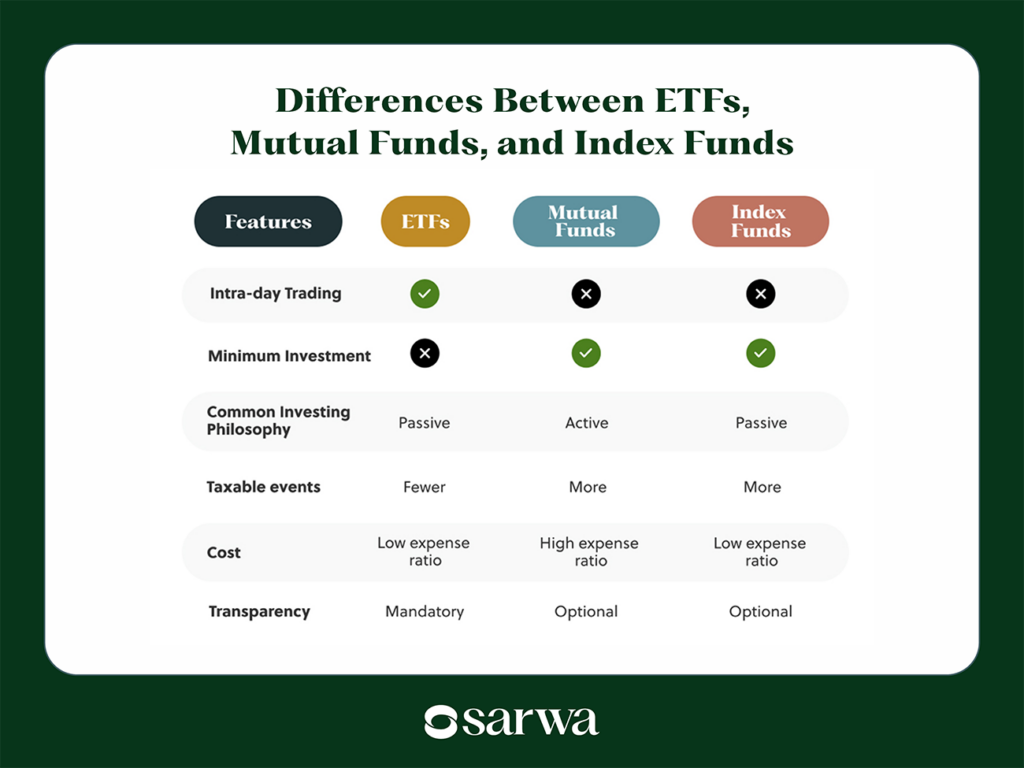
- Exchange-Traded Funds (ETFs): These are investment funds that hold assets like stocks, bonds, or commodities and are designed to track an index. They trade on stock exchanges like individual stocks throughout the day.
- Index Mutual Funds: These are a type of mutual fund that is designed to match the performance of a specific market index. They pool money from many investors to buy the underlying securities in the index.
Both ETFs and index mutual funds offer professional management (though passive for index funds), diversification, and typically low costs when tracking a broad market index like the S&P 500.
The Most Popular Vehicles: S&P 500 ETFs and Mutual Funds
While there are subtle differences, both S&P 500 ETFs and index mutual funds provide excellent avenues for investment. Your choice often comes down to personal preference regarding trading flexibility, minimum investments, and how you prefer to manage your portfolio.
Investing via S&P 500 Exchange-Traded Funds (ETFs)
S&P 500 ETFs are immensely popular for their flexibility and low costs. They are funds that own all or a representative sample of the 500 companies in the index.
- Advantages:
- Lower Expense Ratios: Generally, S&P 500 ETFs boast some of the lowest expense ratios in the investment world, often below 0.10% annually.
- Intraday Trading: Like individual stocks, ETFs can be bought and sold throughout the trading day at market prices. This offers flexibility for investors who might want to capitalize on short-term market movements, although for long-term S&P 500 investing, this isn’t a primary advantage.
- No Minimum Investment (Beyond Share Price): You can typically buy as little as one share of an ETF, making them accessible to investors with smaller capital.
- Transparency: The holdings of an ETF are disclosed daily.
- Popular Examples:
- SPDR S&P 500 ETF Trust (SPY): The oldest and largest S&P 500 ETF, often used as a benchmark itself.
- iShares Core S&P 500 ETF (IVV): Offered by BlackRock, known for its very low expense ratio.
- Vanguard S&P 500 ETF (VOO): Offered by Vanguard, also celebrated for its extremely low costs and efficient structure.
Investing via S&P 500 Index Mutual Funds
S&P 500 index mutual funds also track the index but operate slightly differently from ETFs.
- Advantages:
- Automatic Reinvestment: Many mutual funds offer automatic dividend reinvestment, allowing your returns to compound seamlessly.
- Set-and-Forget Convenience: Mutual funds are priced only once per day, after the market closes. This deters short-term trading and encourages a long-term, disciplined investment approach.
- Dollar-Cost Averaging: Easy to set up automatic recurring investments, which is excellent for dollar-cost averaging (investing a fixed amount regularly, regardless of market fluctuations).
- Disadvantages:
- Minimum Investment: Some index mutual funds, especially those directly from fund providers like Vanguard, may have initial minimum investment requirements, sometimes $3,000 or more. However, many brokerage platforms now offer their own low-minimum or no-minimum versions.
- No Intraday Trading: You cannot buy or sell during the trading day; orders are executed at the end-of-day NAV (Net Asset Value).
- Popular Examples:
- Vanguard 500 Index Fund Admiral Shares (VFIAX): One of the largest and most respected S&P 500 index funds, with an ultra-low expense ratio.
- Fidelity 500 Index Fund (FXAIX): Fidelity’s popular and low-cost offering.
- Schwab S&P 500 Index Fund (SWPPX): Charles Schwab’s equivalent.
Robo-Advisors and Other Indirect Routes
Beyond direct purchases of ETFs or mutual funds, other avenues can provide S&P 500 exposure:
- Robo-Advisors: Services like Betterment or Wealthfront build diversified portfolios using ETFs, and a core component is almost always an S&P 500 tracking ETF or a similar broad market fund. These platforms offer automated portfolio management, rebalancing, and tax-loss harvesting for a small fee.
- Employer-Sponsored Retirement Plans (401(k), 403(b)): Many employer plans offer an S&P 500 index fund as one of the investment options. This is an excellent, tax-advantaged way to gain exposure.
- Target-Date Funds: These are mutual funds designed to be a complete portfolio in a single fund, adjusting their asset allocation (stocks to bonds) as you approach a specific retirement date. They typically include S&P 500 exposure as a significant equity component.
Practical Steps to Purchasing S&P 500 Exposure
Once you’ve decided on your preferred investment vehicle (ETF or mutual fund), the actual purchase process is straightforward.
Step 1: Open a Brokerage Account
This is your gateway to the stock market. You’ll need to open an investment account with a reputable brokerage firm. Popular choices include Charles Schwab, Fidelity, Vanguard, E*TRADE, M1 Finance, and Interactive Brokers.
- Account Types:
- Taxable Brokerage Account: A standard investment account where capital gains and dividends are typically taxed annually.
- Individual Retirement Account (IRA): Tax-advantaged accounts like a Roth IRA (contributions are after-tax, qualified withdrawals are tax-free in retirement) or a Traditional IRA (contributions may be tax-deductible, withdrawals are taxed in retirement).
- 401(k)/403(b): If through an employer, you’ll select your investment options within the plan’s menu.
- Choosing a Broker: Consider factors like trading fees (many offer commission-free ETF and stock trading), minimum deposit requirements, available investment products, research tools, customer service, and user-friendliness of their platform.
Step 2: Fund Your Account
After opening your account, you’ll need to deposit money into it. Common funding methods include:
- Electronic Bank Transfer (ACH): The most common method, linking your bank account to your brokerage account.
- Wire Transfer: Faster but often incurs a fee.
- Check Deposit: Slower but an option.
- Rollover: Transferring funds from an old retirement account (like a previous employer’s 401(k)).
Step 3: Select Your Investment Vehicle
Based on your research and preferences, identify the specific S&P 500 ETF or index mutual fund you wish to purchase. Look up its ticker symbol (e.g., VOO, SPY, FXAIX). Pay close attention to the expense ratio – lower is always better for index funds.
Step 4: Place Your Order
The final step is to execute your trade through your brokerage account’s trading platform.
- For ETFs:
- Enter the ticker symbol.
- Specify the number of shares you want to buy.
- Choose your order type: A market order buys at the current market price, while a limit order allows you to specify a maximum price you’re willing to pay. For long-term investors, a market order for an S&P 500 ETF is usually sufficient due to high liquidity, but a limit order offers more control.
- For Mutual Funds:
- Enter the fund’s ticker symbol or search for its name.
- Specify the dollar amount you wish to invest. Mutual fund orders are processed after the market closes at the day’s NAV.
- Consider setting up recurring investments for dollar-cost averaging.
Key Considerations Before Investing
While S&P 500 investing is generally considered a sound strategy, a few critical points warrant attention.
Expense Ratios: The Silent Killer
Even a seemingly small annual expense ratio (e.g., 0.03% vs. 0.10%) can compound over decades into significant differences in your total returns. Always prioritize S&P 500 funds with the lowest possible expense ratios to maximize your long-term gains. These small percentages are deducted from your investment balance annually, whether your fund goes up or down.
Diversification Beyond the S&P 500
While the S&P 500 offers excellent diversification within large-cap U.S. equities, it doesn’t provide global diversification or exposure to other asset classes. A truly robust portfolio might also include:
- International Stocks: To gain exposure to global economic growth.
- Bonds: To reduce portfolio volatility and provide income, especially as you approach retirement.
- Other Asset Classes: Such as real estate (REITs) or commodities, depending on your goals and risk tolerance.
The S&P 500 is a fantastic core holding, but it shouldn’t necessarily be your only holding.
Long-Term Horizon and Risk Tolerance
Investing in the stock market, even in a diversified index like the S&P 500, comes with inherent risk. The market experiences corrections and bear markets, sometimes significant ones. S&P 500 investing is most effective when approached with a long-term mindset (5+ years, ideally decades). Avoid investing money you might need in the short term, and ensure your risk tolerance aligns with the potential for market fluctuations. Historically, the S&P 500 has recovered from every downturn, but these recoveries can take time.
Tax Implications
Understand the tax implications of your investments. Dividends from S&P 500 funds are typically taxable in a standard brokerage account. When you sell shares for a profit, you’ll incur capital gains taxes. Utilizing tax-advantaged accounts like IRAs or 401(k)s can shield your investments from annual taxation and defer or eliminate taxes on withdrawals, significantly enhancing your long-term returns.
Conclusion
Investing in the S&P 500 is one of the most accessible and effective strategies for participating in the growth of the U.S. stock market. By choosing a low-cost S&P 500 ETF or index mutual fund through a reputable brokerage account, you can effortlessly diversify your portfolio and harness the power of passive investing. Remember to focus on a long-term horizon, keep costs low, and consider how the S&P 500 fits into your broader, globally diversified investment plan. With a clear understanding of the process and a disciplined approach, gaining exposure to this iconic index can be a foundational step toward achieving your financial goals.
aViewFromTheCave is a participant in the Amazon Services LLC Associates Program, an affiliate advertising program designed to provide a means for sites to earn advertising fees by advertising and linking to Amazon.com. Amazon, the Amazon logo, AmazonSupply, and the AmazonSupply logo are trademarks of Amazon.com, Inc. or its affiliates. As an Amazon Associate we earn affiliate commissions from qualifying purchases.