
In the vast and often complex world of finance, certain terms emerge as pillars of understanding, guiding investors and economists alike through the labyrinth of market dynamics. Among these, “S&P 500” stands out as arguably the most referenced and influential barometer of the U.S. stock market and, by extension, the broader American economy. Far more than just a random collection of stocks, the S&P 500 is a sophisticated and meticulously constructed index designed to represent the performance of 500 of the largest publicly traded companies in the United States. For anyone looking to understand market trends, evaluate investment opportunities, or simply grasp the health of the American corporate landscape, comprehending the S&P 500 is an indispensable first step.

This article delves deep into the essence of the S&P 500, exploring its definition, composition, significance, and practical implications for investors. We will unravel why this index commands such respect and how it serves as a cornerstone for both novice and seasoned financial professionals.
Understanding the S&P 500: A Benchmark of the U.S. Economy
At its core, the S&P 500 is an index, a statistical measure designed to track the performance of a specific segment of the market. In this case, it tracks the equity performance of 500 carefully selected U.S. companies. It’s often referred to as the “stock market” in casual conversation, reflecting its broad influence and representative power.
What is a Stock Market Index?
A stock market index is a portfolio of selected stocks that represents a specific market or a segment of it. It’s like a basket of goods in an economic study; by tracking the prices of these goods, economists can infer trends about inflation or consumer spending. Similarly, by tracking the prices of stocks within an index, investors and analysts can gauge the performance of the overall market or a particular sector. Indices like the S&P 500 are not directly investable assets themselves, but they serve as benchmarks against which the performance of individual stocks, mutual funds, and even investment managers can be measured. They simplify complex market data into a single, digestible number, making it easier to understand broad market movements.
The History and Purpose of the S&P 500
The roots of the S&P 500 stretch back to 1923 when Standard & Poor’s, a financial intelligence firm, began publishing daily stock indexes. However, the index as we know it today, encompassing 500 companies, was officially launched on March 4, 1957. Its primary purpose was, and remains, to provide a comprehensive and robust measure of the performance of large-cap U.S. equities. Unlike its predecessor, the Dow Jones Industrial Average (DJIA), which tracks only 30 companies and is price-weighted, the S&P 500 offers a broader and more sophisticated market-capitalization-weighted perspective. This means that larger companies by market value have a greater impact on the index’s movement, better reflecting their true influence on the economy. Its longevity and consistent methodology have cemented its status as the most trusted indicator of the U.S. stock market’s health and direction.
How Companies are Selected for the S&P 500
Inclusion in the S&P 500 is not merely an honor; it often leads to increased investor interest and liquidity for the company’s stock. The selection process is rigorous and managed by a committee at S&P Dow Jones Indices. While the exact criteria can evolve, key considerations generally include:
- Market Capitalization: Companies must have an unadjusted market cap of at least $14.5 billion (this threshold changes over time).
- Liquidity: There must be sufficient trading volume to ensure efficient price discovery and the ability for investors to easily buy and sell shares.
- Public Float: A minimum of 50% of the company’s shares must be available to the public for trading (not held by insiders).
- U.S. Company: The company must be a U.S. entity.
- Profitability: The company must have positive reported earnings in the most recent quarter, and its aggregate earnings over the past four quarters must also be positive.
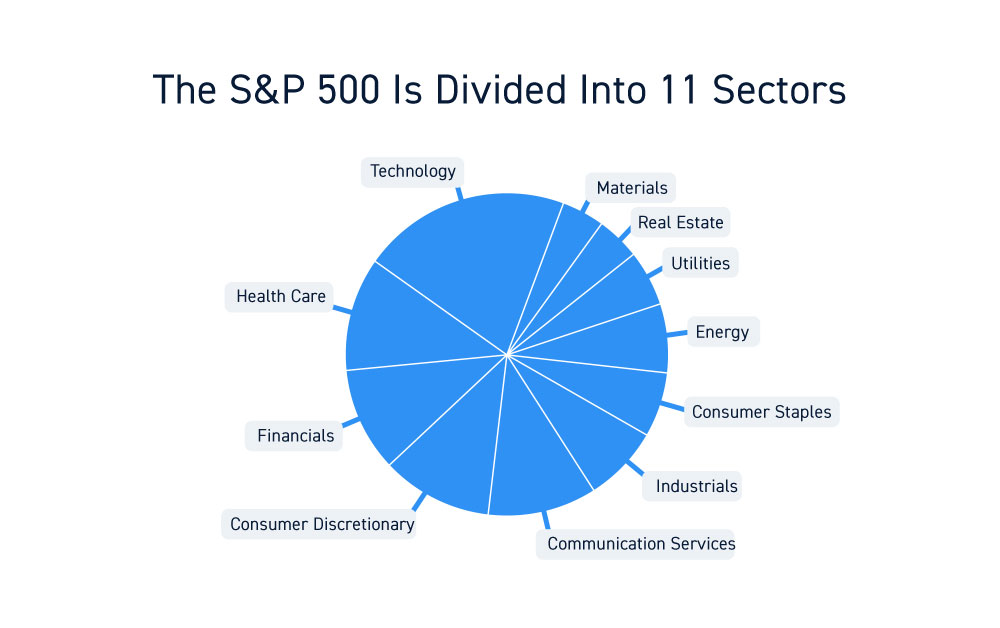
- Sector Representation: The committee also considers sector balance to ensure the index remains a true representation of the broader economy, avoiding over-concentration in any single industry.
These stringent requirements ensure that only the most established, financially sound, and influential companies earn a spot, reinforcing the index’s credibility as a benchmark for the large-cap segment.
The Composition and Weighting of the S&P 500
The S&P 500 is not an equally weighted index, meaning that each of the 500 companies does not contribute equally to the index’s movement. Its market-capitalization weighting scheme means that the largest companies exert a more significant pull, a crucial detail for understanding its performance.
A Diverse Portfolio of Leading Companies
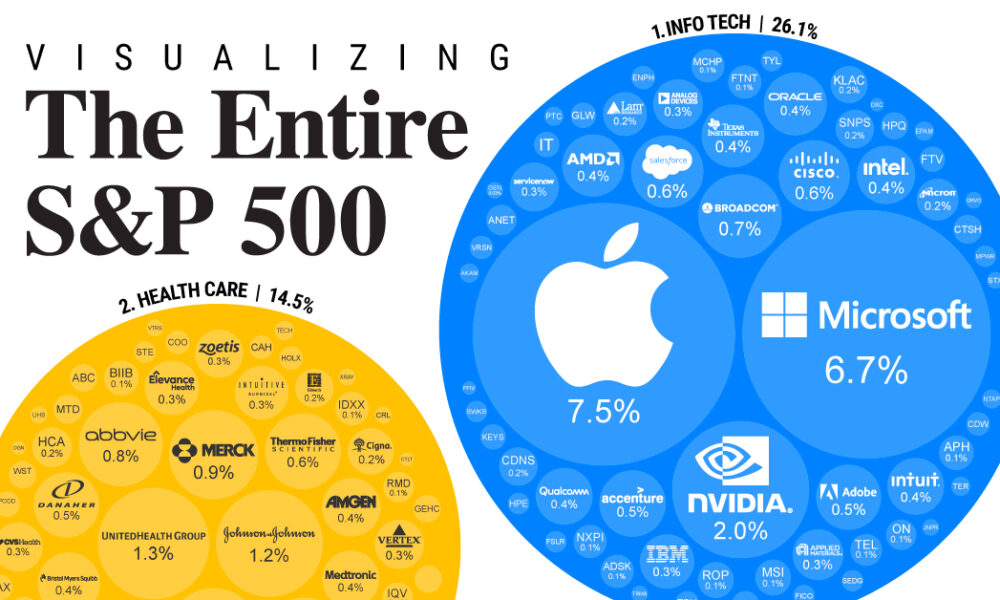
The 500 companies within the S&P 500 represent a comprehensive cross-section of the American economy, spanning virtually every major industry. From technology giants like Apple and Microsoft, which represent a substantial portion of the index’s weight, to financial institutions like JPMorgan Chase, healthcare behemoths such as Johnson & Johnson, consumer staples leaders like Procter & Gamble, and energy titans like ExxonMobil, the index provides exposure to a broad spectrum of sectors. This diversification across industries is a key strength, as it generally smooths out volatility that might be experienced from relying on a single sector. While certain sectors may dominate at different times (e.g., technology in recent decades), the overall composition strives for a balanced reflection of the U.S. economic landscape.
Market-Capitalization Weighting Explained
The S&P 500 is a “market-capitalization-weighted” index. This means that a company’s influence on the index’s value is proportional to its market capitalization (the total value of its outstanding shares). If a company has a market cap of $2 trillion, its stock price movement will have a far greater impact on the S&P 500’s overall performance than a company with a $20 billion market cap, even though both are part of the index.
This weighting methodology has both advantages and disadvantages. On the plus side, it naturally reflects the true scale and economic impact of larger companies, ensuring that the index is a better barometer of the market’s total value. It also tends to favor successful companies, as their growth drives up their market cap, increasing their weight in the index. However, a potential drawback is that it can lead to concentration risk, especially during periods when a few mega-cap companies or a single sector (like technology) experience rapid growth, making the index heavily reliant on their continued performance.
The Role of S&P Dow Jones Indices
The S&P 500 index is maintained and published by S&P Dow Jones Indices, a joint venture between S&P Global and CME Group. This entity is responsible for everything from selecting and deselecting companies, adjusting for corporate actions (like stock splits or mergers), and calculating the index’s value in real-time. Their rigorous, rules-based methodology ensures consistency, transparency, and integrity in the index’s construction and maintenance, which is vital for its credibility and widespread adoption as a benchmark. Their commitment to objectivity ensures that the S&P 500 remains a reliable and unbiased measure of market performance.
Why the S&P 500 Matters to Investors
For individual and institutional investors alike, the S&P 500 is more than just a number on a screen; it’s a fundamental tool that informs strategies, evaluates performance, and provides accessible investment avenues.
A Key Indicator of Market Health
News outlets, financial analysts, and economists frequently cite the S&P 500’s performance as a snapshot of the broader U.S. stock market and, by extension, the health of the American economy. A rising S&P 500 often correlates with investor optimism, economic growth, and corporate profitability, while a declining index can signal recessionary fears or market instability. Because of its diverse composition of leading companies, it is generally considered a more accurate and comprehensive measure of large-cap U.S. stock market performance than other, narrower indices. Its movements often dictate market sentiment and can influence consumer confidence and business investment decisions.
Benchmarking Investment Performance
One of the S&P 500’s most critical functions is its role as a benchmark. Professional money managers who oversee mutual funds, pension funds, or hedge funds are often measured by how well their portfolios perform relative to the S&P 500. If a fund manager’s portfolio returns 8% in a year while the S&P 500 returns 10%, their performance might be considered underwhelming, even if they generated a positive return. Conversely, “beating the S&P 500” is a widely recognized mark of superior investment skill. For individual investors, it provides a simple and accessible standard to evaluate their own portfolios. If your personal investment returns consistently lag the S&P 500, it might prompt a review of your strategy or investment choices.
Investing in the S&P 500: ETFs and Mutual Funds
While you cannot directly “buy” the S&P 500 itself, investors can easily gain exposure to its performance through various financial products. The most popular avenues are Exchange-Traded Funds (ETFs) and mutual funds that are designed to “track” the index.
- ETFs (Exchange-Traded Funds): These are investment funds that hold the same stocks in the same proportions as the S&P 500. They trade like individual stocks on an exchange throughout the day. Popular S&P 500 ETFs include SPY, IVV, and VOO. They offer low expense ratios, diversification, and liquidity, making them a favored choice for many investors seeking broad market exposure.
- Mutual Funds: Similar to ETFs, S&P 500 index mutual funds also aim to replicate the index’s performance. They are typically bought or sold once a day at the closing net asset value (NAV). Many large fund providers offer S&P 500 index mutual funds, providing another accessible way for investors to participate in the growth of these 500 companies.
These investment vehicles allow everyday investors to achieve instant diversification across 500 major U.S. companies with a single purchase, offering a cost-effective way to align their portfolios with the broader market.
Performance and Volatility: What to Expect
The S&P 500’s long history provides valuable insights into market behavior, demonstrating both impressive long-term growth and inevitable periods of volatility.
Historical Returns and Long-Term Growth
Over its multi-decade history, the S&P 500 has demonstrated a remarkable capacity for long-term growth. While past performance is never a guarantee of future results, the average annualized return of the S&P 500, including reinvested dividends, has historically been in the range of 10-12% per year. This powerful compounding effect over decades is a testament to the resilience and innovation of American corporations. This long-term trend underscores the importance of a patient, buy-and-hold investment strategy, as short-term market fluctuations tend to smooth out over extended periods. It’s this robust historical performance that often makes the S&P 500 a cornerstone of retirement planning and long-term wealth accumulation strategies.
Market Cycles and Economic Impact
The S&P 500 does not move in a straight line. It is subject to market cycles, which include periods of expansion (bull markets) and contraction (bear markets), often mirroring the broader economic cycle. Recessions, geopolitical events, technological disruptions, and changes in interest rates can all significantly impact the index’s performance. For instance, during the dot-com bubble burst of the early 2000s or the 2008 financial crisis, the S&P 500 experienced significant declines. Conversely, periods of robust economic growth and innovation, such as the 1990s or the post-2008 recovery, have led to sustained rallies. Understanding that these cycles are a normal part of investing in equities helps investors manage expectations and avoid panic selling during downturns.
Understanding Risk and Diversification
Investing in the S&P 500, while offering significant diversification compared to owning individual stocks, is not without risk. The value of index funds can still fluctuate, and investors can lose money, especially over shorter time horizons. However, the broad diversification across 500 companies and multiple sectors inherently reduces specific company risk. If one company performs poorly or even goes bankrupt, its impact on the overall index is mitigated by the performance of the other 499 companies. This level of diversification is one of the primary reasons the S&P 500 is often recommended as a core component of a well-balanced investment portfolio, especially for those seeking broad market exposure with managed risk.
Beyond the Basics: Advanced Insights for Savvy Investors
While its foundational principles are straightforward, the S&P 500 holds deeper nuances that can inform more sophisticated investment decisions and market analysis.
The “S&P 500 Effect” and Company Aspirations
Inclusion in the S&P 500 is often seen as a significant milestone for a company. This “S&P 500 effect” can sometimes lead to a temporary bump in a company’s stock price upon announcement of its addition to the index. This is partly due to the fact that index funds and ETFs tracking the S&P 500 are then required to purchase the stock, creating immediate demand. Furthermore, it confers a level of prestige and validates a company’s success and stability in the eyes of the market. Companies often aspire to reach the size and profitability required for S&P 500 inclusion, viewing it as a marker of their corporate journey and a testament to their established market position.
Criticisms and Limitations of the S&P 500
While highly valued, the S&P 500 is not without its criticisms and limitations. One frequent concern is its market-cap weighting, which can lead to significant concentration in a few mega-cap companies. For instance, at various points, the top 5-10 companies have accounted for a disproportionately large share of the index’s total weight, making its performance heavily dependent on these few dominant players. This can sometimes create a perception that the index doesn’t fully represent the “average” U.S. company. Additionally, while 500 companies is a substantial number, it still only represents a fraction of the thousands of publicly traded U.S. companies, largely excluding smaller, emerging businesses that are captured by other indices like the Russell 2000. It’s a large-cap index, and investors seeking exposure to mid-cap or small-cap companies need to look beyond the S&P 500.
Comparing the S&P 500 to Other Major Indices
The S&P 500 is often discussed alongside other prominent indices, each serving a distinct purpose:
- Dow Jones Industrial Average (DJIA): Tracks 30 large, well-known U.S. companies. It’s price-weighted, meaning higher-priced stocks have a greater impact, and is less diversified than the S&P 500.
- Nasdaq Composite: Heavily weighted towards technology and growth companies, listing over 3,000 stocks. It’s often seen as an indicator for the tech sector.
- Russell 2000: Tracks 2,000 smaller-cap U.S. companies, offering a benchmark for the small-cap segment of the market.
Understanding the S&P 500 in relation to these other indices allows investors to gain a more nuanced perspective of market performance, understanding which segments of the economy are thriving or lagging.
Conclusion
The S&P 500 is undeniably a cornerstone of modern finance, serving as a critical benchmark, an economic indicator, and an accessible investment vehicle. Its meticulous construction, broad diversification across leading U.S. companies, and robust historical performance make it an indispensable tool for understanding the dynamics of the American stock market. For both aspiring and experienced investors, grasping “what is the S&P 500” is fundamental to building informed strategies, evaluating investment opportunities, and navigating the often-complex world of personal finance and investing. While no investment is without risk, the S&P 500 offers a time-tested pathway to participate in the long-term growth and prosperity of the largest and most influential companies in the United States.
aViewFromTheCave is a participant in the Amazon Services LLC Associates Program, an affiliate advertising program designed to provide a means for sites to earn advertising fees by advertising and linking to Amazon.com. Amazon, the Amazon logo, AmazonSupply, and the AmazonSupply logo are trademarks of Amazon.com, Inc. or its affiliates. As an Amazon Associate we earn affiliate commissions from qualifying purchases.