
The S&P 500 is more than just a list of companies; it is arguably the most widely recognized and influential barometer of the U.S. stock market and, by extension, the broader American economy. For investors, financial analysts, and economists alike, understanding its composition and the mechanisms behind it is fundamental. This index represents 500 of the largest publicly traded companies in the United States, carefully selected to reflect the overall health and diversity of the market. However, its constituents are not static, and the criteria for inclusion are more nuanced than simply being “the largest.” Delving into the S&P 500 reveals a dynamic landscape of corporate giants, innovative disruptors, and the ever-shifting tides of economic progress and industrial evolution, all crucial knowledge for anyone navigating the financial world.
Understanding the S&P 500 Index
At its core, the S&P 500 Index is a market-capitalization-weighted index of 500 of the largest U.S. publicly traded companies. Established in 1957, it has evolved into the benchmark against which countless investment portfolios are measured, offering a robust representation of large-cap U.S. equities. Unlike simpler indices, its design reflects a sophisticated methodology intended to capture both breadth and influence within the American economy.
What the S&P 500 Represents
The S&P 500 is not merely a compilation of the 500 companies with the highest market capitalization. Instead, it aims to be a leading indicator of U.S. equities and a proxy for the overall health of the U.S. economy. Each company’s weight in the index is proportional to its market capitalization, meaning larger companies have a greater impact on the index’s performance. This market-cap weighting ensures that the index truly reflects the collective value and movement of these influential corporations, making it a powerful tool for assessing market trends and investor sentiment. It provides a diversified exposure across various sectors, from technology and finance to healthcare and consumer goods, offering a comprehensive snapshot of corporate America.
Key Inclusion Criteria
Inclusion in the S&P 500 is a mark of significant corporate achievement and financial stability, but it’s subject to stringent criteria established by S&P Dow Jones Indices. While the exact thresholds can adjust, primary considerations include:
- U.S. Domicile: The company must be based in the United States.
- Market Capitalization: A minimum unadjusted market cap threshold (which fluctuates but is typically in the tens of billions of dollars) must be met. This ensures only large-cap companies are considered.
- Liquidity: The company’s shares must be highly liquid, meaning they are frequently traded, ensuring that the index is easily replicable for investors.
- Public Float: A significant portion (at least 50%) of the company’s shares must be available to the public for trading, excluding restricted shares held by insiders or governments.
- Profitability: The company must have positive reported earnings for the most recent quarter, and the sum of its earnings over the previous four consecutive quarters must also be positive. This criterion ensures financial health and operational success.
- GICS Classification: Companies are classified according to the Global Industry Classification Standard (GICS) to ensure proper sector representation and avoid overconcentration in specific areas.
- Listing: Must be listed on a major U.S. exchange (NYSE or NASDAQ).
These criteria are meticulously applied to ensure the index remains relevant, reflective, and investable for a broad range of financial products.
The Selection Process
The final decision for a company’s inclusion or exclusion rests with a specialized committee at S&P Dow Jones Indices. This committee meets regularly, but also has the flexibility to make changes as needed. Their decisions are based on the objective criteria outlined above, alongside qualitative factors that assess a company’s industry leadership, economic representation, and whether its inclusion would improve the index’s overall balance and representativeness. The committee aims to minimize turnover while ensuring the index accurately reflects the current large-cap U.S. equity market. This active oversight is what distinguishes the S&P 500 from a purely quantitative ranking of the largest companies, adding a layer of expert judgment that maintains its integrity and relevance.
Why S&P 500 Membership Matters for Investors and Companies
Membership in the S&P 500 is a coveted status, carrying substantial implications for both the companies included and the broader investment community. For businesses, it signifies a coming of age, a recognition of their market dominance and financial robustness. For investors, it offers a powerful tool for benchmarking, diversification, and strategic allocation.
A Premier Market Benchmark
The S&P 500 serves as the most widely used benchmark for large-cap U.S. equities, making it indispensable for evaluating investment performance. Professional fund managers, individual investors, and financial advisors constantly compare their portfolios’ returns against the S&P 500’s performance to gauge success. If an active fund manager consistently underperforms the S&P 500, it raises questions about their investment strategy, especially given the lower fees associated with simply tracking the index. Beyond individual portfolios, the S&P 500’s movements are often cited in economic news as a key indicator of overall market sentiment and the health of the U.S. economy. A rising S&P 500 often correlates with economic optimism, while a significant downturn can signal recessionary fears or broader market instability.
Investment Vehicle for Diversification
For investors seeking broad exposure to the U.S. stock market with inherent diversification, the S&P 500 is an unparalleled choice. Instead of attempting to pick individual winning stocks, investors can gain exposure to all 500 companies within the index through various investment vehicles, most notably Exchange Traded Funds (ETFs) and index mutual funds. These products passively track the performance of the S&P 500, providing instant diversification across hundreds of companies and multiple sectors. This approach minimizes the risk associated with a single stock’s poor performance, as the impact of any one company is diluted across the entire index. For many, investing in an S&P 500 index fund forms the cornerstone of a long-term investment strategy, offering a balanced blend of growth potential and risk mitigation.
Corporate Prestige and Investment Appeal
For companies, inclusion in the S&P 500 is a significant milestone that bestows considerable prestige. It signals to the market that a company is well-established, financially sound, and a leader in its industry. This heightened profile can lead to increased visibility among institutional investors, who often have mandates to invest primarily in large-cap companies or those included in major indices. When a company is added to the S&P 500, it typically experiences an influx of buying pressure from index funds and ETFs that are required to hold its stock to maintain their tracking accuracy. This “index effect” can provide a temporary boost to the company’s stock price and liquidity. Furthermore, the enhanced reputation can facilitate easier access to capital markets, improve credit ratings, and even aid in talent acquisition, as prospective employees may view an S&P 500 company as more stable and reputable.
The Evolving Landscape: Key Sectors and Influential Players
The S&P 500 is a living index, constantly reflecting the transformations within the U.S. economy. While the names on the list change, so too does the relative importance and dominance of different sectors, driven by technological innovation, consumer trends, and geopolitical shifts.
Sectoral Diversity and Shifts
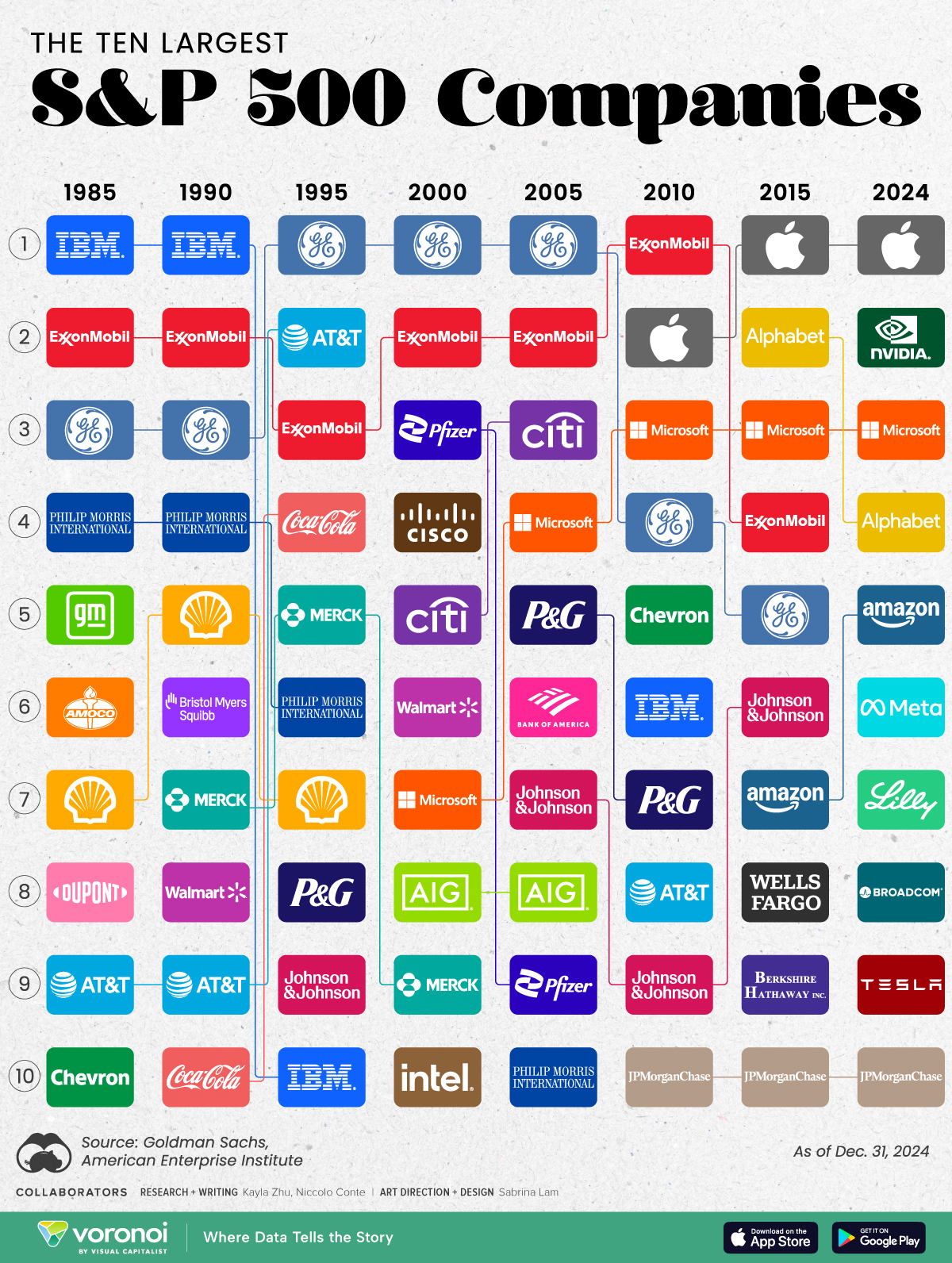
The S&P 500 is meticulously constructed to offer a balanced representation across eleven GICS sectors, ensuring it accurately mirrors the broader economy. Historically, sectors like Industrials, Financials, and Energy held significant sway. However, the last few decades have witnessed a profound shift, with Technology emerging as the undisputed dominant sector. Companies like Apple, Microsoft, and NVIDIA now command a substantial portion of the index’s market capitalization, reflecting the digital revolution’s pervasive impact. Other major sectors include Healthcare (e.g., Johnson & Johnson, UnitedHealth Group), Financials (e.g., JPMorgan Chase, Bank of America), and Consumer Discretionary (e.g., Amazon, Tesla). The relative weights of these sectors are not static; they fluctuate with market performance and economic cycles, underscoring the dynamic nature of the S&P 500 as a reflection of economic power.
Leading Companies by Market Capitalization

Given its market-capitalization-weighted methodology, a handful of extremely large companies exert an outsized influence on the S&P 500’s daily performance. The top five to ten companies by market cap often account for a significant percentage of the index’s total value. For years, technology giants such as Apple (AAPL), Microsoft (MSFT), Amazon (AMZN), Alphabet (GOOGL), and Meta Platforms (META) have consistently ranked among the most influential constituents. Other prominent names frequently include NVIDIA (NVDA) in semiconductors, Tesla (TSLA) in electric vehicles and clean energy, and Berkshire Hathaway (BRK.B), representing a diverse conglomerate. It’s important to remember that this list is not fixed; market performance, mergers, and economic shifts can cause companies to rise or fall in the rankings, altering their weight and impact on the overall index.
The Impact of Disruptive Innovation
Disruptive innovation plays a crucial role in shaping the S&P 500’s composition. Companies that introduce groundbreaking technologies, revolutionize business models, or fundamentally change consumer behavior have the potential to grow rapidly and eventually qualify for inclusion. The rise of companies like Netflix, Tesla, and more recently, NVIDIA, exemplifies how innovation can propel new players into the ranks of the S&P 500, often displacing older, less adaptive incumbents. These innovative companies not only add new sectors or sub-industries to the index but also contribute significantly to overall market growth and dynamism. Their presence highlights the index’s ability to adapt and reflect the leading edge of economic activity, ensuring it remains relevant in an ever-evolving global market.
The Dynamic Nature of Index Membership
Far from being a static roster, the S&P 500 is a fluid list of companies, constantly undergoing revisions to maintain its relevance and accuracy as a market barometer. This dynamism is crucial for ensuring the index continues to reflect the current state of the U.S. economy and the dominant forces within its equity markets.
Additions, Deletions, and Rebalancing
Companies are regularly added to and deleted from the S&P 500 for a variety of reasons. Additions typically occur when a company meets the eligibility criteria, often due to significant growth in market capitalization and sustained profitability, or sometimes following an Initial Public Offering (IPO) of a particularly large and impactful company. Conversely, deletions can result from mergers and acquisitions, bankruptcies, or a sustained failure to meet the index’s eligibility criteria, such as insufficient market cap or declining profitability.
The S&P Dow Jones Indices committee oversees these changes, announcing them periodically. While these events can cause short-term trading volatility as index funds adjust their portfolios, they are a necessary part of keeping the S&P 500 current. Beyond outright additions and deletions, the index undergoes periodic rebalancing. This process ensures that the market-capitalization weighting of each company remains accurate, adjusting for fluctuations in stock prices and share counts, without changing the constituent companies themselves.
Reflecting Economic Change
The evolving composition of the S&P 500 offers a compelling historical narrative of the U.S. economy. Over the decades, industries that once dominated the index have seen their influence wane, while new sectors have risen to prominence. For example, in the mid-20th century, manufacturing, energy, and retail giants held significant weight. The late 20th and early 21st centuries saw the meteoric rise of technology and information companies, pushing sectors like industrials and materials into relatively smaller roles within the index.
This shift mirrors broader economic trends, from the industrial revolution to the information age, and now into an era characterized by digital transformation, artificial intelligence, and biotechnology. The index’s adaptability ensures it remains a powerful tool for understanding which industries are driving economic growth and innovation at any given time, making it a valuable resource for economists and policymakers, not just investors.
Implications for Index Funds
The dynamic nature of the S&P 500 has direct and significant implications for the vast ecosystem of index funds and ETFs that track it. When a company is added to the S&P 500, these funds must purchase its stock to accurately replicate the index’s holdings. Conversely, when a company is deleted, index funds must sell their shares. These transactions, often executed in large volumes, can influence the stock prices of the affected companies, especially around the announcement and effective dates of the changes.
While this active rebalancing might seem contrary to the “passive” nature of index investing, it is a crucial operational aspect that ensures these funds maintain their objective of mirroring the S&P 500’s performance as closely as possible. For investors in these funds, it means their portfolio inherently stays updated with the leading companies in the U.S. market, without requiring them to actively manage individual stock selections.
Investing in the S&P 500: Strategies and Considerations
For many investors, gaining exposure to the S&P 500 is a cornerstone of their long-term financial strategy. It offers a practical and efficient way to participate in the growth of the U.S. economy, but like any investment, it comes with its own set of strategies and considerations.
Passive Investing with ETFs and Index Funds
The most popular and accessible way for individual investors to gain exposure to the S&P 500 is through passive investing via Exchange Traded Funds (ETFs) and index mutual funds. These financial products are designed to meticulously track the performance of the S&P 500, holding all 500 constituent stocks in the same proportions as the index.
- ETFs: Examples include the SPDR S&P 500 ETF Trust (SPY), Vanguard S&P 500 ETF (VOO), and iShares Core S&P 500 (IVV). ETFs trade like individual stocks on exchanges throughout the day, offering flexibility.
- Index Mutual Funds: Many fund providers offer S&P 500 index mutual funds, which are suitable for regular, automated contributions, particularly within retirement accounts like 401(k)s and IRAs.
The primary advantages of these vehicles are their low expense ratios, broad diversification, and the historical tendency of the S&P 500 to deliver solid long-term returns. They allow investors to “own a piece of America’s best companies” without the need for extensive research or active stock picking.
Long-Term Growth Potential and Diversification
Historically, the S&P 500 has demonstrated robust long-term growth, averaging returns that have significantly outpaced inflation over extended periods. This makes it an attractive option for investors with a long-term horizon, such as those saving for retirement or a major life goal. The inherent diversification of the S&P 500 is another major benefit. By investing in 500 companies across various sectors, investors significantly reduce the “single stock risk” – the risk that one company’s poor performance could devastate their portfolio. Even if a few companies struggle or exit the index, their impact is mitigated by the performance of the other hundreds of companies. This broad exposure provides a more stable and predictable return profile compared to a highly concentrated portfolio.

Risks and Market Fluctuations
While the S&P 500 offers substantial benefits, it is not without risks. As an equity index, it is inherently subject to market volatility. Economic downturns, geopolitical events, interest rate changes, and other macro factors can cause the entire index to decline, sometimes sharply. Investors in S&P 500 funds must be prepared for these fluctuations and understand that short-term losses are a normal part of investing in the stock market.
Furthermore, while diversified, the S&P 500 is predominantly concentrated in large-cap U.S. equities, meaning it may not capture the full growth potential of smaller, emerging companies or offer extensive international diversification. Investors seeking these exposures might need to supplement their S&P 500 holdings with other asset classes or regional investments. Nonetheless, for a core U.S. equity holding, the S&P 500 remains a benchmark of choice, requiring investors to have a patient, long-term perspective to navigate its cyclical ups and downs effectively.
The S&P 500 stands as a foundational pillar of the financial world, offering both a reliable barometer of economic health and an accessible pathway to diversified investment. Its constantly evolving roster of 500 leading U.S. companies ensures it remains a dynamic and relevant indicator of market trends and corporate prowess. For anyone navigating the complexities of finance, a deep understanding of what companies are in the S&P 500, how they are selected, and how to engage with the index is an indispensable tool for informed decision-making and long-term financial success.
aViewFromTheCave is a participant in the Amazon Services LLC Associates Program, an affiliate advertising program designed to provide a means for sites to earn advertising fees by advertising and linking to Amazon.com. Amazon, the Amazon logo, AmazonSupply, and the AmazonSupply logo are trademarks of Amazon.com, Inc. or its affiliates. As an Amazon Associate we earn affiliate commissions from qualifying purchases.