
The S&P 500 is more than just a list of companies; it’s a dynamic benchmark, a crucial economic indicator, and a cornerstone of global investing. For many, “the market” often refers implicitly to the performance of this index, which tracks 500 of the largest publicly traded companies in the United States. Far from being a static roster, the S&P 500 represents the ebb and flow of American enterprise, reflecting the nation’s economic health, innovation, and shifting industry landscapes. Understanding who these companies are, how they are selected, and why their collective performance matters is fundamental for investors, economists, and anyone seeking to grasp the pulse of the U.S. financial market.
Understanding the S&P 500 Index: A Benchmark of American Economic Power
At its core, the S&P 500, or the Standard & Poor’s 500, is a market-capitalization-weighted index that tracks the performance of 500 of the largest U.S. public companies. Launched in 1957, it has since become the most widely followed equity index globally, largely because it offers a broad and comprehensive view of the U.S. stock market’s large-cap segment. Unlike simple numerical lists, the S&P 500 is a sophisticated construct designed to represent approximately 80% of the total market capitalization of publicly traded U.S. equities. This makes it an invaluable tool for gauging the overall health and direction of the American economy.
More Than Just a Number: The Criteria for Inclusion
Being part of the S&P 500 is not merely about being large; it signifies a company’s robust financial health, liquidity, and public stature. The selection process is overseen by a committee at S&P Dow Jones Indices, which employs a set of stringent criteria, not simply an automated ranking by market cap. Key requirements for inclusion typically include:
- U.S. Company: The company must be domiciled in the United States.
- Market Capitalization: A minimum market cap threshold, which is periodically adjusted. As of recent times, this has hovered around $14.5 billion or more.
- Liquidity: The stock must be highly liquid, meaning it can be easily bought and sold without significantly impacting its price. This is measured by trading volume and the number of publicly available shares.
- Public Float: At least 50% of the company’s shares must be available to the public (not closely held by insiders or government).
- Profitability: The company must have positive reported earnings in the most recent quarter, and its aggregate earnings over the past four consecutive quarters must also be positive. This ensures that only financially sound companies are included.
- Sector Representation: While not a strict quota, the committee aims for sector balance to ensure the index remains a true reflection of the broader economy. Companies should also represent major industries within the U.S. economy.
These criteria ensure that the S&P 500 isn’t just a collection of big names but a carefully curated group of financially sound and influential enterprises that collectively represent the dynamism and diversity of the U.S. corporate landscape.
Market Capitalization and Sector Representation
The S&P 500 is market-capitalization-weighted. This means that companies with larger market caps have a greater influence on the index’s performance. For example, if Apple’s stock price moves by 1%, it will have a much more significant impact on the S&P 500’s overall value than if a smaller component company experiences the same percentage move. This weighting methodology naturally gives prominence to the largest and most influential companies, often reflecting current market trends and investor sentiment towards those titans.
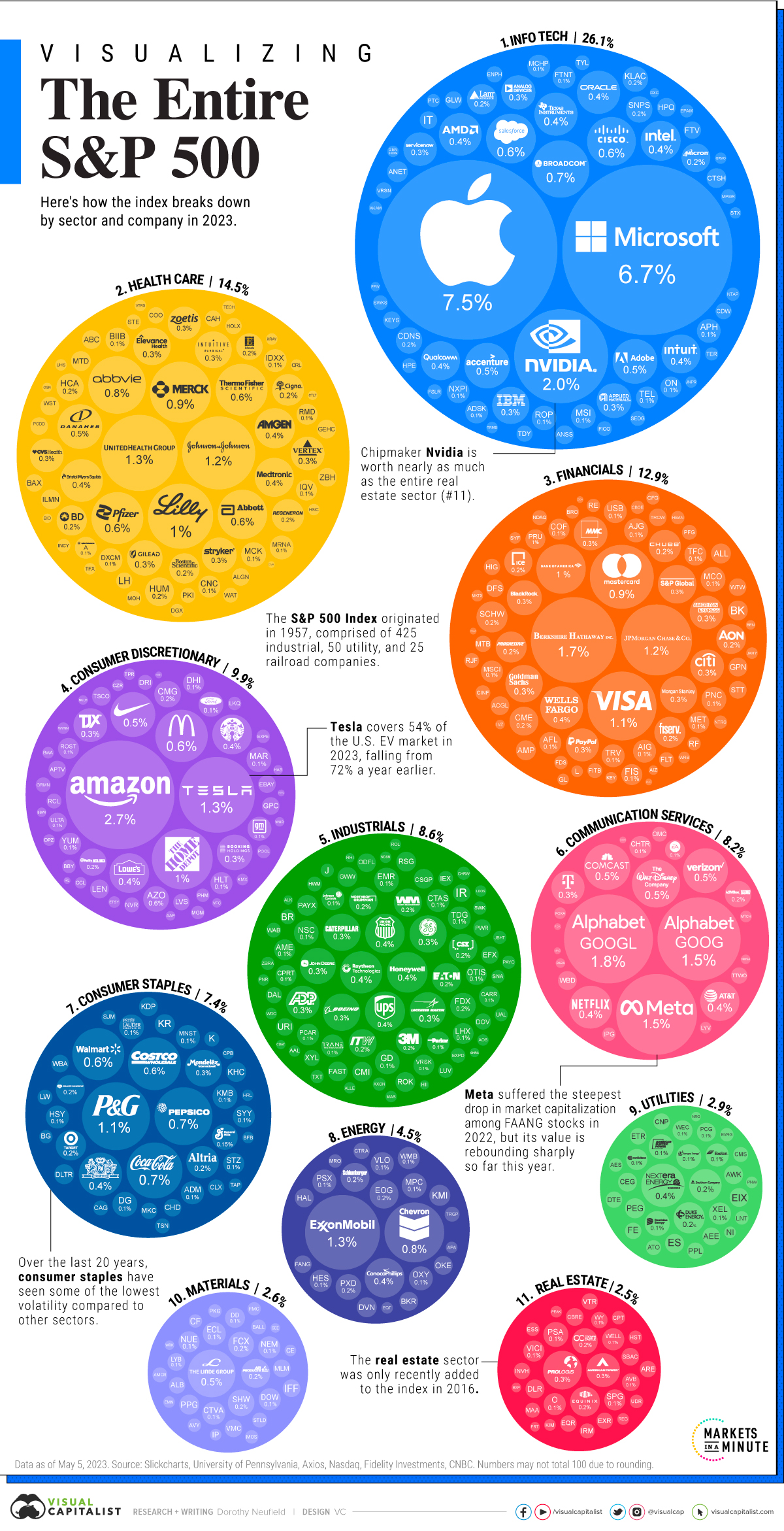
Furthermore, the index is segmented into 11 Global Industry Classification Standard (GICS) sectors: Communication Services, Consumer Discretionary, Consumer Staples, Energy, Financials, Health Care, Industrials, Information Technology, Materials, Real Estate, and Utilities. This sector diversification ensures that the index reflects a wide array of economic activities, preventing over-reliance on any single industry and providing a holistic view of the U.S. economy. The weight of each sector fluctuates over time, reflecting economic shifts and technological advancements. For instance, the Information Technology sector has seen its weighting soar over the past decades, reflecting the digital transformation of the global economy.
Who Are They? A Glimpse at the Giants and Diversification
While listing all 500 companies is beyond the scope of a single article (and the list frequently changes), understanding the types of companies and their representation offers crucial insights. The S&P 500 encompasses everything from tech giants to traditional manufacturers, healthcare innovators to financial institutions, and consumer staples producers to utility providers.
Dominant Sectors and Their Weightings
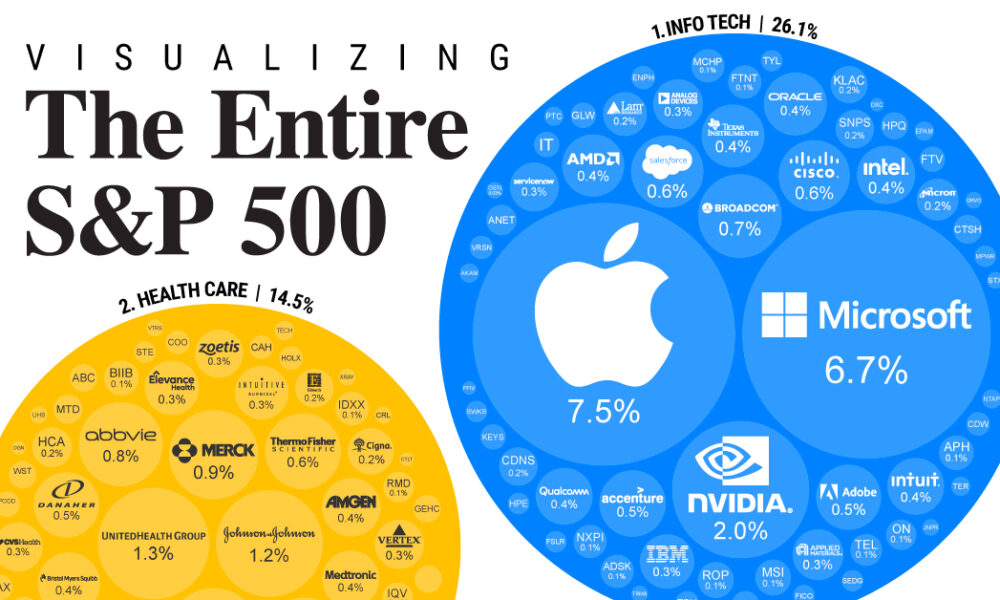
Over time, certain sectors tend to dominate the S&P 500, reflecting periods of economic growth and innovation. In recent years, Information Technology has held the largest weighting, driven by companies like Apple, Microsoft, NVIDIA, and Alphabet (Google). Following closely are sectors like Communication Services (e.g., Meta Platforms, Netflix, Verizon), Financials (e.g., JPMorgan Chase, Bank of America, Visa), and Healthcare (e.g., Johnson & Johnson, UnitedHealth Group, Eli Lilly).
These weightings are not static. Economic cycles, technological breakthroughs, and shifts in consumer behavior continuously reshape the index’s composition. For example, the Energy sector’s prominence can ebb and flow with oil prices, while Consumer Discretionary (e.g., Amazon, Tesla, Home Depot) thrives during periods of strong consumer spending. This dynamic balance ensures the index remains relevant and representative.
The Titans at the Top: Mega-Cap Influence
A striking feature of the S&P 500 is the significant influence of its largest components, often referred to as “mega-cap” companies. The top 10 or 20 companies by market capitalization can collectively account for a substantial percentage of the index’s total value, meaning their performance heavily dictates the overall direction of the S&P 500.
These companies are typically household names and global leaders in their respective industries:
- Technology: Apple, Microsoft, Alphabet (Google), Amazon, NVIDIA, Meta Platforms.
- Healthcare: Johnson & Johnson, Eli Lilly, UnitedHealth Group.
- Financials: Berkshire Hathaway, JPMorgan Chase.
Their sheer size and global reach mean that their financial results, product innovations, and strategic decisions have ripple effects not only across the market but also on the broader economy. Changes in their stock prices can significantly move the entire S&P 500 index, underscoring the importance of tracking these bellwethers.
Dynamic Composition: Companies Entering and Exiting
The S&P 500 is not a set list; it is constantly evolving. Companies are added and removed regularly due to various factors:
- Mergers and Acquisitions: When an S&P 500 company is acquired, it’s typically removed, and another company is added to maintain the 500-count.
- Bankruptcy or Delisting: Companies facing severe financial distress or delisted from major exchanges are removed.
- Failure to Meet Criteria: Companies that no longer meet the liquidity, profitability, or market cap requirements can be replaced.
- Growth of Smaller Companies: As promising mid-cap companies grow and meet the S&P 500 criteria, they can be added, replacing a company deemed less representative or financially sound.
This dynamic nature ensures the index remains a relevant and accurate reflection of the current U.S. large-cap market. For instance, companies like Tesla and NVIDIA, once smaller players, have ascended to become dominant forces within the index, reflecting profound shifts in technology and consumer preferences.
The Investment Significance of the S&P 500
For investors, the S&P 500 is much more than an economic indicator; it’s a powerful tool for portfolio construction, benchmarking, and wealth accumulation. Its broad diversification and historical performance make it a compelling investment avenue for many.
Benchmarking Performance for Funds and Portfolios
One of the primary uses of the S&P 500 is as a benchmark. Professional fund managers often measure their performance against the S&P 500. If an active fund manager claims to beat “the market,” they typically mean outperforming the S&P 500. Similarly, individual investors can use the index to assess how their own stock portfolios are performing relative to a broad market average. Consistently beating the S&P 500 is a challenging feat, and many investors find that simply matching its performance over the long term is a highly effective strategy.
Investing in the S&P 500: ETFs, Index Funds, and Direct Ownership
Investors cannot directly buy “the S&P 500.” Instead, they invest in financial products designed to track the index.
- S&P 500 Index Funds: These are mutual funds that aim to replicate the performance of the S&P 500 by holding all (or a representative sample) of the index’s constituent stocks in the same proportion as the index itself. They offer broad diversification and typically have lower expense ratios than actively managed funds.
- S&P 500 Exchange-Traded Funds (ETFs): Similar to index funds, ETFs track the S&P 500 but trade like individual stocks on an exchange throughout the day. Popular S&P 500 ETFs include SPY (SPDR S&P 500 ETF Trust), IVV (iShares Core S&P 500), and VOO (Vanguard S&P 500 ETF). They provide liquidity and cost-efficiency, making them a favorite for both institutional and retail investors.
- Direct Ownership: While less practical for achieving true S&P 500 diversification due to the sheer number of companies, an investor could theoretically purchase shares in all 500 constituent companies in their correct weightings. This is cumbersome and expensive to manage, which is why index funds and ETFs are preferred.
These investment vehicles allow individuals to gain exposure to the growth of 500 leading U.S. companies with a single investment, simplifying diversification and aligning their portfolios with the broader market’s trajectory.
Risk, Return, and Diversification Benefits
Investing in the S&P 500 offers significant diversification benefits. By holding shares in 500 companies across various sectors, investors mitigate the specific risk associated with any single company or industry. A downturn in one company or sector is likely to be offset by gains elsewhere within the broad index.
Historically, the S&P 500 has delivered robust long-term returns, averaging around 10-12% annually, including dividends, over many decades. While past performance is no guarantee of future results, this track record makes it an attractive core holding for many long-term investors aiming for capital appreciation and wealth building. However, it’s crucial to remember that index investing is not risk-free; market corrections and bear markets can lead to significant temporary declines. The diversification within the S&P 500 helps smooth out volatility compared to investing in individual stocks but does not eliminate market risk.
Beyond the List: Economic Impact and Future Outlook
The S&P 500 companies collectively represent a significant portion of the U.S. economy’s output, employment, and innovation. Their health and performance have wide-ranging implications.
Corporate Performance and Consumer Confidence
The combined earnings and revenue of S&P 500 companies serve as a powerful gauge of corporate America’s financial health. Strong corporate performance often correlates with higher employment rates, increased consumer spending, and overall economic growth. Conversely, declining profits or outlooks can signal potential economic slowdowns. Investor and consumer confidence are often closely tied to the perceived stability and growth trajectory of these leading companies. When S&P 500 companies are thriving, it often translates into a more optimistic economic outlook for the general public.
Innovation, Disruption, and Market Evolution
The S&P 500 is a reflection of ongoing innovation and disruption. Companies that consistently innovate and adapt to changing market demands are more likely to thrive and maintain their position within the index. Industries that were once dominant can wane, while new sectors emerge. For example, the rise of technology and e-commerce companies has significantly reshaped the index, showcasing the dynamic nature of capitalism. Future additions to the S&P 500 are likely to come from areas of cutting-edge technology, renewable energy, biotechnology, and other emerging fields that are currently experiencing rapid growth and transformation.

Global Factors and Their Influence
While the S&P 500 consists of U.S. companies, many of its constituents are multinational corporations with significant global operations and revenue streams. This means their performance can be heavily influenced by international economic conditions, geopolitical events, trade policies, and currency fluctuations. A global economic slowdown, for instance, can impact the earnings of S&P 500 companies reliant on international sales, thereby affecting the index’s overall performance. Understanding the global interconnectedness of these companies is crucial for a comprehensive view of the S&P 500’s trajectory.
In conclusion, the 500 companies in the S&P 500 are not just a static collection but a carefully selected, dynamically changing group of America’s most prominent and financially sound public corporations. They serve as a vital barometer for the U.S. economy, a popular benchmark for investors, and a diversified gateway to participating in the growth of leading American enterprises. For anyone interested in the financial markets, understanding the S&P 500 and its components is an indispensable part of financial literacy.
aViewFromTheCave is a participant in the Amazon Services LLC Associates Program, an affiliate advertising program designed to provide a means for sites to earn advertising fees by advertising and linking to Amazon.com. Amazon, the Amazon logo, AmazonSupply, and the AmazonSupply logo are trademarks of Amazon.com, Inc. or its affiliates. As an Amazon Associate we earn affiliate commissions from qualifying purchases.