
In an increasingly digitized world, the pursuit of financial independence often leads individuals to explore avenues for generating income that doesn’t demand constant, active engagement. This concept, known as passive income, represents the holy grail for many aspiring entrepreneurs and financial planners alike. While no income stream is entirely “hands-off,” the goal is to set up systems that generate revenue with minimal ongoing effort after an initial investment of time, money, or both. Among the myriad platforms available, Amazon stands out as a colossal marketplace offering unparalleled opportunities for creating and scaling passive income streams.

Amazon, a global e-commerce and technology behemoth, boasts hundreds of millions of active customers and a sophisticated logistical infrastructure. This vast ecosystem provides a fertile ground for individuals to plug into existing demand and leverage powerful tools to sell products, promote services, and earn royalties. This article delves into various strategies to tap into Amazon’s potential, transforming initial efforts into sustainable, recurring income streams that contribute significantly to personal wealth accumulation.
Demystifying Passive Income and Amazon’s Role
Before diving into specific methods, it’s crucial to understand what truly constitutes passive income in the context of a dynamic platform like Amazon and why the marketplace is uniquely positioned to facilitate it.
What Truly Constitutes Passive Income?
The term “passive income” is often misunderstood. It doesn’t mean earning money without doing anything at all. Rather, it implies building an asset or system that continues to generate revenue with significantly reduced active involvement once it’s established. Think of it as planting a tree: you invest time and effort to plant it, water it, and nurture it initially, but once it matures, it continues to bear fruit with minimal ongoing care. On Amazon, this “tree” could be a published book, a designed t-shirt, a private-label product listed for sale, or a well-curated affiliate content site. The initial heavy lifting involves research, creation, setup, and marketing, but the subsequent sales or commissions can occur autonomously.
The Amazon Advantage: Scale, Trust, and Infrastructure
Amazon’s sheer scale is its primary advantage. With a global reach and an established customer base that trusts the platform, sellers and creators immediately gain access to an audience that would be impossible to cultivate independently without significant investment. Furthermore, Amazon offers robust infrastructure services like Fulfillment by Amazon (FBA), which handles warehousing, shipping, customer service, and returns for physical products, and Kindle Direct Publishing (KDP), which manages the distribution and royalties for digital books. These services effectively automate significant portions of the selling process, allowing entrepreneurs to focus on creation and marketing rather than logistics, thereby making income generation more passive. The brand recognition and operational efficiency Amazon provides are unparalleled, lowering the barrier to entry for many aspiring passive income earners.
Setting Realistic Expectations for Amazon Passive Income
While the allure of passive income is strong, it’s vital to set realistic expectations. Success on Amazon is rarely overnight. It requires dedication, strategic planning, continuous learning, and often, an initial financial investment. Competition is fierce, and Amazon’s algorithms and policies are constantly evolving. Expect to invest significant time upfront in product development, market research, listing optimization, and initial marketing. Over time, as your products gain traction and your systems become refined, the income stream can indeed become more passive, freeing up your time for other ventures or leisure. Patience and persistence are key virtues in this endeavor.
Digital Pathways to Passive Earnings on Amazon
Amazon offers several powerful avenues for generating passive income through digital products, which often have low overhead and high-profit margins once created.
Kindle Direct Publishing (KDP): Crafting Your Literary Legacy
Kindle Direct Publishing (KDP) allows authors to self-publish ebooks and paperback books for free, giving them access to Amazon’s vast readership. This is a classic passive income model. Once a book is written, edited, designed, and published, it can continue to generate royalties for years with minimal further effort.
- Ebooks: The most common form, offering global distribution and easy consumption.
- Low-Content Books: Journals, planners, notebooks, logbooks – these require less writing and more design, appealing to a different niche within KDP.
- Audiobooks (via ACX): Authors can also convert their books into audio format through ACX (Audiobook Creation Exchange), reaching an even broader audience and generating additional royalties. The upfront investment is in creation (writing, narration, production), but the sales are passive thereafter. Success hinges on writing quality content, effective keyword research, compelling cover design, and smart marketing.
Merch on Demand: Designing for Profit
Amazon Merch on Demand is a print-on-demand service that allows creators to upload designs for various products like T-shirts, hoodies, pop sockets, and phone cases. Amazon handles the printing, shipping, and customer service. Once your design is approved and listed, every sale generates a royalty for you.
- Design Focus: This model thrives on creativity and understanding design trends. Niche-specific designs often perform best.
- No Inventory Risk: Since items are only printed when sold, there’s no upfront inventory cost or risk, making it an incredibly accessible passive income stream for designers or those with an eye for what sells. The initial work involves design creation and listing optimization; the rest is handled by Amazon.
Amazon’s Affiliate Programs: The Associates and Influencer Networks
Affiliate marketing through Amazon Associates is a widely popular passive income method. You earn a commission by recommending products sold on Amazon.
- Amazon Associates: You sign up for the program, get special links for products, and then share those links on your website, blog, social media, or YouTube channel. When someone clicks your link and makes a purchase on Amazon (even if it’s not the exact product you linked to, as long as it’s within 24 hours), you earn a commission. The “passive” aspect comes from creating evergreen content that continually drives traffic and clicks over time.
- Amazon Influencer Program: This is an extension of Amazon Associates, tailored for social media influencers. It allows influencers to create their own Amazon storefront, curating product recommendations with videos and photos. It offers similar commission rates but leverages the influencer’s existing audience and platform directly on Amazon. The content (reviews, recommendations) serves as the passive asset.
Physical Products: Automating Sales with Amazon’s Ecosystem
For those interested in physical goods, Amazon provides robust solutions to automate much of the sales process, allowing for largely passive income generation.
Fulfillment by Amazon (FBA): Private Labeling for Scalability
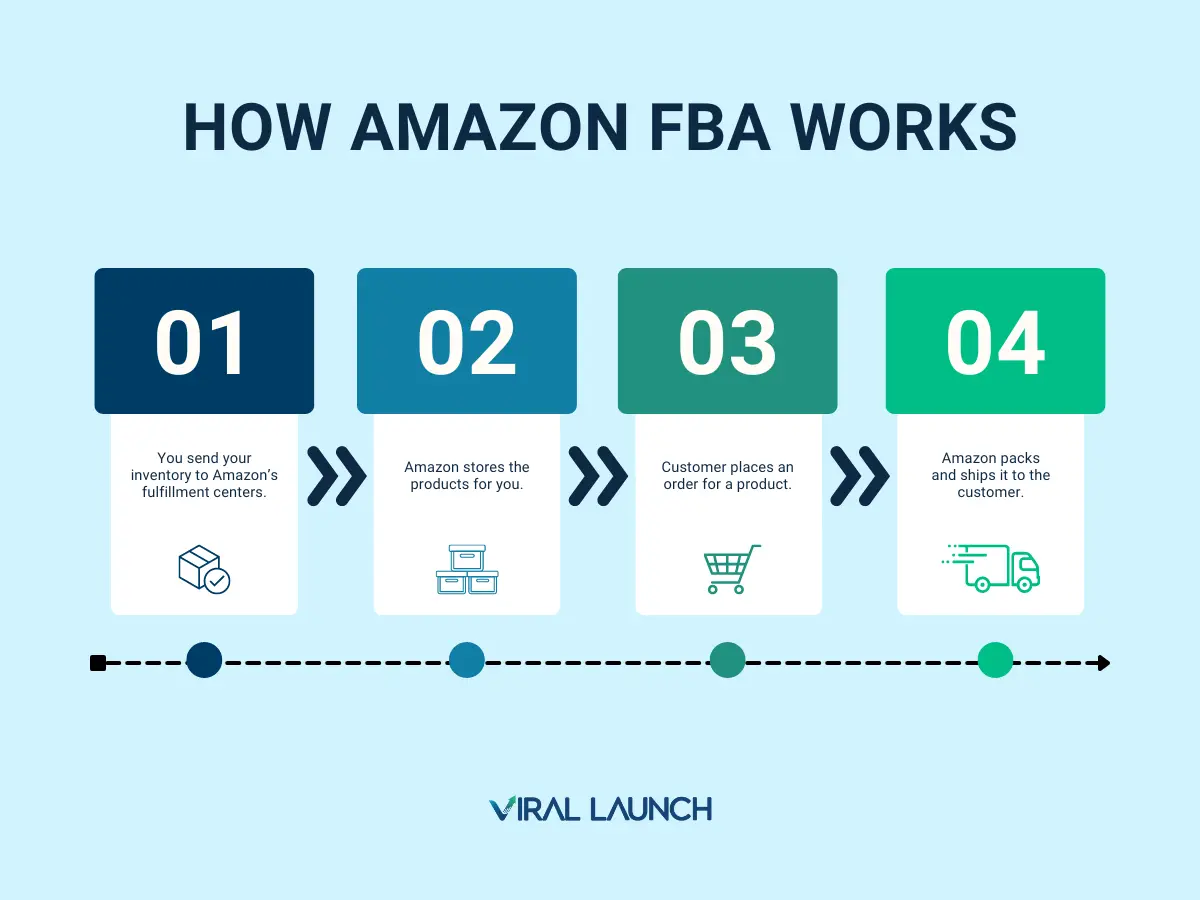
Fulfillment by Amazon (FBA) is arguably one of the most powerful tools Amazon offers for passive income. With FBA, sellers send their products to Amazon’s warehouses, and Amazon handles storage, picking, packing, shipping, customer service, and returns.
- Private Labeling: This involves sourcing generic products, branding them with your own logo and packaging, and selling them exclusively under your brand name. The upfront work includes extensive product research, sourcing from manufacturers (often overseas), creating a brand identity, and launching the product.
- Benefits of FBA: Once your product is launched and gaining traction, sales can become highly passive. You primarily manage inventory levels and marketing campaigns. Amazon’s logistics network is world-class, freeing you from the day-to-day operations of an e-commerce business. Scaling involves finding more profitable products and expanding your brand.
Dropshipping via Amazon: Minimizing Inventory Risk
Dropshipping on Amazon involves selling products without ever holding inventory yourself. When a customer places an order, you purchase the item from a third-party supplier (often a wholesaler or another retailer) who then ships it directly to the customer.
- Supplier Relationships: The key to passive dropshipping is automating the order fulfillment process with reliable suppliers. This reduces your upfront capital investment and eliminates inventory management concerns.
- Amazon’s Policies: While attractive, dropshipping on Amazon requires strict adherence to their policies, especially regarding packaging and customer communication, to ensure the customer doesn’t know the item came from a third-party seller. The initial setup involves finding winning products and reliable suppliers; ongoing management can be automated to a significant degree.
Leveraging Retail and Online Arbitrage for Passive Growth
Arbitrage involves buying products at a lower price from one retailer and selling them at a higher price on Amazon.
- Retail Arbitrage: Buying products from brick-and-mortar stores (clearance sales, discounts) and reselling them on Amazon.
- Online Arbitrage: Finding deals on other e-commerce sites and reselling on Amazon.
- Scaling for Passivity: While inherently more active in the sourcing phase, this method can be made more passive by employing virtual assistants (VAs) to do the product research and sourcing. Furthermore, utilizing FBA for fulfillment ensures that once products are shipped to Amazon, the sales and customer service aspects become passive. The main challenge is finding consistent profitable inventory and efficiently managing the logistics.
Strategic Foundations for Long-Term Amazon Passivity
Building truly passive income streams on Amazon requires more than just picking a method; it demands strategic planning and ongoing optimization.
Niche Selection and Market Validation
The foundation of any successful Amazon venture is thorough market research. Identifying a profitable niche with unmet demand or underserved customers is crucial.
- Demand Analysis: Use tools (e.g., Jungle Scout, Helium 10) to analyze product demand, sales volume, and pricing trends.
- Competition Assessment: Evaluate the competition. Can you offer a superior product, better design, or a unique selling proposition? A niche that is too competitive can be difficult to penetrate, while one with too little demand may not be profitable. Validating your idea before investing significant time and money is essential.
Automation, Delegation, and Outsourcing
To achieve true passivity, entrepreneurs must systematically remove themselves from the day-to-day operations.
- Automation Tools: Utilize software for keyword research, listing optimization, repricing, and inventory management.
- Virtual Assistants (VAs): Hire VAs to handle tasks like customer service inquiries, listing updates, social media promotion, and even product sourcing for arbitrage.
- Outsourcing: For FBA, consider prep centers to handle inspection, labeling, and shipping to Amazon warehouses. For KDP, outsource editing, cover design, and even ghostwriting. This strategic delegation transforms active tasks into manageable, recurring costs, allowing you to scale without proportional time investment.
Financial Management and Reinvestment for Compounding Returns
Effective financial management is critical for sustaining and growing passive income streams.
- Tracking Profits: Keep meticulous records of all income and expenses. Understand your profit margins clearly.
- Reinvestment: A significant portion of early profits should be reinvested back into the business. This could mean ordering more inventory, launching new products, investing in better marketing, or paying for more automation tools. Reinvesting wisely allows your passive income streams to compound and grow over time, leading to greater financial freedom.
Navigating Challenges and Sustaining Momentum
Even passive income streams require occasional attention and adaptation to remain viable.
Staying Compliant with Amazon’s Policies
Amazon has strict rules and regulations for sellers. Ignorance is not an excuse, and violations can lead to account suspension, threatening your income stream. Regularly review Amazon’s Terms of Service, Seller Central updates, and category-specific guidelines. Ensuring product quality, accurate listings, and ethical marketing practices is paramount.
Continuous Learning and Adaptation
The e-commerce landscape, especially on Amazon, is constantly evolving. New trends emerge, algorithms change, and competition intensifies. Staying informed through industry news, online courses, and seller communities is crucial. Be prepared to adapt your strategies, optimize your listings, and innovate your product offerings to maintain relevance and profitability.

Building an Audience Beyond Amazon
While Amazon provides a massive audience, relying solely on their platform can be risky. Diversifying your traffic sources by building your own brand presence off-Amazon (e.g., through a dedicated website, social media presence, or email list) can provide a safety net. This allows you to drive external traffic to your Amazon listings, reduce dependency on Amazon’s internal search algorithms, and potentially funnel customers to your own storefronts in the future.
In conclusion, Amazon offers a diverse array of opportunities for generating passive income. From digital creations like ebooks and custom apparel designs to physical product sales powered by FBA or dropshipping, the platform provides the infrastructure and audience necessary for success. However, achieving true passivity requires strategic planning, diligent initial effort, smart automation, and continuous adaptation. By understanding the core principles of passive income and leveraging Amazon’s powerful ecosystem, entrepreneurs can cultivate sustainable revenue streams that contribute significantly to their financial objectives and personal freedom. The journey demands patience and persistence, but the rewards of a truly passive Amazon income can be transformative.
aViewFromTheCave is a participant in the Amazon Services LLC Associates Program, an affiliate advertising program designed to provide a means for sites to earn advertising fees by advertising and linking to Amazon.com. Amazon, the Amazon logo, AmazonSupply, and the AmazonSupply logo are trademarks of Amazon.com, Inc. or its affiliates. As an Amazon Associate we earn affiliate commissions from qualifying purchases.