
The traditional economic model has long been built on a simple, linear equation: trading time for money. While this “active income” model provides the foundation for most careers, it inherently limits an individual’s earning potential to the number of hours they can physically work. To achieve true financial independence, one must decouple their income from their time. This is the essence of passive income—money earned with minimal ongoing labor after the initial “sweat equity” or capital investment has been made.
In the modern financial landscape, passive income is not a “get rich quick” scheme. It is a sophisticated approach to wealth management that requires upfront resources—either time, money, or a combination of both—to create an asset that generates recurring cash flow. This guide explores the most effective pillars of passive income within the realm of personal finance and investment, providing a roadmap for those looking to build a diversified and resilient financial future.
1. Capital-Intensive Passive Income: Leveraging Financial Markets
The most traditional form of passive income involves putting your existing capital to work. For those who have managed to save a portion of their active income, the financial markets offer several vehicles to generate consistent returns without requiring daily management.
Dividend Growth Investing
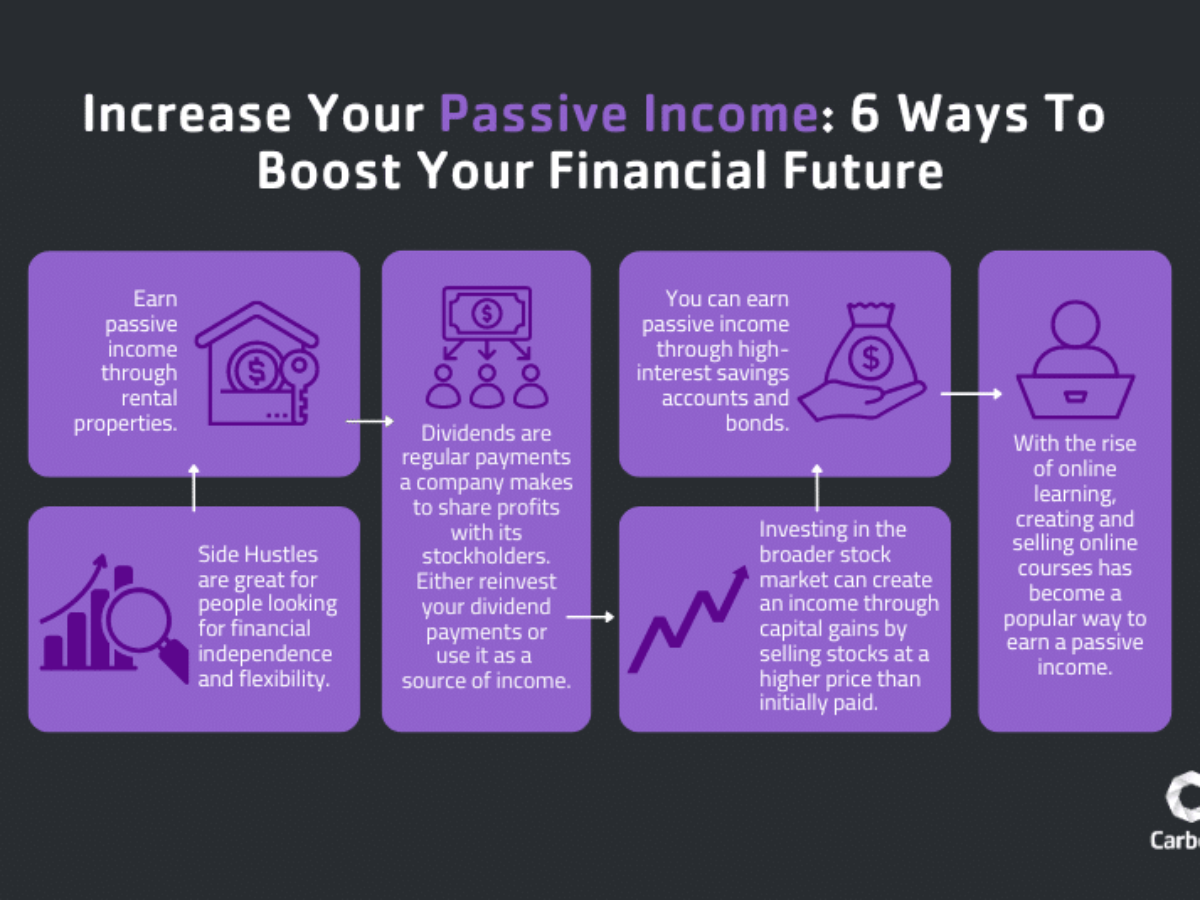
Dividend investing is the practice of buying shares in profitable companies that distribute a portion of their earnings back to shareholders. Unlike growth stocks, which reinvest all profits into the company, dividend-paying companies provide a steady stream of cash. To maximize this strategy, investors often look for “Dividend Aristocrats”—companies that have increased their dividend payouts for at least 25 consecutive years. By reinvesting these dividends, investors benefit from the power of compounding, where the dividends themselves begin to earn more dividends, leading to exponential portfolio growth over time.
Real Estate Investment Trusts (REITs)
Physical real estate is a classic passive income source, but it often comes with the “active” headaches of property management and maintenance. REITs offer a solution by allowing individuals to invest in large-scale, income-producing real estate portfolios without owning the physical property. These trusts are required by law to distribute at least 90% of their taxable income to shareholders. Whether it is commercial office space, residential apartments, or data centers, REITs provide a liquid and hands-off way to gain exposure to the real estate market’s rental yields.
High-Yield Fixed Income and CDs
In a fluctuating interest rate environment, fixed-income instruments such as High-Yield Savings Accounts (HYSAs) and Certificates of Deposit (CDs) have regained prominence. While the returns may be lower than the stock market, they offer capital preservation and guaranteed returns. For a more sophisticated approach, “CD Laddering” involves opening multiple CDs with different maturity dates. This ensures that a portion of the capital becomes available at regular intervals, providing liquidity while still capturing higher interest rates than a standard checking account.
2. Asset Creation: Building Intellectual and Digital Property
For those who may not have significant capital to invest upfront, the “Time-for-Asset” model is the most viable path. This involves spending a concentrated period of time creating a digital or intellectual asset that can be sold or licensed repeatedly.
Digital Products and Online Education
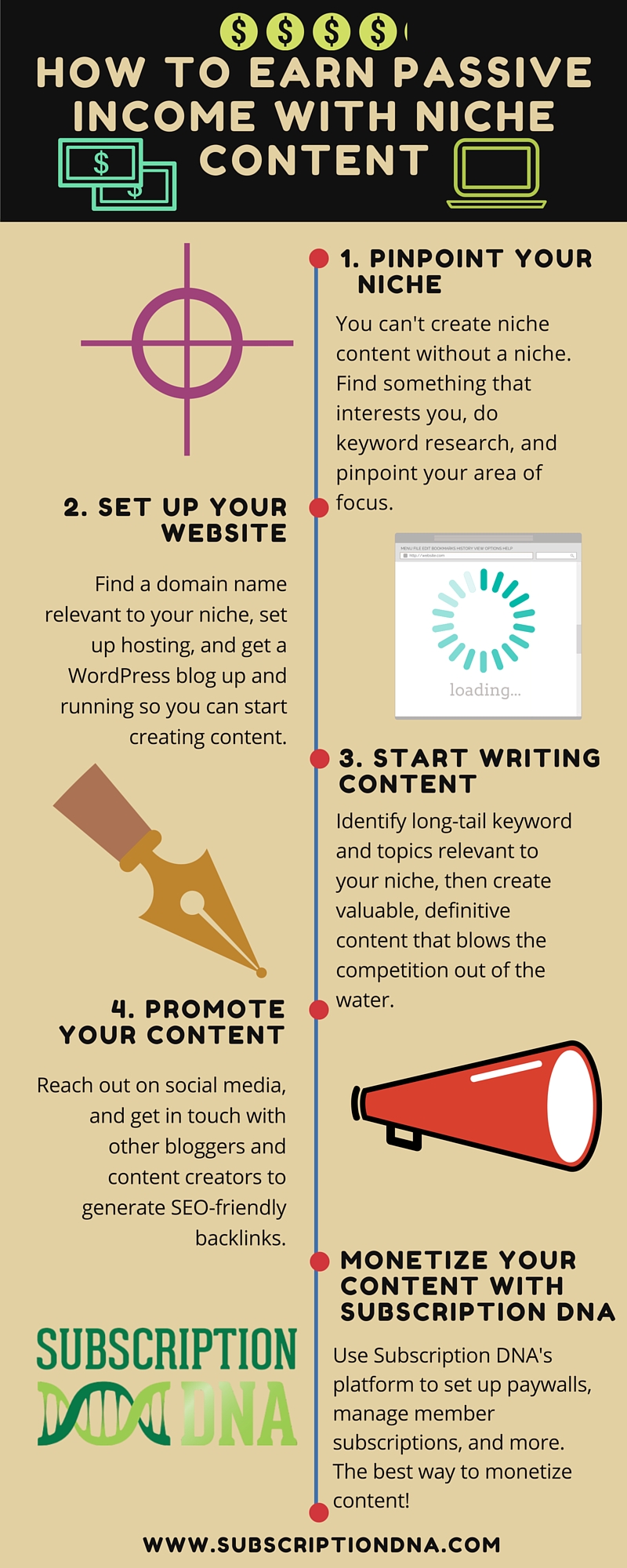
The knowledge economy has paved the way for experts to monetize their skills through online courses and e-books. Once a course is recorded, edited, and hosted on a platform, it becomes a scalable asset. A single digital product can be sold to ten people or ten thousand people with negligible increases in production costs. The key to success in this niche is identifying a high-value problem and providing a comprehensive, structured solution that saves the consumer time or makes them money.
Creating Evergreen Content Ecosystems
Content creation is often viewed as a “hustle,” but when structured correctly, it becomes a financial engine. By focusing on “evergreen” topics—subjects that remain relevant for years—creators can generate passive revenue through ad networks and sponsorships. A well-researched article or a series of educational videos can continue to attract traffic and generate revenue years after the initial publish date. This “long-tail” effect is the hallmark of a successful content-based passive income stream.
Licensing and Royalties
If you possess creative talents, such as photography, music production, or graphic design, licensing your work can provide a steady stream of royalties. Stock photo agencies and music libraries allow creators to upload their work to a global marketplace. Every time a business or individual downloads your asset for their marketing materials, you receive a percentage of the fee. This model turns creative hobbies into professional financial assets that work 24/7.
3. Automated Business Systems: The Scale of Ownership
Passive income can also be derived from business ownership where the owner is not involved in the day-to-day operations. This requires building systems that function independently of the founder’s presence.
Affiliate Marketing and Lead Generation
Affiliate marketing involves promoting a third-party product and earning a commission for every sale made through your unique referral link. To make this truly passive, one must build a “bridge” between the consumer and the product—usually through a specialized review site or a niche authority blog. By optimizing these platforms for search engines (SEO), you can attract “high-intent” traffic. When a user searches for a product recommendation and clicks your link, the system executes the transaction and records your commission automatically.
Automated E-commerce: Print-on-Demand and Dropshipping
While traditional retail requires inventory management, models like Print-on-Demand (POD) allow for a hands-off approach. In this model, you design a product (like a shirt or a mug), and a third-party manufacturer handles the printing, packaging, and shipping only when an order is placed. The “money” aspect here lies in the margin between the manufacturing cost and your retail price. Because you don’t hold inventory or manage fulfillment, the business functions as a passive income stream once the initial marketing and design phases are complete.
Membership and Subscription Models
The most predictable form of passive income is recurring revenue. By building a membership site or a “Software as a Service” (SaaS) tool, you create a system where users pay a monthly fee for continued access to a community, a tool, or specialized data. While these models require initial development and periodic updates, the stability of monthly recurring revenue (MRR) allows for much more accurate financial planning and long-term wealth compounding.
4. Strategic Management: Protecting and Scaling Your Income
Creating a passive income stream is only half the battle; the other half is managing it to ensure longevity and tax efficiency. Passive income is still subject to the laws of finance, and without proper oversight, these streams can dry up.
Diversification and Risk Mitigation
The “single point of failure” is the greatest threat to passive income. Relying solely on one dividend stock or one affiliate platform is risky. A professional approach involves diversifying across different asset classes. For example, an individual might balance a high-risk/high-reward digital course business with the stability of a diversified bond portfolio. This ensures that if one sector of the economy dips, the other streams provide a safety net.
Reinvestment and the “Velocity of Money”
To truly accelerate wealth, one should not immediately spend the passive income they earn. Instead, the goal should be to reinvest those earnings back into new assets. This creates a feedback loop where your passive income generates more passive income. In financial terms, this increases the “velocity of your money”—the speed at which your capital is deployed to create new value.
Understanding Tax Implications
In many jurisdictions, passive income is taxed differently than earned income. For instance, long-term capital gains and qualified dividends often enjoy lower tax rates than a standard salary. Conversely, “passive” business income might be subject to self-employment taxes depending on how the legal entity is structured. Consult with a financial advisor to ensure your income streams are structured within tax-advantaged accounts (like IRAs or 401ks in the US) or through corporate structures that minimize your tax liability, thereby maximizing your net take-home pay.

Conclusion: The Path to Financial Autonomy
Building passive income is a marathon, not a sprint. It requires a fundamental shift in mindset—from being a consumer to being an owner and an investor. Whether you choose to invest in the stock market, create digital assets, or build automated business systems, the objective remains the same: to build a life where your financial security is independent of your physical presence.
By starting small, focusing on one high-quality stream at a time, and consistently reinvesting your gains, you can gradually replace your active expenses with passive cash flow. True wealth is not measured by the size of your paycheck, but by the freedom you have over your time. In the modern economy, passive income is the ultimate tool for reclaiming that freedom.
aViewFromTheCave is a participant in the Amazon Services LLC Associates Program, an affiliate advertising program designed to provide a means for sites to earn advertising fees by advertising and linking to Amazon.com. Amazon, the Amazon logo, AmazonSupply, and the AmazonSupply logo are trademarks of Amazon.com, Inc. or its affiliates. As an Amazon Associate we earn affiliate commissions from qualifying purchases.