
In the rapidly evolving landscape of digital entertainment, Paramount Plus has emerged not merely as a library of cinematic history, but as a sophisticated software platform competing at the bleeding edge of the “streaming wars.” While casual viewers might see a collection of movies and shows, from a technological standpoint, Paramount Plus represents a complex ecosystem of cloud computing, data-driven algorithms, and high-performance video delivery systems. To understand what is truly “in” Paramount Plus, one must look beyond the surface level of content and analyze the technical architecture that powers its global distribution.
As a successor to CBS All Access, Paramount Plus was built to scale. It integrates a legacy of broadcasting excellence with modern software engineering, aiming to provide a seamless user experience across a myriad of devices, from mobile handsets to high-end home theaters. This article explores the technological components that define the service, focusing on its infrastructure, software ecosystem, and the future-facing tools that keep it competitive in a crowded market.
The Technological Infrastructure of Paramount+
The backbone of any streaming service is its ability to deliver high-bitrate content to millions of concurrent users without latency or buffering. Paramount Plus utilizes a robust cloud-based infrastructure that prioritizes uptime and global accessibility. Unlike traditional television, which relies on linear signals, Paramount Plus is a data-driven environment that requires immense processing power.
Cloud-Based Streaming and Global Content Delivery Networks (CDNs)
At the heart of Paramount Plus is a sophisticated network of servers often distributed across major cloud providers like Amazon Web Services (AWS) or Google Cloud. To ensure that a user in London experiences the same speed as a user in Los Angeles, the platform employs Content Delivery Networks (CDNs). These CDNs cache content at “edge” locations—servers physically closer to the end-user.
By leveraging edge computing, Paramount Plus minimizes the physical distance data must travel. When a user hits “play,” the software determines the most efficient path to deliver that data packet, ensuring that high-definition video begins almost instantaneously. This infrastructure is particularly critical for the service’s live streaming components, such as local news and major sporting events like the NFL, where low latency is the primary technical benchmark.
Video Encoding and 4K UHD/HDR Performance
What is “in” the video stream itself? Paramount Plus utilizes advanced video codecs—most notably H.264 (AVC) and H.265 (HEVC)—to compress massive video files into streamable formats. The technical challenge is maintaining visual fidelity while minimizing bandwidth usage. For subscribers on the premium tier, the service delivers 4K Ultra HD resolution, often paired with High Dynamic Range (HDR) standards like Dolby Vision.
HDR tech is a cornerstone of the Paramount Plus visual experience. It allows for a wider color gamut and higher contrast ratios, making “The Godfather” or “Top Gun: Maverick” look as intended by their cinematographers. Behind the scenes, the platform’s “adaptive bitrate streaming” (ABS) technology constantly monitors the user’s internet speed. If the connection dips, the player dynamically switches to a lower-resolution version of the file mid-stream, preventing the dreaded “buffering” wheel.
Software Ecosystem and User Experience (UX)
The front-end of Paramount Plus—the part the user interacts with—is a marvel of cross-platform software engineering. Developing a single application that runs natively on iOS, Android, Roku, Amazon Fire TV, and various Smart TV operating systems (like LG’s webOS or Samsung’s Tizen) requires a highly versatile code base.
Cross-Platform Compatibility and App Development
Paramount Plus developers utilize frameworks that allow for a degree of “code sharing” across platforms while optimizing for the unique hardware of each device. For instance, the mobile app must be optimized for touch interfaces and battery efficiency, while the TV app focuses on remote-control navigation and high-speed image rendering.
The tech stack for these apps often involves JavaScript-based frameworks or C++ for lower-level performance optimization on gaming consoles like the PlayStation 5 or Xbox Series X. The goal is to maintain a unified “source of truth” for the user interface (UI) so that a user’s “Watchlist” or “Continue Watching” queue stays synced across every device in real-time. This requires a highly responsive backend API that updates user states across millions of accounts simultaneously.
UI Design: Navigating the “Mountain of Entertainment”
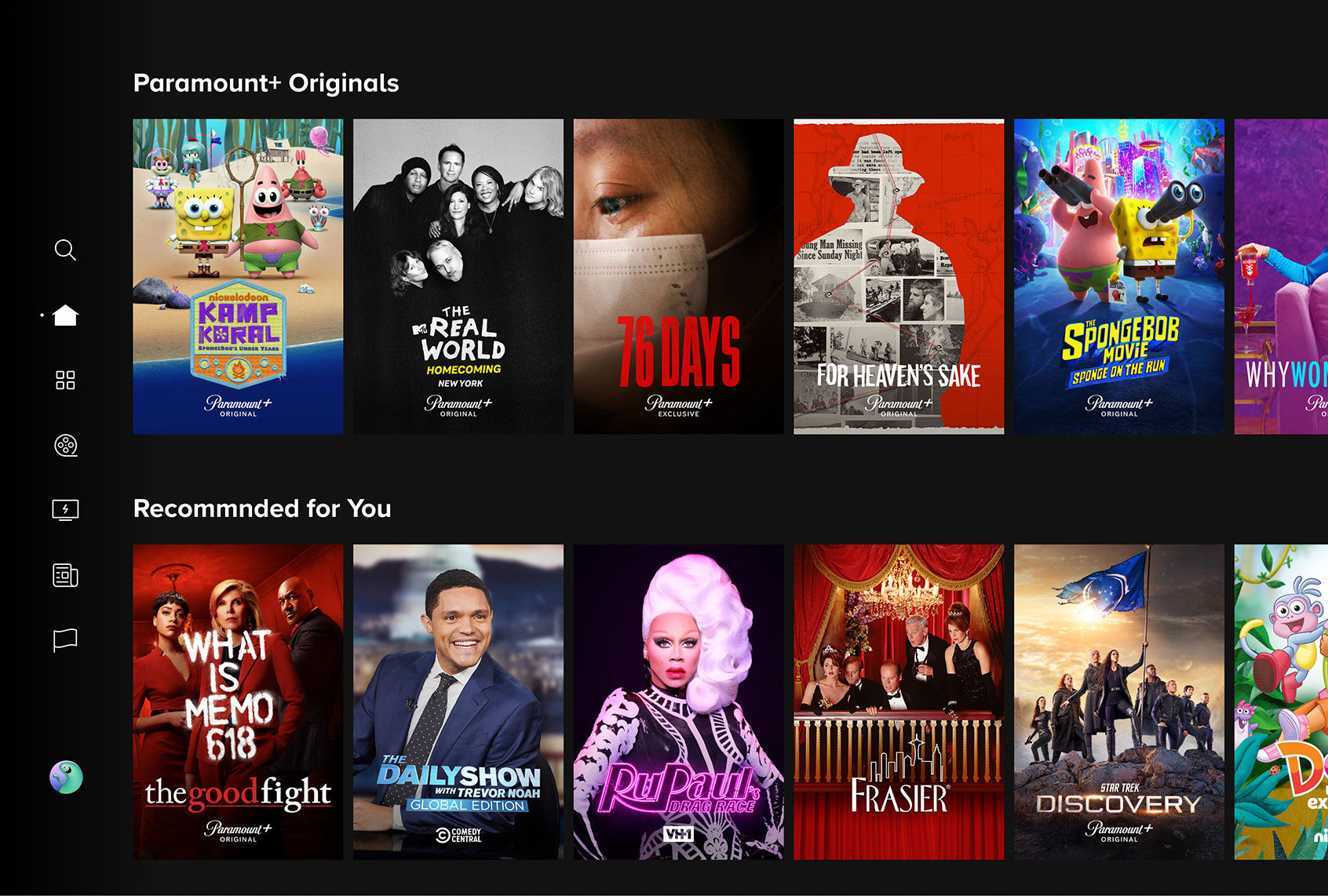
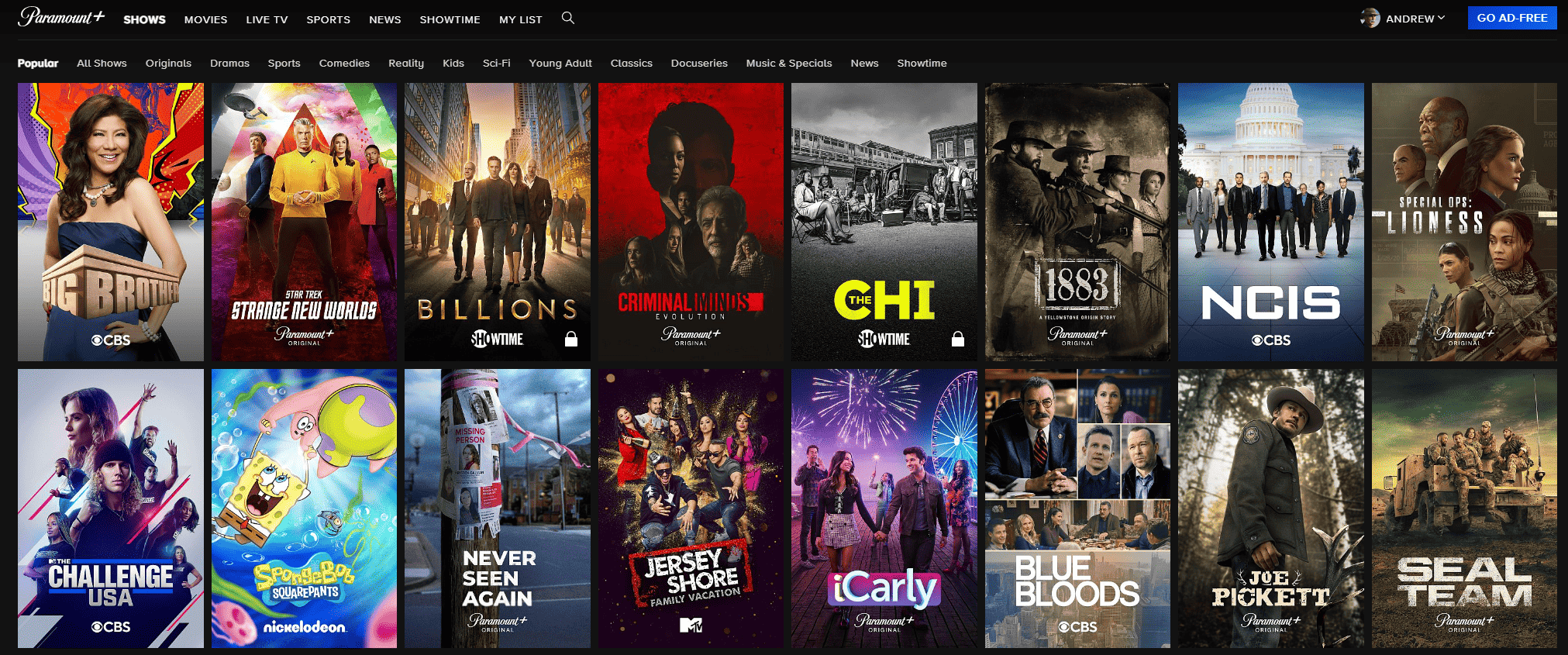
The User Interface (UI) and User Experience (UX) design of Paramount Plus are engineered to reduce “choice paralysis.” The “Mountain of Entertainment” branding is translated into a hierarchical software design. The sidebar and hub-based navigation—separating brands like Nickelodeon, MTV, Comedy Central, and Smithsonian Channel—is a strategic UI choice to categorize a massive metadata library.
The interface relies on high-resolution “hero images” and auto-playing trailers, which are technically demanding because they require the app to pre-fetch video data as the user scrolls. The smoothness of this scrolling is a testament to the app’s memory management and graphical optimization.

AI and Personalization Algorithms
In the modern streaming era, the most valuable technology “in” Paramount Plus is its recommendation engine. This is where Artificial Intelligence (AI) and Machine Learning (ML) play a pivotal role. Every interaction—what you click, how long you watch a show, and even the time of day you log in—serves as data points for the platform’s algorithms.
Machine Learning for Content Curation
Paramount Plus uses collaborative filtering and content-based filtering to suggest new titles. Collaborative filtering analyzes the behavior of similar user segments, while content-based filtering looks at the metadata of what you’ve already watched (e.g., genre, director, lead actors).
The tech goes deeper than simple suggestions; it often involves “dynamic thumbnails.” The algorithm might show you a thumbnail of a romantic scene if it knows you enjoy dramas, or an action-packed shot if you prefer thrillers, for the exact same movie. This level of personalized delivery is achieved through massive data processing pipelines that run in the cloud, constantly refining the “Discovery” feed for each individual user.
Data Security and User Privacy Protocols
With millions of users comes the responsibility of securing sensitive data. Paramount Plus incorporates advanced encryption standards (AES) for user credentials and payment information. Furthermore, the platform must comply with global digital security regulations such as the GDPR and CCPA.
Beyond basic security, the tech stack includes Digital Rights Management (DRM). Paramount Plus uses systems like Google’s Widevine, Apple’s FairPlay, and Microsoft’s PlayReady to ensure that their copyrighted content cannot be easily pirated or ripped from the stream. This DRM technology acts as a silent gatekeeper, verifying that the device and the user have the proper licenses to view the content in a specific resolution.
Connectivity and Integration with Modern Hardware
The modern streaming experience is no longer confined to a single screen. Paramount Plus is designed to integrate into the “Smart Home” ecosystem, utilizing connectivity protocols that allow for voice control and seamless hand-offs between devices.
Smart Home Integration and Voice Search
The platform is integrated with major AI assistants, including Amazon Alexa, Google Assistant, and Apple’s Siri. This allows for deep-linking—a technical process where a user can say “Play Star Trek on Paramount Plus,” and the hardware triggers the app to launch directly into the specific video stream, bypassing the home screen. This requires the Paramount Plus app to expose its library metadata to third-party operating systems through secure APIs.
Offline Viewing and Mobile Optimization
For mobile users, the “Download & Go” feature is a significant technical inclusion. This involves more than just saving a file; it requires the app to manage local storage, maintain DRM licenses even without an internet connection, and offer various quality settings to save on data usage. The app’s ability to handle background downloads while maintaining system performance is a key metric of its software health.
The Future of Streaming Technology: Live and Interactive Media
As we look at what is “in” Paramount Plus today, we must also consider the emerging tech that will define it tomorrow. The platform is increasingly focusing on the convergence of live broadcasting and interactive digital media.
Real-Time Live Streaming (Sports and News)
One of the most difficult technical feats in streaming is the “Super Bowl problem”—handling tens of millions of viewers watching a live event simultaneously. This requires an elastic infrastructure that can spin up thousands of virtual servers in minutes to handle the load. Paramount Plus has invested heavily in low-latency HLS (HTTP Live Streaming) and DASH (Dynamic Adaptive Streaming over HTTP) protocols to ensure the gap between the stadium action and the viewer’s screen is as small as possible.
Interactive Features and Ad-Tech
The service is also innovating in “Ad-Tech.” For subscribers on the ad-supported tier, the platform uses Server-Side Ad Insertion (SSAI). Unlike traditional web ads that might cause a pause or a “skip” button, SSAI stitches the advertisement directly into the video stream on the server side. This results in a seamless, broadcast-quality experience where transitions are smooth and unnoticeable from a technical perspective.
In conclusion, “what is in Paramount Plus” is a sophisticated layer of technological innovation. It is an intricate web of CDN-driven delivery, AI-powered personalization, and multi-platform software engineering. As the service continues to evolve, its success will depend as much on its software updates and server reliability as it does on its library of iconic films. For the tech-savvy consumer, Paramount Plus is a premier example of how legacy media has successfully transitioned into a high-performance digital powerhouse.
aViewFromTheCave is a participant in the Amazon Services LLC Associates Program, an affiliate advertising program designed to provide a means for sites to earn advertising fees by advertising and linking to Amazon.com. Amazon, the Amazon logo, AmazonSupply, and the AmazonSupply logo are trademarks of Amazon.com, Inc. or its affiliates. As an Amazon Associate we earn affiliate commissions from qualifying purchases.