
The question “how much is a Tesla share?” is more than a simple query about a numerical value; it’s a gateway into understanding the intricate world of stock market dynamics, investment principles, and the unique allure of a company that has redefined multiple industries. For both seasoned investors and curious newcomers, grasping the value and volatility of TSLA stock—Tesla’s ticker symbol—requires a dive into financial markets, company performance, and broader economic influences. This article aims to demystify the factors that determine Tesla’s share price, provide insights into its investment landscape, and equip readers with the knowledge to approach investing in such a high-profile stock with an informed perspective.
Understanding Tesla’s Stock (TSLA) in the Investment Landscape
At its core, a stock share represents a fractional ownership in a company. When you purchase a share of Tesla, you become a part-owner of the electric vehicle (EV) giant, entitled to a slice of its future earnings and, in some cases, voting rights on corporate matters. However, the price of that share is a constantly fluctuating figure, a dynamic interplay of supply, demand, and a myriad of underlying factors.
What is a Stock Share? A Primer for Investors
A stock, or equity, is a security that represents proportionate ownership in the issuing corporation. It entitles the holder to a portion of the corporation’s assets and earnings. For investors, shares offer the potential for capital appreciation (the stock price going up) and, occasionally, dividends (a portion of the company’s profits paid out to shareholders). Tesla, like many growth companies, has historically reinvested its earnings back into the business rather than paying dividends, focusing on maximizing future growth and thus capital appreciation for its shareholders. Owning a Tesla share, therefore, is primarily a bet on the company’s continued innovation and market expansion.
Why Tesla? The Allure of a Disruptive Innovator
Tesla’s journey from a niche EV manufacturer to a global automotive and energy powerhouse has been nothing short of spectacular. Its products, from electric vehicles to battery storage solutions and solar technology, have disrupted traditional industries and captured the imagination of consumers and investors alike. This perception of being a forward-thinking, disruptive innovator is a significant driver of investor interest. Beyond its products, Tesla’s brand identity, charismatic leadership, and ambitious vision for a sustainable future contribute to a unique investment narrative that often transcends traditional valuation metrics. Investors are not just buying into a car company; they are buying into a vision of the future.
Real-Time vs. Historical Data: Where to Find TSLA’s Price
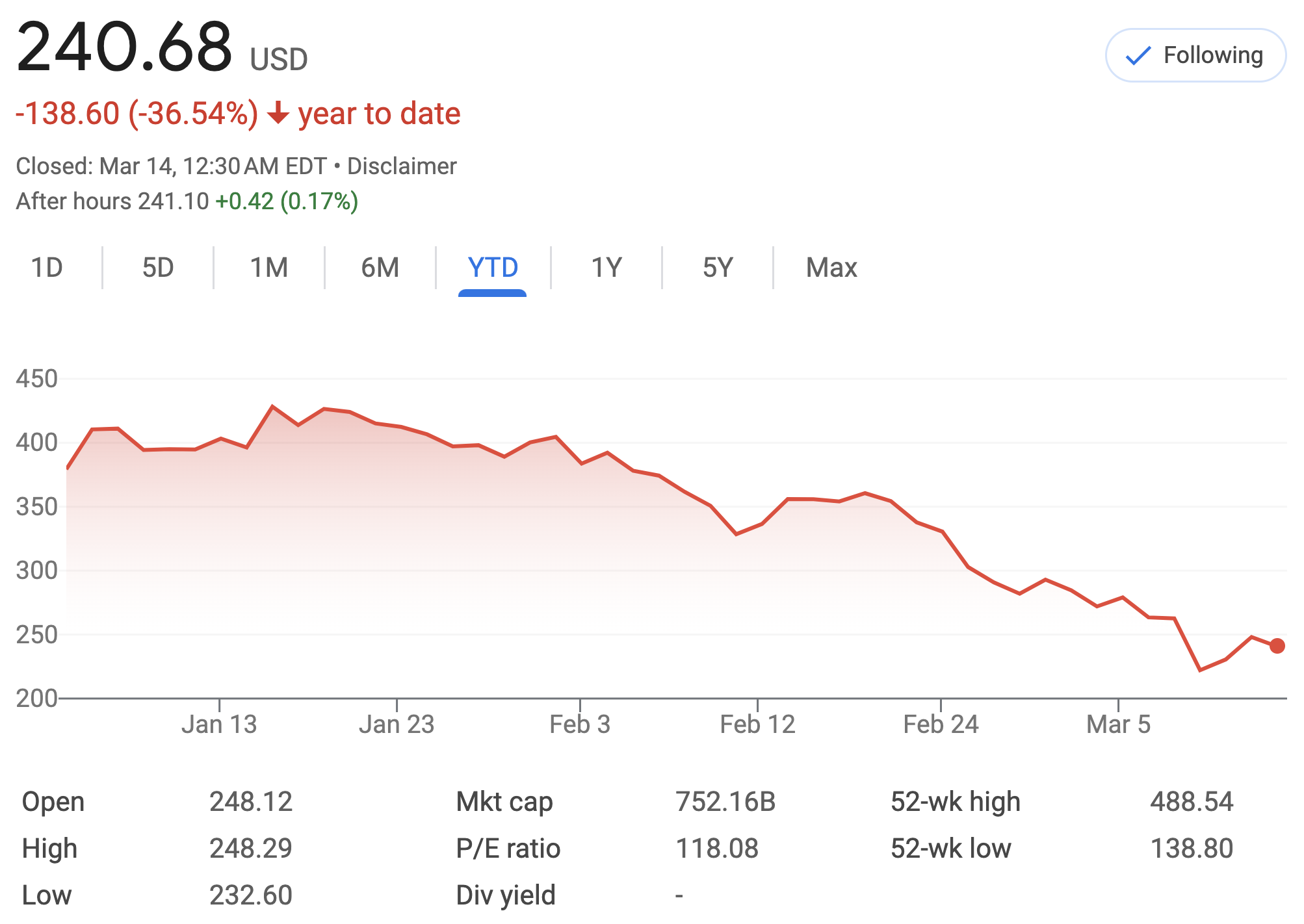
To answer “how much is a Tesla share” at any given moment, investors need access to real-time market data. This information is readily available through various financial platforms, brokerage apps, and financial news websites. These sources display the current trading price, often alongside key metrics like the day’s high and low, trading volume, and market capitalization. Understanding the current price is crucial, but it’s equally important to examine historical data to identify trends, volatility patterns, and significant events that have impacted the stock over time. Historical charts can reveal price peaks, troughs, and long-term growth trajectories, offering context to today’s valuation.
Factors Influencing TSLA Share Price
The price of a Tesla share is not static; it’s a complex reflection of numerous variables, constantly adjusting in response to new information and changing market conditions. Dissecting these factors is essential for any investor looking to understand TSLA’s movements.
Market Sentiment and Investor Psychology
Investor psychology plays an outsized role in the pricing of high-growth, high-profile stocks like Tesla. Sentiment, driven by news cycles, social media buzz, analyst ratings, and even the pronouncements of its CEO, Elon Musk, can cause rapid swings in TSLA’s price. Positive news regarding production milestones, new product launches, or regulatory approvals can fuel optimism and drive prices up, often creating a “fear of missing out” (FOMO) among potential buyers. Conversely, negative news—whether related to production delays, recalls, or competitive threats—can trigger sell-offs and exacerbate downward trends. Analyst upgrades or downgrades also carry significant weight, influencing institutional and retail investors alike.
Company Performance and Financial Health
While sentiment is powerful, fundamental company performance provides the underlying bedrock for long-term valuation. Tesla’s financial health, as reported in its quarterly earnings, production and delivery numbers, and annual reports, is meticulously scrutinized by investors. Key indicators include revenue growth, profitability (net income and operating margins), cash flow generation, and debt levels. Strong earnings reports that beat analyst expectations, robust delivery figures, and consistent free cash flow generation tend to bolster investor confidence and support higher share prices. Conversely, any signs of slowing growth, missed targets, or deteriorating financial metrics can put downward pressure on the stock. The market constantly weighs Tesla’s ambitious growth projections against its actual ability to execute and generate sustainable profits.
Macroeconomic Conditions and Industry Trends
Broader economic forces also exert significant influence. Interest rates, inflation rates, global economic growth, and consumer spending patterns can all impact Tesla’s business and, consequently, its stock price. Higher interest rates, for instance, can make it more expensive for companies to borrow and expand, while also making future earnings less valuable in present terms. Inflation can increase production costs, potentially squeezing margins. Furthermore, the overall health of the electric vehicle market, competition from traditional automakers entering the EV space, raw material costs (like lithium for batteries), and technological advancements in battery efficiency or autonomous driving all contribute to the competitive landscape and industry trends that shape investor perceptions of Tesla’s future potential.
Regulatory Environment and Geopolitical Factors
Government policies, regulations, and geopolitical events can have profound effects on global companies like Tesla. Subsidies for EV purchases, emissions standards, and charging infrastructure mandates in various countries can accelerate or hinder EV adoption. Trade policies, tariffs, and international relations can impact Tesla’s supply chain, production costs, and access to key markets, particularly in regions like China, which is both a major production hub and a crucial sales market. Geopolitical tensions can lead to supply chain disruptions, increased raw material costs, or reduced consumer demand, all of which can be reflected in the company’s stock valuation.
Investing in Tesla: Considerations for Prospective Shareholders
Investing in a stock like Tesla requires careful consideration of its unique characteristics, potential risks, and how it aligns with an individual’s financial goals and risk tolerance.
Volatility and Risk Assessment
Tesla stock is renowned for its volatility. Its price swings can be significant, offering substantial gains to investors but also posing considerable risks. This volatility stems from a combination of its high-growth status, speculative investor interest, and the inherent uncertainties of pioneering new technologies. Prospective shareholders must assess their own comfort level with such price fluctuations. Investing in TSLA often requires a higher risk tolerance and an understanding that short-term price movements can be unpredictable. It’s crucial to acknowledge that while high growth offers high reward potential, it also carries higher risk.

Diversification and Portfolio Strategy
No matter how compelling a single stock appears, diversification remains a cornerstone of sound investment strategy. Placing too much capital into one stock, even a market leader like Tesla, exposes an investor to undue concentration risk. A well-diversified portfolio spreads investments across different asset classes, industries, and geographies, mitigating the impact of any single investment’s underperformance. For those keen on investing in Tesla, it should ideally be one component of a broader, balanced portfolio, rather than the sole holding.
Long-Term vs. Short-Term Investment Horizons
Tesla can appeal to different types of investors. Long-term investors, often referred to as “buy and hold” investors, focus on the company’s fundamental growth trajectory over many years, enduring short-term market noise. They believe in Tesla’s mission and its potential to dominate future markets. Short-term traders, on the other hand, might attempt to profit from Tesla’s daily or weekly price fluctuations, leveraging its volatility. Each approach carries its own set of strategies, risks, and required dedication. For most retail investors, a long-term perspective, coupled with continuous research, is generally recommended.
Understanding Valuation Metrics (P/E, Market Cap)
To objectively assess whether Tesla shares are “expensive” or “cheap” at a given price, investors often look at valuation metrics. The Price-to-Earnings (P/E) ratio, which compares the stock price to the company’s earnings per share, is a common indicator. Tesla often trades at a higher P/E ratio than traditional automakers, reflecting its growth potential and investor expectations. Market capitalization (stock price multiplied by outstanding shares) indicates the total value of the company, providing a sense of its scale relative to competitors. While these metrics are useful, they should be interpreted within the context of Tesla’s specific industry, growth prospects, and unique business model.
The Mechanics of Buying Tesla Shares
Once an investor has decided to purchase Tesla shares, understanding the practical steps involved is crucial. The process has become significantly more accessible in recent years thanks to technological advancements in the brokerage industry.
Choosing a Brokerage Platform
The first step is to open an investment account with a reputable brokerage firm. Numerous online brokers offer platforms that cater to a wide range of investors, from beginners to experienced traders. When choosing a broker, consider factors such as commission fees (many now offer commission-free trading), the user-friendliness of their platform, available research tools, customer service, and whether they offer fractional share investing. Major platforms often provide detailed information and tools specific to popular stocks like TSLA.
Types of Orders: Market, Limit, Stop-Loss
When buying or selling shares, investors typically use different types of orders:
- Market Order: This instructs your broker to buy or sell shares immediately at the best available current price. It offers speed but no price guarantee.
- Limit Order: This allows you to specify the maximum price you’re willing to pay to buy shares, or the minimum price you’re willing to accept to sell shares. Your order will only execute if the stock reaches your specified price or better. This provides price control but no guarantee of execution.
- Stop-Loss Order: This is a risk management tool that automatically triggers a market order to sell shares once they fall to a predetermined price, helping to limit potential losses.
Understanding these order types is fundamental to executing trades effectively and managing risk.
Fractional Shares: Making Investing Accessible
A significant development that has democratized stock investing is the advent of fractional shares. Instead of needing to buy a full share, which can be hundreds or thousands of dollars for high-priced stocks like Tesla, many brokers now allow investors to buy fractions of a share. This means you can invest a specific dollar amount (e.g., $100) into Tesla, regardless of its current share price, making it accessible to investors with smaller budgets. This feature significantly lowers the barrier to entry for owning a piece of expensive companies.
Beyond the Current Price: A Forward Look at TSLA’s Investment Potential
The current price of a Tesla share is a snapshot, but informed investing demands a forward-looking perspective. Understanding the potential catalysts for future growth and the ongoing risks is paramount.
Growth Catalysts and Future Outlook
Tesla’s investment potential is often tied to its ability to continue innovating and expanding its market reach. Future growth catalysts include the successful rollout of new vehicle models (e.g., Cybertruck, next-generation platforms), expansion into new geographic markets, advancements in battery technology and production, the maturation of its FSD (Full Self-Driving) capabilities, and the growth of its energy storage and solar businesses. The company’s relentless pursuit of economies of scale, vertical integration, and technological leadership in areas like AI and robotics could further solidify its competitive advantage and drive long-term shareholder value. The global shift towards sustainable energy and transportation provides a substantial tailwind for Tesla’s core businesses.
Potential Headwinds and Risks
Despite its promise, Tesla faces significant headwinds and risks that investors must acknowledge. Intense competition from established automakers and new EV startups is increasing globally. Supply chain challenges, particularly for crucial components like semiconductors and raw materials, can impact production targets. Regulatory scrutiny, potential product recalls, and public perception issues (e.g., related to autonomous driving safety) remain ongoing concerns. Furthermore, Tesla’s valuation, often higher than industry peers, implies significant future growth that the company must consistently deliver on. Any substantial deviation from expected growth trajectories or profitability could lead to investor reassessment.

The Importance of Continuous Research and Due Diligence
Investing in any company, especially one as dynamic and scrutinized as Tesla, requires continuous research and due diligence. Investors should regularly review company earnings reports, monitor industry news, follow macroeconomic trends, and stay informed about competitive developments. Relying solely on past performance or market hype is a precarious strategy. A well-informed investor understands that while the current price of a Tesla share reflects today’s market consensus, its future value will be determined by a complex interplay of innovation, execution, and market forces, all requiring ongoing vigilance.
In conclusion, determining “how much is a Tesla share” involves far more than checking a ticker symbol. It’s about understanding market mechanics, appreciating a company’s unique value proposition, assessing myriad influencing factors, and embracing a disciplined approach to financial decision-making within a dynamic investment landscape.
aViewFromTheCave is a participant in the Amazon Services LLC Associates Program, an affiliate advertising program designed to provide a means for sites to earn advertising fees by advertising and linking to Amazon.com. Amazon, the Amazon logo, AmazonSupply, and the AmazonSupply logo are trademarks of Amazon.com, Inc. or its affiliates. As an Amazon Associate we earn affiliate commissions from qualifying purchases.