
Navigating the American tax system is often cited as one of the most complex financial responsibilities for individuals and business owners alike. Unlike traditional employees who have taxes withheld from every paycheck, the growing population of freelancers, independent contractors, and small business owners must navigate the “pay-as-you-go” mandate of the Internal Revenue Service (IRS). As the digital economy continues to evolve, the methods for fulfilling these obligations have shifted from paper checks and snail mail to sophisticated online platforms. Understanding how to pay federal estimated taxes online is no longer just a matter of convenience; it is a fundamental pillar of modern financial management. This guide explores the strategic importance of estimated taxes, the digital tools available for payment, and the best practices for maintaining healthy business cash flow.

Understanding the “Pay-As-You-Go” System and Determining Liability
The United States tax system operates on a “pay-as-you-go” basis. This means the government requires tax payments to be made throughout the year as income is earned, rather than in one lump sum during the April filing season. For those in the traditional workforce, the employer handles this via W-2 withholdings. However, for the self-employed, investors, and business entities, the responsibility falls squarely on the individual.
Who is Required to Make Estimated Payments?
In the realm of personal and business finance, identifying your status is the first step. Generally, you must pay estimated taxes if you expect to owe at least $1,000 in taxes for the current year after subtracting your withholding and credits. This typically applies to:
- Sole Proprietors and Freelancers: Individuals running their own businesses without a traditional payroll structure.
- Partners and S-Corporation Shareholders: Those who receive pass-through income.
- Investors: Individuals with significant income from dividends, interest, or capital gains that are not subject to withholding.
- Landlords: Those earning rental income.
If you fail to pay enough tax through withholding or estimated payments, or if you pay them late, you may be hit with an underpayment penalty. From a financial planning perspective, these penalties represent “leaked” capital—money that could have been invested or used for business growth but is instead lost to avoidable fees.
The 1040-ES Calculation: Determining Your Liability
Before you can pay online, you must determine how much to pay. The IRS provides Form 1040-ES (Estimated Tax for Individuals) to help calculate these figures. The most effective way to approach this is to look at your prior year’s adjusted gross income (AGI) and your expected income for the current year.
Effective financial management suggests using the “Safe Harbor” method: paying 100% of the tax shown on your prior year’s return (or 110% if your AGI was over $150,000). By utilizing this strategy, you protect yourself from penalties even if your income fluctuates significantly. Calculating this correctly is a vital component of your annual financial strategy, ensuring that you aren’t over-leveraging your cash reserves or leaving yourself vulnerable to a massive tax bill in April.
Top Digital Platforms for Federal Tax Payments
The IRS has made significant strides in its digital infrastructure, offering several secure portals for electronic payments. Selecting the right platform depends on your specific financial needs, the frequency of your payments, and your preference for record-keeping.
IRS Direct Pay: The Simplest Solution for Individuals
For most individual taxpayers and sole proprietors, IRS Direct Pay is the gold standard for digital transactions. This service allows you to pay your estimated tax directly from your checking or savings account without any additional fees.
The financial advantage of Direct Pay is its simplicity and speed. You do not need to register for an account; you simply verify your identity using information from a prior year’s tax return. Once the payment is made, you receive an immediate confirmation number. From a bookkeeping standpoint, this immediate verification is essential for reconciling your monthly business bank statements and ensuring your tax “bucket” is being emptied appropriately and on time.
EFTPS: The Professional Choice for Businesses
The Electronic Federal Tax Payment System (EFTPS) is a free service provided by the U.S. Department of the Treasury. While Direct Pay is ideal for quick one-off payments, EFTPS is a more robust financial tool designed for businesses and individuals who want more control over their payment history.
EFTPS requires a formal registration process, which includes receiving a PIN via physical mail for security. Once registered, users can:
- Schedule payments up to 365 days in advance.
- Review a comprehensive 16-month history of all federal tax payments.
- Handle various tax types beyond just estimated income tax (such as payroll taxes or corporate taxes).
For the savvy financial manager, the ability to schedule payments a year in advance is a massive benefit. It allows for “set it and forget it” tax planning, ensuring that payments are never missed even during busy operational cycles.

Debit, Credit Card, and Digital Wallet Options
For those looking for flexibility, the IRS utilizes third-party payment processors to accept payments via debit cards, credit cards, and digital wallets like PayPal or Click to Pay. While these options are convenient, they come with a financial trade-off: processing fees.
From a personal finance perspective, paying taxes with a credit card is usually only advisable if the rewards (cash back or points) outweigh the processing fee—which usually ranges from 1.8% to 2%. However, for businesses experiencing a temporary cash flow crunch, the ability to put a tax payment on a credit line can provide the necessary liquidity to keep operations running, provided the interest costs are managed strictly.
Critical Deadlines and Avoiding Underpayment Penalties
Timing is everything in finance. Estimated taxes are not paid once a year; they are paid in four specific installments. Missing these deadlines can lead to cumulative interest charges that erode your profit margins.
The Quarterly Schedule: Mark Your Calendar
The IRS breaks the year into four payment periods. It is a common misconception that these are perfectly three-month quarters. The standard deadlines are:
- April 15: For income earned Jan 1 – March 31.
- June 15: For income earned April 1 – May 31.
- September 15: For income earned June 1 – Aug 31.
- January 15 (of the following year): For income earned Sept 1 – Dec 31.
Marking these dates on your financial calendar is non-negotiable. Many high-earning freelancers choose to pay these a few days early via EFTPS to ensure that any bank processing delays do not result in a “late” status.
The Financial Impact of Underpayment
The IRS calculates penalties based on the amount of the underpayment and how long it remained unpaid. This is essentially an interest charge. In an environment where interest rates are high, these penalties can become a significant financial burden. By paying online and on time, you are effectively protecting your ROI (Return on Investment) by not wasting capital on government interest charges. If your income is seasonal—for example, if you earn 80% of your income in the fourth quarter—you can use the “Annualized Income Installment Method” to align your payments with your actual cash flow, preventing you from overpaying early in the year.
Best Practices for Managing Tax Cash Flow
Paying taxes online is the final step in a much larger financial workflow. To ensure you always have the funds available to make these payments without stressing your business operations, you must implement a system for tax-focused cash flow management.
Automating Your Savings: The High-Yield Tax Bucket
One of the most effective personal finance strategies for the self-employed is the “Percentage Method.” Every time you receive a payment from a client, immediately transfer a fixed percentage (usually between 25% and 30%) into a separate, dedicated high-yield savings account.
By keeping your tax money in a high-yield account, you are earning interest on the government’s money until the moment you hit “submit” on IRS Direct Pay. This turns a tax liability into a small source of passive income. Treating this account as “invisible” ensures that you never accidentally spend your tax obligations on operational expenses.
Tracking Business Expenses to Lower Estimated Costs
Your estimated tax payments are based on your net income, not your gross revenue. Therefore, meticulous expense tracking is a vital financial habit. By using accounting software to categorize every deductible business expense—from home office utilities to software subscriptions—you lower your taxable income in real-time.
As you approach each quarterly deadline, review your year-to-date profit and loss statement. If your expenses were higher than anticipated, you might be able to lower your estimated payment for that quarter, keeping more liquidity within your business for reinvestment.
Conclusion: Empowerment Through Financial Literacy
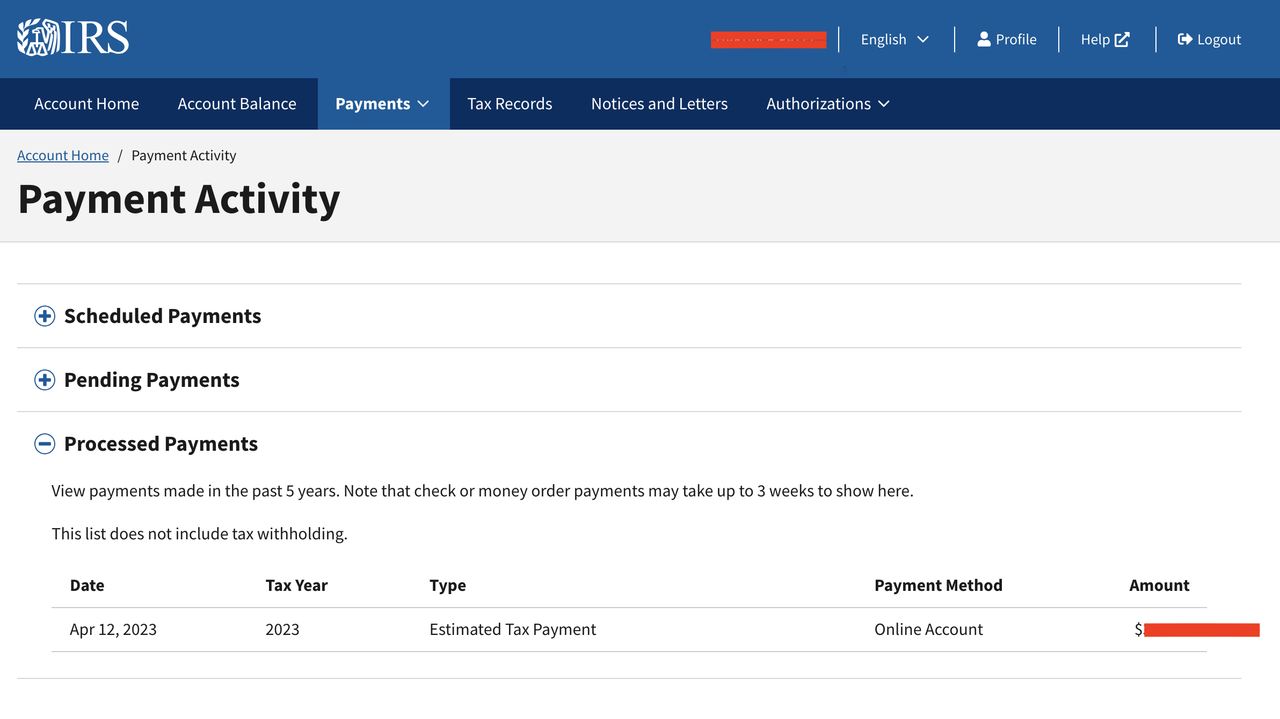
Learning how to pay federal estimated taxes online is an essential skill for anyone navigating the modern financial landscape. It represents the intersection of technology and personal finance, offering tools that provide transparency, security, and efficiency. By moving away from antiquated paper systems and embracing platforms like IRS Direct Pay and EFTPS, you gain greater control over your financial destiny.
Ultimately, the goal of masterfully managing your estimated taxes is to eliminate “tax season anxiety.” When you calculate accurately, save diligently in high-yield accounts, and pay through secure online portals, April 15th becomes just another day on the calendar rather than a financial crisis. Through disciplined cash flow management and the strategic use of digital tools, you can ensure that your financial foundation remains solid, allowing you to focus on what truly matters: growing your wealth and your business.
aViewFromTheCave is a participant in the Amazon Services LLC Associates Program, an affiliate advertising program designed to provide a means for sites to earn advertising fees by advertising and linking to Amazon.com. Amazon, the Amazon logo, AmazonSupply, and the AmazonSupply logo are trademarks of Amazon.com, Inc. or its affiliates. As an Amazon Associate we earn affiliate commissions from qualifying purchases.