
The annual ritual of tax filing often evokes a sense of trepidation, but the evolution of the Internal Revenue Service (IRS) into a digitally-forward financial entity has significantly reduced the friction of the actual payment process. Gone are the days when mailing a paper check and crossing one’s fingers was the primary method of settling a federal debt. Today, the digital landscape offers a variety of secure, efficient, and immediate ways to ensure your financial obligations are met accurately and on time.
For the modern taxpayer, understanding how to navigate these online payment portals is not just a matter of convenience; it is a critical component of personal financial management. Utilizing online tools allows for better cash flow tracking, immediate confirmation of receipt, and the ability to schedule payments to avoid late fees and interest. This guide explores the diverse ecosystem of IRS online payment options, providing the financial insight necessary to manage your tax liabilities with professional precision.
Understanding the Digital Ecosystem of Federal Tax Payments
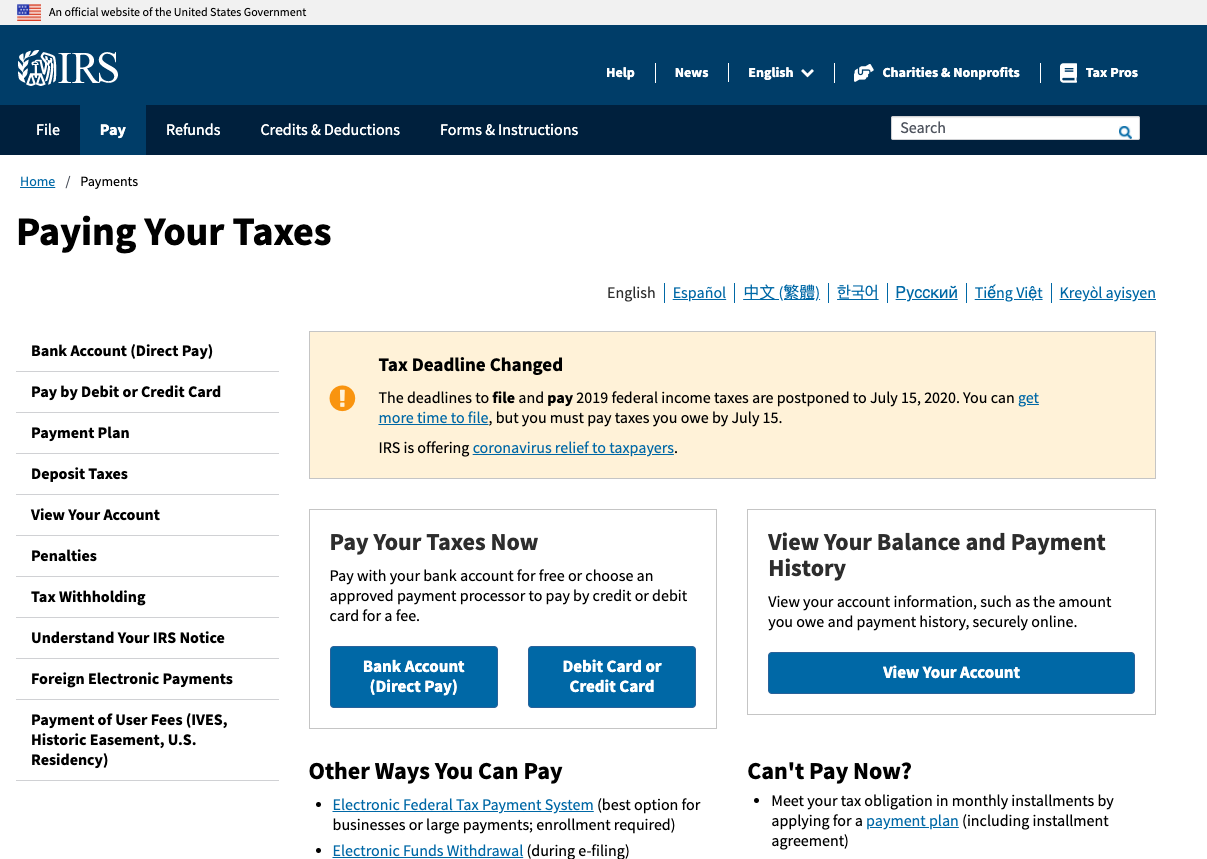
The shift from paper-based transactions to a digital-first approach reflects a broader trend in personal finance toward transparency and speed. When you pay the IRS online, you are engaging with one of the world’s most robust financial processing systems. However, the first step in a successful payment is identifying which specific digital tool aligns with your tax status and your immediate financial goals.
The Shift from Paper Checks to Digital Transactions
Historically, tax payments were a slow-moving gear in the federal machine. Checks could be lost in the mail, signatures could be misinterpreted, and the delay between sending a payment and its posting could lead to unnecessary anxiety. The digital transition has mitigated these risks. By choosing an online path, taxpayers gain “real-time” assurance. From a financial management perspective, digital payments allow for precise budgeting. You know exactly when the funds will leave your account, allowing you to manage your liquidity more effectively during the high-expenditure months of the tax season.
Identifying the Right Payment Portal for Your Needs
Not all IRS payment tools are created equal. The agency provides several distinct platforms, each serving a specific niche of the taxpaying public. For example, a sole proprietor making estimated quarterly payments has different needs than a large corporation or an individual paying a one-time balance due on a 1040 form. Identifying whether you need “Direct Pay,” the “Electronic Federal Tax Payment System (EFTPS),” or a third-party processor is the foundation of a sound tax settlement strategy.
Direct Pay vs. Electronic Federal Tax Payment System (EFTPS)
For the vast majority of individual taxpayers, the choice usually boils down to two primary government-run systems: Direct Pay and EFTPS. While both facilitate the transfer of funds from a bank account to the Treasury, they operate on different logic and require different levels of commitment.
IRS Direct Pay: The Individual Taxpayer’s Best Friend
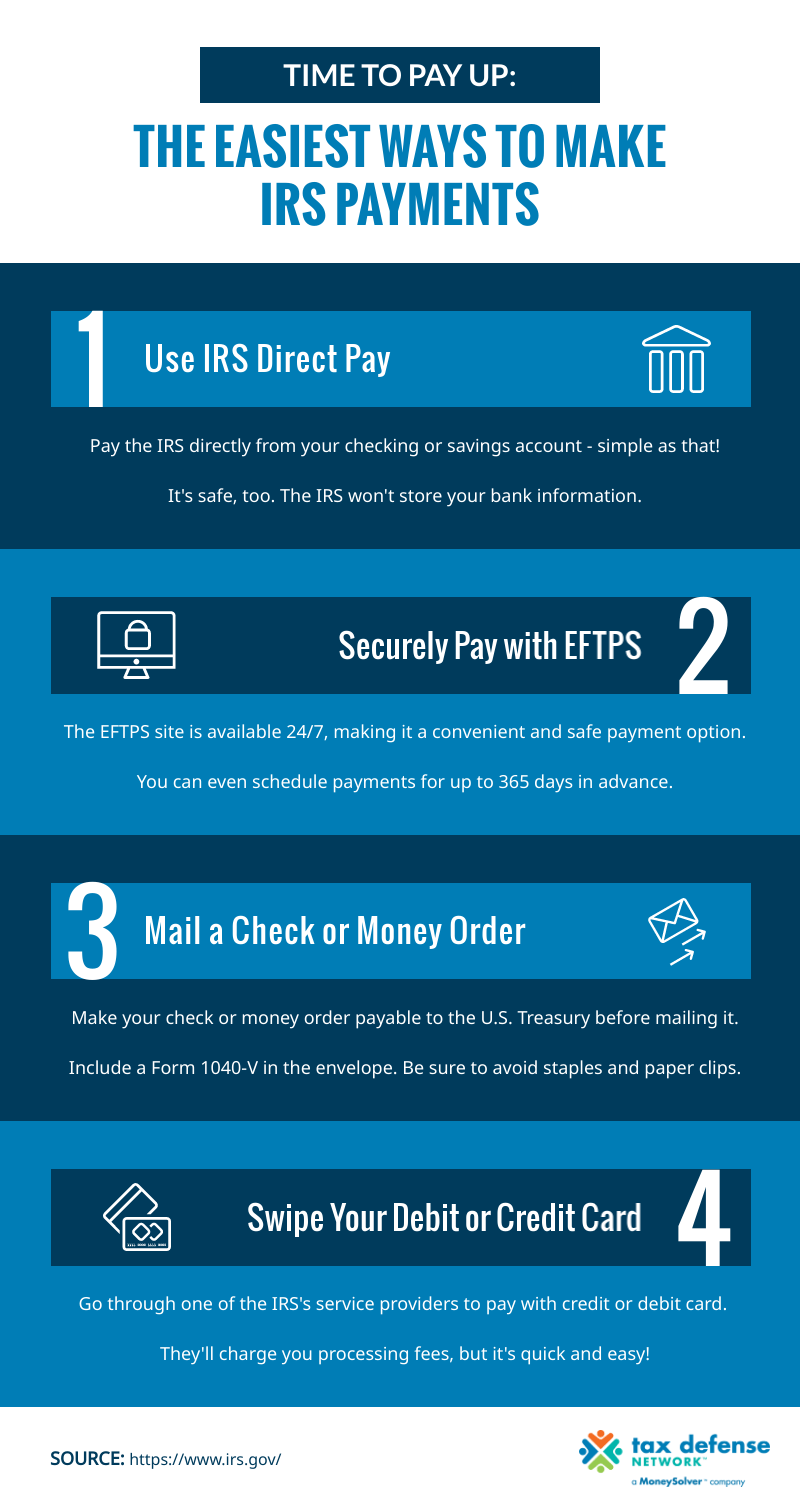
IRS Direct Pay is arguably the most streamlined financial tool provided by the agency. It allows individuals to pay their income tax directly from a checking or savings account without any prior registration.
From a financial planning standpoint, Direct Pay is ideal for those who value speed and simplicity. There are no usernames or passwords to remember. Instead, the system verifies your identity using information from a previous year’s tax return. You can use it for 1040 payments, estimated taxes, and even extensions. The most significant financial benefit is that it is entirely free—there are no transaction fees, ensuring that every cent you send goes directly toward reducing your tax liability. However, it is limited to five payments every 24 hours, which is rarely a constraint for the average household but something to note for active investors.
EFTPS: The Corporate and High-Volume Solution
While Direct Pay is built for speed, the Electronic Federal Tax Payment System (EFTPS) is built for control and record-keeping. EFTPS is a separate website managed by the Department of the Treasury and requires a formal registration process, which includes receiving a PIN via physical mail.
EFTPS is the gold standard for business owners, corporations, and high-net-worth individuals who need to manage multiple types of federal taxes (such as payroll, excise, or corporate income tax). The primary financial advantage of EFTPS is its robust reporting and scheduling capabilities. You can schedule payments up to 365 days in advance, which is a vital tool for business cash flow forecasting. It provides a comprehensive history of all payments made through the system, acting as a secondary ledger for your financial records. For those managing complex portfolios, the rigors of the EFTPS setup are well worth the long-term organizational benefits.
Third-Party Payment Processors and Credit Card Options
In some financial scenarios, paying directly from a bank account may not be the most advantageous move. The IRS authorizes several third-party processors to accept payments via credit and debit cards. While this introduces fees, it also introduces strategic opportunities for the financially savvy.

Weighing the Convenience vs. Transaction Fees
When you pay the IRS with a credit or debit card, the government does not receive the processing fee; instead, that fee goes to the authorized third-party service provider (such as PayUSAtax, ACI Payments, Inc., or EveryTaxPayment.com). These fees typically range from a flat rate for debit cards to approximately 1.8% to 2% for credit cards.
From a personal finance perspective, this requires a cost-benefit analysis. If you are using a credit card to earn “points” or “cash back,” you must ensure that the value of the rewards exceeds the processing fee. For example, if your card offers 1.5% cash back but the processor charges a 1.96% fee, you are effectively paying a premium for the convenience. However, if you are meeting a “minimum spend” requirement for a significant sign-up bonus, paying your taxes via credit card can be a brilliant tactical move.
Secure Payment Gateways and Fraud Protection
One of the primary concerns with third-party processors is security. The IRS-approved list of processors ensures that your financial data is handled with bank-grade encryption. When utilizing these services, always ensure you are navigating through the official IRS.gov portal to avoid phishing sites. These processors provide an additional layer of consumer protection inherent to credit card transactions, such as the ability to dispute a double charge—a feature not typically available with direct bank transfers.
Advanced Financial Management: Installment Agreements and Online Tools
Sometimes, the challenge isn’t how to pay, but the fact that the full amount cannot be paid immediately. The IRS online suite offers sophisticated financial instruments for debt management, allowing taxpayers to maintain their financial health even when facing a large tax bill.
Setting Up Online Payment Plans
If you cannot pay your tax debt in full, the IRS Online Payment Agreement tool allows you to apply for an installment plan. This is a crucial tool for debt mitigation. By setting up a formal agreement online, you can often lower the late-payment penalty rate.
There are two main types of digital agreements: short-term (paying in 180 days or less) and long-term (monthly installments). From a business finance perspective, an installment agreement is essentially a government loan. While it carries interest and penalties, the rates are often lower than those of an unsecured personal loan or credit card debt. Navigating this through the online portal allows for instant approval in many cases, providing immediate relief and a clear path toward solvency.
Using the Taxpayer Account Feature for Real-Time Monitoring
One of the most powerful recent additions to the IRS digital toolkit is the “Individual Online Account.” This portal acts as a central hub for your federal financial identity. Here, you can view your total balance due, your payment history, and key information from your most recent tax return.
For those focused on long-term wealth management, this transparency is invaluable. It allows you to verify that your estimated payments have been applied correctly and to view digital copies of select notices sent by the IRS. Instead of waiting for a letter in the mail, you can proactively manage your tax status, ensuring that no surprises disrupt your financial planning.
Best Practices for Secure and Efficient Tax Settlement
To maximize the benefits of online tax payments, one must adhere to a set of best practices that prioritize security and record-keeping. In the digital age, your financial data is your most valuable asset, and protecting it during tax season is paramount.
Record Keeping in the Digital Age
Even though the IRS tracks your payments digitally, maintaining your own “paper trail” is essential for financial audits and personal accounting. Every time you complete an online payment, the system generates a confirmation number. You should save this as a PDF or print it immediately.
In the event of a discrepancy—where the IRS claims a payment wasn’t received—this confirmation number is your primary evidence. For businesses, these digital receipts should be integrated into your accounting software (like QuickBooks or Xero) to ensure your balance sheets reflect your actual tax expenditures accurately.
Avoiding Common Online Payment Errors
Financial efficiency can be easily derailed by simple data entry errors. When paying online, the most common mistakes include selecting the wrong tax year or the wrong form type. For instance, if you intend to pay your 2023 1040 balance but accidentally apply the payment to “Estimated Tax” for 2024, it can take months of correspondence to rectify the error.
Always double-check the “Tax Period” and “Tax Form” fields before submitting. Additionally, ensure that your bank account information (routing and account numbers) is entered correctly to avoid “dishonored payment” fees, which can be substantial. By approaching the online payment process with the same diligence you apply to your investment portfolio, you can ensure that your interaction with the IRS is a seamless, professional transaction that supports your overall financial well-being.
aViewFromTheCave is a participant in the Amazon Services LLC Associates Program, an affiliate advertising program designed to provide a means for sites to earn advertising fees by advertising and linking to Amazon.com. Amazon, the Amazon logo, AmazonSupply, and the AmazonSupply logo are trademarks of Amazon.com, Inc. or its affiliates. As an Amazon Associate we earn affiliate commissions from qualifying purchases.