
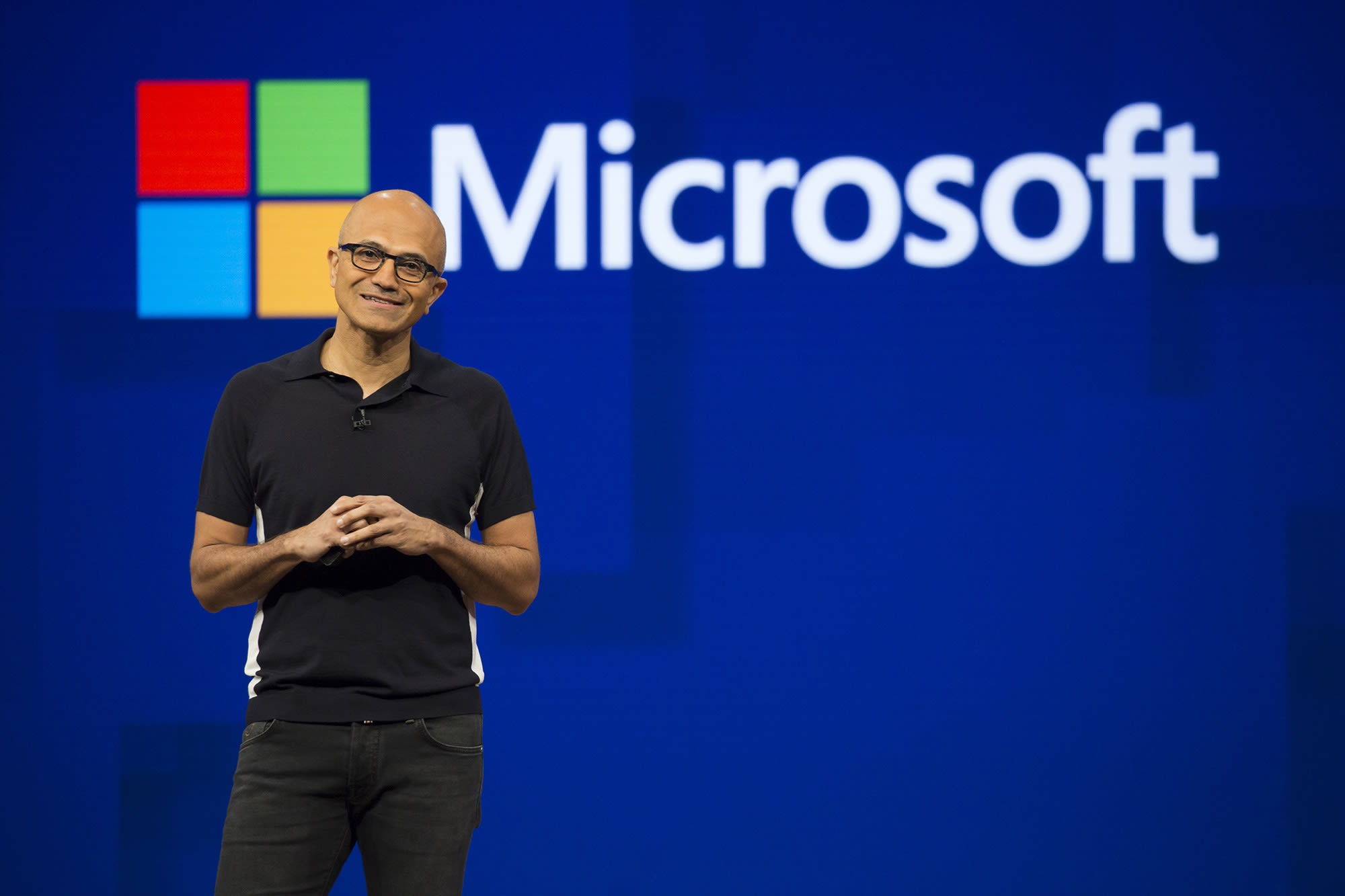
When the conversation turns to the question of who is the CEO of Microsoft Corporation, the name Satya Nadella immediately emerges as the primary architect of the modern digital landscape. Since taking the helm in 2014, Nadella has not merely managed a legacy software company; he has fundamentally re-engineered Microsoft’s technological priorities, shifting the focus from a desktop-centric world to a future dominated by cloud computing and Artificial Intelligence (AI). His leadership represents a pivotal era in tech history, where a “mobile-first, cloud-first” philosophy replaced the stagnant “Windows-only” dogma of the past.

Under Nadella’s guidance, Microsoft has transitioned from a provider of packaged software to a powerhouse of digital infrastructure. This transition was not just a business maneuver but a deep-seated technological pivot that required reimagining how code is written, how data is stored, and how intelligence is deployed across global networks. To understand Nadella is to understand the current trajectory of the entire technology sector.
From Windows-First to Cloud-First: The Azure Revolution
For decades, Microsoft’s identity was inseparable from the Windows operating system. However, when Satya Nadella stepped into the CEO role, he recognized that the future of computing lived in the data center, not just the local hard drive. This realization led to the meteoric rise of Microsoft Azure, the cloud platform that has become the backbone of modern enterprise technology.
Breaking the Silos of Legacy Software
The most significant hurdle Nadella faced was the internal culture that prioritized the Windows platform above all else. In a tech landscape where competitors were moving toward agile, web-based services, Microsoft risked becoming a dinosaur. Nadella decoupled the company’s services from its proprietary OS, allowing products like Microsoft 365 to flourish on iOS, Android, and Linux. This “cloud-first” strategy meant that software was no longer a static product purchased in a box, but a living, breathing service updated in real-time. By prioritizing software-as-a-service (SaaS) and infrastructure-as-a-service (IaaS), Microsoft regained its relevance among developers and CTOs worldwide.
The Infrastructure of the Modern Internet
Azure is more than just a storage solution; it is a global supercomputer. Under Nadella, Microsoft expanded its data center footprint to dozens of regions globally, providing the low-latency infrastructure required for high-performance computing. This massive investment in hardware—from undersea fiber optic cables to specialized liquid-cooling systems—has enabled Azure to support everything from massive multiplayer gaming to complex scientific simulations. The shift to the cloud fundamentally changed the way businesses approach digital transformation, allowing startups to access the same computational power as Fortune 500 companies.
Leading the AI Frontier: OpenAI and the Era of Copilots
While the cloud provided the foundation, Satya Nadella identified Artificial Intelligence as the ultimate destination for the tech industry. Long before “generative AI” became a household term, Nadella was positioning Microsoft as an AI-first company. This foresight culminated in one of the most significant technological partnerships in history: the deep integration with OpenAI.
Democratizing Artificial Intelligence
Nadella’s vision for AI is rooted in the concept of the “Copilot.” Rather than viewing AI as a replacement for human intellect, he views it as a tool to enhance human productivity. By integrating Large Language Models (LLMs) into the Microsoft 365 suite, the company has effectively democratized AI. Whether it is generating code in GitHub, summarizing meetings in Teams, or creating complex data visualizations in Excel, the goal is to make sophisticated tech accessible to the average user. This shift represents a move toward “natural language” as the primary user interface, potentially ending the era of complex menus and command-line prompts.

Integrating Generative AI across the Tech Stack
The brilliance of Nadella’s AI strategy lies in its vertical integration. Microsoft doesn’t just provide an AI chatbot; it provides the entire stack. This includes the silicon (with custom AI chips like Maia 100), the cloud infrastructure (Azure AI), the models (via the OpenAI partnership and internal development), and the applications (Copilot). By controlling every layer of the technology, Microsoft ensures that AI is not an afterthought but a core component of the digital experience. This holistic approach has forced the entire tech industry to accelerate its development cycles, sparking a new “arms race” in silicon design and machine learning research.
Open Source and Cross-Platform Integration
Perhaps the most surprising technological shift under Satya Nadella was Microsoft’s embrace of the open-source community. Historically, Microsoft viewed open-source software, particularly Linux, as a threat to its business model. Nadella flipped this script, famously declaring that “Microsoft loves Linux.”
The Acquisition of GitHub and the Developer Ecosystem
In 2018, Microsoft acquired GitHub, the world’s leading platform for software development and collaboration. This move was a clear signal that under Nadella, Microsoft intended to be the primary environment for the world’s developers. By maintaining GitHub as an open, developer-first platform while integrating it with Azure and VS Code (Microsoft’s popular open-source code editor), the company successfully won back the trust of the tech community. This strategy ensures that the next generation of software—whether it’s built for the web, mobile, or the cloud—is built using Microsoft’s tools.
Bridging the Gap: Bringing Microsoft Tools to Linux and Mobile
Nadella understood that in a fragmented tech ecosystem, interoperability is a feature, not a bug. He oversaw the development of the Windows Subsystem for Linux (WSL), which allows developers to run Linux environments directly on Windows. He also pushed for the development of .NET as an open-source, cross-platform framework. By making Microsoft’s development tools work seamlessly across different operating systems, Nadella ensured that the company’s tech remains the “glue” that holds different parts of the digital world together. This pragmatism has been essential in an era where developers use a mix of MacBooks, Linux servers, and Android devices.
The Future of Computing: Quantum, Edge, and Security
As the CEO of Microsoft, Satya Nadella is not just focused on the technologies of today but is actively investing in the disruptive technologies of tomorrow. His vision extends beyond the cloud into the realms of edge computing, quantum mechanics, and advanced digital security.
Preparing for the Post-Silicon World
Nadella has consistently pointed toward Quantum Computing as the next great frontier. Microsoft’s Azure Quantum platform is currently exploring topological qubits, a technology aimed at making quantum computers more stable and scalable. While still in its infancy, the goal is to solve problems that are currently impossible for classical computers, such as simulating complex molecular interactions for drug discovery or optimizing global logistics chains. By building the software tools for quantum computing today, Microsoft is ensuring it will lead the next major paradigm shift in technology.
Security in an Increasingly Connected Digital Landscape
As technology becomes more integrated into daily life, the surface area for cyberattacks grows exponentially. Nadella has positioned security as a fundamental pillar of the company’s technological offerings. Under his leadership, Microsoft has become one of the world’s largest security companies, leveraging AI to analyze trillions of signals daily to predict and prevent breaches. This focus on “Zero Trust” architecture and secure-by-design principles is critical as the world moves toward the Internet of Things (IoT) and “Edge” computing, where intelligence is processed on local devices rather than in a central cloud.
Through these four pillars—Cloud, AI, Open Source, and Future Computing—Satya Nadella has redefined what it means to be a technology leader. He has successfully navigated Microsoft through the most volatile decade in tech history, ensuring that the company remains at the center of the global digital economy. His tenure as CEO is a testament to the power of technological adaptability, proving that even the largest entities can pivot if they have a clear-eyed vision of where the future is headed. In the world of software and silicon, Nadella is not just a manager; he is a visionary who continues to shape the tools we use every single day.
aViewFromTheCave is a participant in the Amazon Services LLC Associates Program, an affiliate advertising program designed to provide a means for sites to earn advertising fees by advertising and linking to Amazon.com. Amazon, the Amazon logo, AmazonSupply, and the AmazonSupply logo are trademarks of Amazon.com, Inc. or its affiliates. As an Amazon Associate we earn affiliate commissions from qualifying purchases.