
The NASDAQ, often synonymous with innovation and technology, is far more than just a stock market; it’s a dynamic ecosystem reflecting the cutting edge of global enterprise. For investors, entrepreneurs, and financial enthusiasts alike, understanding what constitutes the NASDAQ is crucial for grasping market dynamics, identifying investment opportunities, and discerning broader economic trends. While famously associated with tech giants, the NASDAQ encompasses a vast array of companies, from burgeoning startups to established multinational corporations, all united by a common thread of growth and forward-thinking vision. Delving into its composition reveals a complex interplay of indices, listing requirements, and sector weightings that paint a comprehensive picture of modern finance.
Understanding the NASDAQ: More Than Just a Stock Market
At its core, the NASDAQ (National Association of Securities Dealers Automated Quotations) is a global electronic marketplace for buying and selling securities. Established in 1971, it was the world’s first electronic stock market, pioneering a revolutionary approach to trading that moved away from traditional physical trading floors. This digital foundation has profoundly influenced its identity and the types of companies it attracts.
Origins and Evolution: A Digital Pioneer
The NASDAQ’s inception marked a significant paradigm shift in financial markets. Before its arrival, stock exchanges largely relied on an “open outcry” system, where traders physically met to conduct transactions. The NASDAQ introduced a computerized, electronic network that connected buyers and sellers, offering greater transparency, efficiency, and speed. This innovative spirit is deeply ingrained in its DNA, attracting companies that share a similar drive for innovation and growth. Over the decades, it has evolved from a nascent electronic bulletin board to a sophisticated global exchange, listing tens of thousands of companies and facilitating trillions of dollars in transactions annually. Its journey reflects the broader digital transformation of the economy, consistently adapting to new technologies and market demands.
The Role of an Exchange: Facilitating Capital Markets
As a stock exchange, NASDAQ plays a pivotal role in the global capital markets. Its primary function is to provide a platform where companies can raise capital from investors by issuing stocks, and where investors can trade those stocks. This facilitates economic growth by connecting those who need capital (businesses) with those who have it (investors). For companies, listing on the NASDAQ provides access to a vast pool of public funds, enhancing liquidity, raising their profile, and enabling expansion. For investors, it offers opportunities to participate in the growth of these companies, potentially generating returns through capital appreciation and dividends. The NASDAQ ensures an orderly and regulated market, promoting fair and transparent trading practices that protect both issuers and investors.
Key Characteristics: Technology-Driven and Global Reach
The NASDAQ’s defining characteristic is its technology-centric approach. While it lists companies from diverse sectors, it has historically been the preferred venue for technology, biotechnology, and growth-oriented firms. This focus has cemented its reputation as a hub for innovation. Furthermore, the NASDAQ boasts a significant global reach, attracting companies from around the world looking to tap into the U.S. capital markets and gain international exposure. Its robust electronic infrastructure allows for seamless trading across different time zones, making it a truly global marketplace. This blend of technological innovation and international appeal differentiates it from other major exchanges and shapes the composition of its listed securities.
The NASDAQ Composite Index: A Broad Stroke View
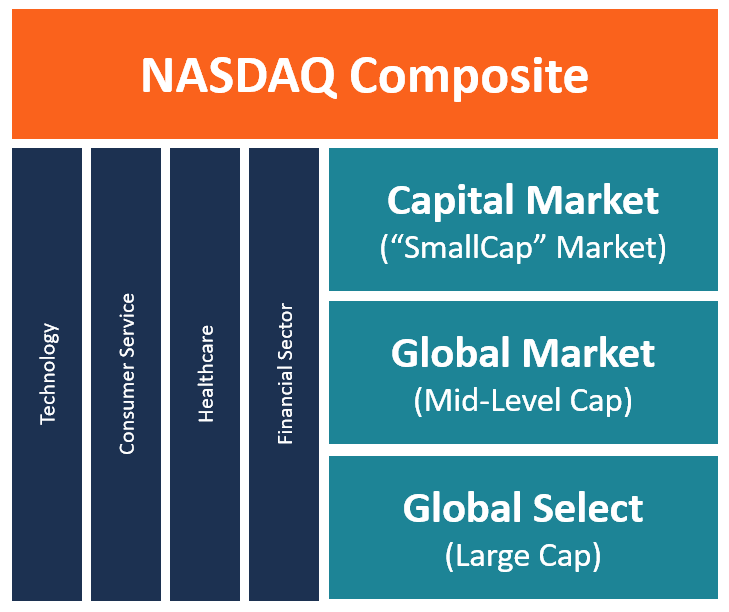
When people refer to “the NASDAQ,” they often implicitly mean one of its prominent indices. The most encompassing of these is the NASDAQ Composite Index, a broad market index that serves as a vital barometer for the health and sentiment of the entire NASDAQ stock market. It offers a comprehensive snapshot of the types of companies listed on the exchange.
Defining the Composite: A Market Barometer
The NASDAQ Composite Index comprises virtually all common stocks and similar securities listed on the NASDAQ Stock Market. Unlike other indices that might select only a certain number of stocks, the Composite includes over 3,000 companies, providing an extensive view of the market’s performance. It is a market-capitalization-weighted index, meaning companies with larger market values have a greater impact on the index’s performance. This weighting methodology ensures that the movements of larger, more influential companies are reflected more heavily in the index’s overall trajectory, making it a powerful indicator of investor sentiment towards growth-oriented businesses.
Diverse Constituents: From Startups to Established Leaders
While often associated solely with tech, the NASDAQ Composite is remarkably diverse. Its constituents span a wide range of industries, including technology, healthcare, biotechnology, retail, telecommunications, industrials, and financial services. This diversity is crucial; it demonstrates that while technology companies may dominate headlines, the NASDAQ provides a listing venue for innovative companies across the economic spectrum. From emerging startups striving for their first breakthroughs to established market leaders with decades of history, the Composite includes a broad cross-section of publicly traded entities, all meeting NASDAQ’s listing requirements.
Sectoral Weightings: A Reflection of Economic Shifts
The sectoral weightings within the NASDAQ Composite dynamically reflect ongoing shifts in the global economy and investor interest. Historically, technology has maintained a dominant position, encompassing software, hardware, semiconductors, and internet services. However, other sectors like healthcare (particularly biotechnology and pharmaceuticals), consumer discretionary (e-commerce, entertainment), and communication services also hold significant weight. These weightings are not static; they evolve as industries grow, shrink, or transform, providing insights into which sectors are driving economic innovation and attracting significant capital investment. Analyzing these weightings can reveal underlying trends about where capital is flowing and which industries are perceived as having the greatest growth potential.
The NASDAQ-100 Index: The Giants That Drive Innovation
Perhaps the most famous and widely followed NASDAQ index is the NASDAQ-100. This index is far more selective than the Composite, representing the 100 largest non-financial companies listed on the NASDAQ Stock Market based on market capitalization. It is a benchmark for large-cap growth stocks, globally recognized for tracking many of the world’s most innovative and influential companies.
Selection Criteria: Non-Financial Titans
The NASDAQ-100 has stringent selection criteria designed to include only the most prominent and liquid non-financial companies. Key requirements include being listed on the NASDAQ for at least three months, maintaining minimum average daily trading volumes, and not being in bankruptcy. The “non-financial” criterion is important as it explicitly excludes banks, insurance companies, and other financial institutions. This distinction helps to create an index focused on innovation and growth sectors, often contrasting with other broad market indices that include financial services firms. The index is rebalanced quarterly and re-ranked annually, ensuring that it remains reflective of the leading companies in its defined scope.
Dominant Sectors: Technology’s Stronghold

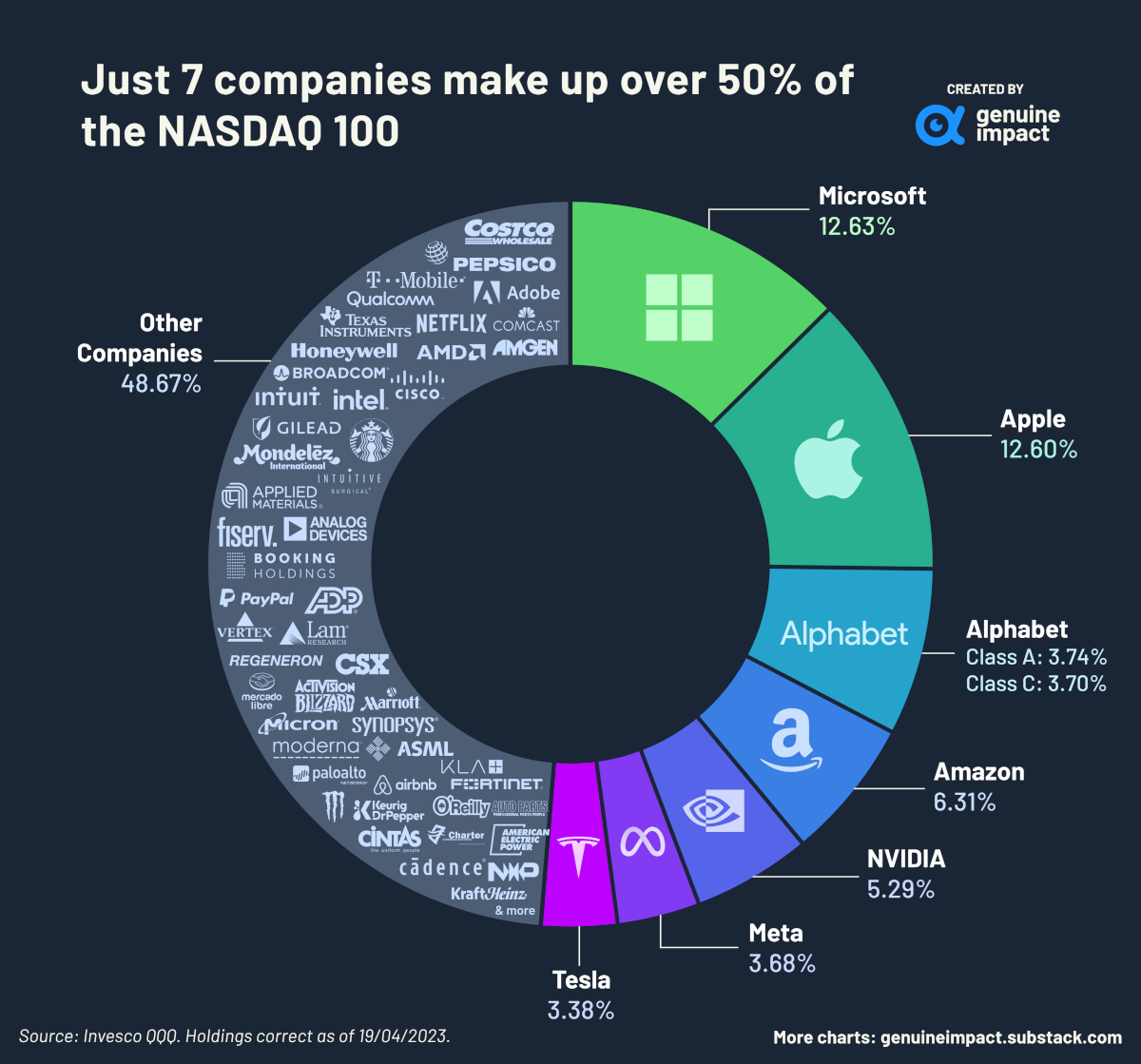
The NASDAQ-100 is overwhelmingly dominated by technology companies. Giants in software, internet services, e-commerce, and hardware constitute a significant portion of the index’s weight. However, it also includes major players in other growth-oriented sectors such as biotechnology, telecommunications, and consumer discretionary. These companies are typically at the forefront of their respective industries, driving innovation, expanding markets, and often exhibiting rapid revenue growth. The concentration in these sectors reflects the index’s mandate to capture the performance of leading growth companies that are shaping the future economy.
Marquee Names: The Powerhouses of the Modern Economy
The NASDAQ-100 is home to some of the most recognizable corporate names globally. Think of tech behemoths like Apple, Microsoft, Amazon, Google (Alphabet), and Meta Platforms. But it also includes major players beyond traditional tech, such as NVIDIA in semiconductors, Tesla in electric vehicles, Starbucks in consumer retail, and Amgen in biotechnology. These companies are not just large; they are often industry leaders with vast market influence, strong brand recognition, and a significant impact on global consumer behavior and technological advancement. Their inclusion in the NASDAQ-100 highlights their status as powerhouses driving the modern economy.
Performance and Influence: A Benchmark for Growth
The NASDAQ-100 is widely regarded as a benchmark for large-cap growth stocks and a proxy for the performance of the U.S. technology sector. Its performance is closely watched by investors seeking exposure to companies with high growth potential. Due to the innovative nature and often global reach of its constituents, the NASDAQ-100 has historically demonstrated strong long-term growth, albeit with periods of higher volatility compared to broader, more diversified market indices. Its influence extends beyond investment vehicles; the companies within the NASDAQ-100 often set industry standards, drive technological advancements, and contribute significantly to economic output and employment.
Beyond the Indices: A Home for Growth and Innovation
While indices like the Composite and the NASDAQ-100 provide excellent snapshots, the true breadth of what is in the NASDAQ extends to the thousands of companies that might not be in the spotlight but represent the future of innovation and growth. The NASDAQ is unique in its appeal to a wide spectrum of companies, from early-stage ventures to established mid-caps, reflecting its commitment to fostering innovation at every level.
Listing Requirements: A Path for Aspiring Companies
NASDAQ offers several market tiers (Global Select Market, Global Market, and Capital Market), each with varying listing requirements designed to accommodate companies at different stages of their growth. This tiered structure ensures accessibility for a broad range of businesses, from smaller companies with nascent revenue streams to larger, more established entities. Requirements generally cover minimum shareholder equity, operating income, market capitalization, and share price, along with corporate governance standards. This flexibility allows promising young companies to access public capital markets earlier than might be possible on other exchanges, providing a vital lifeline for innovation and expansion.
Small and Mid-Cap Innovators: The Future’s Foundation
Beyond the well-known mega-caps, the NASDAQ is home to a vibrant ecosystem of small and mid-capitalization companies. These firms often represent the next wave of innovation, focusing on niche technologies, specialized healthcare solutions, emerging consumer trends, or disruptive business models. Investing in these companies can offer higher growth potential, though often accompanied by increased risk and volatility. For investors with a longer time horizon and a higher risk tolerance, these smaller NASDAQ-listed companies can be a rich hunting ground for future market leaders, providing early exposure to groundbreaking industries and technologies.
Global Appeal: Attracting International Visionaries
The NASDAQ’s reputation as a market for growth and innovation extends globally, attracting numerous international companies seeking to list their shares in the U.S. This provides them with access to one of the deepest and most liquid capital markets in the world, enhancing their visibility, funding opportunities, and global credibility. These international listings bring diverse perspectives and business models to the NASDAQ, further enriching its composition and offering investors exposure to global economic trends and emerging markets, all within a familiar and regulated framework.
Investing in the NASDAQ: Strategies and Considerations
For individuals and institutions looking to gain exposure to the companies within the NASDAQ, there are several avenues available, each with its own set of advantages and considerations from a financial planning perspective. Understanding these options is key to aligning investment decisions with personal financial goals and risk tolerance.
Direct Stock Ownership: Picking Individual Winners
One approach is to directly purchase shares of individual companies listed on the NASDAQ. This strategy requires thorough research and analysis of specific companies’ financials, management teams, competitive landscapes, and future growth prospects. It offers the potential for high returns if successful in identifying outperforming stocks, but also carries significant risk, as the performance of a single stock can be highly volatile. Direct ownership suits investors who are engaged, informed, and comfortable with higher levels of risk and the time commitment required for active management.
Exchange-Traded Funds (ETFs) and Mutual Funds: Diversified Exposure
For many investors, a more diversified approach to gaining NASDAQ exposure is through Exchange-Traded Funds (ETFs) or mutual funds that track NASDAQ indices. The most popular example is the Invesco QQQ Trust (QQQ), an ETF designed to track the NASDAQ-100 Index. Investing in such funds provides instant diversification across numerous NASDAQ-listed companies, mitigating the risk associated with individual stock picking. These funds are ideal for investors seeking broad exposure to the growth-oriented sectors represented on the NASDAQ without the need for extensive individual stock research, offering a balance of growth potential and reduced idiosyncratic risk.
Risks and Opportunities: Volatility and Growth Potential
Investing in NASDAQ-listed companies, particularly those within its growth-heavy indices, comes with inherent risks and opportunities. The opportunity lies in the potential for significant capital appreciation, driven by innovation, market expansion, and strong earnings growth. However, this growth potential often comes with higher volatility compared to value-oriented or broader market indices. Growth stocks can be more sensitive to economic downturns, interest rate changes, and shifts in investor sentiment. A well-considered investment strategy should acknowledge this volatility and align with an investor’s long-term financial goals and capacity for risk.
Long-Term Vision: A Focus on Future Trends
Regardless of the specific investment vehicle, a long-term vision is often beneficial when investing in the NASDAQ. Many of the companies listed, especially in the technology and biotechnology sectors, operate on multi-year development cycles and require time for their innovations to mature and gain market traction. Adopting a long-term perspective allows investors to ride out short-term market fluctuations and benefit from the compounding growth of these forward-looking enterprises. The NASDAQ’s composition is a testament to innovation, and investing in it means placing a bet on the companies that are actively shaping the future.
In conclusion, “what is in the NASDAQ” is a multifaceted answer. It is a vast electronic marketplace encompassing thousands of companies, ranging from innovative startups to global tech behemoths. It houses key indices like the NASDAQ Composite, a broad market barometer, and the NASDAQ-100, a selective index of non-financial growth leaders. For investors, the NASDAQ represents a dynamic arena for capital growth, offering diverse avenues for participation, from direct stock ownership to diversified fund investments, all while navigating the unique blend of high growth potential and inherent market volatility that defines this pioneering exchange.
aViewFromTheCave is a participant in the Amazon Services LLC Associates Program, an affiliate advertising program designed to provide a means for sites to earn advertising fees by advertising and linking to Amazon.com. Amazon, the Amazon logo, AmazonSupply, and the AmazonSupply logo are trademarks of Amazon.com, Inc. or its affiliates. As an Amazon Associate we earn affiliate commissions from qualifying purchases.