
For investors, analysts, and anyone with a keen eye on the pulse of the global economy, the daily performance of the Nasdaq Composite is more than just a fleeting number; it’s a dynamic indicator reflecting the health and sentiment of the innovation-driven sectors. Unlike broader market indices that offer a more generalized view, the Nasdaq Composite zeroes in on a vast array of companies, predominantly those in technology, biotechnology, and other growth-oriented industries. Understanding its daily fluctuations, therefore, provides invaluable insights into the forces shaping the future of business and finance.
In a world increasingly driven by technological advancement and rapid innovation, the Nasdaq Composite often acts as a bellwether for market enthusiasm and investor confidence in these cutting-edge sectors. Its movements can be influenced by a myriad of factors, from macroeconomic data releases and Federal Reserve policy statements to geopolitical events and, crucially, the earnings reports of its heavyweight constituents. To truly grasp what the Nasdaq Composite is “doing today,” one must look beyond the immediate tick-by-tock changes and delve into the underlying currents that propel this pivotal index. This exploration is not merely about tracking numbers; it’s about deciphering the narrative of capital allocation, technological progress, and investor psychology in real-time.
Understanding the Nasdaq Composite: A Gateway to Innovation
The Nasdaq Composite Index is a cornerstone of the global financial landscape, representing a vast and diverse collection of companies listed on the Nasdaq Stock Market. Its significance extends far beyond mere market capitalization; it serves as a critical benchmark for the performance of growth-oriented and technology-focused enterprises that are often at the forefront of innovation.
Definition and Composition
At its core, the Nasdaq Composite is a market-capitalization-weighted index of all common stocks and similar securities listed on the Nasdaq stock market. Unlike the Dow Jones Industrial Average, which comprises only 30 large-cap companies, or the S&P 500, which focuses on 500 of the largest U.S. companies across various sectors, the Nasdaq Composite encompasses over 3,000 stocks. This expansive scope includes not only the tech giants that dominate headlines but also thousands of smaller, emerging companies across a spectrum of industries such as biotechnology, telecommunications, retail, and finance, all meeting Nasdaq’s listing requirements. The market-capitalization weighting means that companies with larger market values have a greater impact on the index’s movement, naturally giving significant weight to household names like Apple, Microsoft, Amazon, Google (Alphabet), and Meta Platforms, among others. This concentration in technology and growth stocks makes the Nasdaq Composite particularly sensitive to shifts in investor sentiment towards innovation and future earnings potential.
Key Role in the Global Economy
The Nasdaq Composite plays an indispensable role in the global economy for several reasons. Firstly, it offers a distinct reflection of investor confidence in the technology sector, which has become an increasingly dominant force in economic growth and productivity. When the Nasdaq Composite is performing strongly, it often signals optimism about innovation, digital transformation, and the future earnings power of tech-driven businesses. Conversely, downturns can indicate concerns about valuation, regulatory pressures, or broader economic headwinds affecting these growth sectors. Secondly, its composition provides a unique barometer for the venture capital ecosystem and the lifecycle of startups. Many companies that begin as small, innovative ventures eventually list on Nasdaq, making the index a testament to the journey from nascent idea to global enterprise. For institutional investors, fund managers, and individual traders, the Nasdaq Composite is not just an investment vehicle but a crucial tool for assessing sector-specific trends, identifying investment opportunities, and managing portfolio risk within the dynamic landscape of modern industry. Its daily movements are thus meticulously scrutinized as a key indicator of market sentiment and economic direction.
Market Movers and Current Performance Indicators
To understand what the Nasdaq Composite is doing today, it’s essential to look at the immediate catalysts and ongoing trends that shape its performance. The index’s daily fluctuations are a complex interplay of micro and macro factors, each contributing to its upward or downward trajectory.
Tracking Daily Fluctuations and Trends
The moment-to-moment action of the Nasdaq Composite is a constant reflection of supply and demand for the thousands of underlying securities. Professional traders and sophisticated algorithms constantly process news, economic data, and order flows, leading to rapid price discovery. Observing the index’s intraday chart can reveal patterns – whether it’s consolidating after a significant move, experiencing a sharp rally on positive news, or undergoing a correction due to profit-taking or new concerns. Beyond the immediate ticks, investors often look for broader daily trends: is the index opening higher or lower than its previous close? Is it maintaining momentum throughout the trading session, or fading into the close? Volume also plays a crucial role; a significant move on high volume is often seen as more credible than one on thin trading, indicating stronger conviction among market participants. These daily movements, when aggregated over weeks and months, form the basis of more substantial trends that inform long-term investment strategies.
Key Factors Influencing Today’s Movement
Several powerful forces exert their influence on the Nasdaq Composite’s daily direction:
- Economic Data Releases: Reports on inflation (CPI, PPI), employment (jobs reports), consumer spending, manufacturing output, and GDP growth provide critical insights into the health of the economy. Strong economic data can boost optimism about corporate earnings, while weak data can spark fears of recession or slowdowns, both directly impacting investor sentiment towards growth stocks.
- Corporate Earnings Reports: As a heavily weighted index towards major tech companies, quarterly earnings announcements from its largest constituents (e.g., Apple, Microsoft, Amazon, Nvidia) can dramatically sway the index. Positive surprises often lead to rallies, while misses or disappointing guidance can trigger sell-offs.
- Federal Reserve Policy and Interest Rates: The Fed’s stance on monetary policy, particularly interest rate hikes or cuts, profoundly affects growth stocks. Higher interest rates increase borrowing costs and reduce the present value of future earnings, often putting downward pressure on high-valuation tech companies. Conversely, lower rates can act as a tailwind.
- Geopolitical Events and Global News: International conflicts, trade disputes, shifts in global supply chains, and even major political developments can introduce uncertainty, leading investors to flee riskier assets, including many Nasdaq-listed growth stocks.
- Commodity Prices: Fluctuations in oil prices, for instance, can impact consumer spending and business costs, indirectly affecting the profitability of companies across sectors.
- Sector-Specific News: Breakthroughs in AI, new product launches, regulatory scrutiny on big tech, or developments in biotechnology can cause significant shifts within specific industries, rippling through the broader Nasdaq Composite.
Notable Sector Performance
Within the Nasdaq Composite, certain sectors often lead or lag the overall index. Today, it’s not uncommon to see specific segments like semiconductors, cloud computing, artificial intelligence, or cybersecurity either driving gains or experiencing steeper declines. For example, if there’s a positive analyst upgrade for a major chipmaker, it could lift the entire semiconductor sub-sector, contributing positively to the Composite. Conversely, concerns over increased competition in streaming services might weigh down entertainment tech stocks. Identifying which sectors are exhibiting strength or weakness on a given day provides a granular view of market dynamics and helps explain the broader index’s performance. The concentrated nature of the Nasdaq means that the performance of a handful of mega-cap tech stocks can often dictate the direction of the entire index, making their individual movements particularly critical to watch.
Beyond Today’s Numbers: Broader Market Context
While daily performance captures immediate market sentiment, a comprehensive understanding of the Nasdaq Composite requires placing its daily movements within a broader historical and comparative context. This long-term perspective reveals underlying trends and allows investors to differentiate between short-term noise and significant shifts.
Long-Term Growth Trajectory and Volatility

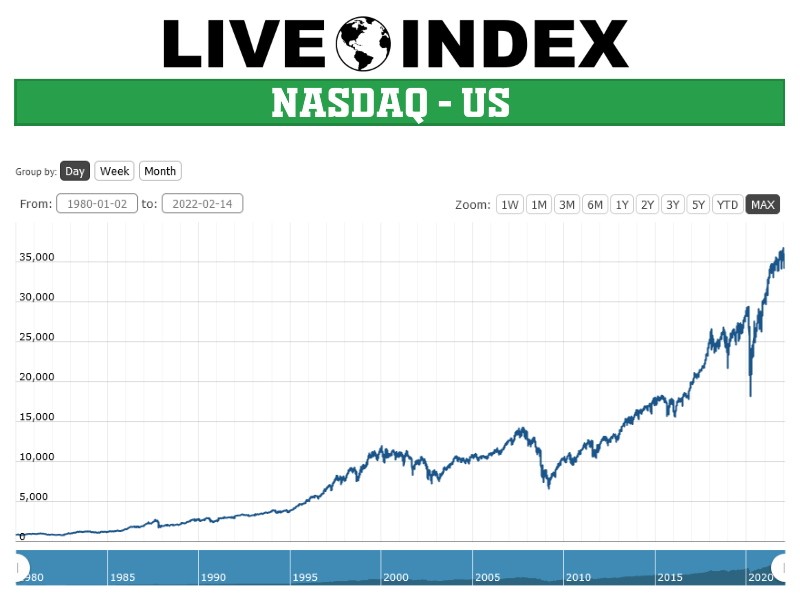
Historically, the Nasdaq Composite has been characterized by its robust long-term growth trajectory, driven by the relentless innovation of its constituent companies. Over decades, it has delivered impressive returns, fueled by technological revolutions ranging from the personal computer to the internet, and most recently, artificial intelligence and biotechnology. However, this growth has also come with periods of significant volatility. The dot-com bust of the early 2000s and the market corrections seen during financial crises or economic downturns demonstrate the index’s sensitivity to speculative bubbles, interest rate changes, and broader economic cycles. Understanding this inherent growth-volatility trade-off is crucial for investors. While the long-term trend points upwards, daily or even monthly periods can be marked by dramatic swings, requiring a disciplined and patient approach to investing in this index. Analyzing its performance over various timeframes (e.g., 1-year, 5-year, 10-year) helps to contextualize today’s actions, determining whether current movements are part of a larger trend or merely temporary deviations.
Comparison with Other Major Indices
To truly appreciate the Nasdaq Composite’s “today” performance, it’s beneficial to compare it against other leading market indices:
- S&P 500: The S&P 500 represents 500 of the largest U.S. companies across all major sectors, making it a broader benchmark for the overall health of the American economy. If the Nasdaq is outperforming the S&P 500 today, it might indicate strong investor confidence in growth and technology stocks relative to other sectors. Conversely, if the S&P 500 is performing better, it could suggest a rotation out of tech into more value-oriented or cyclical sectors.
- Dow Jones Industrial Average (DJIA): The Dow, comprising just 30 large-cap “blue-chip” companies, is often seen as a barometer for traditional industrial and financial stalwarts. The Nasdaq’s performance compared to the Dow can highlight a divergence between old-economy and new-economy companies. For instance, a strong Nasdaq on a flat Dow could signal a tech-led rally that isn’t broadening out to other parts of the market.
These comparisons help investors understand whether today’s movements are specific to the tech and growth sectors or indicative of a broader market trend, offering a clearer picture of relative strength and weakness across the economy.
The Influence of Macroeconomic Headwinds and Tailwinds
Beyond immediate news, the Nasdaq Composite is constantly buffeted by larger macroeconomic forces. Tailwinds, such as periods of low-interest rates, robust economic growth, and increasing consumer spending, typically foster an environment where growth stocks can thrive. Low rates make it cheaper for companies to borrow and expand, and they also increase the present value of future earnings, which is particularly beneficial for high-growth tech firms. Headwinds, conversely, can include rising inflation, higher interest rates, geopolitical instability, supply chain disruptions, and the threat of recession. These factors can erode corporate profits, increase operational costs, and dampen investor appetite for risk, often leading to significant corrections in the Nasdaq. Today’s performance, therefore, can often be traced back to the prevailing macroeconomic climate—whether it’s an environment conducive to risk-taking and growth, or one demanding caution and value preservation. Understanding these underlying forces is critical for predicting sustained trends versus ephemeral daily shifts.
Strategic Implications for Investors
The daily ebb and flow of the Nasdaq Composite carries significant implications for investors, influencing portfolio decisions, risk management, and the overall approach to wealth building within the modern financial landscape.
Diversification and Risk Management in a Nasdaq-Heavy Portfolio
For many investors, especially those with a long-term growth orientation, exposure to Nasdaq-listed companies is significant. However, the index’s concentration in technology and growth stocks, while offering high potential returns, also introduces specific risks. A Nasdaq-heavy portfolio can be more susceptible to sector-specific downturns, shifts in technological paradigms, and changes in investor sentiment towards growth equities. Therefore, today’s performance should always be viewed through the lens of diversification. If the Nasdaq is experiencing a particularly volatile day, an investor might assess whether their portfolio has adequate exposure to other asset classes, such as bonds, real estate, or value stocks in less correlated sectors (e.g., utilities, consumer staples). Implementing risk management strategies, such as setting stop-loss orders, rebalancing portfolios periodically, or utilizing options to hedge against downside risk, becomes paramount when dealing with the inherent dynamism of growth-oriented indices like the Nasdaq Composite.
Leveraging Financial Tools for Informed Decisions
In today’s fast-paced market, a wealth of financial tools and resources is available to help investors make informed decisions about the Nasdaq Composite. Beyond basic stock tickers, advanced analytical platforms provide real-time data, technical analysis charts, news aggregators, and customizable alerts. These tools enable investors to track intraday movements, identify support and resistance levels, analyze trading volumes, and monitor market sentiment instantaneously. Furthermore, access to analyst reports, economic calendars, and expert commentary can provide deeper insights into the factors driving today’s performance. For instance, an investor might use a screener to identify Nasdaq-listed companies showing strong fundamentals despite a broader index dip, or employ a backtesting tool to evaluate how certain investment strategies would have performed under similar market conditions in the past. These digital resources empower investors to move beyond mere speculation and base their decisions on data-driven analysis, crucial for navigating the complexities of the Nasdaq Composite.
The Importance of Continuous Learning in Investing
The technology and innovation sectors that dominate the Nasdaq Composite are perpetually evolving. What drives market performance today might be different tomorrow, as new technologies emerge, regulatory landscapes shift, and global economic dynamics transform. Therefore, continuous learning is not just beneficial but essential for investors. This includes staying abreast of technological advancements (e.g., AI, quantum computing, biotech breakthroughs), understanding macroeconomic trends, following geopolitical developments, and critically evaluating expert opinions. Regularly reading financial news, subscribing to industry journals, attending webinars, and engaging with investment communities can provide valuable perspectives. For someone tracking the Nasdaq Composite, this ongoing education helps in recognizing nascent trends, anticipating potential risks, and adapting investment strategies to maintain relevance and effectiveness in a market that constantly reinvents itself. Today’s Nasdaq performance is merely a snapshot; understanding its context requires a commitment to lifelong financial literacy.
Outlook and Future Considerations for the Nasdaq
Looking beyond today’s trading session, the Nasdaq Composite faces a future rich with both opportunity and challenge. Its trajectory will be shaped by a confluence of technological progress, regulatory shifts, and evolving global dynamics.
Emerging Technologies and Their Potential Impact
The Nasdaq Composite is fundamentally linked to the future of technology. Emerging fields such as artificial intelligence, quantum computing, renewable energy, biotechnology, and the metaverse are poised to drive the next wave of innovation and economic growth. Companies at the forefront of these revolutions, many of which are Nasdaq-listed, could experience exponential growth, pushing the index to new heights. However, these nascent technologies also carry inherent risks, including high development costs, intense competition, regulatory hurdles, and the potential for disruptive failures. The ability of the Nasdaq Composite to reflect and capitalize on these emerging trends will be crucial for its long-term performance. Investors must monitor which companies and sectors successfully transition from experimental stages to market leadership, as these will likely be the primary drivers of the index’s future.
Regulatory Landscape and Geopolitical Dynamics
The increasing influence and market dominance of large technology companies have drawn significant attention from regulators worldwide. Antitrust concerns, data privacy regulations (like GDPR), and debates over content moderation could lead to new legislation that impacts the business models and profitability of major Nasdaq constituents. A fragmented regulatory landscape across different countries could also create operational challenges and limit global expansion opportunities. Simultaneously, geopolitical dynamics, including trade wars, supply chain realignments, and international conflicts, can introduce volatility and uncertainty. For example, tensions over semiconductor supply chains or restrictions on technology exports can directly affect the operations and stock prices of key Nasdaq companies. Understanding and anticipating these regulatory and geopolitical shifts will be vital for investors attempting to gauge the future risk and reward profile of the Nasdaq Composite.

Expert Perspectives and Market Sentiment
The future performance of the Nasdaq Composite will also heavily depend on evolving market sentiment and the collective wisdom (or fear) of experts and investors. Analyst ratings, economic forecasts from major financial institutions, and the consensus view of market strategists can all influence investor confidence and capital flows. A sustained period of positive expert outlook on economic growth and technological innovation could fuel bullish sentiment, while widespread concerns over inflation, interest rates, or geopolitical instability could lead to prolonged periods of caution or decline. However, it’s equally important to remember that market sentiment can be fickle and often subject to herd mentality. Therefore, while expert perspectives offer valuable insights, astute investors should always conduct their own due diligence, critically assess underlying fundamentals, and consider contrarian viewpoints to avoid being solely swayed by the prevailing mood. The Nasdaq Composite, as a mirror of innovation and growth, will continue to be a fascinating battleground where future potential and present realities constantly contend for dominance.
aViewFromTheCave is a participant in the Amazon Services LLC Associates Program, an affiliate advertising program designed to provide a means for sites to earn advertising fees by advertising and linking to Amazon.com. Amazon, the Amazon logo, AmazonSupply, and the AmazonSupply logo are trademarks of Amazon.com, Inc. or its affiliates. As an Amazon Associate we earn affiliate commissions from qualifying purchases.