
The summer of 2020 marked a pivotal moment in the history of corporate finance and cryptocurrency adoption. It was during this period that MicroStrategy, an enterprise software and business intelligence company, made the audacious decision to integrate Bitcoin into its corporate treasury strategy, becoming the first publicly traded company to make a significant allocation to the digital asset. This move, spearheaded by CEO Michael Saylor, was not merely an investment but a paradigm shift in how companies might manage their balance sheets and perceive value in an increasingly digital and uncertain global economy. The ripple effects of MicroStrategy’s initial foray into Bitcoin continue to shape discussions around corporate asset management, inflation hedging, and the future role of digital currencies.

The Genesis of a Bold Corporate Strategy
MicroStrategy’s decision to embrace Bitcoin as its primary treasury reserve asset was not an impulsive one, but rather the culmination of a rigorous analysis of prevailing macroeconomic conditions and a deep dive into the properties of Bitcoin itself. The global economic landscape of 2020, significantly altered by the COVID-19 pandemic and subsequent governmental responses, set the stage for this unconventional financial maneuver.
Michael Saylor’s Vision and the Macroeconomic Landscape of 2020
At the heart of MicroStrategy’s strategic pivot was Michael Saylor, the company’s enigmatic co-founder and CEO. Saylor, a long-time advocate for technological disruption, became increasingly concerned about the erosion of purchasing power of fiat currencies. The unprecedented monetary easing policies adopted by central banks worldwide in response to the economic fallout from the pandemic — including massive quantitative easing programs and near-zero interest rates — signaled to Saylor an inevitable future of inflation and currency debasement. He saw traditional treasury assets like cash and short-term bonds as “melting ice cubes” that offered negative real returns and exposed the company’s capital to significant long-term risk.
This macroeconomic backdrop fueled an intensive search for an alternative asset that could serve as a reliable store of value. Saylor and his team evaluated various options, including gold, real estate, and other commodities, but ultimately concluded that Bitcoin possessed unique characteristics that made it superior for their specific needs. Its decentralized nature, fixed supply cap, censorship resistance, and increasingly robust network infrastructure presented a compelling case as a hedge against inflation and a digital equivalent to gold.
Identifying Bitcoin as a Primary Treasury Reserve Asset
The shift towards Bitcoin wasn’t just about finding an investment; it was about fundamentally reimagining MicroStrategy’s treasury policy. Historically, corporate treasuries primarily focused on liquidity, safety, and yield. However, in an environment of unprecedented monetary expansion and financial repression, the traditional approach seemed to Saylor to be actively detrimental to shareholder value over the long term.
MicroStrategy undertook a thorough due diligence process, studying Bitcoin’s technology, security, regulatory environment, and historical performance. They sought to understand its volatility profile and its potential as a non-correlated asset that could genuinely preserve capital. The conclusion was that Bitcoin, despite its perceived volatility, offered the best long-term risk-adjusted return potential in comparison to holding significant amounts of cash or short-duration debt instruments. The company decided not just to invest a small percentage of its treasury but to convert a substantial portion of its cash reserves into Bitcoin, making it a cornerstone of its balance sheet. This commitment signaled a profound belief in Bitcoin’s future and its role in a sound corporate financial strategy.
The Initial Acquisition Phase: Summer and Autumn 2020
Having established the strategic rationale, MicroStrategy moved decisively to execute its plan, making headlines and sending ripples through both the cryptocurrency and traditional financial markets. The initial acquisitions set a precedent that many other corporations would later consider.
First Public Announcement: August 2020
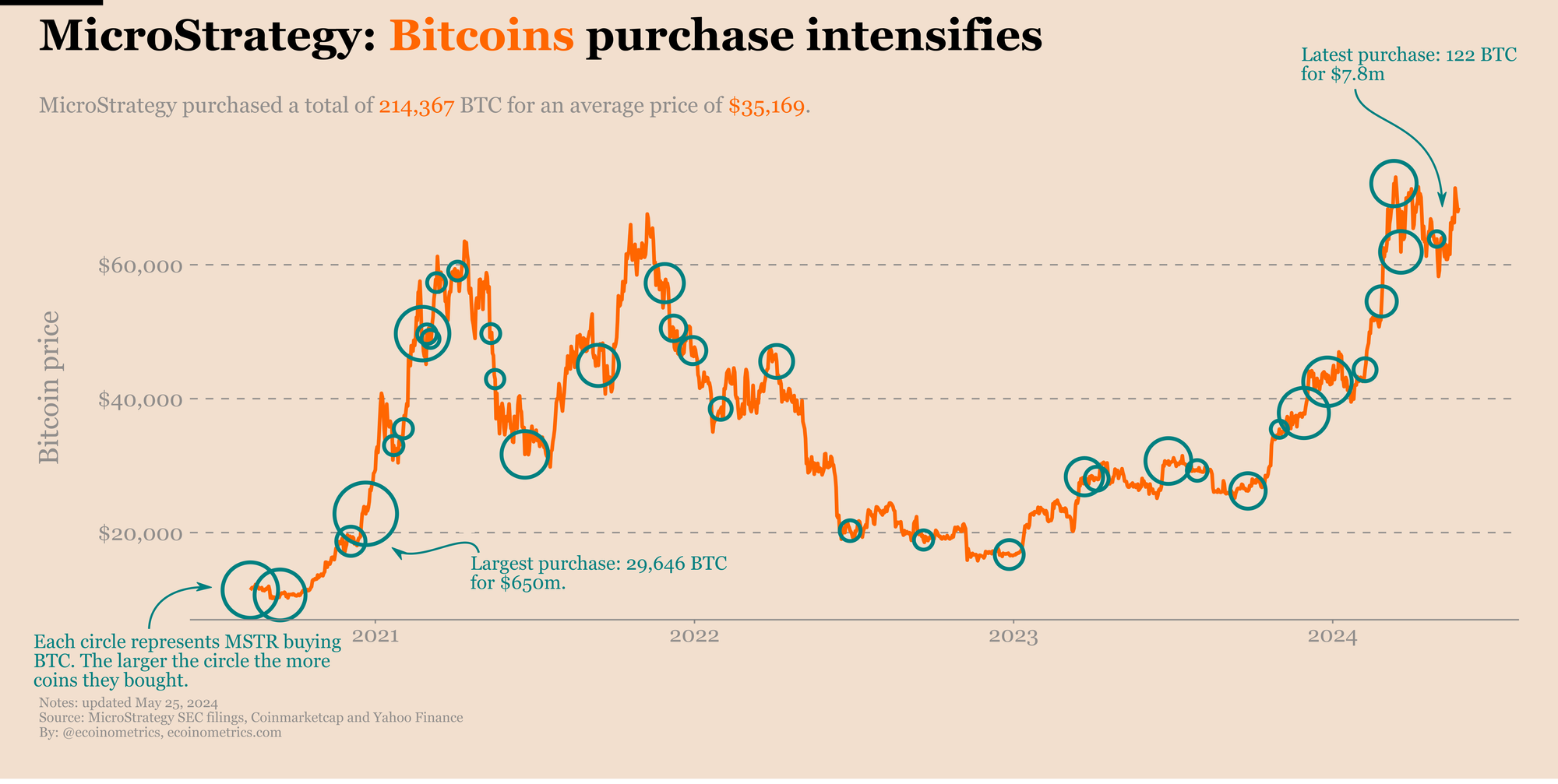
The first public announcement of MicroStrategy’s significant Bitcoin acquisition came on August 11, 2020. The company disclosed that it had purchased 21,454 Bitcoins for an aggregate purchase price of $250 million, inclusive of fees and expenses. This monumental purchase, made over several days prior to the announcement, represented a significant portion of the company’s available cash and short-term investments at the time. The average price per Bitcoin in this initial tranche was approximately $11,653.
In its press release, MicroStrategy articulated its rationale, stating that the move was part of a new capital allocation strategy designed to maximize long-term value for its shareholders. They emphasized Bitcoin’s potential as a reliable store of value and an attractive investment asset with more long-term appreciation potential than holding cash. This announcement was a watershed moment, as it legitimized Bitcoin as a treasury asset for institutional investors and other public companies, dispelling some of the lingering skepticism that had confined Bitcoin primarily to retail and speculative investors.
Subsequent Significant Purchases and Treasury Policy Shift
The August 2020 announcement was not a one-off event but the beginning of a sustained strategy. Just a month later, on September 14, 2020, MicroStrategy announced a further purchase of an additional 16,796 Bitcoins for approximately $175 million, bringing its total holdings to 38,250 Bitcoins at an aggregate cost of $425 million. This second major acquisition reinforced the company’s conviction and demonstrated that their commitment to Bitcoin was not fleeting.
The decision to continue accumulating Bitcoin signaled a permanent shift in MicroStrategy’s treasury policy. The company formally adopted Bitcoin as its primary treasury reserve asset, essentially making it an ongoing part of its financial operating model. This meant that future cash flows, beyond what was necessary for operational expenses and strategic investments in its core business, would be considered for conversion into Bitcoin. This was a radical departure from conventional corporate finance, where cash holdings are typically managed to ensure liquidity and short-term capital preservation, often through low-yield, highly liquid instruments. MicroStrategy, under Saylor’s leadership, was willing to embrace the volatility inherent in Bitcoin for what it believed would be superior long-term capital appreciation and preservation against inflation.
Rationale Behind the Radical Financial Move
MicroStrategy’s financial strategy was underpinned by several key convictions regarding the global economy and the unique properties of Bitcoin. These rationales provide a framework for understanding why a publicly traded company would take such an unprecedented step.
Mitigating Inflationary Risks and Dollar Depreciation
One of the primary drivers for MicroStrategy’s Bitcoin strategy was the explicit desire to hedge against inflation and the depreciation of the U.S. dollar. In 2020, with central banks unleashing massive stimulus packages and governments running large fiscal deficits, concerns about future inflation grew significantly among a segment of investors and economists. Michael Saylor articulated this concern vividly, stating that holding cash was akin to “sitting on a block of ice that’s melting.” The company believed that the purchasing power of fiat currencies was systematically being eroded, making it imperative to find an asset that could retain and grow value over time. Bitcoin, with its programmed scarcity and disinflationary monetary policy, presented itself as an ideal candidate to serve as a robust inflation hedge, akin to digital gold but with potentially superior properties given its digital native nature and ease of transfer.
Capitalizing on Bitcoin’s Scarcity and Digital Gold Narrative
The fixed supply of Bitcoin, capped at 21 million coins, was a critical factor in MicroStrategy’s assessment. Unlike fiat currencies, which can be printed at will by central banks, Bitcoin’s supply schedule is immutable and transparent. This fundamental scarcity is often cited as its most compelling characteristic for long-term value preservation. Saylor explicitly embraced the “digital gold” narrative, positioning Bitcoin as a superior alternative to traditional precious metals due to its divisibility, portability, verifiability, and resistance to confiscation. The company recognized that as the world digitized further, a digital, sovereign, hard asset would become increasingly valuable. By acquiring a significant amount of Bitcoin, MicroStrategy aimed to capitalize on this scarcity and the potential for Bitcoin to become a global reserve asset in the digital age.
The Opportunity Cost of Holding Cash in a Low-Interest Environment
Beyond hedging inflation, MicroStrategy also considered the opportunity cost of holding large sums of cash in a near-zero or even negative real interest rate environment. Traditional treasury management strategies often involve investing surplus cash in short-term government bonds or money market funds, which offer safety and liquidity but typically generate very low returns. In 2020, these returns were negligible and, when adjusted for inflation, often negative. This meant that simply holding cash was a losing proposition in real terms.
By reallocating a substantial portion of its cash reserves into Bitcoin, MicroStrategy aimed to generate significantly higher returns on its treasury assets. While acknowledging Bitcoin’s volatility, the company’s long-term conviction was that its appreciation potential far outweighed the minimal returns offered by conventional cash equivalents. This proactive approach to treasury management transformed the company’s balance sheet from a passive holding of depreciating assets into an active strategic allocation aimed at wealth preservation and growth.
MicroStrategy’s Enduring Bitcoin Strategy and Its Financial Implications
MicroStrategy’s initial acquisitions were merely the beginning of an ongoing, committed strategy that has evolved over the years, solidifying its identity as a Bitcoin proxy stock. This approach has had profound financial implications for the company and has influenced the broader corporate finance landscape.
Continuous Accumulation and Debt Financing for Bitcoin Purchases
Following its initial purchases, MicroStrategy has continued to accumulate Bitcoin, leveraging various financial instruments to do so. The company has repeatedly announced further purchases, often utilizing the proceeds from convertible note offerings and stock sales. This innovative use of debt and equity to finance Bitcoin acquisitions was another groundbreaking aspect of their strategy. For instance, in late 2020 and throughout 2021, MicroStrategy raised hundreds of millions of dollars through the issuance of convertible senior notes, with the explicit purpose of using the net proceeds to acquire additional Bitcoin. This demonstrated a willingness to take on leverage to increase its exposure to the digital asset, indicating deep conviction in its long-term value. This strategy transformed MicroStrategy into more than just a software company; it became a publicly traded entity whose financial performance was inextricably linked to the price of Bitcoin.
Impact on Balance Sheet and Shareholder Value Perception
The impact of MicroStrategy’s Bitcoin strategy on its balance sheet has been significant and multifaceted. On one hand, the substantial Bitcoin holdings have introduced considerable volatility to its financial statements. During periods of Bitcoin price appreciation, the value of MicroStrategy’s holdings surged, leading to increased shareholder value and positive market sentiment. Conversely, during market downturns, the unrealized losses on its Bitcoin holdings have led to significant paper losses and pressure on its stock price.
Despite the volatility, the strategy has undeniably raised MicroStrategy’s profile and attracted a new class of investors interested in gaining exposure to Bitcoin through a publicly traded company. Many investors now view MicroStrategy as a “Bitcoin proxy” or an “unleveraged Bitcoin ETF,” providing a regulated way to invest in the cryptocurrency. This has often led to its stock price moving in tandem with Bitcoin’s price, and sometimes even at a premium or discount, depending on market sentiment and the perceived value of its core software business. The strategy has undoubtedly generated significant buzz and attention for the company, elevating its brand recognition far beyond what its core software business might have achieved independently.
Paving the Way for Other Public Companies
MicroStrategy’s bold move opened the floodgates for other corporations to seriously consider Bitcoin as a treasury asset. While not all companies have followed MicroStrategy’s aggressive “Bitcoin-first” approach, its pioneering efforts demonstrated that it was indeed feasible and potentially beneficial for publicly traded entities to hold cryptocurrency on their balance sheets. Companies like Tesla later announced significant Bitcoin purchases, citing similar rationales related to inflation hedging and potential returns. Even companies that haven’t directly invested in Bitcoin have had to confront the question of digital assets in their treasury strategies, thanks in part to the precedent set by MicroStrategy. The company effectively proved that Bitcoin could move beyond being a speculative asset for individuals to a legitimate component of corporate finance.
Lessons for Business Finance and Investment Strategy
MicroStrategy’s journey with Bitcoin offers invaluable lessons for businesses and investors grappling with modern financial challenges and emerging asset classes.
The Importance of Conviction and Long-Term Vision
MicroStrategy’s sustained commitment to Bitcoin, despite significant market fluctuations, underscores the importance of conviction rooted in a long-term vision. Michael Saylor consistently articulated his belief in Bitcoin’s fundamental value proposition, its technological superiority, and its role as a future global reserve asset. This unwavering conviction allowed the company to navigate periods of intense volatility without capitulating. For any business considering an unconventional investment strategy, MicroStrategy’s example highlights that a deep understanding of the asset and a robust long-term thesis are crucial for enduring short-term market noise and maintaining strategic consistency.
Diversification Beyond Traditional Assets
The MicroStrategy case vividly illustrates the need for businesses to consider diversifying their treasury holdings beyond traditional fiat currencies and low-yield instruments. In an era of unprecedented monetary expansion and persistent inflation, relying solely on conventional assets may expose companies to significant erosion of purchasing power. Exploring non-traditional assets, like Bitcoin, that offer different risk-return profiles and serve as effective inflation hedges, can be a vital component of a resilient and forward-looking financial strategy. This doesn’t necessarily mean a full-scale conversion, but rather a thoughtful allocation to assets that can genuinely preserve and grow capital in a changing economic landscape.

Navigating Volatility in a Nascent Asset Class
Investing in a nascent and highly volatile asset class like Bitcoin comes with inherent risks. MicroStrategy’s experience demonstrates that managing this volatility requires both a strong conviction and a clear understanding of risk tolerance. While the company embraced the volatility for the sake of long-term upside, it also highlighted the need for transparency with shareholders and a clear communication strategy regarding the risks involved. For other businesses, it provides a case study in how to approach such investments – perhaps starting with smaller allocations, developing internal expertise, and thoroughly assessing the impact on financial reporting and shareholder perception. The lesson is not necessarily to replicate MicroStrategy’s strategy, but to learn from its analytical rigor and its bold execution in integrating a highly disruptive asset into its core financial operations.
aViewFromTheCave is a participant in the Amazon Services LLC Associates Program, an affiliate advertising program designed to provide a means for sites to earn advertising fees by advertising and linking to Amazon.com. Amazon, the Amazon logo, AmazonSupply, and the AmazonSupply logo are trademarks of Amazon.com, Inc. or its affiliates. As an Amazon Associate we earn affiliate commissions from qualifying purchases.