
Navigating the housing market over the last few years has felt like riding a rollercoaster in the dark. After a decade of historically low interest rates, the sudden surge initiated by the Federal Reserve’s aggressive tightening cycle left many prospective homeowners and investors in a state of paralysis. As we look toward 2025, the central question remains: will mortgage rates finally retreat to more manageable levels, or is the “higher for longer” era our new permanent reality?
Predicting interest rates is notoriously difficult, yet by analyzing the underlying economic drivers, Federal Reserve policy shifts, and market cycles, we can form a data-driven projection for the 2025 mortgage landscape. For anyone planning to buy, sell, or refinance, understanding these variables is essential for long-term financial health.
The Federal Reserve’s Dual Mandate and the Path to 2025
To understand where mortgage rates are going, one must first understand the mechanism that drives them. While the Federal Reserve does not directly set mortgage rates, its control over the federal funds rate creates a “floor” or a benchmark for all other forms of credit. The Fed operates under a dual mandate: maintaining price stability (controlling inflation) and maximizing sustainable employment.
Inflation Targets and the “Soft Landing”
The primary catalyst for the high rates of 2023 and 2024 was the fight against persistent inflation. The Fed’s target of 2% is the North Star for its policy decisions. As we approach 2025, the consensus among economists is that inflation is cooling, albeit slowly. If inflation continues its descent toward that 2% goal throughout 2024, the Fed will have the “green light” to begin a series of rate cuts.
A “soft landing”—where inflation reaches the target without triggering a major recession—is the ideal scenario for the 2025 mortgage market. In this environment, we would likely see a gradual, controlled descent in mortgage rates as the premium for inflation risk evaporates.
Quantitative Tightening vs. Easing
Beyond interest rates, the Fed’s balance sheet plays a crucial role. During the pandemic, the Fed bought billions of dollars in Mortgage-Backed Securities (MBS) to keep rates low. Recently, they have been letting those assets roll off their balance sheet (Quantitative Tightening). By 2025, the Fed may shift its stance on MBS, which could help narrow the “spread” between the 10-year Treasury yield and mortgage rates, potentially lowering the costs for consumers even if the base federal funds rate stays relatively high.
Market Forecasts: What Experts Predict for 2025
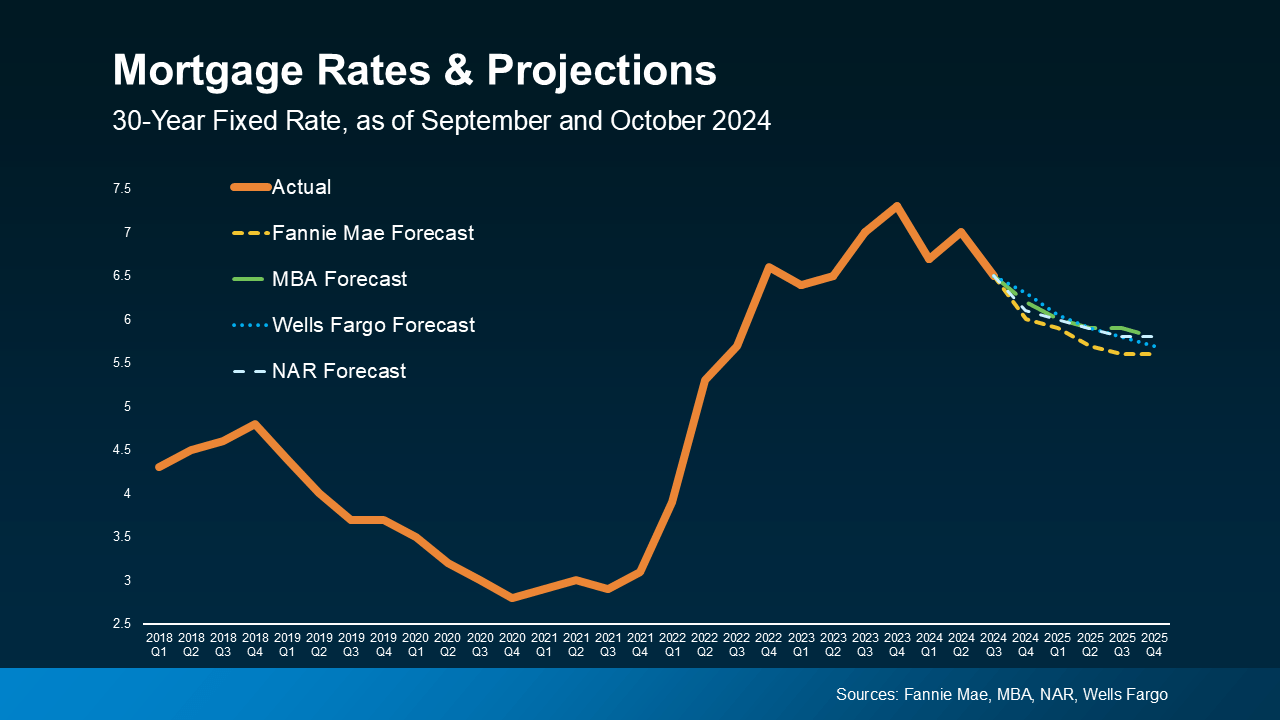
Financial institutions such as Fannie Mae, the Mortgage Bankers Association (MBA), and the National Association of Realtors (NAR) spend significant resources modeling future rate environments. While their specific numbers vary, a general trend emerges for 2025.
The Range of Possibilities: 5.5% to 6.5%
Most major forecasts suggest that the era of 3% mortgage rates is firmly in the rearview mirror. However, the 7% to 8% peaks seen in late 2023 are also expected to subside. For 2025, the median expectation among financial analysts is for the 30-year fixed-rate mortgage to stabilize somewhere between 5.5% and 6.2%.
This range is significant because it represents a “psychological threshold” for many buyers. At 6%, many households that were priced out at 7.5% find that their monthly debt-to-income ratios suddenly become viable again. This stabilization is expected to unlock a significant amount of “pent-up demand” from buyers who have been sitting on the sidelines for the past two years.
The Impact of Long-Term Bond Yields
Mortgage rates are more closely tied to the 10-year Treasury yield than the short-term federal funds rate. Investors in 10-year bonds are betting on the long-term health of the economy. If the market anticipates a slowing economy in 2025, bond yields will drop, pulling mortgage rates down with them. Investors should keep a close eye on the “yield curve”; if it remains inverted or begins to flatten significantly, it signals that the market expects lower rates in the coming year.
Factors Influencing Mortgage Volatility in 2025
While the general trend points toward a modest decline, several “wildcards” could introduce volatility into the 2025 financial markets. Professional investors and homeowners must account for these risks when planning their 2025 budgets.

The Aftermath of the 2024 Election Cycle
2025 will be the first year of a new or renewed presidential term in the United States. Historically, post-election years can be periods of significant fiscal policy shifts. Changes in tax law, housing subsidies, or government spending can impact the national deficit. A rising deficit often leads to higher Treasury yields as the government issues more debt to fund its operations, which can inadvertently push mortgage rates higher, regardless of what the Federal Reserve does.
Global Geopolitical Shifts and Market Stability
The global economy is more interconnected than ever. Conflicts in energy-producing regions or shifts in global manufacturing can lead to “supply-side” inflation. If 2025 sees a spike in oil prices or a disruption in global trade routes, inflation could prove “sticky,” forcing the Fed to keep rates higher for longer than the market currently anticipates. In times of global uncertainty, investors often flock to the “safe haven” of U.S. Treasuries, which can actually lower yields and mortgage rates in the short term, though this is often accompanied by broader economic distress.
Strategic Financial Planning for Prospective Homebuyers
With 2025 projected to be a year of transition, how should individuals position themselves? Financial planning in a 6% interest rate environment requires a different strategy than the “easy money” era of 2020.
To Buy Now or Wait?
The “wait and see” approach has a significant opportunity cost. If mortgage rates do drop to 5.5% in 2025, a flood of buyers will likely enter the market. In a market already plagued by low inventory, this surge in demand will inevitably drive home prices higher.
The financial mantra for 2025 is likely to be: “Marry the house, date the rate.” This strategy suggests buying the property you want at today’s price and planning to refinance in 2025 or 2026 when rates are lower. This allows the buyer to capture the current home value before increased competition drives prices out of reach.
Refinancing Strategies for Existing Homeowners
For those who purchased homes in late 2023 or 2024 at rates near 7.5% or 8%, 2025 will likely be the “Year of the Refinance.” A drop of even 1% can save the average homeowner hundreds of dollars per month and tens of thousands over the life of the loan.
However, homeowners should calculate the “break-even point”—the time it takes for the monthly savings to cover the closing costs of the new loan. If you plan to stay in your home for at least three to five years, a 2025 refinance will likely be one of the best financial moves you can make.
The Broader Impact on Real Estate Investing and Personal Wealth
Mortgage rates do not just affect homebuyers; they dictate the flow of capital in the broader economy. For real estate investors and those looking to build wealth through property, 2025 represents a shifting landscape of opportunity.
Institutional vs. Individual Investors
In a high-rate environment, institutional investors (like large hedge funds) often pull back because the cost of borrowing eats into their margins. As rates stabilize in 2025, we may see a resurgence of institutional activity. For the individual investor, this means more competition. However, lower rates also improve the “cash-on-cash” return for rental properties, making the math for “buy and hold” strategies much more attractive than it was in 2023.
Building Equity in a Shifting Rate Environment
Home equity remains the largest component of net worth for the average American family. Even with rates at 6%, real estate remains a powerful hedge against inflation. In 2025, as the market finds its “new normal,” we expect a return to steady, predictable home value appreciation. Unlike the volatile spikes of 2021, the 2025 market is likely to be driven by fundamental demand and limited supply, which provides a more stable foundation for building long-term personal wealth.
Conclusion: Preparing for the 2025 “New Normal”
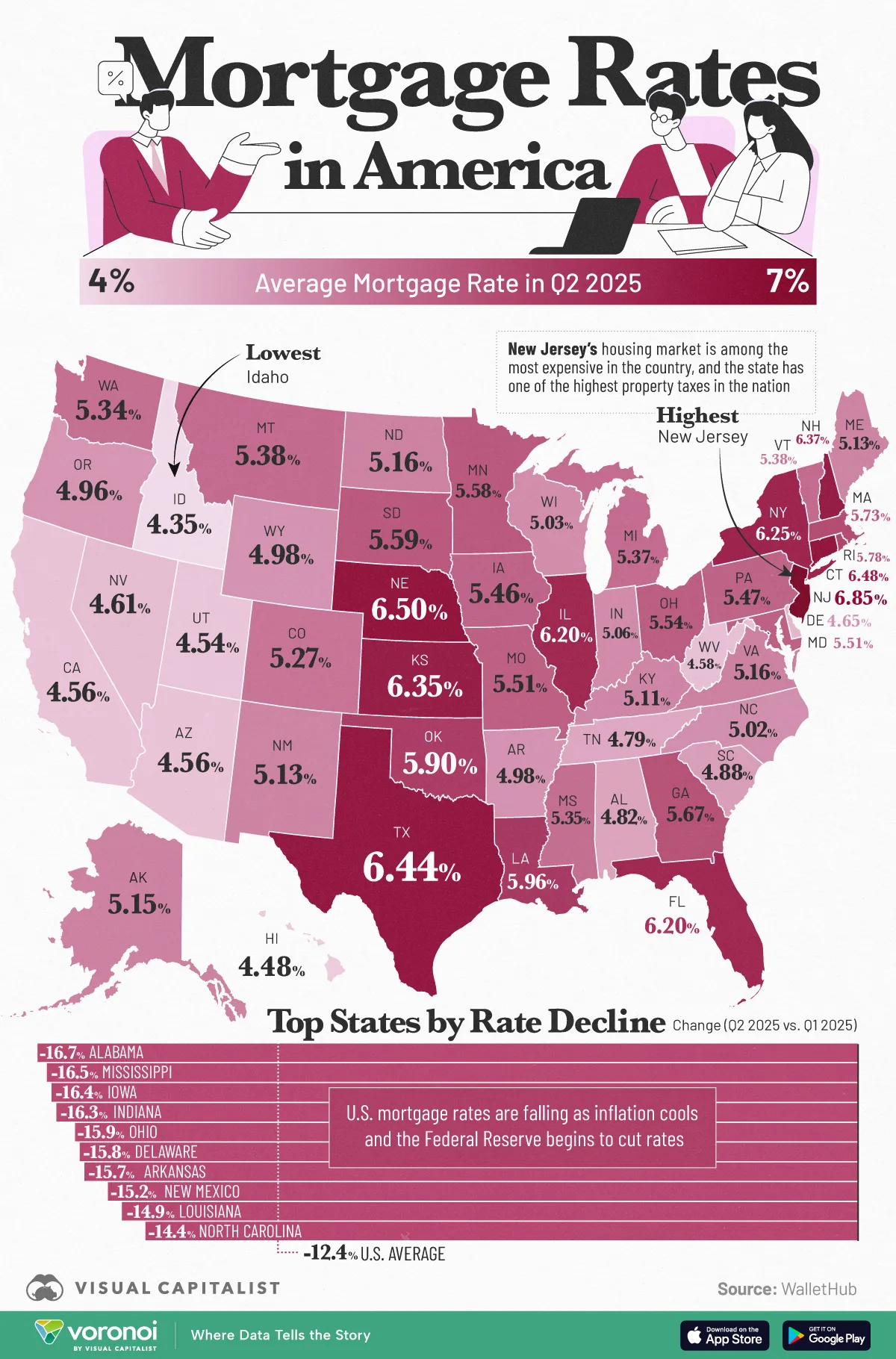
As we peer into 2025, the outlook for mortgage rates is one of cautious optimism. While we are unlikely to see the 3% rates that defined the previous decade, the extreme volatility of the post-pandemic recovery appears to be fading. A stabilization in the 5.5% to 6.2% range would provide much-needed clarity for the housing market.
Success in the 2025 financial landscape will require agility. For buyers, it means being ready to act if inventory increases; for homeowners, it means being prepared to refinance as soon as the numbers make sense; and for investors, it means recalculating portfolios to reflect a more stable cost of capital. By keeping a close eye on inflation data and Federal Reserve signals, you can navigate the 2025 mortgage market with confidence and precision.
aViewFromTheCave is a participant in the Amazon Services LLC Associates Program, an affiliate advertising program designed to provide a means for sites to earn advertising fees by advertising and linking to Amazon.com. Amazon, the Amazon logo, AmazonSupply, and the AmazonSupply logo are trademarks of Amazon.com, Inc. or its affiliates. As an Amazon Associate we earn affiliate commissions from qualifying purchases.