
Selecting a mortgage is arguably the most consequential financial decision a person will make in their lifetime. It is not merely a loan to purchase a house; it is a long-term liability that dictates your monthly cash flow, your ability to save for retirement, and your overall financial mobility for decades. Because a mortgage is tied to the largest asset most people will ever own, the process of picking one requires more than a cursory glance at interest rates. It demands a rigorous analysis of your personal balance sheet, an understanding of macroeconomic trends, and a strategic approach to debt management.
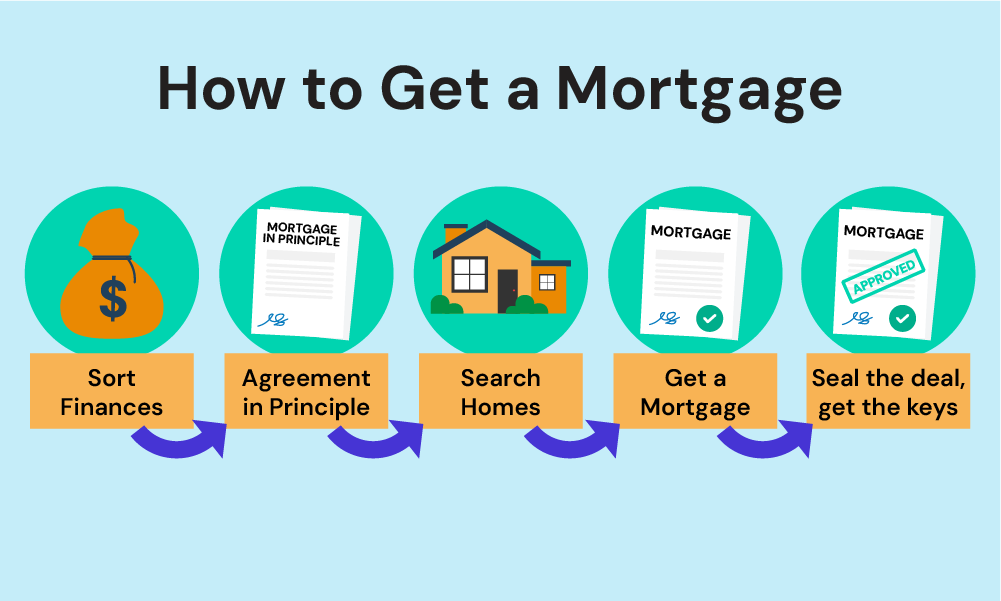
In the world of personal finance, a mortgage should be viewed as a tool. When used correctly, it provides leverage to build equity and wealth. When chosen poorly, it becomes a financial anchor. To navigate this complex landscape, one must look beyond the “monthly payment” and analyze the total cost of capital over the life of the loan.
Financial Foundations: Preparing Your Balance Sheet
Before you ever step foot into a bank or contact a broker, you must treat your personal finances like a business preparing for an audit. Lenders are not just looking at your income; they are assessing risk. To secure the most favorable terms, you must optimize your financial profile to appear as low-risk as possible.
Assessing and Optimizing Credit Health
Your credit score is the primary lever that determines your interest rate. In the mortgage world, a difference of just 0.5% in an interest rate can equate to tens of thousands of dollars over a 30-year term. For a “Money” niche perspective, credit management is high-ROI work. You should pull your credit reports from all three major bureaus months in advance. Look for errors, but more importantly, look at your credit utilization ratio. Aiming for a score above 740 generally puts you in the “prime” tier, granting access to the lowest available rates. If your score is lower, it may be financially wiser to spend six months repairing it before applying for a loan.
Calculating the Debt-to-Income (DTI) Ratio
Lenders use the DTI ratio to determine how much of your gross monthly income is already committed to debt payments. Typically, lenders prefer a front-end DTI (mortgage payment only) of 28% and a back-end DTI (all debts) of 36% to 43%. However, from a personal wealth-building standpoint, just because a lender will lend you a certain amount does not mean you should take it. Conservative financial planning suggests keeping your total housing costs—including insurance and taxes—below 30% of your take-home pay to ensure you have enough surplus for investing and emergency funds.
Establishing a Strategic Down Payment
The “20% down” rule is often debated. From a purely financial standpoint, putting 20% down eliminates Private Mortgage Insurance (PMI) and gives you immediate equity, which reduces the lender’s risk and often lowers your interest rate. However, in a low-interest-rate environment, some investors argue for a lower down payment (e.g., 3.5% or 5%) to keep more cash liquid for high-yield investments or stock market contributions. To pick the right mortgage, you must decide if you value “equity and safety” (high down payment) or “liquidity and leverage” (low down payment).
Navigating Loan Types: Choosing the Right Structure
Mortgages are not one-size-fits-all products. The “type” of loan you choose should align with your long-term financial goals and your expected duration of stay in the home.
Fixed-Rate vs. Adjustable-Rate Mortgages (ARMs)
The 30-year fixed-rate mortgage is the gold standard for stability. Your principal and interest payments remain the same for 360 months, protecting you against inflation and rising interest rates. On the other hand, Adjustable-Rate Mortgages (ARMs) often offer lower “teaser” rates for an initial period (5, 7, or 10 years). An ARM can be a sophisticated financial move if you know for a certainty that you will sell the home or refinance before the rate resets. However, for most personal finance portfolios, the certainty of a fixed rate is a hedge against future market volatility.
Government-Backed vs. Conventional Loans
Conventional loans are the standard for those with solid credit and a decent down payment. They are not insured by the federal government and typically offer the most flexibility. Government-backed loans, such as FHA (Federal Housing Administration), VA (Veterans Affairs), or USDA (Department of Agriculture), serve specific niches. FHA loans are excellent for those with lower credit scores or minimal down payments, though they come with mandatory mortgage insurance premiums that can be costly over time. VA loans are arguably the best financial product on the market for those who qualify, often requiring $0 down and no monthly mortgage insurance.
Analyzing Loan Terms: 15-Year vs. 30-Year
This is where the math of personal finance becomes most apparent. A 15-year mortgage usually carries a lower interest rate and results in significantly less interest paid over time. However, it requires a much higher monthly payment, which ties up your monthly cash flow. A 30-year mortgage offers a lower monthly commitment, providing more “financial breathing room,” but at the cost of higher interest over time. A common middle-ground strategy is to take the 30-year loan for the flexibility but pay it off as if it were a 15-year loan when your budget allows.
The True Cost of Borrowing: Beyond the Interest Rate
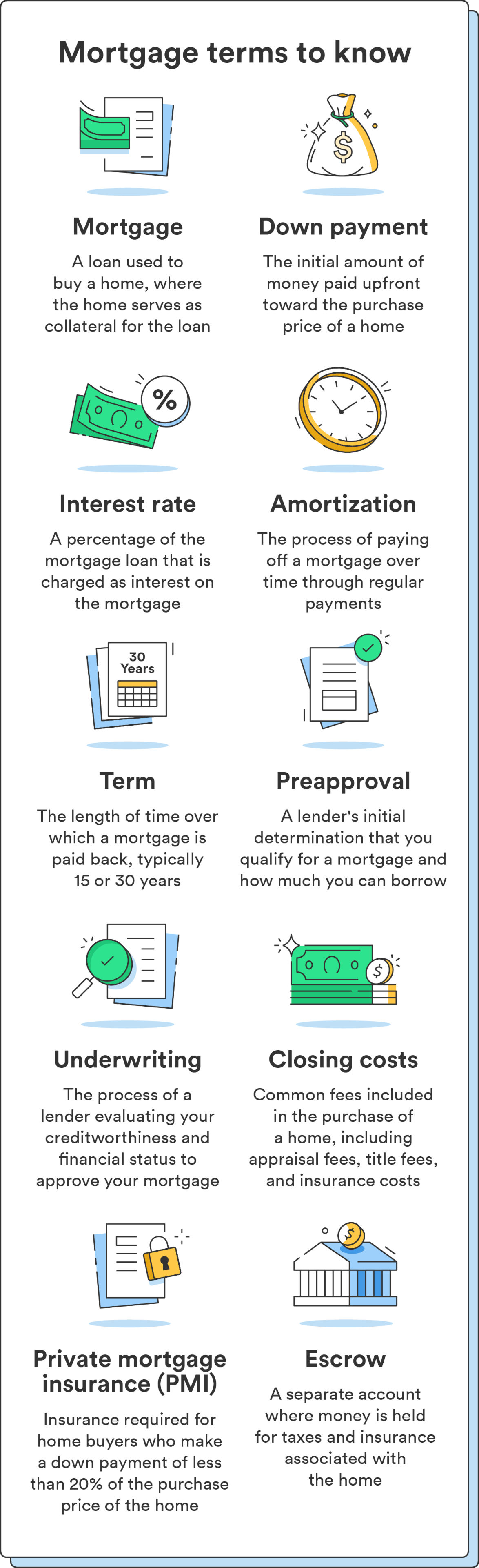
When picking a mortgage, many consumers make the mistake of focusing solely on the “headline” interest rate. In reality, the cost of borrowing involves several layers of fees and hidden expenses that can alter the net present value of your home investment.
Interest Rate vs. Annual Percentage Rate (APR)
The interest rate is the cost you pay each year to borrow the money, expressed as a percentage. The APR, however, is a more comprehensive metric. It includes the interest rate plus other costs, such as broker fees, points, and some closing costs. When comparing two mortgage offers, the APR is the more accurate tool for a “side-by-side” financial comparison. If one lender offers a lower interest rate but higher fees, the APR will reveal the truth of which loan is actually cheaper.
Discount Points and Origination Fees
Lenders often give you the option to “buy down” your interest rate by paying “points” upfront. One point typically costs 1% of the loan amount and reduces your interest rate by about 0.25%. This is a “break-even” calculation. If you plan to stay in the home for a long time (10+ years), paying for points can save you a fortune in interest. If you plan to move in 3 to 5 years, you will likely never recoup the upfront cost of those points, making it a poor financial move.
Understanding the Impact of PMI and Escrow
If you put down less than 20% on a conventional loan, you will be required to pay Private Mortgage Insurance (PMI). This is a fee that protects the lender—not you. From a money management perspective, PMI is “dead money”—it provides you no benefit. Part of picking a mortgage involves calculating how quickly you can reach 20% equity to cancel PMI. Additionally, you must factor in escrow accounts for property taxes and homeowners insurance. These costs often fluctuate, meaning your “fixed” mortgage payment might still increase year-over-year due to tax assessments.
Shopping Like a Pro: Execution and Negotiation
The final stage of picking a mortgage is the market execution. This is where you move from theory to reality, vetting lenders to find the best deal for your specific financial situation.
Comparing Lenders and Securing Pre-approval
Do not simply go to the bank where you have your checking account. You should solicit quotes from at least three different sources: a national bank, a local credit union, and an independent mortgage broker. Brokers are particularly valuable in the “Money” niche because they have access to wholesale rates from multiple lenders and can often find “niche” products that fit unique financial profiles (such as self-employed individuals with complex tax returns). A pre-approval letter is your “proof of funds” and is essential in a competitive real estate market.
Analyzing the Loan Estimate
By law, once you apply for a mortgage, lenders must provide you with a three-page document called a “Loan Estimate.” This is the most important document in the process. It breaks down every single cent of the loan, including the projected monthly payment, closing costs, and how much interest you will have paid in five years. To pick the best mortgage, lay these Loan Estimates side-by-side. Look at “Section A” (Origination Charges) specifically, as these are the fees the lender is charging you directly and are often negotiable.
The Importance of Rate Locking
Interest rates move daily, influenced by the bond market and Federal Reserve policy. Once you find a loan product and a rate that fits your financial plan, you should “lock” the rate. A rate lock guarantees that your interest rate won’t change between the time you apply and the time you close, provided you close within a certain window (usually 30 to 60 days). In a rising-rate environment, failing to lock a rate can cost you hundreds of dollars a month.

Conclusion: Aligning Your Mortgage with Your Wealth Strategy
Picking a mortgage is not a transaction; it is a strategic allocation of debt. The “best” mortgage is not necessarily the one with the lowest monthly payment, but the one that aligns with your broader financial trajectory. Whether you prioritize cash flow flexibility, interest minimization, or rapid equity growth, your choice should be backed by hard data and a clear understanding of the loan’s long-term impact on your net worth.
By meticulously preparing your credit, choosing the right loan structure, analyzing the APR over the headline rate, and shopping aggressively among lenders, you transform the home-buying process from a stressful hurdle into a calculated financial victory. In the end, a well-chosen mortgage serves as the foundation upon which the rest of your financial life is built.
aViewFromTheCave is a participant in the Amazon Services LLC Associates Program, an affiliate advertising program designed to provide a means for sites to earn advertising fees by advertising and linking to Amazon.com. Amazon, the Amazon logo, AmazonSupply, and the AmazonSupply logo are trademarks of Amazon.com, Inc. or its affiliates. As an Amazon Associate we earn affiliate commissions from qualifying purchases.