
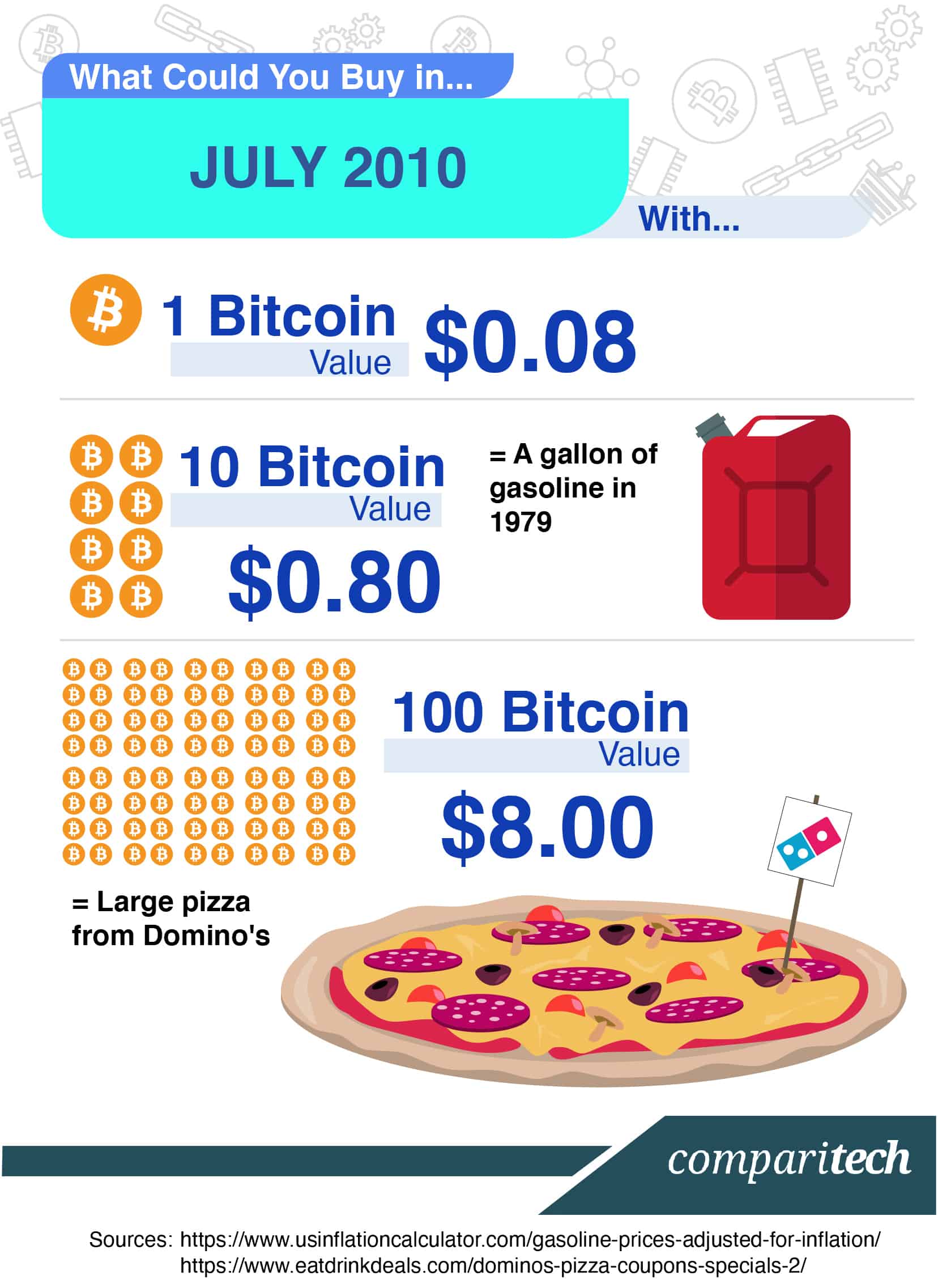
The question “What is one Bitcoin worth?” is perhaps the most frequently asked yet complex query in the modern financial landscape. To a casual observer, the answer is a simple flickering number on a cryptocurrency exchange, a figure that might swing by thousands of dollars within a single afternoon. However, to the sophisticated investor, the “worth” of a Bitcoin is not merely its current market price; it is a reflection of a paradigm shift in how humanity perceives, stores, and transfers value.
Unlike traditional fiat currencies, which are backed by government decree and central bank policy, Bitcoin operates on a decentralized framework. This fundamental difference means that its value is derived from a unique intersection of scarcity, utility, and market sentiment. To understand what one Bitcoin is truly worth, one must look beyond the ticker symbol and explore the economic engines that drive its valuation.

The Mechanics of Price Discovery: How Bitcoin’s Value is Determined
At its most basic level, the price of Bitcoin is determined by the same force that governs the price of wheat, oil, or Apple stock: supply and demand. However, the environment in which this price discovery occurs is unlike any other asset class in history.
Supply and Demand Dynamics
Bitcoin’s supply is governed by an immutable code rather than a committee of economists. There will only ever be 21 million Bitcoins. This absolute scarcity is a pillar of its financial value. When demand increases—whether due to retail FOMO (fear of missing out) or institutional accumulation—and the supply remains fixed (or the rate of new supply decreases via “halving” events), the price must mathematically rise to find equilibrium. This makes Bitcoin a disinflationary asset, contrasting sharply with the inflationary nature of the US Dollar or the Euro.
The Role of Exchanges and Liquidity
Bitcoin trades 24 hours a day, 365 days a year, across hundreds of global exchanges. The “worth” of a Bitcoin is the aggregate price at which buyers and sellers are willing to transact at any given microsecond. Liquidity—the ease with which Bitcoin can be converted into cash without affecting the price—plays a crucial role here. In periods of high liquidity, price discovery is efficient. During “liquidity crunches,” even small trades can cause massive price swings, contributing to the volatility that characterizes the asset.
Intrinsic vs. Extrinsic Value: Is Bitcoin a Real Asset?
Critics often argue that Bitcoin has no “intrinsic” value because you cannot touch it and it produces no cash flow like a rental property or a dividend-paying stock. However, in the realm of modern finance, the definition of value has evolved.
The Scarcity Principle and the “Digital Gold” Thesis
Many investors view Bitcoin as “Digital Gold.” Like physical gold, Bitcoin is difficult to “mine,” exists in limited quantities, and is durable. However, Bitcoin improves upon gold’s limitations: it is easily divisible, infinitely portable, and verifiable via the blockchain without the need for a third-party assay. Its value, therefore, is rooted in its properties as a superior store of value in a digital-first economy. When investors ask what a Bitcoin is worth, they are often measuring it against the debasement of traditional currencies.
Utility and the Network Effect
According to Metcalfe’s Law, the value of a network is proportional to the square of the number of its connected users. Bitcoin’s worth is inextricably linked to its utility as a censorship-resistant payment rail. The ability to send billions of dollars across the globe in minutes for a nominal fee, without requiring permission from a bank, provides a baseline of utility value. As more merchants, payment processors, and individuals join the network, the inherent value of each unit within that network increases.
Economic Factors Influencing Bitcoin’s Market Worth
While the internal mechanics of Bitcoin provide a foundation, external economic factors act as the primary catalysts for its price movements. The transition of Bitcoin from a “fringe experiment” to a “macro asset” means it is now sensitive to global financial trends.
Institutional Adoption and Regulatory Shifts
The entry of institutional giants like BlackRock and Fidelity through Spot Bitcoin ETFs (Exchange-Traded Funds) has fundamentally altered Bitcoin’s valuation model. Institutional involvement brings “sticky” capital—long-term investments that reduce circulating supply. Furthermore, regulatory clarity in major economies provides a “green light” for pension funds and insurance companies to allocate a portion of their portfolios to Bitcoin. Every step toward legal integration into the global financial system adds a layer of “legitimacy premium” to its price.
Macroeconomic Trends: Inflation and Interest Rates
Bitcoin often behaves as a barometer for global liquidity. When central banks engage in quantitative easing (printing money) or lower interest rates, the purchasing power of fiat currency drops. In these environments, “hard assets” like Bitcoin typically appreciate as investors seek to protect their wealth. Conversely, when the Federal Reserve raises interest rates to combat inflation, speculative assets may see a temporary drawdown. Understanding what Bitcoin is worth requires an understanding of the broader “M2” money supply and the health of the global economy.
Comparing Bitcoin to Traditional Financial Instruments
To truly grasp Bitcoin’s worth, it is helpful to place it alongside the traditional assets that have dominated portfolios for the last century.
Bitcoin vs. Fiat Currency
Fiat currencies are mediums of exchange backed by the “full faith and credit” of a government. Their value is subject to political stability and fiscal responsibility. Bitcoin, often referred to as “algorithmic money,” removes the human element of error and greed from the monetary supply. While fiat is better for daily coffee purchases (for now), Bitcoin is increasingly seen as a superior vehicle for long-term wealth preservation, as it cannot be devalued by government overspending.
Bitcoin as a Diversification Tool in Modern Portfolios
In the context of personal finance, Bitcoin’s worth lies in its low correlation to traditional equities and bonds over long time horizons. Adding a small percentage (1% to 5%) of Bitcoin to a traditional 60/40 portfolio has historically improved the Sharpe Ratio—a measure of risk-adjusted return. For the modern investor, Bitcoin is worth the “optionality” it provides: the potential for asymmetric upside that traditional stocks or bonds rarely offer in the current economic climate.
The Future Outlook: What Will One Bitcoin Be Worth Tomorrow?
Speculating on the future price of Bitcoin is a favorite pastime of Wall Street analysts and Silicon Valley enthusiasts alike. While no one can predict the exact number, we can identify the trends that will dictate its future worth.
Volatility Management and Long-Term Holding
For many, the “worth” of Bitcoin is obscured by its volatility. A 20% drop in a week can be terrifying. However, when viewed through a multi-year lens, Bitcoin has been one of the best-performing assets of the last decade. Financial advisors often suggest that the worth of Bitcoin should be measured in “Satoshis” (the smallest unit of Bitcoin) and accumulated through Dollar Cost Averaging (DCA). This strategy mitigates the risk of bad timing and focuses on the long-term appreciation of the network.
Technological Milestones and Scaling Solutions
The future valuation of Bitcoin will also depend on its ability to scale. Innovations like the Lightning Network, which allows for near-instant and near-free transactions, transform Bitcoin from a “passive store of value” into an “active medium of exchange.” As the technology becomes more invisible and integrated into everyday apps, the barrier to entry for the average consumer disappears. If Bitcoin becomes the underlying settlement layer for the internet, the value of a single coin could reach heights that reflect its status as a global reserve currency.
In conclusion, what one Bitcoin is worth is a question with two answers. The first is the market price you see today—a reflection of current liquidity, news cycles, and trader sentiment. The second, and more important, is its value as a revolutionary financial technology. As a decentralized, borderless, and scarce digital asset, Bitcoin represents a new chapter in the history of money. Its true worth is found in its ability to provide financial sovereignty to anyone with an internet connection, acting as a hedge against an uncertain fiscal future. Whether it is priced at $10,000 or $1,000,000, its value remains rooted in the fundamental shift toward a more transparent and equitable global economy.
aViewFromTheCave is a participant in the Amazon Services LLC Associates Program, an affiliate advertising program designed to provide a means for sites to earn advertising fees by advertising and linking to Amazon.com. Amazon, the Amazon logo, AmazonSupply, and the AmazonSupply logo are trademarks of Amazon.com, Inc. or its affiliates. As an Amazon Associate we earn affiliate commissions from qualifying purchases.