
For the past several years, the global financial landscape has been dominated by a single, prevailing theme: the rise of interest rates. From prospective homeowners watching mortgage rates climb to investors recalibrating their portfolios, the shift away from the “easy money” era of near-zero rates has been profound. However, as inflation begins to show signs of cooling, the central question for 2024 and 2025 has shifted from “how high will they go?” to “when will they finally come down?”
Understanding the timing of interest rate cuts requires a deep dive into macroeconomic indicators, central bank psychology, and the delicate balance of maintaining economic growth without reigniting the flames of inflation.
1. The Federal Reserve’s Mandate: Understanding the “Why” Before the “When”
To predict when interest rates will drop, one must first understand why they were raised. The Federal Reserve (and other global central banks) operates under a dual mandate: achieving maximum employment and maintaining stable prices. When inflation skyrocketed to 40-year highs in the wake of the pandemic, the Fed utilized its primary tool—the federal funds rate—to cool the economy.
The Battle Against Inflation (The 2% Target)
The most significant hurdle to lower interest rates is the “2% inflation target.” Central banks generally view 2% as the “Goldilocks” zone for a healthy economy. While inflation has dropped significantly from its 9.1% peak in mid-2022, the final stretch—getting from 3% down to 2%—has proven to be “sticky.” As long as service-sector inflation and housing costs remain elevated, the Federal Reserve remains hesitant to prematurely cut rates, fearing a 1970s-style resurgence where inflation returns with a vengeance after an early pivot.
The Role of Quantitative Tightening
Beyond the interest rate itself, the Fed has been shrinking its balance sheet through a process called Quantitative Tightening (QT). By allowing bonds to mature without replacing them, the Fed reduces the money supply. Analysts watch QT closely because a shift in this policy often precedes or accompanies a shift in interest rates. If the financial system begins to show signs of a “liquidity crunch,” the Fed may be forced to lower rates sooner than the inflation data alone might suggest.
2. Key Economic Indicators: The Data That Will Trigger a Cut
The Federal Reserve has repeatedly stated that they are “data-dependent.” This means they aren’t following a pre-set calendar; they are waiting for specific economic signals to flash green.
Consumer Price Index (CPI) and Personal Consumption Expenditures (PCE)
While the CPI is the most famous inflation metric, the Federal Reserve actually prefers the Core PCE index. This metric excludes volatile food and energy prices and provides a clearer picture of long-term price trends. Investors looking for a rate cut should watch for consecutive months of PCE data trending toward or below 2.5%. If the “Core” numbers remain stubbornly high, the “higher for longer” narrative will likely persist.
The Strength of the Labor Market
Paradoxically, “bad news” for the job market is often “good news” for those hoping for lower interest rates. A robust labor market with high wage growth can lead to “wage-price spirals,” where companies raise prices to cover higher labor costs. If the unemployment rate begins to tick upward significantly—moving past the 4% or 4.5% mark—the Fed may shift its focus from fighting inflation to preventing a deep recession, thereby accelerating the timeline for rate cuts.
Gross Domestic Product (GDP) Growth
The resilience of the U.S. economy has surprised many analysts. Despite high rates, GDP growth has remained positive. As long as the economy is growing at a healthy clip, the Fed feels no urgency to provide “stimulus” in the form of lower rates. A significant slowdown in GDP—or a “hard landing”—would be the most immediate catalyst for a pivot toward a more accommodative monetary policy.
3. Forecasts and Timelines: Navigating the Consensus
Financial institutions and market participants use “Fed Watch” tools to price in the probability of rate cuts. While these forecasts change weekly based on new data, a general consensus for the next 18 months has begun to emerge.
The 2024 Outlook: Caution Over Aggression
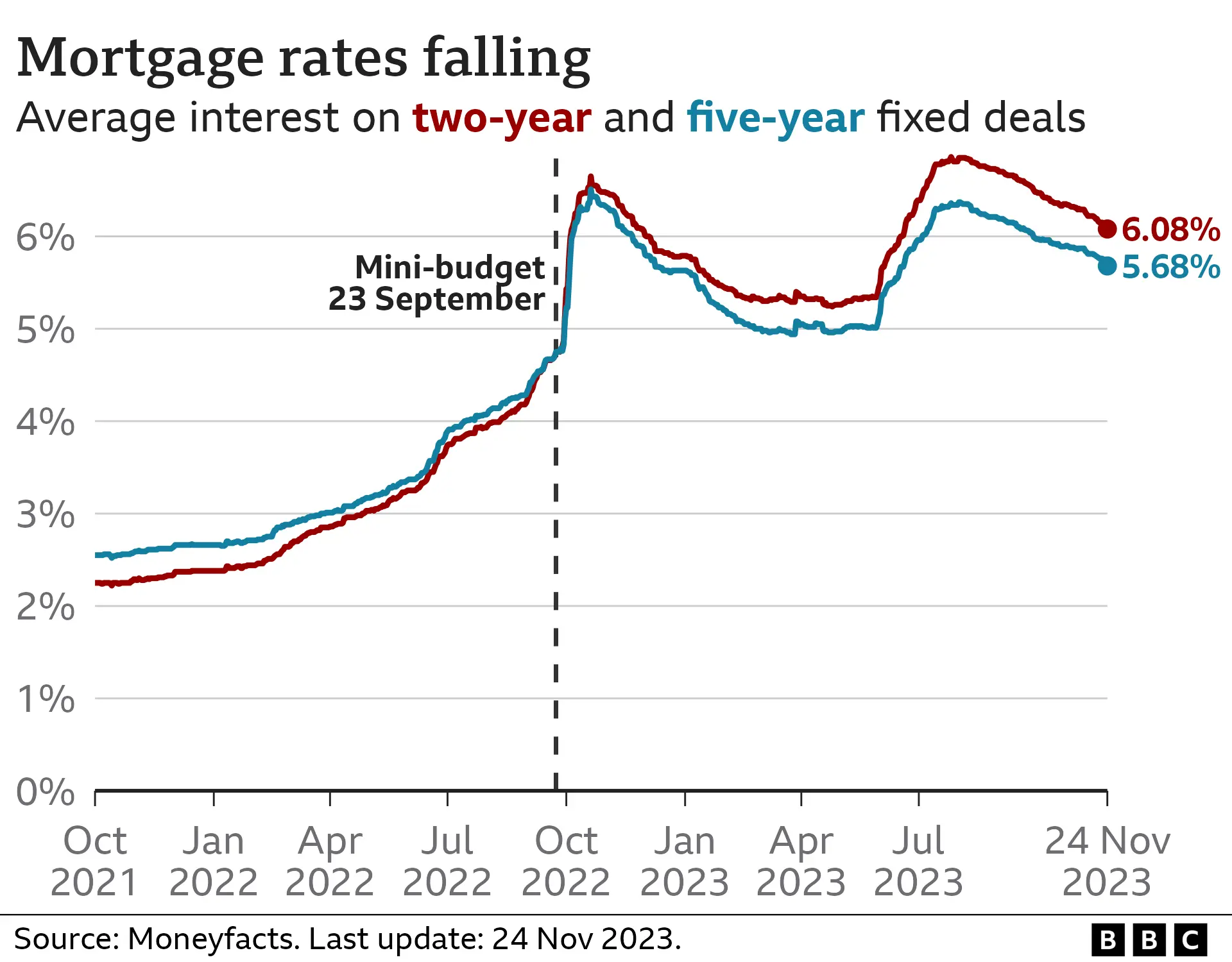
Most major banks, including Goldman Sachs and JP Morgan, have moved their expectations for the first rate cut into the latter half of 2024. The early-year optimism that predicted cuts as early as March has faded. The current sentiment suggests that the Fed will likely implement two or three small cuts (typically 25 basis points each) before the end of the year, provided inflation continues its downward trajectory. This is often referred to as a “recalibration” rather than a full-scale easing cycle.
The 2025 “Normalization” Phase
Looking toward 2025, many economists expect a more steady series of reductions. The goal is to reach a “neutral rate”—a level that neither stimulates nor restricts economic growth. Most estimates place this neutral rate somewhere between 2.5% and 3.5%. This suggests that while rates will go down, we are unlikely to return to the 0% rates seen during the 2010s. The “new normal” will likely be a world where borrowing costs are moderate rather than non-existent.
The Impact of the Yield Curve
The “yield curve”—specifically the gap between 2-year and 10-year Treasury notes—has been inverted for a record amount of time. Historically, an inverted yield curve is a harbinger of a recession. The bond market is currently signaling that it expects rates to be lower in the future than they are today. When the curve finally “un-inverts,” it often coincides with the start of a rate-cutting cycle.
4. Strategic Financial Planning: Preparing Your Portfolio
When interest rates are expected to move, the window for strategic financial adjustments begins to close. Whether you are a borrower or an investor, the anticipation of lower rates requires a shift in tactics.
Lock-In High Yields Now
If you have cash sitting in a standard savings account, now is the time to move it into high-yield savings accounts (HYSAs) or Certificates of Deposit (CDs). As soon as the Fed cuts the benchmark rate, the APY on these accounts will drop almost instantly. Locking in a 5% CD now ensures that you continue to earn that return even if the Fed drops rates by 1% later this year.
The Bond Market Opportunity
Bond prices and interest rates have an inverse relationship. When rates go down, existing bonds with higher “coupons” become more valuable, driving their prices up. For investors in fixed-income securities, the period just before rates begin to fall is often the most lucrative. Moving into medium-to-long-term Treasuries or high-quality corporate bonds can provide both steady income and capital appreciation as rates decline.
Real Estate and Mortgage Strategy
For those looking to buy a home, the “wait for lower rates” strategy is a double-edged sword. While a lower interest rate decreases your monthly payment, it also brings a flood of buyers back into the market, potentially driving up home prices. Many financial advisors suggest “buying the house, not the rate”—meaning, buy the property you can afford now and plan to refinance when rates eventually drop.
5. The Broader Impact: Business Finance and the Side Hustle Economy
Interest rates don’t just affect mortgages; they dictate the flow of capital throughout the entire economy, including the world of online income and small business.
Access to Capital for Side Hustles
Many digital entrepreneurs and side hustlers rely on low-interest credit or small business loans to scale their operations. In a high-interest environment, the “cost of capital” makes expansion risky. As rates begin to decline, we can expect to see a resurgence in entrepreneurship. Lower borrowing costs mean that the “hurdle rate” (the return needed to make an investment worthwhile) decreases, making new ventures more viable.
Corporate Earnings and the Stock Market
High interest rates are a “gravity” on stock valuations. They make future earnings less valuable and increase the interest expense for companies with heavy debt loads. When expectations for rate cuts solidify, growth stocks—particularly in the tech and innovation sectors—tend to rally. For the “Money” focused investor, shifting toward companies with strong balance sheets that stand to benefit from lower interest expenses is a prudent move during a transition period.
The Refinancing Wave
A drop in interest rates often triggers a massive wave of corporate debt refinancing. Companies that took out high-interest loans during the 2022-2023 period will look to replace that debt with cheaper alternatives. This improves profit margins and can lead to increased dividends or stock buybacks, providing another tailwind for equity investors.

Conclusion: Patience is a Financial Virtue
Predicting the exact moment interest rates will go down is an exercise in probability, not certainty. However, the economic “fever” of high inflation is clearly breaking. While we may not see the dramatic, emergency cuts of the past, the trajectory for late 2024 and 2025 is unmistakably downward.
For the savvy individual, the current environment is a time for preparation. By maximizing yields on cash now, positioning portfolios for bond appreciation, and readying debt-reduction strategies, you can ensure that you are not just a spectator to the Fed’s decisions, but a beneficiary of the coming shift in the financial tides. The “easy money” era may be over, but the “smart money” era is just beginning.
aViewFromTheCave is a participant in the Amazon Services LLC Associates Program, an affiliate advertising program designed to provide a means for sites to earn advertising fees by advertising and linking to Amazon.com. Amazon, the Amazon logo, AmazonSupply, and the AmazonSupply logo are trademarks of Amazon.com, Inc. or its affiliates. As an Amazon Associate we earn affiliate commissions from qualifying purchases.