
In the modern retail landscape, the transition from a “product-based” economy to an “experience-based” economy has redefined how consumers allocate their discretionary income. Few companies exemplify this shift as effectively as Build-A-Bear Workshop. While a cursory glance at the brand might suggest a simple toy store, a financial analysis reveals a sophisticated model of tiered pricing, high-margin upsells, and strategic brand licensing. For parents, collectors, and investors alike, understanding “how much” a Build-A-Bear costs requires looking beyond the price tag on a plush animal and examining the total cost of ownership and the underlying business finance at play.
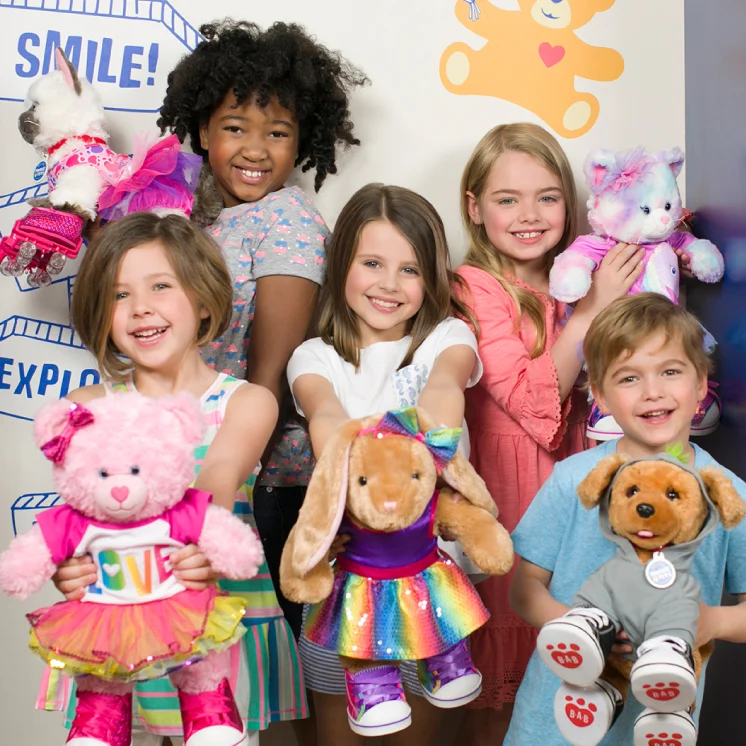
Decoding the Pricing Architecture: What Does a Build-A-Bear Actually Cost?
The cost of a Build-A-Bear experience is rarely a single, static figure. Instead, it is a variable expenditure that depends heavily on the consumer’s level of engagement with the customization process. To understand the financial commitment, one must break the transaction down into its primary components: the base plush, the auditory enhancements, and the aesthetic accessories.
The Base Price: Starting Points for Plush Friends
The entry-level cost for a standard Build-A-Bear typically ranges from $14.00 to $25.00. These “base” models are usually classic bears, bunnies, or dogs made from high-quality synthetic fibers. From a consumer finance perspective, these represent the “loss leader” or the low-barrier entry point designed to get the customer into the store. However, the price floor has risen over the last decade due to supply chain inflation and increased manufacturing costs. Collectors should note that limited-edition “vaulted” designs or oversized plush can start as high as $40.00 to $80.00, representing a significant jump in initial capital outlay.
The Upsell Strategy: Clothing, Accessories, and Sound
The true genius of the Build-A-Bear financial model lies in the “add-on” ecosystem. Once a customer has selected a base plush, they enter a high-conversion sales funnel. Accessories and clothing items typically range from $5.00 for a simple pair of glasses or a small prop to $25.00 for full licensed outfits (such as a Star Wars Jedi robe or a Disney princess gown).
Furthermore, sensory enhancements add layers to the final bill. Scent chips (e.g., strawberry or cotton candy) usually retail for around $4.00, while sound chips—ranging from generic giggles to recorded personal messages or licensed movie clips—can add $5.00 to $10.00 to the total. When a consumer adds a full outfit, shoes, a scent, and a sound, a $20.00 bear quickly escalates into a $60.00 to $75.00 investment.
Taxes and Regional Price Variances
It is also essential to consider the impact of geography on the final price. Build-A-Bear operates in high-traffic malls and premium tourist destinations (like Disney Springs or Times Square). In these flagship locations, base prices may be marked up by 10-15% to offset higher commercial real estate costs. Additionally, sales tax can vary significantly by state or country, adding an unexpected 5-10% to the final receipt. For a family purchasing multiple bears, these regional variances can shift the budget by $20.00 or more.
Budgeting for the Experience: Personal Finance Strategies for Parents
For families operating on a strict monthly budget, a trip to Build-A-Bear can be a daunting financial prospect. Without a clear plan, the “experience” can result in significant impulse spending. Applying basic personal finance principles can help families enjoy the process without compromising their financial health.
The “Pay Your Age” Phenomenon and Promotional Cycles
One of the most famous marketing and financial strategies in recent retail history is the Build-A-Bear “Pay Your Age” event. While this created logistical chaos in its inaugural year, it remains a cornerstone of the brand’s value proposition through the “Birthday Treat Bear.” Members of the Build-A-Bear Bonus Club (a free loyalty program) can bring a child in during their birthday month to pay only their age for a specific birthday bear.
From a personal finance standpoint, this is the most efficient way to engage with the brand. A three-year-old receiving a bear for $3.00 represents a massive discount, allowing the parent to reallocate that saved capital toward accessories or future savings. Understanding these promotional cycles is key to optimizing household “fun money” categories.
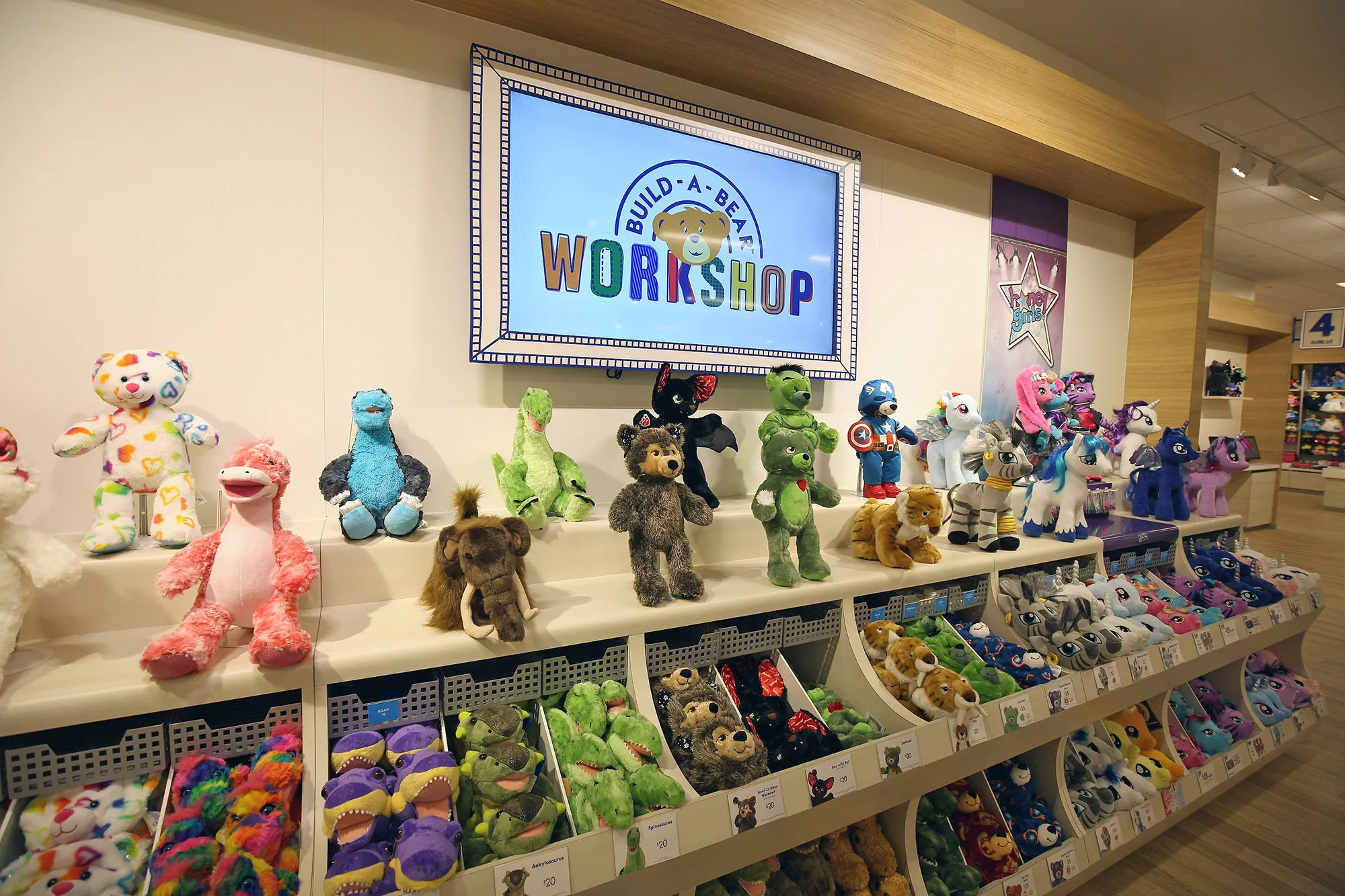
Setting a Hard Limit: The Value of Pre-Paid Gift Cards
To prevent “feature creep”—the phenomenon where a child keeps adding accessories until the price doubles—financial experts often recommend the “Gift Card Method.” By purchasing a gift card for a specific amount (e.g., $40.00) before entering the store, parents create a hard ceiling for spending. This serves two purposes: it protects the family budget and provides a practical lesson in financial literacy for the child. The child must make trade-offs—deciding, for instance, between a sound chip or a pair of shoes—within the constraints of their “available capital.”
Calculating the ROI of “Experience Retail”
In personal finance, we often look at the “cost per hour of entertainment.” A standard movie ticket might cost $15.00 for two hours of entertainment ($7.50/hour). A Build-A-Bear experience, which includes the 30-minute “stuffing ceremony,” the heart ceremony, and the long-term utility of the toy, offers a different ROI. While the upfront cost is higher, the “durability” of the experience and the physical asset (the toy) can provide value for years. For many parents, the price is justified not by the materials, but by the emotional equity and the memory created, which is a subjective but important metric in discretionary spending.
Business Finance: Why the Build-A-Bear Model Succeeds
From a corporate finance perspective, Build-A-Bear Workshop (NYSE: BBW) is a fascinating study in margin management and brand resilience. The company has successfully navigated the “retail apocalypse” by leaning into its unique financial strengths.
High-Margin Add-ons and the Psychology of Customization
The gross profit margins on plush toys are traditionally healthy, but the margins on accessories are exceptional. It costs the company significantly less to manufacture a tiny polyester t-shirt than it does the main bear, yet the t-shirt often sells for 50% of the bear’s price. By allowing customers to “build” their own product, the company offloads some of the labor (the customer participates in the “creation”) while charging a premium for the privilege. This is known in behavioral economics as the “IKEA effect”—consumers place a higher value on products they partially created themselves.
Diversification Through Licensing (Disney, Nintendo, and Beyond)
A major driver of the brand’s financial stability is its aggressive licensing strategy. By partnering with massive intellectual property holders like Disney, Marvel, Pokémon, and Nintendo, Build-A-Bear taps into pre-existing fan bases. While these licensed products often carry a higher price tag for the consumer (due to the royalty fees Build-A-Bear must pay), they also ensure high inventory turnover. For the business, these licenses act as a hedge against changing toy trends, as a “Pikachu” or a “Baby Yoda” will almost always have a market.
Membership Economics: The Bonus Club and Customer Lifetime Value
The Build-A-Bear Bonus Club is a masterclass in driving Customer Lifetime Value (CLV). By collecting data on birthdays and shopping habits, the company can send targeted “Money Off” coupons (e.g., $10 off a $30 purchase) during slow retail periods. From a business finance perspective, these coupons are a calculated “customer acquisition cost” (CAC) designed to drive foot traffic into malls. Once the customer is in the store, the aforementioned upsell funnel ensures that the average transaction value (ATV) remains high enough to cover the cost of the discount.
Hidden Costs and Value Optimization
When calculating the total financial impact of a Build-A-Bear visit, one must also account for “peripheral costs” that aren’t found on the receipt but affect the overall household balance sheet.
Transportation and Mall Spend
Because Build-A-Bear locations are almost exclusively in major shopping malls, the “true cost” includes gasoline, parking fees, and the inevitable “secondary spend.” It is a well-documented retail phenomenon that families visiting a destination store like Build-A-Bear are 70% more likely to eat at the mall food court or visit other retailers. A $50.00 bear can easily lead to a $120.00 afternoon when these variables are factored into the total expenditure.

The Secondary Market: Resale Value of Limited Editions
Unlike many “disposable” toys, certain Build-A-Bears can actually be viewed as minor financial assets. The secondary market for rare or retired bears (such as the early Pokémon releases or the “Swarovski” crystal bears) can be surprisingly lucrative. For the savvy consumer, purchasing a limited-edition collaboration might not just be a cost, but a “store of value.” Checking sites like eBay or Mercari reveals that some retired bears sell for two to five times their original retail price. While not a replacement for a 401(k), the resale value provides a unique “exit strategy” for collectors that most other toy purchases lack.
In conclusion, “how much a Build-A-Bear costs” is a question with two answers: the literal price at the register and the broader financial commitment to the experience. By understanding the pricing tiers, utilizing loyalty programs, and recognizing the business tactics at play, consumers can navigate the workshop without overextending their personal finances. Ultimately, the brand’s success lies in its ability to turn a simple commodity—a stuffed animal—into a high-value financial transaction through the power of customization and emotional branding.
aViewFromTheCave is a participant in the Amazon Services LLC Associates Program, an affiliate advertising program designed to provide a means for sites to earn advertising fees by advertising and linking to Amazon.com. Amazon, the Amazon logo, AmazonSupply, and the AmazonSupply logo are trademarks of Amazon.com, Inc. or its affiliates. As an Amazon Associate we earn affiliate commissions from qualifying purchases.