
The majestic eagle, a timeless emblem of power, freedom, and national pride, has graced the coinage of numerous civilizations and countries throughout history. From ancient empires to modern republics, this formidable bird of prey has been a ubiquitous symbol, lending its gravitas and symbolic weight to the very currency that facilitates trade and represents a nation’s wealth and sovereignty. For investors and collectors alike, understanding which coins feature an eagle is more than just a matter of curiosity; it delves into the realms of numismatics, precious metal investment, and the rich tapestry of global financial history. This article will explore the diverse world of eagle-adorned coins, examining their historical significance, their role in investment portfolios, and their enduring appeal.

The Enduring Symbolism of the Eagle on Currency
The choice of an eagle to represent a nation or its currency is no accident. Its inherent characteristics—strength, keen vision, predatory prowess, and the ability to soar above all others—have made it a powerful metaphor for national aspirations and values. This symbolism transcends geographical and cultural boundaries, explaining its widespread adoption.
A Legacy of Power and Freedom
For millennia, the eagle has been associated with divinity, empire, and unyielding strength. The Roman Empire, one of history’s most dominant forces, famously adopted the Aquila (eagle) as its military standard, a symbol of its legions’ invincibility and imperial authority. This legacy directly influenced later European powers and, eventually, modern nation-states. When new nations sought to forge an identity rooted in ideals of liberty and sovereignty, the eagle, particularly in its American bald eagle variant, became an undeniable choice. It embodies the spirit of independence, the ability to overcome adversity, and the pursuit of greatness. For nations, placing an eagle on their currency is a declaration of their autonomy and a statement of their foundational principles, making the coin not just a medium of exchange, but a miniature monument to national identity.
Global Representation
While the American Bald Eagle is perhaps the most famous example of an eagle on currency, its use is far from exclusive to the United States. Many countries across continents have chosen various species of eagles to adorn their coins, each with its unique historical and cultural resonance. From the powerful double-headed eagles symbolizing dual sovereignty in former empires like Russia and Austria-Hungary, to the single-headed eagles representing diverse cultures in Mexico, Germany, Poland, and Egypt, the motif is truly global. These representations often reflect specific national myths, historical events, or desired attributes, making each eagle-bearing coin a unique piece of a larger narrative of global finance and iconography.
Iconic American Eagle Coins and Their Financial Significance
When most people think of an eagle on a coin, their minds often turn to American coinage. The United States has a rich history of featuring the bald eagle, its national bird, on its currency, not just for its symbolic value but also for its critical role in the world of precious metals investment.
The American Silver Eagle
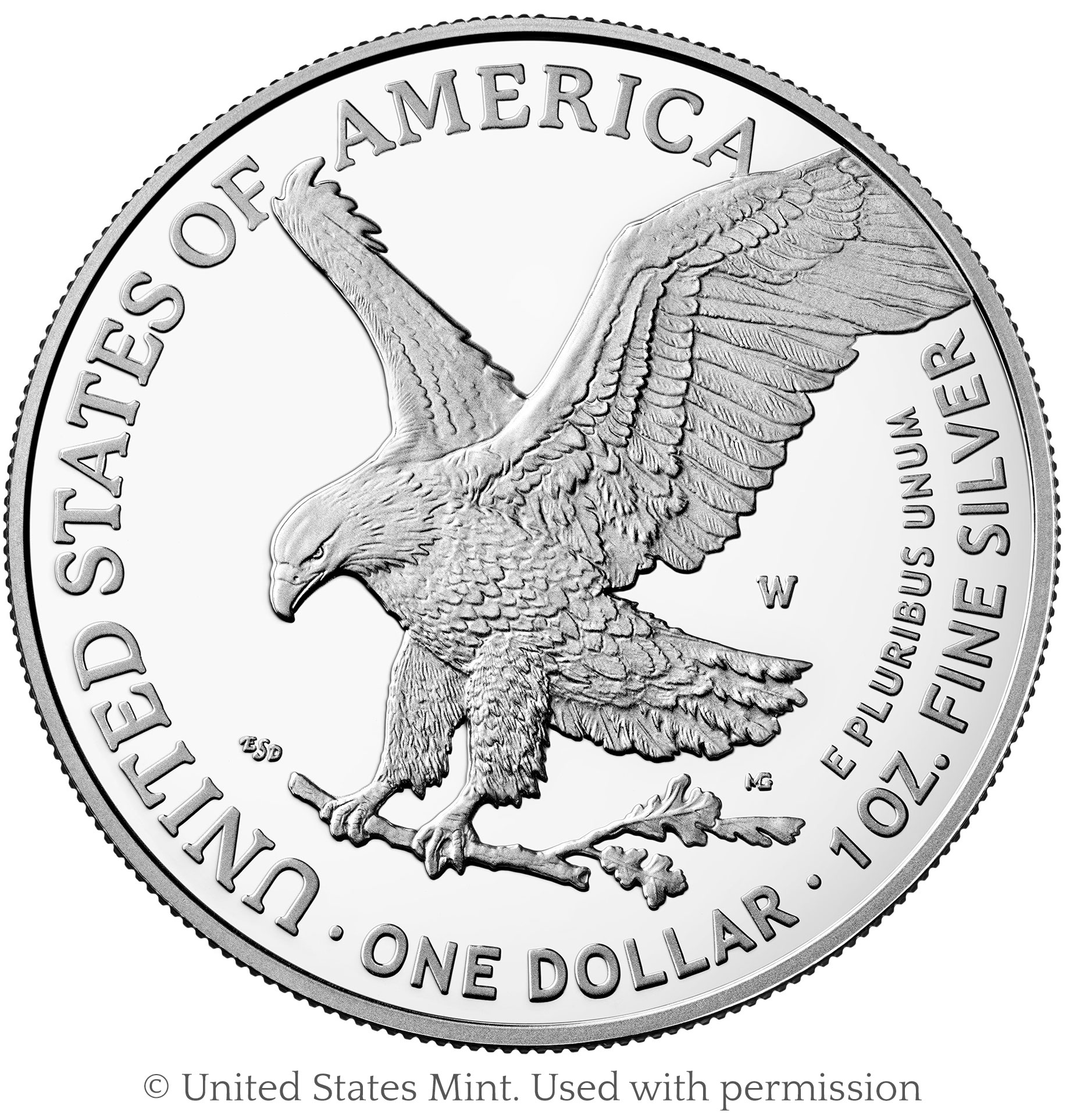
Introduced in 1986, the American Silver Eagle is the official silver bullion coin of the United States. It is composed of one troy ounce of 99.9% pure silver, making it a cornerstone for silver investors worldwide. The obverse features Adolph A. Weinman’s iconic “Walking Liberty” design, while the reverse proudly displays a heraldic eagle with a shield, an olive branch, and arrows, designed by John Mercanti.
As a legal tender coin with a face value of one dollar (though its intrinsic silver value is far higher), the Silver Eagle enjoys guaranteed purity and weight by the U.S. government, providing a high level of trust and liquidity. For investors, it serves as a straightforward way to own physical silver, acting as a hedge against inflation and economic uncertainty. Its widespread recognition and ease of trading make it an accessible entry point for new investors and a staple for seasoned bullion stackers. Proof and uncirculated collector versions, minted in smaller quantities, also appeal to numismatists, often commanding premiums above their melt value due to their finish, rarity, and aesthetic appeal.
The American Gold Eagle
Also launched in 1986, the American Gold Eagle is the U.S. Mint’s official gold bullion coin. It is produced in 1/10, 1/4, 1/2, and 1-ounce denominations, each containing 22-karat gold (91.67% gold, with copper and silver alloys for durability). The design is equally iconic: the obverse features Augustus Saint-Gaudens’ majestic full-length figure of Liberty with flowing hair, a torch in one hand, and an olive branch in the other. The reverse showcases a family of eagles, with a male eagle flying above a nest containing a female eagle and her hatchlings—a powerful symbol of American family and strength, designed by Miley Busiek.
The American Gold Eagle is one of the most popular and trusted gold coins in the world. Its legal tender status and explicit guarantee of weight and purity by the U.S. government make it highly desirable for gold investors. It is eligible for inclusion in Individual Retirement Accounts (IRAs), further cementing its status as a serious investment vehicle. Like its silver counterpart, Gold Eagles are sought after for wealth preservation, portfolio diversification, and as a safe-haven asset during times of economic volatility. The historical design and the high demand contribute to its strong market liquidity.
Other US Coins Featuring Eagles
Beyond the dedicated bullion coins, the eagle has historically appeared on various circulating and commemorative U.S. coins:
- Quarter Dollar: The reverse of the standard Washington Quarter historically featured a heraldic eagle. While the 50 State Quarters and America the Beautiful Quarters programs introduced diverse designs, many still incorporated elements or a flying eagle.
- Half Dollar: The Kennedy Half Dollar, though rarely seen in circulation today, features the presidential seal on its reverse, which includes a prominent bald eagle.
- Pre-1933 Gold Coins: The most significant examples are the “Double Eagle” ($20 gold coin) and “Gold Eagle” ($10 gold coin). Designs like Saint-Gaudens’ Liberty Head Double Eagle and Indian Head Gold Eagle are masterpieces of numismatic art and highly prized by collectors and investors for their historical significance and intrinsic gold value. These coins, no longer minted for circulation after the U.S. went off the gold standard, represent a significant piece of American financial history and often command substantial numismatic premiums.
Beyond US Borders: Eagles on World Coinage
The American eagle coins are prominent, but the symbol’s usage is a global phenomenon. Many other nations have incorporated various forms of eagles into their coinage, making them significant for both cultural identity and international investment.
Mexican Libertad
While not featuring a literal eagle on its reverse, the Mexican Libertad coin, produced in both silver and gold, prominently displays the national coat of arms on its obverse: an eagle devouring a snake, perched atop a prickly pear cactus. This iconic image is deeply rooted in Aztec mythology and symbolizes the founding of Tenochtitlan (modern Mexico City). The reverse features the Winged Victory statue, a symbol of independence. The Libertad, especially in its silver variant, is highly regarded by precious metal investors globally for its purity (99.9% fine silver or gold) and beautiful design, offering an alternative to government-minted coins like the American Eagle or Canadian Maple Leaf. Its appeal lies in its rich historical narrative and its status as a pure bullion asset.
German Coins
The “Bundesadler” or federal eagle is the national emblem of Germany, a stylized black eagle with its head turned to the right, wings open but feathers closed. This symbol has a long history, tracing back to the Roman Empire and the Holy Roman Empire. Today, the Bundesadler is prominently featured on the reverse of German Euro coins (the 1-euro and 2-euro denominations). Before the Euro, it was also a central motif on the Deutschmark coinage. For collectors, German coins with the eagle represent a continuation of national identity through significant historical periods, while their value primarily derives from their face value in circulation, or numismatic interest for older, rarer pieces.

Polish Zloty
Poland’s national coat of arms, the White Eagle, is one of the oldest national symbols in the world, dating back to the 13th century. It depicts a white eagle with a gold crown, golden talons, and beak, set against a red background. This majestic symbol is universally present on Polish Zloty coinage, from its smallest denominations to its larger commemorative pieces. The White Eagle symbolizes sovereignty, courage, and the nation’s resilience through centuries of tumultuous history. For collectors, Polish coins with the White Eagle offer a glimpse into a rich European history and a testament to enduring national pride.
Other Notable Mentions
Many other countries feature eagles, or similar birds of prey, on their coins:
- Egypt: The Eagle of Saladin, a golden eagle facing left, is a national symbol and appears on Egyptian Pound coins.
- Austria: While the Austrian Philharmonic coin features musical instruments, the pre-Euro Austrian Schilling coins often depicted various heraldic eagles.
- Canada: Although the maple leaf is iconic, some Canadian commemorative coins and territorial issues have featured eagles.
- Russia: The double-headed eagle, a legacy of the Byzantine Empire and the Tsardom of Russia, continues to appear on some modern Russian coins, symbolizing the nation’s historical expanse and dual focus (East and West).
These examples underscore the eagle’s universal appeal as a potent emblem across diverse economies and cultural landscapes.
Investing in Eagle Coins: Bullion vs. Numismatics
For those looking to acquire coins featuring eagles, the motivation typically falls into one of two main categories: bullion investment or numismatic (collectible) investment. Understanding the distinction is crucial for making informed financial decisions.
Bullion Investment
Bullion investors are primarily interested in the intrinsic metal value of a coin. Their focus is on the quantity and purity of the precious metal (gold, silver, platinum) it contains, rather than its rarity, condition, or historical uniqueness. Eagle coins such as the American Silver Eagle, American Gold Eagle, and Mexican Libertad are prime examples of bullion coins.
- Focus: Wealth preservation, diversification against traditional assets, hedging against inflation and currency devaluation.
- Target Audience: Individuals seeking to store value in tangible assets, long-term investors.
- Key Characteristics: High purity (e.g., .999 or .9999 fine), widely recognized, often traded close to their melt value (spot price plus a small premium).
- Benefits: Liquidity, global recognition, often eligible for tax-advantaged accounts like IRAs.
Numismatic Investment (Collectible Value)
Numismatic investors, or collectors, are driven by factors beyond the melt value of the metal. They seek coins that hold value due to their rarity, historical significance, artistic merit, mint errors, excellent condition, or a combination of these elements.
- Focus: Collecting as a hobby, historical preservation, potential for capital appreciation based on rarity and demand.
- Target Audience: Enthusiasts, individuals seeking unique assets, those interested in the art and history of coinage.
- Key Examples: Pre-1933 U.S. gold coins (like the Saint-Gaudens Double Eagle), ancient Roman coins with eagle motifs, limited-edition proof versions of modern bullion coins, and coins with identifiable errors.
- Understanding Premiums: Numismatic coins often trade at significant premiums over their intrinsic metal value. This “numismatic premium” can fluctuate based on market demand, grading, and perceived rarity, making it a more specialized and potentially volatile investment. Research and expertise are paramount in this field.
Safeguarding Your Eagle Coin Investments
Whether you are investing in bullion for its metal content or collecting numismatic pieces for their rarity, safeguarding your investment is paramount. Proper handling, storage, and due diligence are essential to protect your assets and maximize their value.
Authentication and Grading
For both bullion and numismatic coins, authentication is the first step. Always purchase from reputable dealers with established track records. For numismatic pieces, third-party grading services like PCGS (Professional Coin Grading Service) and NGC (Numismatic Guaranty Company) are invaluable. They authenticate, grade (assign a condition score), and encapsulate coins, providing an independent assessment that helps establish value and builds buyer confidence. Even for bullion coins, ensuring their authenticity against counterfeits is crucial, especially for higher value items.
Storage and Security
Physical precious metals and valuable collectible coins require secure storage. Options include:
- Safe Deposit Boxes: Offered by banks, these provide secure off-site storage.
- Secure Home Safes: For smaller collections, a quality fireproof and theft-resistant safe at home can be an option, but ensure it’s properly secured and insured.
- Third-Party Vault Storage: Specialized companies offer high-security, insured vault storage, particularly for larger bullion holdings.
Proper handling is also vital; avoid touching coins directly with bare hands, as oils can damage their surface and finish, especially for proof and uncirculated specimens. Use cotton gloves and handle coins by their edges.
Market Fluctuations and Due Diligence
The value of both bullion and numismatic coins can fluctuate. Bullion prices are tied to the global spot prices of gold, silver, and other metals, which can be volatile. Numismatic values are influenced by collector demand, market trends, and economic conditions that affect discretionary spending. Always conduct thorough research before buying or selling. Understand the market dynamics, track historical prices, and consult with experts or trusted resources. Diversify your investments and avoid putting all your capital into a single type of coin.
Conclusion
The eagle on a coin is far more than a decorative element; it is a profound symbol embedded in the fabric of global finance and national identity. From the readily available American Silver Eagle, a stalwart for bullion investors, to the historically rich pre-1933 gold eagles coveted by numismatists, these coins offer a tangible link to history, art, and economic principles. Whether you’re drawn to their intrinsic metal value as a hedge against economic uncertainty or captivated by their rarity and historical narrative, eagle-adorned coins represent a fascinating and financially significant segment of the monetary world. Their enduring presence on currency underscores a universal recognition of the eagle’s majesty and its timeless representation of strength, freedom, and prosperity.
aViewFromTheCave is a participant in the Amazon Services LLC Associates Program, an affiliate advertising program designed to provide a means for sites to earn advertising fees by advertising and linking to Amazon.com. Amazon, the Amazon logo, AmazonSupply, and the AmazonSupply logo are trademarks of Amazon.com, Inc. or its affiliates. As an Amazon Associate we earn affiliate commissions from qualifying purchases.