
In the rapidly evolving landscape of digital finance, few assets have sparked as much conversation, debate, and institutional interest as XRP. Often misunderstood by the general public as merely another cryptocurrency like Bitcoin or Ethereum, XRP distinguishes itself through a singular, hyper-focused purpose: revolutionizing the way money moves across borders. Developed to serve as a high-speed, low-cost bridge for international transactions, XRP represents a fundamental shift from traditional banking systems to a modernized, internet-of-value framework.
To understand what XRP does, one must look past the speculative charts and into the mechanics of global liquidity. In a world where information moves instantly, the movement of money remains surprisingly sluggish. XRP was engineered to solve this “settlement gap,” providing a financial tool that enables value to be transferred with the same friction-less ease as a digital message.
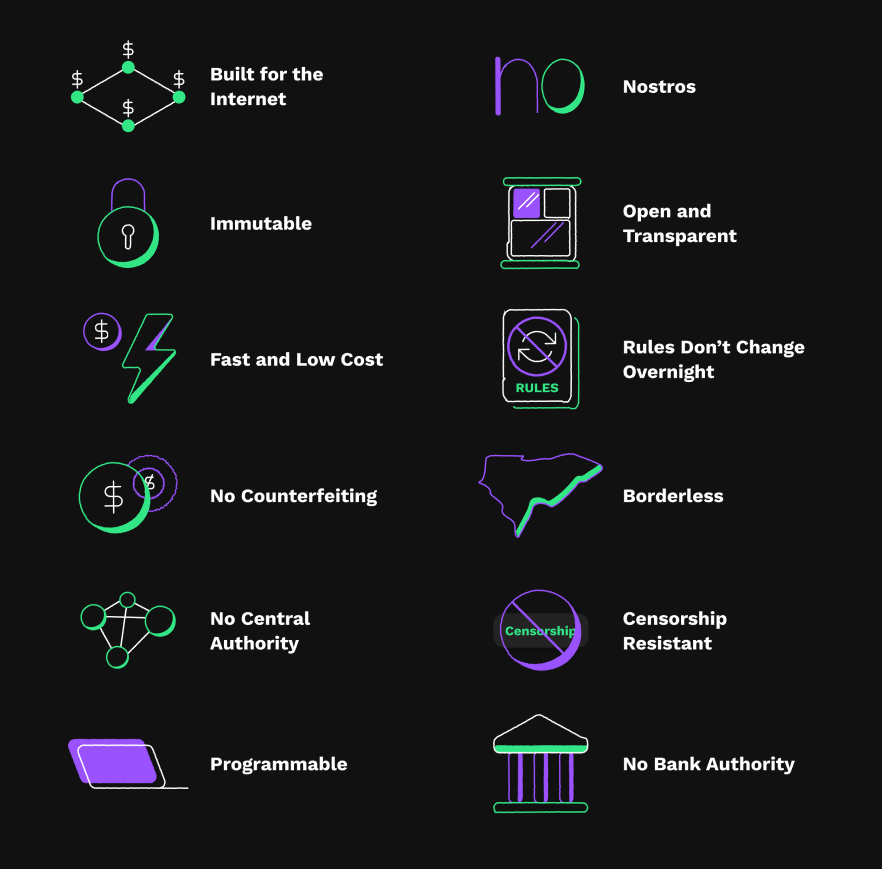
The Utility of XRP as a Financial Instrument
At its core, XRP is a digital asset designed for enterprise use. While it can be held by individuals as a store of value or an investment, its primary functional design is to facilitate liquidity for financial institutions. In the traditional banking world, sending money from one country to another is a convoluted process involving multiple intermediary banks, high fees, and significant delays.
Solving the Pre-funding Dilemma with On-Demand Liquidity (ODL)
One of the most significant financial burdens for global banks is the requirement to maintain “Nostro/Vostro” accounts. These are pre-funded accounts in foreign currencies held in banks abroad to ensure that cross-border payments can be settled. Currently, trillions of dollars in capital are trapped in these accounts worldwide, sitting idle just to facilitate trade.
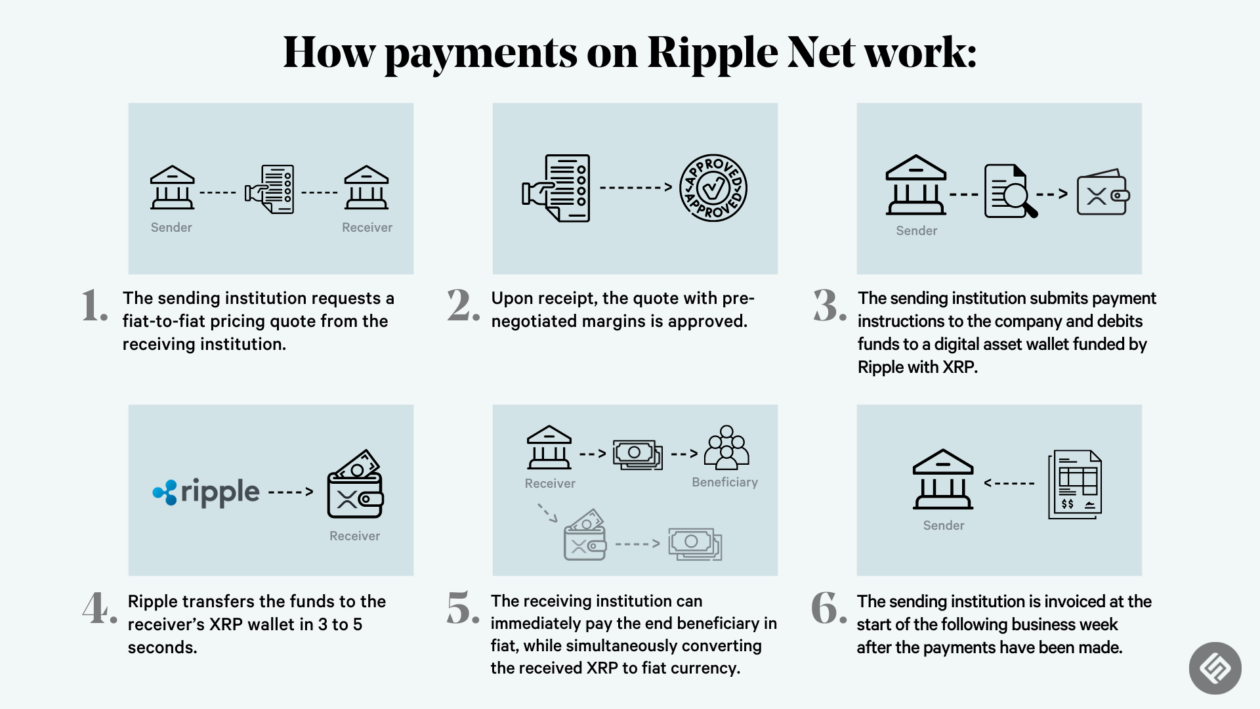
XRP enables a solution known as On-Demand Liquidity (ODL). By using XRP as a bridge currency, a financial institution does not need to pre-fund accounts in a destination country. Instead, they can convert their local currency into XRP, send it across the XRP Ledger in seconds, and have it converted into the destination currency on the other side. This frees up vast amounts of capital, allowing businesses to put that money to more productive use elsewhere in their operations.
XRP as a Neutral Bridge Currency for Institutional Transfers
In the global marketplace, not all currencies are easily tradable against one another. For example, converting Mexican Pesos directly to Thai Baht can be expensive and difficult because there isn’t a high-volume direct market for that specific pair. Usually, these transactions must first be converted into US Dollars, creating a “double-hop” that increases costs.
XRP acts as a neutral bridge. Because it is decentralized and traded globally, it can sit in the middle of any two fiat currencies. This neutrality is essential for a global financial tool; it doesn’t favor one nation’s central bank over another, providing a level playing field for international settlements.
Investing in the XRP Ecosystem
From a personal finance and investment perspective, XRP occupies a unique niche. Unlike Bitcoin, which many view as “digital gold” or a hedge against inflation, XRP is often viewed as a “utility token.” Its value proposition for an investor is tied closely to the volume of transactions it might one day facilitate within the global financial system.
Market Position and Liquidity
XRP consistently ranks among the top digital assets by market capitalization. This high ranking is a reflection of its deep liquidity. For investors, liquidity is a crucial metric; it means that the asset can be bought or sold in large quantities without causing massive, erratic price swings (relative to smaller-cap tokens).
The “Money” aspect of XRP for a private investor involves understanding its role in a diversified portfolio. Because its primary use case is institutional, its price movements are often influenced by different catalysts than those affecting consumer-focused tokens or decentralized finance (DeFi) platforms. News regarding banking partnerships, regulatory developments, and international trade agreements often serve as the primary drivers of its market value.
Risks and Rewards: The Volatility Factor
As with any financial asset in the digital space, XRP carries inherent risks. The digital asset market is notoriously volatile, and XRP is no exception. However, proponents argue that the “utility-based” floor of XRP provides a different risk profile than purely speculative assets. If XRP becomes the standard for cross-border settlements, the constant demand from financial institutions to fuel their ODL transactions could theoretically provide a stabilizing force for its valuation over the long term.
Investors must balance the potential for high returns against the regulatory uncertainties that have historically shadowed the asset. For a savvy participant in the “Money” niche, XRP represents a high-stakes play on the future of the global banking infrastructure.
XRP vs. Traditional Financial Systems
To truly grasp what XRP does, one must compare it to the incumbent system: SWIFT (the Society for Worldwide Interbank Financial Telecommunication). For decades, SWIFT has been the backbone of international finance, yet it remains a messaging system, not a settlement system.
The SWIFT Comparison: Speed and Cost Efficiency
When a bank sends a message via SWIFT, the message arrives quickly, but the actual money can take three to five days to settle. This is because the funds must move through a chain of correspondent banks, each taking a fee and adding time to the process. Furthermore, SWIFT transactions have a relatively high error rate, often requiring manual intervention.
XRP, by contrast, settles in roughly 3 to 5 seconds. The cost per transaction on the XRP Ledger is a fraction of a cent—so low that it is practically negligible. For a business or a bank, moving from a 5-day settlement window to a 5-second one is not just a marginal improvement; it is a complete transformation of their financial physics. It reduces the risk of currency fluctuations during the “waiting period” and ensures that the recipient has immediate access to the funds.
Institutional Adoption and the Banking Sector
The adoption of XRP is not a theoretical exercise. Various payment providers and smaller banks have already integrated XRP-based tools to facilitate remittances. For the broader financial world, the allure of XRP lies in its “interoperability.” It is designed to work alongside existing banking protocols rather than trying to replace the banks entirely.
This “pro-banking” stance is a key differentiator in the financial world. While many digital assets were created to bypass banks, XRP was created to upgrade them. This makes it a more palatable option for traditional financial institutions that are looking to modernize their “Money” movement strategies without abandoning their regulatory frameworks.
Future Outlook and the Regulatory Landscape
The future of XRP is inextricably linked to the broader evolution of digital finance laws and the emergence of Central Bank Digital Currencies (CBDCs). As nations look to digitize their own currencies, the need for a bridge to connect these various digital “islands” becomes even more pressing.
The Role of XRP in Central Bank Digital Currencies (CBDCs)
Central banks around the world are currently exploring or piloting CBDCs. However, a digital Dollar, a digital Euro, and a digital Yen will still face the same interoperability problems as their physical counterparts. XRP is positioned to be the “interconnecting tissue” for these CBDCs.
By providing a fast, neutral ledger, XRP can facilitate the exchange of one CBDC for another. This role as a “meta-currency” is perhaps the most ambitious vision for what XRP does. In this scenario, XRP becomes a core component of the global monetary plumbing, invisible to the end-user but essential for the speed of the global economy.

Long-term Value Proposition for Individual Investors
For those focusing on online income and long-term wealth building, the question of XRP’s “Money” value comes down to adoption. If the world moves toward an “Internet of Value” where money moves as fast as data, the underlying assets that enable that movement will become incredibly valuable.
The strategy for many investors in this niche is to view XRP not as a currency to buy coffee with, but as an infrastructure play. Much like one might invest in the companies that built the fiber-optic cables for the internet, investing in XRP is a bet on the “cables” of the new financial system.
In conclusion, XRP is far more than a digital token; it is a sophisticated financial tool designed to resolve the inefficiencies of a legacy banking system. By eliminating the need for pre-funded accounts, reducing settlement times from days to seconds, and lowering costs to near zero, XRP serves as a catalyst for a more efficient global economy. Whether viewed as a bridge for institutions or a strategic asset for individual investors, its role in the future of money is undeniably significant. As the digital and physical financial worlds continue to merge, the utility of XRP as a provider of instant, global liquidity remains its most defining and valuable characteristic.
aViewFromTheCave is a participant in the Amazon Services LLC Associates Program, an affiliate advertising program designed to provide a means for sites to earn advertising fees by advertising and linking to Amazon.com. Amazon, the Amazon logo, AmazonSupply, and the AmazonSupply logo are trademarks of Amazon.com, Inc. or its affiliates. As an Amazon Associate we earn affiliate commissions from qualifying purchases.