
In the modern financial landscape, few questions are as ubiquitous among retail and institutional investors as “What is the stock price for Amazon?” While a simple search provides a real-time numerical value, the true answer involves a complex tapestry of market capitalization, historical splits, and underlying fundamental health. Amazon.com Inc. (ticker: AMZN) has transitioned from a niche online bookseller to a global behemoth that dictates the movement of major indices like the S&P 500 and the Nasdaq-100. For an investor, understanding the stock price is not merely about tracking daily fluctuations; it is about evaluating the company’s intrinsic value against its current market price to determine if it represents a sound financial opportunity.

Understanding the Current Valuation of Amazon (AMZN)
When assessing the price of Amazon stock today, one must first look at it through the lens of its historical trajectory and its massive scale. As of the current market cycle, Amazon maintains its position as one of the world’s most valuable companies, often fluctuating within the “trillion-dollar club.”
The Significance of the Ticker and Historical Price Action
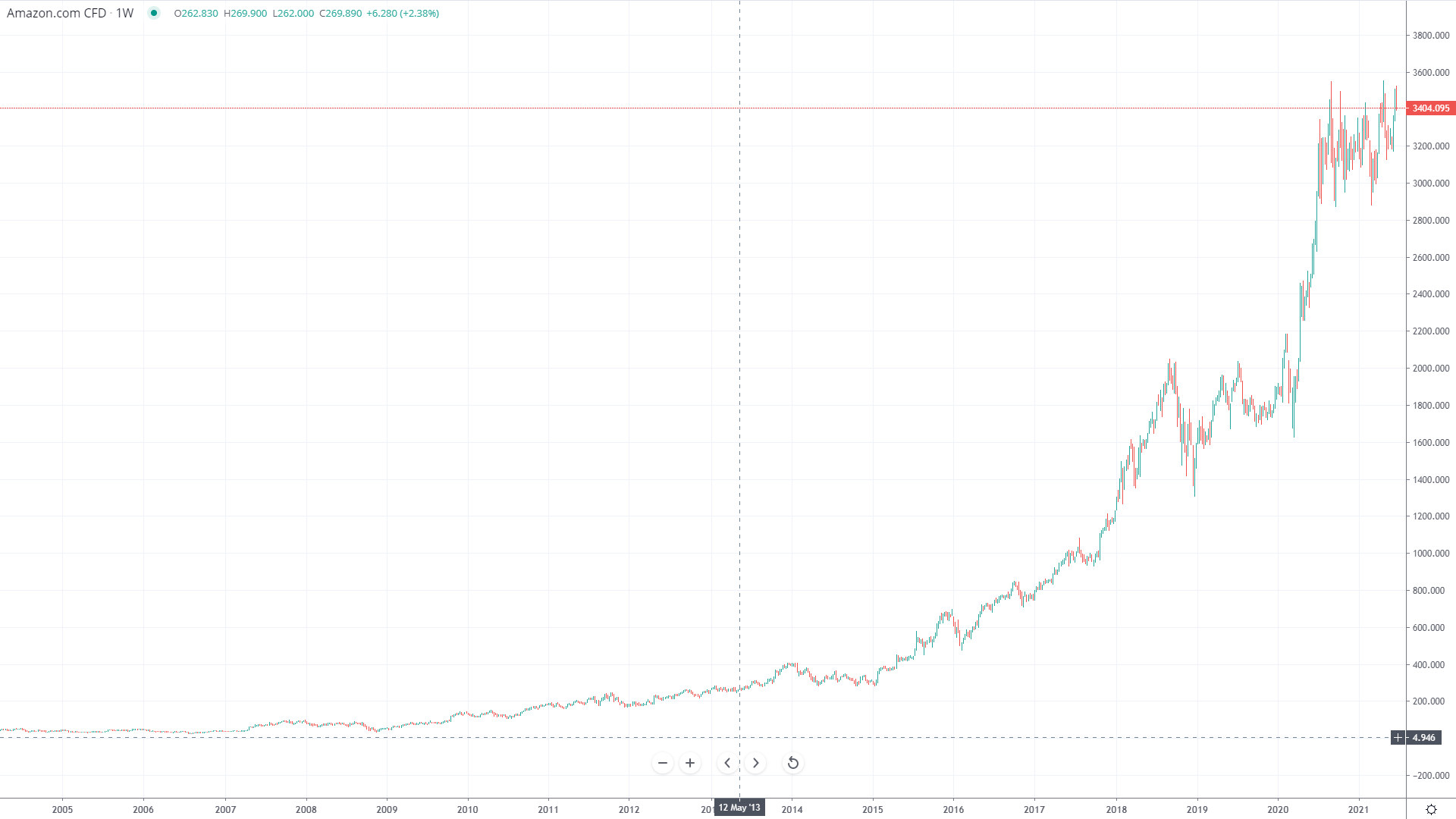
For years, Amazon’s stock price was perceived as “expensive” by retail investors because it traded well into the thousands of dollars. However, the landmark 20-for-1 stock split in June 2022 fundamentally changed the accessibility of the shares. While a stock split does not change the company’s market capitalization or its underlying value, it lowers the “sticker price” per share, increasing liquidity and making it easier for individual investors to engage in options trading or buy whole shares. Understanding this historical context is vital when comparing today’s price to the charts of the late 2010s.
Market Capitalization and Its Influence on Index Performance
Amazon’s stock price multiplied by its outstanding shares gives us its market capitalization. Because Amazon is a “mega-cap” stock, its price movement has a disproportionate impact on the broader market. When an investor buys a total market index fund, a significant portion of their money is effectively flowing into Amazon. Therefore, the “price” of Amazon is often a bellwether for the health of the consumer discretionary sector and the tech-heavy Nasdaq. Investors monitor the $1.5 trillion to $2 trillion market cap milestones as psychological resistance and support levels that define the stock’s momentum.
Core Financial Drivers: What Moves the Needle for Investors?
The nominal price of Amazon stock is driven by its earnings reports, specifically its ability to generate cash and grow its diverse business segments. To understand why the price is where it is, we must look at the specific engines of growth within the company’s financial statements.
AWS: The High-Margin Profit Center
While the public associates Amazon with brown boxes and fast shipping, the investment community focuses heavily on Amazon Web Services (AWS). AWS is the company’s cloud computing arm and serves as its primary profit engine. In many fiscal quarters, AWS accounts for the majority of the company’s operating income despite contributing a smaller percentage of total revenue compared to the retail division. When AWS reports high growth and strong margins, the stock price typically reacts positively, as cloud computing is viewed as a high-moat, recurring revenue business.
E-commerce Efficiency and Logistics Capital Expenditure
The “Money” side of Amazon’s retail business is a game of margins. For years, Amazon reinvested nearly every dollar of profit back into its logistics network. Today, investors watch the “North America” and “International” segments to see if the company can transition from a period of heavy capital expenditure (building warehouses and delivery fleets) to a period of harvesting profits. A rising stock price often reflects the market’s belief that Amazon has achieved the “economies of scale” necessary to squeeze more profit out of every transaction.
Advertising Revenue: The Quiet Giant in the Balance Sheet
A relatively new but powerful driver of Amazon’s stock valuation is its digital advertising business. By leveraging its vast repository of consumer data, Amazon has become the third-largest digital ad platform in the world, trailing only Google and Meta. Advertising margins are significantly higher than retail margins. When Amazon shows strength in ad revenue, it signals to the market that the company is successfully diversifying its income streams, which often leads to a higher Price-to-Earnings (P/E) expansion.
Evaluating Amazon Through Key Investment Metrics
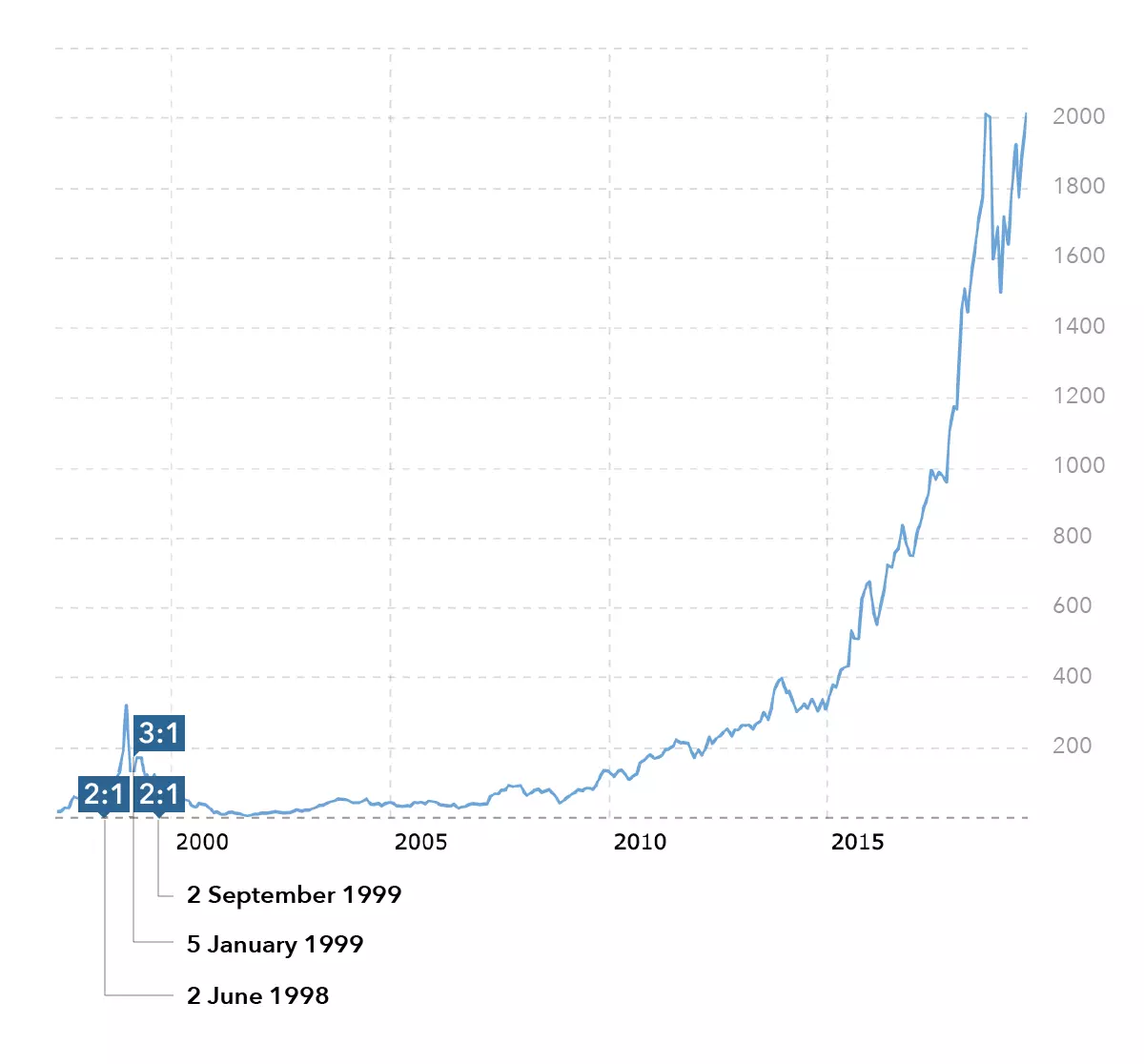
To determine if the current stock price represents a “buy,” “hold,” or “sell,” investors move beyond the nominal price and look at valuation ratios. These metrics provide a standardized way to compare Amazon’s price to its financial output.
Analyzing the Price-to-Earnings (P/E) and Price-to-Sales (P/S) Ratios
Amazon has historically traded at a very high P/E ratio compared to the broader market. This is because investors have been willing to pay a premium for its aggressive growth and its habit of reinvesting profits. However, as the company matures, the market increasingly looks for “GAAP” (Generally Accepted Accounting Principles) profitability. Investors now frequently look at the Forward P/E ratio—calculating the price based on predicted future earnings—to gauge whether the stock is overvalued relative to its growth trajectory.
Free Cash Flow: The Lifeblood of Amazon’s Expansion
In the world of business finance, “Cash is King.” Amazon’s management, particularly under the philosophy established by founder Jeff Bezos and continued by Andy Jassy, has always prioritized Free Cash Flow (FCF). FCF is the cash a company generates after accounting for cash outflows to support operations and maintain its capital assets. A positive and growing FCF allows Amazon to pay down debt, acquire new companies (like One Medical or Roomba’s parent iRobot, pending regulatory hurdles), and innovate without needing to issue more debt or dilute shareholders.
Strategic Portfolio Integration: How to Approach AMZN Stock
If you are looking at the stock price with the intent to invest, you must consider the strategy that best fits your financial goals. Investing in a high-volatility, high-growth stock requires a disciplined approach.
Dollar-Cost Averaging vs. Lump Sum Investing
Given that the stock price for Amazon can be volatile due to quarterly earnings surprises or regulatory news, many financial advisors suggest Dollar-Cost Averaging (DCA). By investing a fixed amount of money at regular intervals, an investor buys more shares when the price is low and fewer when it is high. This mitigates the risk of “timing the market” poorly—a common pitfall when dealing with high-priced tech and retail stocks.
The Impact of Stock Splits on Retail Accessibility
While the 2022 split made the price per share lower, it also allowed for more precise portfolio rebalancing. For individual investors, the lower price means they can use Amazon for “covered call” strategies or more easily donate specific shares for tax-loss harvesting. From a financial planning perspective, the current price level allows for much more granular control over one’s exposure to the e-commerce and cloud sectors.
The Macroeconomic Landscape and Future Projections
The price of Amazon does not exist in a vacuum. It is heavily influenced by global economic conditions, interest rates, and consumer behavior.
Interest Rates and the Cost of Capital
As a growth-oriented company, Amazon is sensitive to the Federal Reserve’s interest rate policy. High interest rates increase the “discount rate” used by analysts to value future cash flows. Simply put, when interest rates are high, future dollars are worth less today, which can put downward pressure on the stock price of companies like Amazon. Conversely, a “dovish” or low-interest-rate environment tends to favor Amazon’s valuation, as it lowers the cost of the massive debt often used to fund its infrastructure.
Consumer Spending Trends and Global Economic Shifts
As a massive retailer, Amazon is a direct proxy for the health of the consumer. If inflation eats into discretionary income, Amazon’s retail volumes may slump, dragging the stock price down. However, Amazon’s “Prime” ecosystem acts as a financial moat; the recurring subscription revenue provides a buffer that many other retailers lack. Investors monitor the “Consumer Price Index” (CPI) and retail sales data as leading indicators for where Amazon’s stock might head in the coming quarter.
Final Financial Outlook
When you ask “What is the stock price for Amazon?”, you are asking for a snapshot of a moving target. To be a successful investor in the “Money” niche, one must look past the daily ticker and analyze the underlying machinery. Amazon remains a complex financial entity where the high margins of the cloud and advertising are used to subsidize the high-growth, lower-margin retail world. Whether the current price is a bargain or a peak depends on the company’s ability to maintain its dominance in AWS while continuing to find efficiencies in its global supply chain. For the long-term investor, the price is merely a entry point into one of the most sophisticated cash-generating machines in corporate history.
aViewFromTheCave is a participant in the Amazon Services LLC Associates Program, an affiliate advertising program designed to provide a means for sites to earn advertising fees by advertising and linking to Amazon.com. Amazon, the Amazon logo, AmazonSupply, and the AmazonSupply logo are trademarks of Amazon.com, Inc. or its affiliates. As an Amazon Associate we earn affiliate commissions from qualifying purchases.