
For decades, Apple Inc. (AAPL) has stood as a titan of the global economy, evolving from a niche computer manufacturer into a diversified conglomerate that serves as a cornerstone for institutional and retail portfolios alike. When a prospective investor asks, “How much is one share of Apple?” they are often seeking more than a simple numerical ticker price. They are inquiring about the cost of entry into one of the most successful financial engines in history. Understanding the value of a single share requires a comprehensive look at market dynamics, historical adjustments, and the fundamental financial metrics that drive Apple’s multi-trillion-dollar valuation.
Understanding the Current Price and Market Dynamics
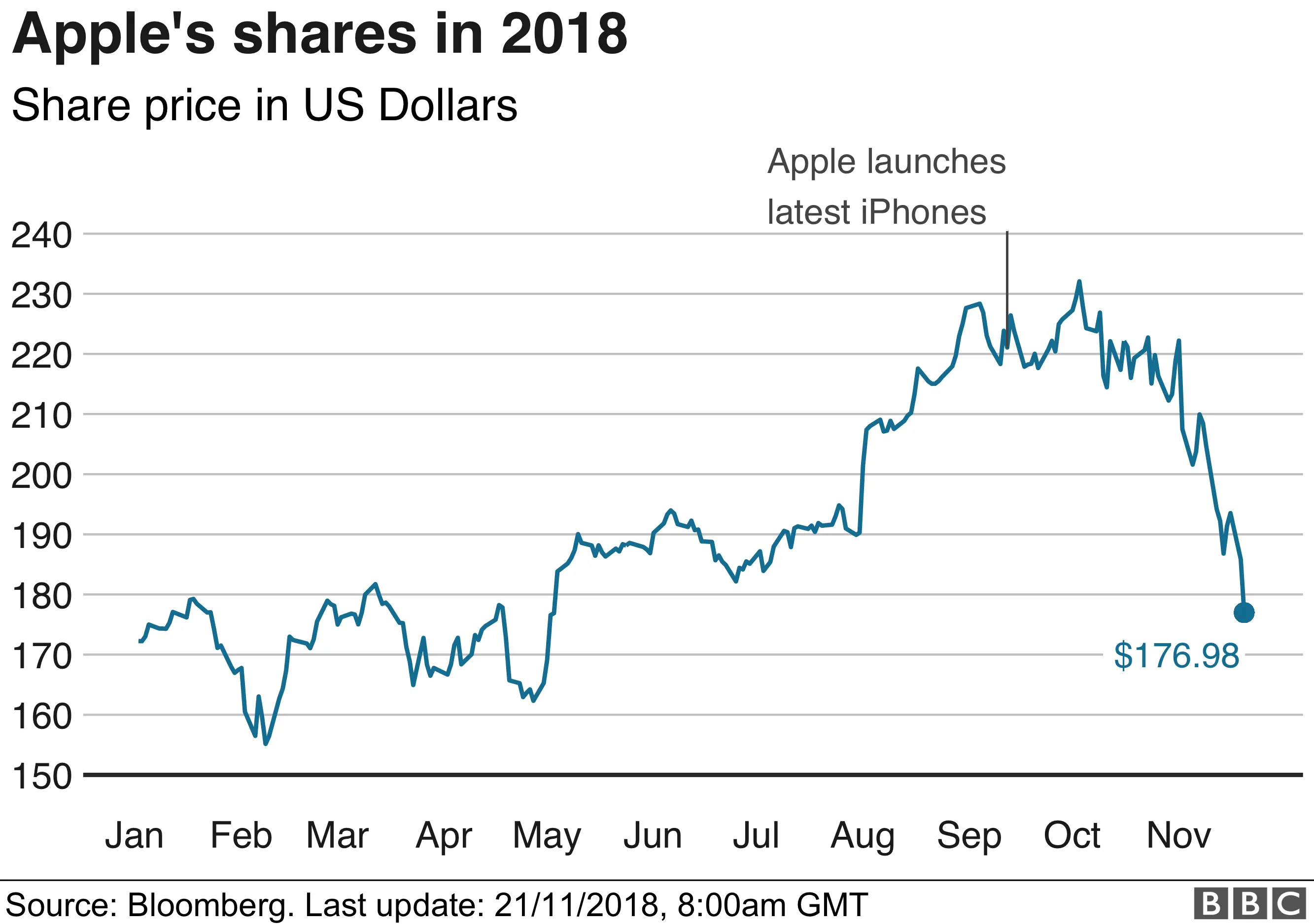
The price of a single share of Apple is a fluid figure, shifting second by second during trading hours on the NASDAQ. While the nominal price often fluctuates between $150 and $230 (depending on the market cycle), that number is merely the surface of a much deeper financial ocean. To understand what you are paying for when you buy “one share,” you must understand the forces that dictate that price.
Real-Time Pricing vs. Intrinsic Value
The market price of AAPL is determined by the collective sentiment of millions of participants, ranging from high-frequency trading algorithms to long-term pension funds. However, savvy investors distinguish between the market price and intrinsic value. Intrinsic value is an estimate of the actual worth of a company based on its future cash flows and fundamental assets. When the market price is lower than the intrinsic value, value investors see an opportunity. Conversely, when the price sits at a premium, it suggests that the market has high expectations for the company’s future earnings.
The Role of Market Sentiment and Macroeconomics
Apple does not exist in a vacuum. The price of one share is heavily influenced by broader macroeconomic factors. For instance, when the Federal Reserve adjusts interest rates, it directly impacts the “discount rate” used by analysts to value future earnings. Higher interest rates typically lead to a compression in the valuation multiples of growth-oriented stocks like Apple. Additionally, global supply chain costs and currency fluctuations—specifically the strength of the U.S. dollar—can shave billions off Apple’s international revenue, subsequently reflecting in the daily share price.
Historical Performance and the Impact of Stock Splits
To look at Apple’s share price today without context is to miss the broader financial narrative. If Apple had never split its stock, a single share would today be worth tens of thousands of dollars, making it inaccessible to the average retail investor.
A Legacy of Growth: From Garage to Trillions
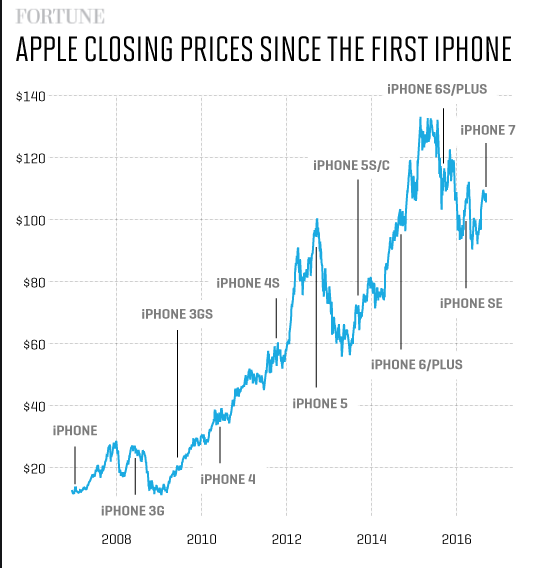
Apple’s financial journey is a testament to the power of compounding. Since its Initial Public Offering (IPO) in 1980, the stock has generated astronomical returns for those with the patience to hold through volatility. For the modern investor, the current share price represents a “normalized” entry point, but the underlying equity represents a claim on a company that consistently generates over $90 billion in annual net income. This growth hasn’t been linear; it has been punctuated by market crashes and product cycles, yet the long-term trajectory has remained upward, driven by relentless operational efficiency and high return on invested capital (ROIC).
The Math of Stock Splits: Why Share Price Isn’t Everything
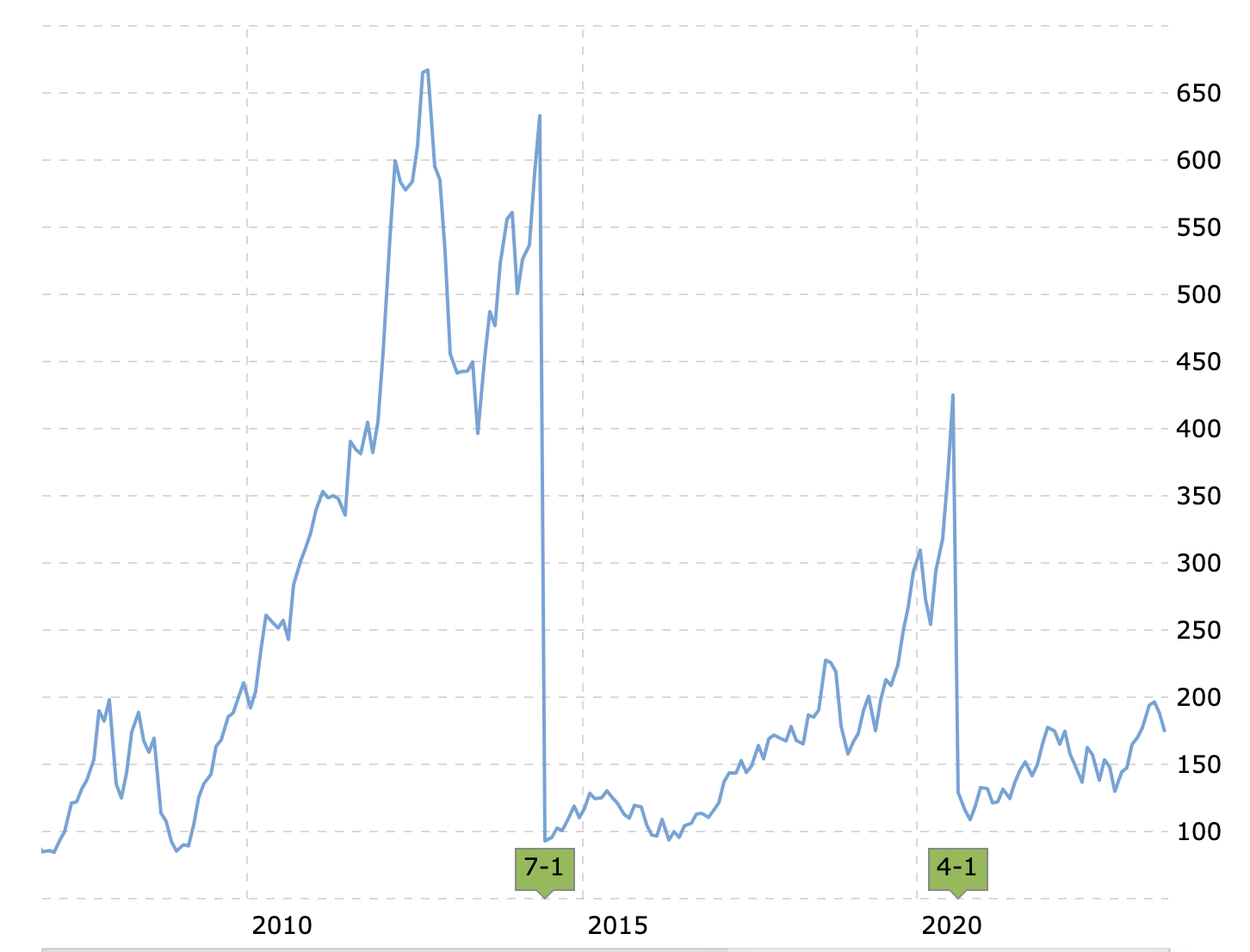
Apple has historically used stock splits to keep its share price within a “psychological” range that appeals to retail investors. Notable splits include the 7-for-1 split in 2014 and the 4-for-1 split in 2020. A stock split does not change the total value of your investment; it simply divides the company’s “pie” into more slices. If you owned one share worth $400 before a 4-for-1 split, you would own four shares worth $100 each afterward. This move increases liquidity and makes it easier for individual investors to buy “one share” without needing a massive capital outlay.
Fundamental Analysis: Is Apple Still a “Buy”?
When evaluating whether the current price of one share is a fair entry point, investors turn to fundamental analysis. This involves peeling back the layers of Apple’s balance sheet to see what truly supports the stock price.
Analyzing the Price-to-Earnings (P/E) Ratio
The P/E ratio is the most common metric used to determine if Apple is overvalued or undervalued. It tells you how much the market is willing to pay for every $1 of the company’s profit. Historically, Apple traded at a lower P/E ratio than many software companies because it was viewed primarily as a hardware manufacturer. However, as Apple transitioned toward a high-margin services model, its P/E multiple expanded. Investors are now willing to pay a premium for Apple’s “ecosystem” because it provides recurring, predictable revenue that justifies a higher share price.
Cash Reserves and Dividend Yields
One of Apple’s most attractive financial features is its “Fortress Balance Sheet.” The company maintains a massive cash position, which it uses for strategic acquisitions, research and development, and shareholder returns. For the individual investor, owning one share entitles you to a portion of the company’s dividend. While Apple’s dividend yield may seem modest compared to utility stocks, its “dividend growth” is significant. Furthermore, Apple’s aggressive share buyback program reduces the total number of shares outstanding, which effectively increases the “ownership stake” of every remaining share, providing a subtle but powerful tailwind for the stock price.
Strategies for Investing in Apple Stock
Knowing the price of one share is the first step, but the second step is determining how to integrate that share into a broader financial plan. The barrier to entry for owning Apple has never been lower, thanks to modern financial technology.
Fractional Shares: Investing with Less
If the current price of one share—say $190—is more than a beginner wants to commit at once, many brokerage platforms now offer “fractional shares.” This allows an investor to buy $10 or $50 worth of Apple stock, receiving a proportional fraction of a share. This democratization of finance ensures that the nominal price of a single share is no longer a hurdle for wealth building. It allows for the implementation of “portfolio weighting,” where an investor can maintain Apple as a specific percentage of their total assets regardless of its share price.
Dollar-Cost Averaging (DCA) and Long-Term Holding
Because Apple’s share price can be volatile in the short term, many financial advisors recommend Dollar-Cost Averaging (DCA). Instead of trying to “time the market” to get the lowest possible price for one share, an investor commits to buying a fixed dollar amount of Apple stock at regular intervals. Over time, this strategy lowers the average cost per share, as you naturally buy more shares when the price is low and fewer when the price is high. For a blue-chip stock like Apple, the “time in the market” usually outperforms “timing the market.”
The Financial Outlook: Future Growth Drivers
The price of one share today is essentially a bet on the company’s ability to grow in the future. Investors are currently looking beyond the iPhone to see where the next decade of capital appreciation will come from.
Services Revenue and Subscription Models
The most important shift in Apple’s financial profile is the growth of its Services segment, which includes the App Store, iCloud, Apple Music, and Apple Pay. These services boast gross margins significantly higher than hardware products. From a finance perspective, this shift is revolutionary. It moves Apple from a “transactional” business model—where they must convince you to buy a new phone every few years—to a “subscription” model with “sticky” revenue. As the percentage of total revenue from Services increases, the stock’s valuation tends to become more resilient.
Emerging Markets and Institutional Ownership
Apple’s expansion into emerging markets, particularly India, represents a massive untapped revenue stream that supports long-term share price appreciation. Furthermore, Apple remains a “top holding” for the world’s largest exchange-traded funds (ETFs) and mutual funds. Because Apple is a heavily weighted component of the S&P 500 and the Nasdaq-100, billions of dollars automatically flow into Apple shares every time an investor buys a broad market index fund. This institutional “floor” provides a level of price stability that few other equities can claim.
In conclusion, while the answer to “how much is one share of Apple” can be found with a quick Google search, the value of that share is a reflection of the company’s mastery over its finances, its aggressive return of capital to shareholders, and its pivot toward high-margin recurring revenue. For the modern investor, one share of Apple is not just a piece of a technology company; it is a stake in a global financial institution that continues to redefine the boundaries of corporate profitability.
aViewFromTheCave is a participant in the Amazon Services LLC Associates Program, an affiliate advertising program designed to provide a means for sites to earn advertising fees by advertising and linking to Amazon.com. Amazon, the Amazon logo, AmazonSupply, and the AmazonSupply logo are trademarks of Amazon.com, Inc. or its affiliates. As an Amazon Associate we earn affiliate commissions from qualifying purchases.