
Navigating the world of loans can feel daunting, whether you’re considering a mortgage, an auto loan, student debt, or a personal line of credit. One of the most critical pieces of information you’ll need to understand – and manage effectively – is your monthly loan payment. This isn’t just an arbitrary number; it’s a foundational element of your financial health, impacting your budget, savings potential, and overall financial planning. Knowing precisely how to calculate this figure empowers you to make informed decisions, avoid financial strain, and strategically manage your debt. This guide will demystify the process, exploring the underlying principles, practical calculation methods, and strategic considerations for understanding and optimizing your loan payments.

Understanding the Fundamentals of Loan Payments
Before diving into the “how-to,” it’s essential to grasp the core components that dictate how much you pay each month. These elements are the building blocks of every loan calculation.
Key Components of a Loan
Every loan, regardless of its type, is built upon a few fundamental parameters:
- Principal (P): This is the original amount of money you borrow from the lender. It’s the starting point of your debt, and every payment you make will contribute towards reducing this principal, alongside interest.
- Interest Rate (i): The interest rate is essentially the cost of borrowing money, expressed as a percentage of the principal. It’s the lender’s profit for extending you credit. Interest rates are typically quoted annually (Annual Percentage Rate or APR), but for monthly payment calculations, this annual rate needs to be converted into a monthly rate. Understanding whether your rate is fixed (stays the same throughout the loan term) or variable (can change over time) is crucial.
- Loan Term (n): This refers to the duration over which you agree to repay the loan, usually expressed in years or months. Common terms might be 30 years for a mortgage, 5 years for an auto loan, or 10 years for student loans. The term significantly impacts both your monthly payment amount and the total interest you’ll pay over the life of the loan.
- Amortization: This isn’t a component in the same way as the others, but it’s the process by which loan payments are structured. Amortization is the gradual repayment of a loan over time through a series of fixed periodic payments. Each payment consists of both principal and interest. Early in the loan term, a larger portion of your payment goes towards interest, with a smaller portion reducing the principal. As the loan progresses, this ratio shifts, with more of your payment applying to the principal.
The Monthly Payment Formula Explained
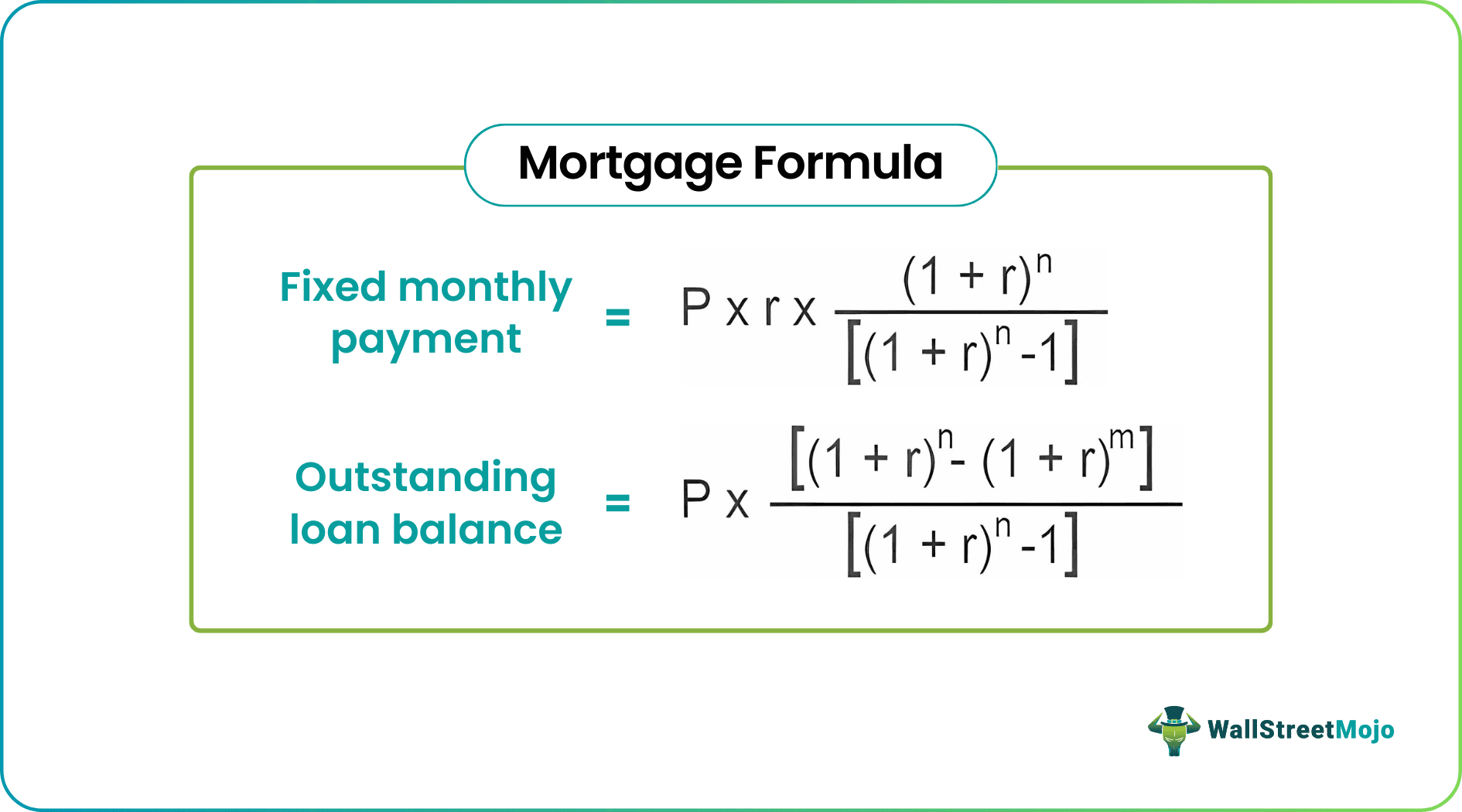
For those who appreciate the underlying mechanics, the monthly loan payment (M) can be calculated using a standard amortization formula:
$M = P [ i(1 + i)^n ] / [ (1 + i)^n – 1]$
Let’s break down each variable and its conversion for accurate calculation:
- M: Your monthly loan payment. This is the value you are trying to find.
- P: The principal loan amount (the initial sum borrowed).
- i: Your monthly interest rate. This is crucial. If your annual interest rate (APR) is, say, 6%, you must divide it by 12 to get the monthly rate. So, 6% becomes 0.06 annually, and 0.06 / 12 = 0.005 monthly.
- n: The total number of payments. If your loan term is 30 years, you multiply 30 by 12 (months) to get 360 payments.
While understanding this formula provides valuable insight into how payments are structured, most individuals rely on practical tools for calculation, which we’ll explore next.
Practical Methods for Calculating Your Monthly Payment
Although the mathematical formula exists, modern financial tools make finding your monthly payment quick, accurate, and incredibly user-friendly.
Utilizing Online Loan Calculators
Online loan calculators are by far the most accessible and frequently used method for determining monthly payments. They are ubiquitous and require no specialized software or financial expertise.
- Accessibility and Ease of Use: A quick search for “loan payment calculator” will yield countless options from reputable sources like bank websites, financial news outlets (e.g., NerdWallet, Bankrate), and even government-backed sites. They are designed with intuitive interfaces, often requiring just three inputs.
- Inputs Required: You typically need to enter:
- The principal loan amount you wish to borrow.
- The annual interest rate (APR).
- The loan term in years (the calculator will usually convert this to months automatically).
- Advantages:
- Speed and Accuracy: Get an instant, precise monthly payment figure.
- “What-if” Scenarios: Easily adjust the principal, interest rate, or term to see how changes impact your payment. This is invaluable for budgeting and comparing different loan offers. For instance, you can quickly determine if extending a loan term by a few years makes a loan more affordable monthly, or how a lower interest rate could save you money.
- Additional Insights: Many advanced calculators also show the total interest paid over the life of the loan and even provide a basic amortization schedule.
Leveraging Spreadsheet Software (Excel/Google Sheets)
For those who prefer a more hands-on approach, or need to manage multiple loan scenarios and integrate them into broader financial models, spreadsheet software like Microsoft Excel or Google Sheets offers powerful built-in functions.
-
The PMT Function: The primary function for calculating loan payments in a spreadsheet is
PMT. Its syntax is typically:
PMT(rate, nper, pv, [fv], [type])
Let’s break down the relevant parameters:rate: This is the monthly interest rate. Remember to convert your annual APR by dividing by 12. For example, if your APR is 5%, you would enter0.05/12.nper: This is the total number of payments over the loan’s lifetime. If your loan term is 15 years, you would enter15*12(which is 180 payments).pv: This is the present value, or the principal loan amount. This should be entered as a negative number if you want the PMT function to return a positive payment amount (as it represents an outflow of cash). For example,-200000for a $200,000 loan.[fv]: This is an optional argument for the future value, or a cash balance you want to attain after the last payment. For a standard loan where you want the balance to be zero, you can omit this or enter 0.[type]: Also optional, indicating when payments are due (0 for end of period, 1 for beginning of period). For most loans, 0 (end of period) is the default and typically used.
-
Step-by-Step Example:
To calculate the monthly payment for a $200,000 loan at 4.5% APR over 30 years:
=PMT(0.045/12, 30*12, -200000)
This would return your monthly payment. -
Benefits for Tracking and Advanced Scenario Planning: Spreadsheets excel at creating dynamic financial models. You can link your PMT function to cells containing your principal, rate, and term, allowing you to quickly change inputs and see the immediate effect. Furthermore, you can build full amortization schedules that show how much principal and interest are paid with each successive payment, offering unparalleled clarity.
Consulting with Financial Institutions
While digital tools are efficient, sometimes human expertise is invaluable. Loan officers and financial advisors can provide tailored calculations and advice.
- Role of Loan Officers and Financial Advisors: When you apply for a loan, the lender’s representative (e.g., a mortgage loan officer, auto finance specialist) will provide you with official payment estimates based on the specific loan products they offer. They can clarify complex terms, explain different loan options, and help you understand how various fees might affect your total cost or effective interest rate.
- When Personalized Advice Is Needed: For complex financial situations, such as structuring a large business loan, dealing with multiple debts, or understanding unique lending products, a financial advisor can offer personalized guidance beyond a simple calculation. They can help you integrate your loan payments into a comprehensive financial plan.
Factors That Influence Your Monthly Payment
Beyond the core components, several other factors can significantly alter the size of your monthly loan payment. Understanding these nuances is key to optimizing your financial commitments.

The Impact of Interest Rates
The interest rate is arguably the most powerful lever on your monthly payment and the total cost of your loan.
- Direct Effect on Payment and Total Cost: Even a seemingly small difference in the annual interest rate can translate into hundreds or thousands of dollars saved (or spent) over the life of a long-term loan. A higher interest rate means a larger portion of your monthly payment goes to the lender as interest, leaving less for principal reduction, thus potentially prolonging the repayment period or increasing the total amount due.
- Fixed vs. Variable Interest Rates:
- Fixed Rates: Your interest rate remains constant for the entire duration of the loan. This provides predictable monthly payments, making budgeting easier.
- Variable Rates: The interest rate can fluctuate based on market conditions (e.g., tied to the prime rate or LIBOR/SOFR). While variable rates might start lower than fixed rates, they introduce uncertainty, as your monthly payment could increase if rates rise.
- APR vs. Nominal Interest Rate: Always pay attention to the Annual Percentage Rate (APR). While a nominal interest rate only reflects the interest charged on the principal, the APR often includes other costs associated with the loan, such as origination fees or points, providing a more comprehensive measure of the true cost of borrowing.
Loan Term Length
The duration of your loan has a profound impact on your monthly payment and the overall financial burden.
- Shorter Terms: Opting for a shorter loan term (e.g., 15 years for a mortgage instead of 30) results in significantly higher monthly payments. However, the major benefit is that you’ll pay less total interest over the life of the loan because you’re paying off the principal more quickly. This strategy is ideal if you can comfortably afford the higher payments.
- Longer Terms: Conversely, choosing a longer loan term leads to lower monthly payments, making the loan more affordable on a month-to-month basis. The trade-off is that you’ll end up paying substantially more in total interest because the principal takes longer to repay, and interest accrues for a longer period. This is often chosen for large loans like mortgages to keep payments manageable.
- Balancing Affordability with Total Cost: The decision between a shorter or longer term is a delicate balance between your current cash flow needs and your long-term financial goals. It’s crucial to use calculators to model both scenarios.
Principal Amount
The principal, the initial amount you borrow, directly correlates with your monthly payment.
- Direct Correlation: Simply put, the more money you borrow, the higher your monthly payment will be, assuming the interest rate and loan term remain constant.
- Importance of Down Payments: For secured loans like mortgages and auto loans, making a larger down payment reduces the principal amount you need to borrow. This directly translates to lower monthly payments and often less total interest paid over the life of the loan. A substantial down payment can also help you qualify for better interest rates.
Additional Costs and Fees
Sometimes, the “monthly payment” isn’t just about principal and interest. Other charges can be rolled into or added to your monthly obligation, especially for mortgages.
- Escrow for Mortgages: For many homeowners, the monthly mortgage payment includes an escrow component. This portion collects funds for property taxes and homeowner’s insurance premiums, which are then paid by the lender on your behalf when due. While not part of the principal and interest of the loan itself, it’s a mandatory part of your total monthly housing cost.
- Loan Origination Fees and Closing Costs: These are upfront costs associated with processing the loan. While often paid at closing, some can be rolled into the loan principal, thereby increasing the amount borrowed and, consequently, the monthly payment.
- Private Mortgage Insurance (PMI): If you make a down payment of less than 20% on a conventional mortgage, lenders typically require you to pay for Private Mortgage Insurance (PMI). This protects the lender if you default. PMI is usually added to your monthly mortgage payment and can significantly increase your housing costs until you reach 20% equity in your home.
Beyond the Calculation: Strategic Financial Planning
Finding your monthly payment is just the first step. The real value comes from integrating this knowledge into a broader financial strategy that promotes stability and growth.
Budgeting and Affordability
Integrating loan payments into your monthly budget is non-negotiable for sound financial health.
- Integrating Loan Payments into Your Monthly Budget: Once you know your exact monthly payment, immediately factor it into your personal or business budget. Ensure it fits comfortably within your income after covering other essential expenses. Overextending yourself can lead to missed payments, late fees, and damage to your credit score.
- The “28/36 Rule” and Other Debt-to-Income Ratios: Lenders often use debt-to-income (DTI) ratios to assess your ability to manage monthly payments. A common guideline, particularly for mortgages, is the 28/36 rule: your housing expenses (principal, interest, taxes, insurance) should ideally not exceed 28% of your gross monthly income, and your total monthly debt payments (including housing, credit cards, auto loans, etc.) should not exceed 36% of your gross monthly income. While these are guidelines, understanding your own DTI is crucial for maintaining financial flexibility.
- Avoiding Over-borrowing: Just because a lender offers you a certain loan amount doesn’t mean you should take it. Calculate what you can comfortably afford, not just what you technically qualify for. A lower monthly payment might mean a longer term and more interest, but it could prevent financial stress down the line.
The Power of Extra Payments
Even small additional payments can yield significant long-term savings and accelerate your debt repayment.
- How Even Small Additional Payments Can Significantly Reduce Interest and Loan Term: Because loans are front-loaded with interest, any extra money you pay directly reduces the principal. This means less interest accrues on the remaining balance, shortening the loan term and dramatically reducing the total interest paid. Even adding $50-$100 to your monthly payment can shave years off a mortgage or thousands of dollars off total interest.
- Discussing Payment Strategies (e.g., Bi-Weekly Payments): Instead of making one monthly payment, some lenders offer bi-weekly payment options (paying half the monthly amount every two weeks). Since there are 26 bi-weekly periods in a year, this effectively results in one extra full monthly payment per year, significantly accelerating principal reduction. Another strategy is to dedicate any windfalls (bonuses, tax refunds) directly to your loan principal.
Refinancing and Loan Consolidation
These strategies can be powerful tools to lower your monthly payments or reduce your interest rate.
- When These Options Make Sense:
- Refinancing: If interest rates have dropped significantly since you took out your original loan, refinancing can secure a lower interest rate, thereby reducing your monthly payment and/or the total interest paid. It can also be used to change your loan term (e.g., from 30 to 15 years to pay off faster, or from 15 to 30 years to lower monthly payments).
- Loan Consolidation: This involves taking out a new loan to pay off multiple existing debts (e.g., credit card debt, personal loans). The goal is often to simplify payments into one manageable sum and ideally secure a lower average interest rate, which can lead to lower monthly payments and easier financial management.
- Pros and Cons: While both can offer substantial benefits, they also come with costs (e.g., closing costs for refinancing) and potential drawbacks (e.g., extending the repayment period for consolidated loans, leading to more interest paid overall). Always run a detailed cost-benefit analysis before proceeding.
Understanding Your Amortization Schedule
An amortization schedule provides a clear, payment-by-payment breakdown of how your loan is being paid off.
- Visualizing How Principal and Interest Are Paid Over Time: This schedule shows exactly how much of each monthly payment goes towards interest and how much goes towards reducing your principal balance. It also tracks your remaining loan balance after each payment.
- The “Interest-Heavy” Early Years: Amortization schedules clearly illustrate that in the early years of a loan (especially long-term ones like mortgages), a much larger portion of your payment is allocated to interest. As the loan matures, the proportion shifts, with more going towards principal reduction.
- Why This Matters for Financial Planning and Potential Early Payoffs: Understanding the amortization schedule is empowering. It highlights why extra principal payments early in the loan’s life have such a dramatic impact on the total interest paid and the loan’s duration. It allows you to strategically target principal reduction for maximum benefit.
Conclusion
Knowing how to find your monthly loan payment is more than just a calculation; it’s a cornerstone of effective financial management. Whether you utilize straightforward online calculators, leverage the power of spreadsheets, or seek personalized advice from financial professionals, gaining clarity on this critical number empowers you to make smarter financial decisions. By understanding the underlying components of a loan, considering the various factors that influence your payments, and integrating this knowledge into a strategic financial plan, you can navigate the complexities of debt with confidence. Proactive debt management is not just about making payments on time; it’s about understanding your commitments, optimizing your strategies, and ultimately achieving greater financial stability and peace of mind.
aViewFromTheCave is a participant in the Amazon Services LLC Associates Program, an affiliate advertising program designed to provide a means for sites to earn advertising fees by advertising and linking to Amazon.com. Amazon, the Amazon logo, AmazonSupply, and the AmazonSupply logo are trademarks of Amazon.com, Inc. or its affiliates. As an Amazon Associate we earn affiliate commissions from qualifying purchases.