
It’s a question that silently gnaws at many of us, often dismissed with a sigh or a shrug. “How much interest did I pay?” This isn’t just a numerical query; it’s an exploration into the true cost of borrowing, a critical insight into our financial habits, and a powerful lever for future financial decisions. Whether you’re grappling with credit card debt, managing a mortgage, or trying to pay down an auto loan, understanding the total interest you’ve remitted is fundamental to achieving financial mastery.
In a world brimming with financial products, from short-term loans to long-term investments, interest is the invisible thread connecting them all. For savers, it’s a reward; for borrowers, it’s a cost. Failing to grasp the magnitude of this cost can lead to perpetual debt cycles, stalled wealth building, and a persistent feeling of financial entrapment. This article aims to pull back the curtain on interest payments, empowering you with the knowledge and tools to not only answer this crucial question but also to strategically minimize your interest burden going forward.
The Mechanics of Interest: Understanding the Basics
At its core, interest is the price paid for the use of borrowed money, or alternatively, the income earned from lending money. It’s the engine that drives financial systems, influencing everything from the national economy to your household budget. To truly understand how much interest you’ve paid, we must first dissect its fundamental components.
What is Interest? The Cost of Borrowing
When you borrow money, whether it’s for a house, a car, or simply to cover a temporary shortfall with a credit card, the lender charges you a fee for the privilege of using their capital. This fee is known as interest. It compensates the lender for the risk they take and the opportunity cost of not using that money elsewhere. For borrowers, interest represents a significant portion of the total cost of any loan, often dwarfing the principal amount itself over extended periods.
Key terms associated with interest payments include:
- Principal: The original amount of money borrowed or invested.
- Interest Rate: The percentage charged by a lender for the use of assets, or paid on deposited funds. This is typically expressed annually (APR – Annual Percentage Rate or APY – Annual Percentage Yield).
- Loan Term: The duration over which a loan is scheduled to be repaid.
Simple vs. Compound Interest: The Fundamental Difference
The way interest is calculated can dramatically impact the total amount you pay. The two primary methods are simple interest and compound interest.
Simple Interest: Straightforward Calculation
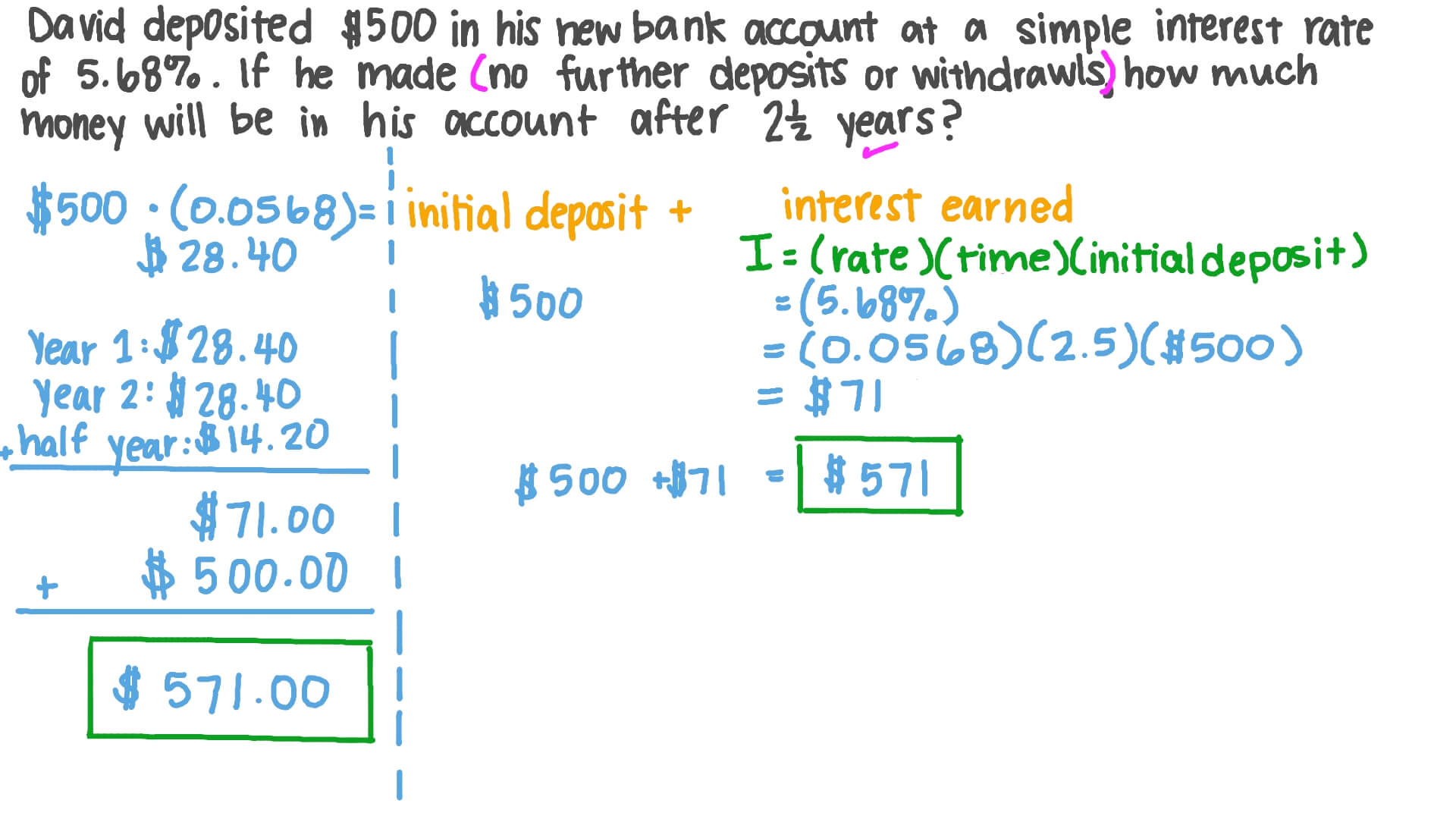
Simple interest is calculated only on the principal amount of a loan or deposit. It’s the easiest to compute and often used for short-term loans or basic savings accounts. The formula is: Principal × Interest Rate × Time. For example, if you borrow $1,000 at 5% simple interest for 2 years, you’d pay $50 per year, totaling $100 in interest. While straightforward, most consumer loans and debts do not operate on simple interest for long durations.
Compound Interest: Interest on Interest
Compound interest is where the magic (or mischief, for borrowers) happens. It’s calculated on the principal amount and on the accumulated interest from previous periods. This means your interest earns interest, leading to exponential growth. While a boon for investors, allowing modest sums to balloon over time, it can be a significant burden for borrowers. Credit cards, mortgages, and most long-term loans use compound interest, making the “interest on interest” effect a powerful force that drives up the total cost of borrowing significantly over the loan term. Understanding this mechanism is crucial for realizing the true long-term impact of your debt.
Common Areas Where You Pay Interest
Interest payments are ubiquitous in our financial lives. From daily transactions to major life purchases, interest is likely a component of your expenditure. Pinpointing where and how you’re incurring these costs is the first step toward financial control.
Credit Cards: The High-Interest Revolving Trap
Credit cards are perhaps the most common and often the most expensive source of interest payments for consumers. With typical APRs ranging from 15% to over 30%, carrying a balance can quickly accumulate substantial interest charges. Credit card interest usually compounds daily or monthly. If you only make the minimum payment, a significant portion goes towards interest, barely touching the principal. This revolving debt can lead to a long and costly journey, as interest on interest compounds rapidly on your outstanding balance. Understanding your grace period (the time you have to pay off your balance before interest is charged) and paying in full each month are key to avoiding this trap.
Mortgages: Long-Term Commitment, Significant Interest
A mortgage is likely the largest loan most people will ever take out, and consequently, it generates the most substantial interest payments over its lifespan. While mortgage interest rates are generally much lower than credit card rates, the sheer size of the loan and its extended term (e.g., 15 or 30 years) mean that the total interest paid can easily exceed the original principal amount.
The Amortization Schedule
Mortgages operate on an amortization schedule, which dictates how your payments are allocated between principal and interest over the loan term. Crucially, in the early years of a mortgage, a disproportionately large share of your monthly payment goes towards interest. As time progresses, more of your payment starts to chip away at the principal. This front-loading of interest means that even small extra payments in the early stages can save you a significant amount over the loan’s lifetime.
Personal Loans & Auto Loans: Fixed Payments, Predictable Interest
Personal loans and auto loans typically come with fixed interest rates and fixed repayment terms, leading to predictable monthly payments. While more straightforward than revolving credit, the total interest paid can still be substantial, especially with longer loan terms.
Impact of Loan Term on Total Interest
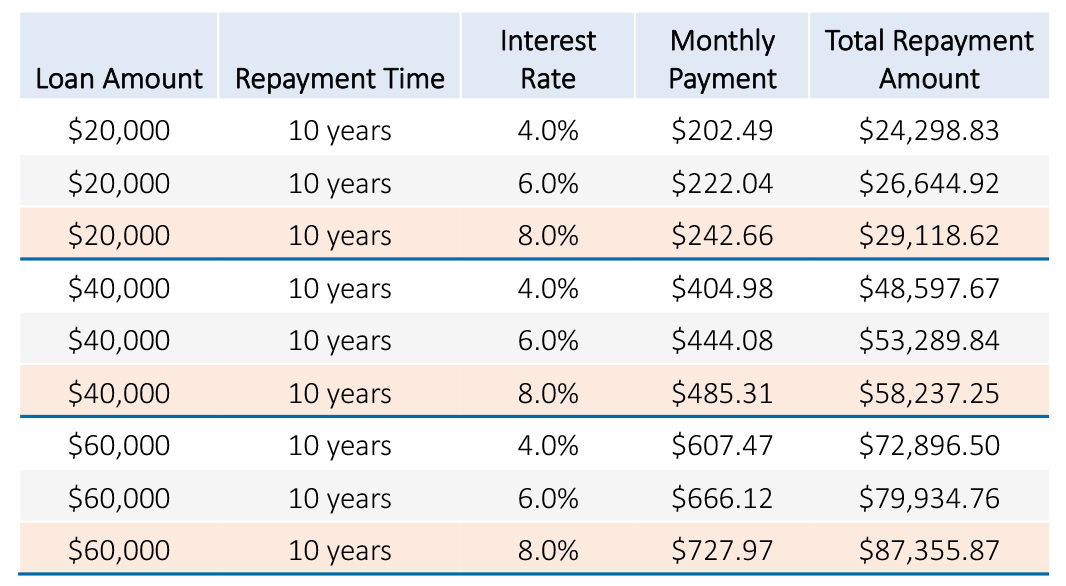
A common strategy to reduce monthly payments is to extend the loan term. However, this invariably leads to paying more interest over the life of the loan. For instance, a 72-month auto loan will have lower monthly payments than a 48-month loan for the same amount, but the total interest accrued will be significantly higher. Understanding this trade-off is essential when selecting a loan term.
Student Loans: Deferred Interest & Complex Repayments
Student loans often have unique interest characteristics, such as subsidized loans where interest doesn’t accrue while you’re in school or during deferment. However, unsubsidized loans and private student loans typically accrue interest from the moment they’re disbursed. The total interest paid on student loans can be considerable, given their typically long repayment periods (10-25 years) and, in some cases, capitalization of interest (unpaid interest is added to the principal, and then interest is charged on that new, larger principal). Income-driven repayment plans can also lead to more interest accruing over time, even if they make monthly payments more manageable.
Calculating Your Total Interest Paid
Finding out the exact amount of interest you’ve paid on any given loan can seem daunting, but it’s entirely achievable with the right resources and a little effort. Knowing this figure is powerful, providing clarity and motivation for better financial choices.
Utilizing Loan Statements and Annual Summaries
The most direct and reliable source for determining your paid interest is your loan servicer or lender.
- Monthly Statements: Most loan statements will break down your payment into principal and interest components. Summing these up over time will give you a running total.
- Annual Statements (e.g., Form 1098 for Mortgages): For mortgages, lenders are required to send a Form 1098 (Mortgage Interest Statement) each year, detailing the total interest you paid during the calendar year. This is primarily for tax purposes, but it’s an excellent summary. Other loan types may also provide annual summaries upon request.
- Online Account Portals: Most lenders provide online access to your account, where you can often view your payment history and find summaries of interest paid year-to-date or over the life of the loan.

Online Calculators and Financial Tools
The internet is replete with calculators designed to help you understand your loan costs.
- Loan Amortization Calculators: These are invaluable. By inputting your principal, interest rate, and loan term, an amortization calculator will generate a schedule showing exactly how much principal and interest you pay each month over the entire life of the loan. It will also provide the total interest paid.
- Credit Card Interest Calculators: These can help estimate how much interest you’ll pay based on your current balance, APR, and proposed monthly payments.
- Personal Finance Software/Apps: Tools like Mint, YNAB, or Quicken can track your expenses, including interest payments, and often provide reports on your spending categories.
Manual Calculations (for Simpler Scenarios)
While complex loans like mortgages are best handled by statements or calculators, you can manually calculate total interest paid for simpler, fully repaid loans. The fundamental formula is:
Total Interest Paid = (Total of All Payments Made) – (Original Principal Amount of the Loan)
For example, if you borrowed $5,000 and made 24 monthly payments of $230 until it was paid off, your total payments would be $230 * 24 = $5,520. Your total interest paid would then be $5,520 – $5,000 = $520. This method works well once a loan is fully repaid.
The Power of Amortization Schedules
For any installment loan (mortgage, auto, personal), an amortization schedule is a powerful tool. It’s a table that details each payment, showing the portion applied to interest, the portion applied to principal, and the remaining loan balance. Reviewing your amortization schedule can reveal how much interest you’ve paid up to a certain point and project the total interest you will pay if you stick to the original terms. Many loan servicers provide these, or you can generate them using online tools.
Strategies to Minimize Interest Payments
Once you understand how much interest you’ve been paying, the natural next step is to explore how you can reduce this financial outflow. Minimizing interest payments is a cornerstone of effective personal finance, freeing up funds for savings, investments, or other financial goals.
Pay More Than the Minimum (Especially for Revolving Debt)
This is perhaps the most impactful strategy for credit cards and other revolving debt. Paying only the minimum amount barely covers the accruing interest, keeping you in debt longer and dramatically increasing the total interest paid. Even a small extra payment above the minimum can significantly reduce your principal balance, leading to less interest being charged in subsequent cycles and accelerating your debt-free date.
Refinancing or Consolidation
If you have high-interest debt, particularly from credit cards or older personal loans, exploring refinancing or debt consolidation options can be highly beneficial.
- Refinancing: This involves taking out a new loan to pay off an existing one, ideally at a lower interest rate or with better terms. This is common for mortgages, student loans, and auto loans.
- Debt Consolidation: This combines multiple debts into a single, often lower-interest, loan. This can simplify payments and reduce your overall interest burden, but it requires discipline to avoid accumulating new debt.
Shorter Loan Terms
While longer loan terms offer lower monthly payments, they come at the cost of significantly more total interest paid over time. If your budget allows, opting for a shorter loan term (e.g., a 15-year mortgage instead of a 30-year, or a 3-year car loan instead of a 5-year) will lead to higher monthly payments but drastically reduce the total interest you pay. Calculate the difference – it’s often staggering.
Making Extra Principal Payments
Even without refinancing or shortening your loan term, making additional payments specifically designated for principal can have a profound impact. Each dollar you pay towards principal directly reduces the amount on which interest is calculated in the future.
- One extra payment a year: On a mortgage, making an extra principal payment equivalent to one monthly payment annually can shave years off your loan term and save tens of thousands in interest.
- Rounding up payments: For smaller loans, simply rounding up your monthly payment can make a difference.
- Applying windfalls: Use bonuses, tax refunds, or unexpected income to make lump-sum principal payments.
Understanding and Utilizing Grace Periods
For credit cards, the grace period is your best friend. This is the period between the end of a billing cycle and the payment due date during which you can pay your balance in full without incurring any interest charges. Always pay your full statement balance before the due date to take advantage of this and avoid credit card interest altogether.
Shopping for the Best Rates
Before taking on any new debt, whether it’s a credit card, a personal loan, or a mortgage, diligently shop around for the lowest possible interest rates. A difference of even one or two percentage points can translate into thousands of dollars in savings over the life of a loan. Compare offers from multiple lenders and understand all fees associated with the loan.
Beyond the Number: The Financial Impact of Interest
Understanding “how much interest did I pay?” is more than just crunching numbers; it’s about gaining a holistic view of your financial health and recognizing the profound impact these payments have on your broader financial goals.
Opportunity Cost: What Else Could That Money Have Done?
Every dollar spent on interest is a dollar that could have been saved, invested, or used to pursue other aspirations. This is the essence of opportunity cost. The interest you pay on a high-rate credit card might be enough to fund an emergency savings account, contribute to a retirement fund, or even pay for a skill-building course. Recognizing this trade-off can be a powerful motivator to reduce debt.
Financial Freedom: How Reducing Interest Payments Contributes to It
Lowering your interest burden is a direct path to greater financial freedom. As you pay less interest, more of your income becomes available for discretionary spending, saving, or investing. This accelerates your progress towards milestones like buying a home, retiring comfortably, or achieving financial independence. It shifts your financial trajectory from merely serving debt to actively building wealth.
Empowering Financial Decisions: Knowledge as Power
The act of quantifying your interest payments transforms a vague sense of financial burden into a concrete, actionable figure. This knowledge empowers you to make more informed decisions:
- Should I consolidate my debt?
- Is refinancing my mortgage worthwhile?
- How much extra should I pay on my auto loan?
- Can I afford a shorter loan term for my next major purchase?
This analytical approach fosters a proactive rather than reactive stance toward your finances, allowing you to regain control and steer your financial ship with confidence.
In conclusion, asking “how much interest did I pay?” is not just a question for the curious; it’s a vital inquiry for anyone serious about optimizing their financial well-being. By understanding the mechanics of interest, identifying where it accrues, diligently calculating your past payments, and strategically implementing methods to reduce future interest, you embark on a path toward greater financial efficiency and, ultimately, a more secure and prosperous future. Take the time to uncover this number, for within it lies the power to transform your financial destiny.
aViewFromTheCave is a participant in the Amazon Services LLC Associates Program, an affiliate advertising program designed to provide a means for sites to earn advertising fees by advertising and linking to Amazon.com. Amazon, the Amazon logo, AmazonSupply, and the AmazonSupply logo are trademarks of Amazon.com, Inc. or its affiliates. As an Amazon Associate we earn affiliate commissions from qualifying purchases.