
Purchasing a car is a significant financial decision for most individuals, and one of the largest costs associated with it, beyond the sticker price, is the interest you pay on an auto loan. Understanding how to figure auto loan interest isn’t just about crunching numbers; it’s about empowering yourself to make informed choices, negotiate better terms, and ultimately save thousands of dollars over the life of your loan. Many car buyers focus solely on the monthly payment, overlooking the cumulative impact of interest, which can substantially increase the total cost of their vehicle.
This comprehensive guide will demystify auto loan interest, breaking down its components, showing you how to calculate it, and equipping you with strategies to minimize its impact on your wallet. By the end, you’ll not only understand the “how” but also the “why” behind every dollar you pay in interest, transforming you into a more savvy and confident car buyer.
The Fundamentals of Auto Loan Interest
Before diving into calculations, it’s crucial to grasp the foundational concepts of auto loan interest. These terms are the building blocks for understanding your loan agreement and its financial implications.
What is Interest?
In its simplest form, interest is the cost of borrowing money. When you take out an auto loan, a lender (a bank, credit union, or dealership) provides you with the funds to purchase a vehicle. In return, they charge you a fee for the use of that money, which is expressed as a percentage of the principal balance – this is the interest. It compensates the lender for the risk they take and the opportunity cost of not using that money elsewhere. For an auto loan, this interest is typically amortized, meaning your monthly payments gradually pay down both the principal (the original amount borrowed) and the interest accrued.
Key Terms You Need to Know
Navigating auto loan interest requires familiarity with specific financial terminology:
- Principal: This is the original amount of money you borrow to purchase the car, minus any down payment or trade-in value.
- Interest Rate (APR vs. Nominal Rate): The nominal interest rate is the percentage charged on the principal. However, the more critical figure is the Annual Percentage Rate (APR). The APR represents the total cost of borrowing, including not just the nominal interest rate but also any additional fees or charges imposed by the lender (e.g., origination fees). Comparing APRs between different lenders provides a more accurate apples-to-apples comparison of the true cost of a loan.
- Loan Term: This refers to the duration of the loan, expressed in months (e.g., 36, 48, 60, 72, or 84 months). A longer loan term typically results in lower monthly payments but significantly higher total interest paid over the life of the loan.
- Amortization: This is the process of paying off a debt over time through regular, fixed payments. With an amortizing loan, each payment covers both a portion of the principal and the accrued interest. Early in the loan term, a larger portion of your payment goes towards interest, while later, more goes towards principal.
- Total Interest Paid: This is the sum of all interest payments made over the entire duration of the loan. It’s a crucial figure often overlooked but profoundly impacts the car’s true cost.
Factors Influencing Your Interest Rate
Several critical factors determine the interest rate you’ll be offered on an auto loan, and understanding them can help you secure a more favorable rate:
- Credit Score: This is arguably the most significant factor. Lenders use your credit score to assess your creditworthiness and the likelihood of you repaying the loan. A higher credit score (generally above 700) indicates lower risk and typically qualifies you for the lowest interest rates. Conversely, a lower score will result in a higher interest rate to compensate the lender for increased risk.
- Down Payment: Making a larger down payment reduces the principal amount you need to borrow. This lowers the lender’s risk exposure and can often lead to a more attractive interest rate. It also reduces your monthly payments and the total interest paid.
- Loan Term Length: Shorter loan terms (e.g., 36 or 48 months) usually come with lower interest rates because the lender’s money is tied up for a shorter period, reducing their risk. Longer terms (e.g., 72 or 84 months) often carry higher rates.
- Vehicle Age/Type (New vs. Used): New cars typically qualify for lower interest rates due to their higher resale value and perceived reliability. Used cars, especially older models, may have higher rates due to their depreciated value and potentially higher risk of mechanical issues.
- Market Conditions: Prevailing economic conditions, such as the federal interest rate set by central banks, influence overall lending rates. When these rates are low, auto loan rates tend to follow suit.
- Lender Type: Different types of lenders (banks, credit unions, dealership financing, online lenders) have varying interest rate structures and eligibility criteria. Credit unions, for instance, are often known for offering competitive rates to their members.
Manual Methods for Calculating Interest
While most auto loans are complex amortizing loans, understanding how simple interest works can provide a foundational perspective. However, for accurate auto loan calculations, leveraging tools is typically more practical.
Simple Interest Calculation (for understanding, not typical auto loans)
Simple interest is calculated only on the principal amount of a loan. The formula is straightforward:
Interest = Principal × Rate × Time
- Principal: The initial loan amount.
- Rate: The annual interest rate (expressed as a decimal, e.g., 5% becomes 0.05).
- Time: The loan term in years.
Example: If you borrowed $10,000 at a 5% simple interest rate for 1 year, the interest would be $10,000 × 0.05 × 1 = $500.
However, this method is rarely applicable to auto loans, which are almost always amortizing loans. With amortizing loans, interest is calculated on the remaining principal balance each month, not just the original principal. As you pay down the principal, the amount of interest accrued each month decreases, making manual simple interest calculation inadequate for determining true auto loan costs.
Understanding Amortization and Loan Payments
An amortizing loan payment is a fixed monthly amount designed to pay off the entire loan balance (principal and interest) by the end of the loan term. Early in the loan’s life, a larger portion of your payment goes towards interest because the principal balance is at its highest. As the principal is paid down with each successive payment, less interest accrues, and a larger portion of your payment goes towards reducing the principal.
Manually calculating the exact interest paid on an amortizing loan for each month or over the entire term is incredibly tedious without specialized tools. It would involve calculating the interest on the current principal balance, subtracting that from the fixed payment to find the principal paid, then subtracting that principal from the total principal to get the new balance, and repeating for every single month of the loan.
Using a Loan Amortization Schedule
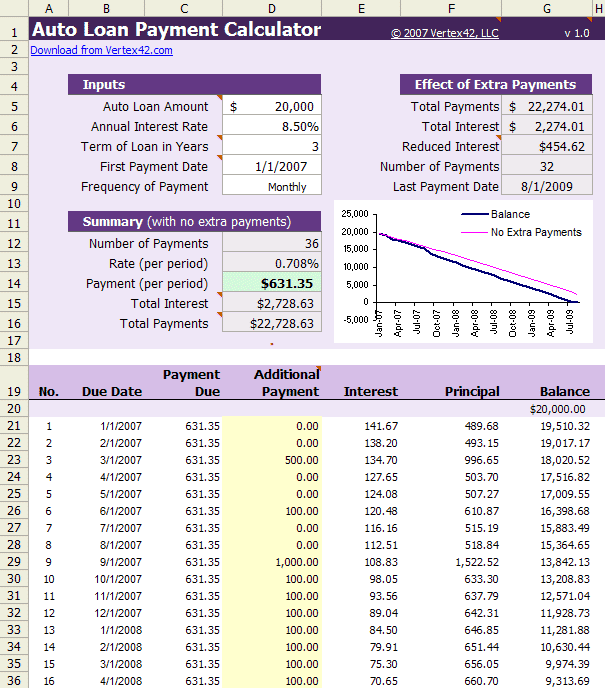
While creating a full amortization schedule by hand is impractical for most, understanding what an amortization schedule shows is highly beneficial. An amortization schedule is a table that details each loan payment, breaking down how much goes towards interest, how much goes towards principal, and the remaining principal balance after each payment.
What it shows:
- Payment Number: The sequential number of the monthly payment.
- Beginning Balance: The principal remaining before this payment.
- Interest Paid: The amount of interest included in this month’s payment.
- Principal Paid: The amount of principal reduction in this month’s payment.
- Ending Balance: The principal remaining after this payment.
By reviewing an amortization schedule (provided by a lender or generated by a calculator), you can see exactly how your money is being allocated and how much total interest you will pay over the loan’s lifetime. This insight is powerful for budgeting and strategic financial planning.
Leveraging Tools for Accurate Interest Calculation
Given the complexity of amortizing loans, relying on readily available tools is the most practical and accurate way to figure auto loan interest.
Online Auto Loan Calculators
Online auto loan calculators are widely available from financial institutions, automotive websites, and personal finance portals. They are simple to use and provide immediate, accurate results.
How they work: You input a few key pieces of information:
- Loan Amount: The total amount you wish to borrow.
- Interest Rate (APR): The annual interest rate you’ve been offered or anticipate.
- Loan Term: The number of months you plan to take to repay the loan.
Outputs provided:
- Estimated Monthly Payment: The fixed amount you’ll pay each month.
- Total Interest Paid: The cumulative sum of all interest payments over the loan’s term.
- Total Cost of Loan: The sum of the principal borrowed plus the total interest paid.
Benefits: Online calculators are fast, highly accurate, and invaluable for comparing different loan scenarios (e.g., how a longer term or a slightly lower interest rate impacts your total cost). They allow you to quickly visualize the financial implications of various borrowing decisions.
Spreadsheet Software (Excel/Google Sheets)
For those comfortable with spreadsheets, programs like Microsoft Excel or Google Sheets offer powerful financial functions to calculate loan details and even build a full amortization table. This gives you maximum control and customization.
Using financial functions:
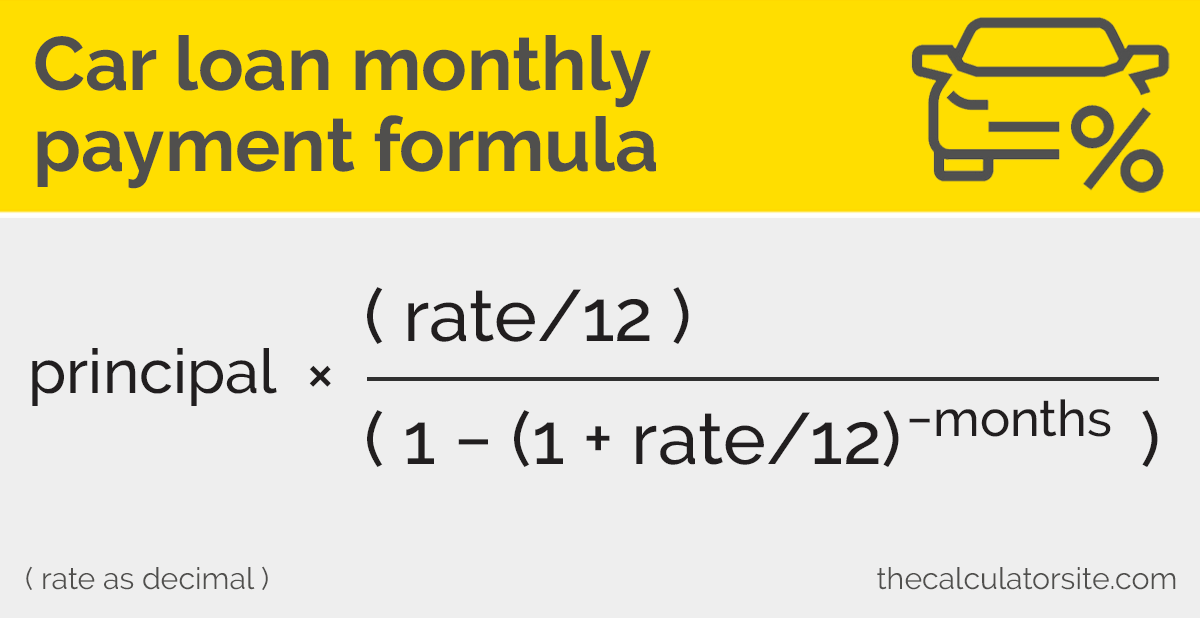
- PMT (Payment): Calculates the monthly payment for a loan based on a constant interest rate and constant payments.
=PMT(rate, nper, pv)rate: The interest rate per period (annual rate / 12).nper: The total number of payments (loan term in months).pv: The present value or principal loan amount.
- IPMT (Interest Payment): Calculates the interest portion of a given payment.
=IPMT(rate, per, nper, pv)per: The payment period for which you want to find the interest.
- PPMT (Principal Payment): Calculates the principal portion of a given payment.
=PPMT(rate, per, nper, pv)
By using these functions, you can create a detailed amortization schedule for your loan, allowing you to see the principal and interest breakdown for every single payment and sum the total interest paid over the loan term. This is an excellent way to understand the mechanics deeply and model different repayment strategies.
Lender-Provided Information
When you are approved for an auto loan, your lender is legally required to provide you with specific disclosures that detail the loan’s terms.
- Loan Disclosures (Truth in Lending Act): Under the Truth in Lending Act (TILA), lenders must provide clear, concise information about your loan, including the APR, finance charge (total interest and fees), and payment schedule. Always review these documents meticulously.
- Loan Offers and Statements: Compare the APR, total interest, and total cost across different loan offers you receive. Once you’ve secured a loan, your monthly statements will show your payment breakdown (principal vs. interest) and your remaining balance.
The information provided directly by lenders is the official source of your loan terms. Ensure it aligns with your understanding and any calculations you’ve performed independently.
Strategies to Minimize Auto Loan Interest
Understanding how to calculate auto loan interest is the first step; the next is implementing strategies to pay as little interest as possible. Every percentage point and every dollar saved adds up.
Improve Your Credit Score
Your credit score is the single most influential factor in determining your interest rate. Before applying for an auto loan, take steps to improve it:
- Pay bills on time: Payment history is the most critical component.
- Reduce outstanding debt: Especially credit card balances, to lower your credit utilization.
- Check your credit report: Dispute any errors that could be dragging your score down.
- Avoid opening new credit lines: In the months leading up to a loan application, as this can temporarily lower your score.
A higher credit score can translate into significantly lower APRs, saving you hundreds or even thousands of dollars in interest.
Make a Larger Down Payment
Putting more money down upfront directly reduces the amount you need to borrow. A smaller principal loan amount means less interest accrues over time. For example, on a $30,000 car, a $5,000 down payment means you only borrow $25,000, immediately reducing your total interest liability. Lenders also view larger down payments as a sign of financial stability and a reduced risk, which can lead to better interest rates.
Choose a Shorter Loan Term
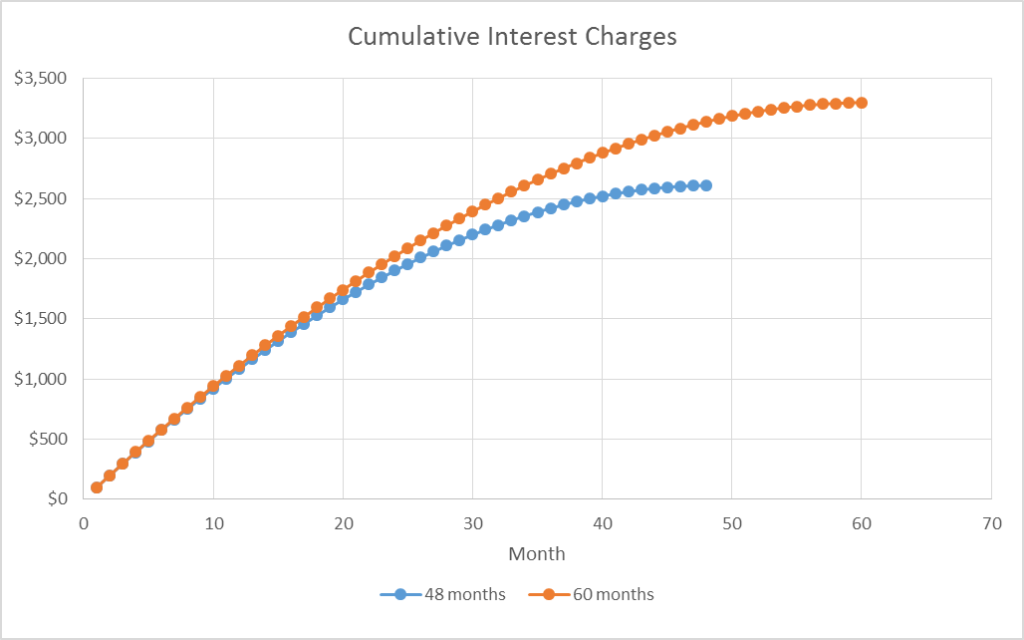
While longer loan terms offer lower monthly payments, they come at the cost of significantly higher total interest paid. This is because the lender is charging interest on your balance for a longer period. Opting for the shortest loan term you can comfortably afford will drastically reduce the overall interest you pay. For instance, a 60-month loan will almost always result in less total interest than a 72-month or 84-month loan, even if the interest rate is the same.
Shop Around for Lenders
Never take the first loan offer you receive, especially from a car dealership. Dealerships often mark up interest rates offered by their partner lenders. Instead, pre-qualify for loans with multiple financial institutions, including:
- Your existing bank or credit union: They often offer competitive rates to loyal customers.
- Online lenders: Many fintech companies specialize in auto loans and can provide quick quotes.
- Other traditional banks: Cast a wide net.
By having multiple pre-approvals in hand, you can compare APRs and use the best offer as leverage when negotiating with a dealership. The act of shopping for rates within a short period (typically 14-45 days, depending on the credit scoring model) counts as a single inquiry on your credit report, so it won’t harm your score significantly.
Consider Refinancing
If market conditions improve, your credit score significantly increases, or you initially received a high-interest rate due to limited options, refinancing your auto loan might be a smart move. Refinancing involves taking out a new loan, usually with a lower interest rate, to pay off your existing auto loan. This can lower your monthly payments or reduce the total interest paid over the remaining term. Evaluate refinancing options carefully, considering any fees associated with the new loan.
Pay Extra Principal
Even small additional payments can make a big difference in the total interest you pay. When you make an extra payment, specify that the additional amount should be applied directly to the principal. This reduces your principal balance faster, meaning less interest will accrue on subsequent payments. For example, if your monthly payment is $400, consider paying $450. That extra $50 directly reduces the principal, shortening the loan term and saving you money over time. Just ensure your loan doesn’t have prepayment penalties, although these are rare for auto loans.
Conclusion
Understanding how to figure auto loan interest is an essential skill for anyone planning to purchase a vehicle. It transcends simple arithmetic, providing the foundation for making financially sound decisions that impact your budget for years to come. By familiarizing yourself with key terms, exploring calculation methods, and proactively employing strategies to secure the best possible terms, you empower yourself to minimize borrowing costs. Don’t let interest be a hidden cost that erodes your wealth; instead, master its mechanics and make it work for your financial advantage. With the right knowledge and tools, you can drive away not just with a new car, but with a smarter, more cost-effective financing plan.
aViewFromTheCave is a participant in the Amazon Services LLC Associates Program, an affiliate advertising program designed to provide a means for sites to earn advertising fees by advertising and linking to Amazon.com. Amazon, the Amazon logo, AmazonSupply, and the AmazonSupply logo are trademarks of Amazon.com, Inc. or its affiliates. As an Amazon Associate we earn affiliate commissions from qualifying purchases.