
Navigating the world of car loans can feel like deciphering a complex financial puzzle. For many, a car is a necessity, and a loan is the most common way to finance its purchase. However, the true cost of that car extends far beyond its sticker price, largely due to the interest you pay over the loan’s lifetime. Understanding how car loan interest is computed is not just an academic exercise; it’s a critical skill that empowers you to make informed financial decisions, potentially saving you thousands of dollars. This comprehensive guide will demystify car loan interest, breaking down its components, illustrating calculation methods, and offering strategies to minimize its impact on your wallet.
Understanding the Fundamentals of Car Loan Interest
Before diving into the mechanics of calculation, it’s essential to grasp the basic concepts that underpin car loan interest. Interest, in its simplest form, is the cost of borrowing money. Lenders charge interest as compensation for the risk they take by lending you capital and for the opportunity cost of not using that money elsewhere.
What is Interest and Why Does It Exist?
When you take out a car loan, a financial institution provides you with a lump sum to purchase your vehicle. In return, you agree to repay that sum, known as the principal, over a set period, along with an additional charge – the interest. This charge is the lender’s profit and a reflection of market rates, economic conditions, and your individual creditworthiness. Without the incentive of earning interest, lenders would have no reason to provide loans, making large purchases like cars inaccessible to many.
Key Components of a Car Loan
To understand interest computation, you must first be familiar with the core elements of any car loan agreement:
- Principal: This is the initial amount of money you borrow to purchase the car. If your car costs $30,000 and you make a $5,000 down payment, your principal loan amount is $25,000.
- Interest Rate (APR): The annual percentage rate (APR) is the yearly cost of borrowing money, expressed as a percentage of the principal. It includes both the nominal interest rate and any additional fees or charges. A lower APR means less interest paid over the life of the loan.
- Loan Term: This refers to the duration over which you agree to repay the loan, typically expressed in months (e.g., 36, 48, 60, 72, or even 84 months). A longer loan term usually means lower monthly payments but results in paying more interest overall because the loan takes longer to pay off.
- Monthly Payment: This is the fixed amount you pay back to the lender each month. A portion of this payment goes towards reducing the principal, and another portion covers the accrued interest.
Types of Interest Rates
While most car loans utilize a fixed interest rate, it’s worth understanding the distinction:
- Fixed Interest Rate: The interest rate remains constant throughout the entire loan term. This provides predictable monthly payments, making budgeting easier. The vast majority of car loans are fixed-rate.
- Variable Interest Rate: The interest rate can fluctuate based on a benchmark index (e.g., the prime rate). While less common for car loans, a variable rate means your monthly payments could increase or decrease over time, introducing an element of unpredictability.
The Mechanics of Interest Calculation
Car loans, like mortgages, are typically amortizing loans. This means that each monthly payment includes both principal and interest, with the proportion changing over the loan’s life. Early in the loan term, a larger percentage of your payment goes towards interest, while later, a larger percentage goes towards reducing the principal.
Simple Interest vs. Amortizing Loans
It’s crucial to understand that while interest is calculated daily on the remaining principal balance, your payments are structured on an amortizing basis. Simple interest, where interest is only charged on the original principal amount (like some short-term loans), is not how car loans work. With an amortizing loan, as you pay down the principal, the amount of interest accruing daily on the new, lower principal balance also decreases.
The Amortization Schedule
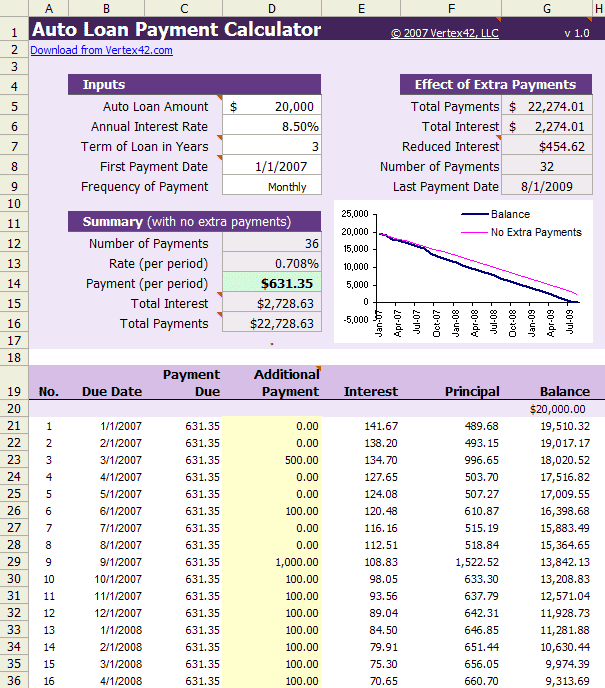
An amortization schedule is a table detailing each payment over the life of your loan. It breaks down how much of each payment goes towards interest and how much goes towards the principal balance. Key insights from an amortization schedule include:
- Interest Front-Loading: In the initial months or years, a significant portion of your monthly payment is allocated to interest.
- Principal Acceleration: As the loan progresses, the principal component of your payment increases, leading to faster reduction of your outstanding balance.
- Total Cost: It clearly shows the total interest you will pay over the entire loan term.
Manual Calculation Steps (Approximate)
While modern financial calculators and online tools make precise computation effortless, understanding the underlying steps can provide valuable insight. Here’s a simplified, approximate method to grasp the concept of monthly interest accrual:
- Convert Annual Interest Rate to Monthly: Divide your annual interest rate (APR) by 12. For example, if your APR is 6%, your monthly interest rate is 0.06 / 12 = 0.005.
- Calculate Monthly Interest Payment on Remaining Principal: Multiply your current outstanding principal balance by the monthly interest rate.
- Subtract Interest from Monthly Payment to Find Principal Reduction: Your actual fixed monthly payment is determined by the amortization formula (discussed below). Once you know the interest portion for that month, subtract it from your fixed monthly payment to find how much principal you paid off.
- Update Remaining Principal: Subtract the principal reduction from your previous month’s principal balance to get the new outstanding principal.
- Repeat: For the next month, repeat steps 2-4 with the new, lower principal balance.
Example (Simplified for illustration, not precise amortization):
Loan Amount: $20,000
Annual Interest Rate: 6% (Monthly Rate: 0.005)
Let’s assume a hypothetical fixed monthly payment of $386.66 (actual payment calculated by a formula).
-
Month 1:
- Interest: $20,000 * 0.005 = $100
- Principal Paid: $386.66 – $100 = $286.66
- New Principal Balance: $20,000 – $286.66 = $19,713.34
-
Month 2:
- Interest: $19,713.34 * 0.005 = $98.57
- Principal Paid: $386.66 – $98.57 = $288.09
- New Principal Balance: $19,713.34 – $288.09 = $19,425.25
As you can see, as the principal balance decreases, the interest paid each month also decreases, and a larger portion of your fixed monthly payment goes towards the principal.
The Loan Amortization Formula
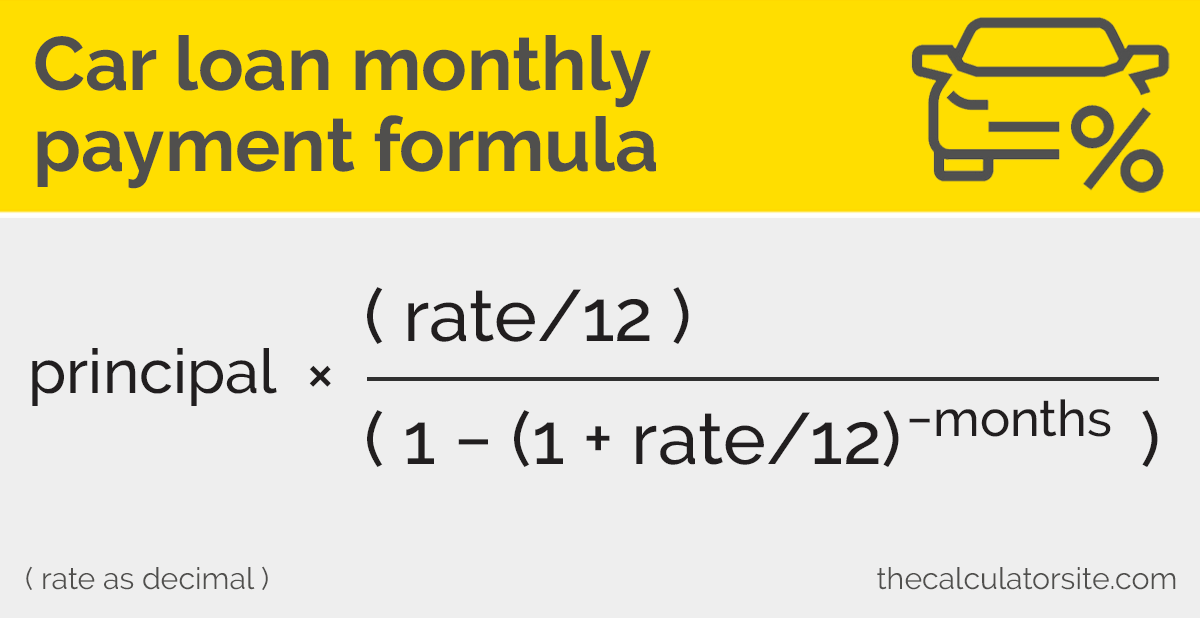
For precise calculation of your fixed monthly payment and the total interest over the loan term, the following formula (or variations thereof) is used:
M = P [ i(1 + i)^n ] / [ (1 + i)^n – 1]
Where:
- M = Monthly Payment
- P = Principal Loan Amount (the initial amount you borrow)
- i = Monthly Interest Rate (Annual Rate / 12; express as a decimal, e.g., 6% becomes 0.06 / 12 = 0.005)
- n = Total Number of Payments (Loan Term in Years * 12; e.g., 5 years * 12 = 60 payments)
While calculating this manually can be tedious, understanding the variables helps demystify how changes in principal, interest rate, or loan term directly impact your monthly payment and, consequently, the total interest paid. The higher ‘P’ is, the higher ‘M’ will be. The higher ‘i’ is, the higher ‘M’ will be. The higher ‘n’ is, the lower ‘M’ will be (but total interest increases).
Tools and Resources for Accurate Interest Computation
Given the complexity of the amortization formula, relying on modern tools is the most practical and accurate way to compute car loan interest.
Online Car Loan Calculators
These are the most accessible and widely used tools. Simply input your principal amount, interest rate (APR), and loan term, and the calculator instantly provides your monthly payment, total interest paid, and total cost of the loan. Many also generate an amortization schedule.
Inputs required:
- Loan Amount (Principal)
- Interest Rate (APR)
- Loan Term (in months or years)
- Some calculators also allow for down payment and trade-in value, automatically calculating the principal.
Spreadsheet Software (Excel/Google Sheets)
For those who prefer a more hands-on approach or want to create custom scenarios, spreadsheet software offers powerful functionalities. You can build your own amortization schedule using formulas (e.g., PMT for monthly payment, IPMT for interest payment, PPMT for principal payment). This allows for greater flexibility, such as experimenting with extra payments or varying interest rates.
Consulting with Financial Advisors or Lenders
For complex situations or if you need personalized advice, discussing your options with a financial advisor or directly with your prospective lender is invaluable. They can walk you through the specifics of their loan products, clarify terms, and help you understand the long-term financial implications.
Strategies to Minimize Car Loan Interest Over Time
Understanding how interest is computed is the first step; the next is leveraging that knowledge to reduce the total interest you pay.
Making a Larger Down Payment
This is one of the most effective strategies. A larger down payment directly reduces the principal amount you need to borrow. Since interest is calculated on the principal, a smaller principal means less interest will accrue over the life of the loan. It also generally makes you a less risky borrower, potentially qualifying you for a lower APR.
Opting for a Shorter Loan Term
While a longer loan term (e.g., 72 or 84 months) offers lower monthly payments, it significantly increases the total interest paid. A shorter term (e.g., 36 or 48 months) means higher monthly payments, but you pay off the principal faster, drastically reducing the total interest cost. If your budget allows, always opt for the shortest loan term possible.
Improving Your Credit Score
Your credit score is a major determinant of the interest rate you’ll be offered. Lenders view borrowers with higher credit scores as less risky, and therefore, are willing to offer them more favorable (lower) interest rates. Before applying for a car loan, take steps to improve your credit score, such as paying bills on time, reducing existing debt, and checking for errors on your credit report. Even a percentage point difference in APR can save you hundreds, if not thousands, over the loan’s life.
Refinancing Your Car Loan
If your credit score has improved since you took out your initial loan, or if market interest rates have dropped, refinancing could be an option. Refinancing involves taking out a new loan, usually with a lower interest rate, to pay off your existing car loan. This can lead to lower monthly payments, less total interest paid, or both. Be sure to calculate the total costs of refinancing (e.g., application fees) to ensure it’s truly beneficial.
Making Extra Payments
Any extra money you can put towards your loan principal will help reduce the total interest paid. Since interest is calculated on the remaining principal balance, even small additional payments directly attacking the principal can make a difference. Ensure your lender applies extra payments directly to the principal and doesn’t just “pre-pay” your next month’s installment. Some lenders might have prepayment penalties, though these are less common with car loans than with other types of loans.

Conclusion
The process of computing car loan interest, while initially appearing complex, is fundamentally about understanding a few key variables: principal, interest rate, and loan term. By grasping how these components interact and how interest is amortized over the loan’s life, you gain invaluable insight into the true cost of your vehicle. Leveraging online calculators and spreadsheet tools can provide precise figures, but the most significant power lies in applying strategies to minimize that cost. Whether through a larger down payment, a shorter loan term, improving your credit score, or making extra payments, informed decisions can lead to substantial savings. Understanding car loan interest isn’t just about crunching numbers; it’s about empowering yourself to take control of your financial future and drive away with confidence, knowing you’ve made a smart investment.
aViewFromTheCave is a participant in the Amazon Services LLC Associates Program, an affiliate advertising program designed to provide a means for sites to earn advertising fees by advertising and linking to Amazon.com. Amazon, the Amazon logo, AmazonSupply, and the AmazonSupply logo are trademarks of Amazon.com, Inc. or its affiliates. As an Amazon Associate we earn affiliate commissions from qualifying purchases.