
Purchasing a car is a significant financial decision for most individuals, and one of the most critical components determining the total cost of ownership is the interest rate on your car loan. Understanding how this rate is calculated, what influences it, and how to effectively manage it can translate into savings of hundreds, even thousands, of dollars over the life of your loan. Far too often, car buyers focus solely on the monthly payment, overlooking the underlying interest rate that dictates how much extra they pay for the privilege of borrowing. This article will demystify car loan interest rates, equipping you with the knowledge to make informed, financially savvy choices when financing your next vehicle. By understanding the mechanics, you gain significant leverage, transforming a potentially complex transaction into a transparent and manageable process.
Understanding the Fundamentals of Car Loan Interest
Before diving into calculations, it’s essential to grasp the foundational concepts of car loan interest. This knowledge forms the bedrock upon which all subsequent calculations and financial decisions are built.
What is Interest and Why Does it Matter?
At its core, interest is the cost of borrowing money. When you take out a car loan, the lender (bank, credit union, or dealership) charges you a percentage of the principal loan amount for the use of their funds over a specified period. This percentage is known as the interest rate, expressed annually (APR – Annual Percentage Rate). For car loans, interest is crucial because it directly adds to the total amount you pay back beyond the car’s sticker price. A higher interest rate means a higher cost of borrowing, translating into either larger monthly payments or a longer repayment period, ultimately increasing the overall expense of your vehicle. Ignoring the interest rate means ignoring a significant portion of your car’s true cost.
Key Components of a Car Loan
To understand interest calculation, you must first recognize the interconnected elements that define a car loan:
- Principal: This is the initial amount of money you borrow to purchase the car. It’s the car’s price minus any down payment, trade-in value, or rebates. The interest is always calculated based on the outstanding principal balance.
- Interest Rate (APR): As discussed, this is the percentage charged by the lender for borrowing the principal. It’s usually expressed as an annual rate.
- Loan Term (Duration): This is the agreed-upon period over which you will repay the loan, typically expressed in months (e.g., 36, 48, 60, 72, or even 84 months). A longer term generally means lower monthly payments but often results in more total interest paid over the life of the loan due to the extended period of borrowing.
- Monthly Payment: This is the fixed amount you pay back to the lender each month. Each payment consists of two parts: a portion that goes towards reducing the principal balance and a portion that covers the interest accrued since the last payment.
Fixed vs. Variable Interest Rates
Most car loans in the market are structured with a fixed interest rate. This means that the interest rate remains constant throughout the entire loan term, regardless of market fluctuations. This provides predictability and stability in your monthly payments, making it easier to budget. While less common for standard car loans, some specialized or longer-term financing options might involve variable interest rates. A variable rate can change periodically (e.g., every six months) based on a benchmark index (like the prime rate), meaning your monthly payments could fluctuate. For the vast majority of car buyers, especially in the consumer market, a fixed-rate loan is the standard and more straightforward option.
Methods for Calculating Your Car Loan Interest
While modern technology offers convenient tools, understanding the underlying mathematical principles can empower you to verify figures and grasp the impact of different loan scenarios. Car loan interest is generally calculated using a simple interest formula on a declining principal balance, creating an amortization schedule.
Manual Calculation: The Simple Interest Formula (for a period)
The fundamental formula for simple interest is:
Interest (I) = Principal (P) × Rate (R) × Time (T)
While this formula gives you the interest for a specific period, it’s a building block. For car loans, which are typically paid monthly, the ‘time’ (T) is usually expressed as a fraction of a year (e.g., 1/12 for a month). The ‘rate’ (R) needs to be the monthly rate, derived from the annual percentage rate (APR).
Let’s break down how this works for a single month’s interest:
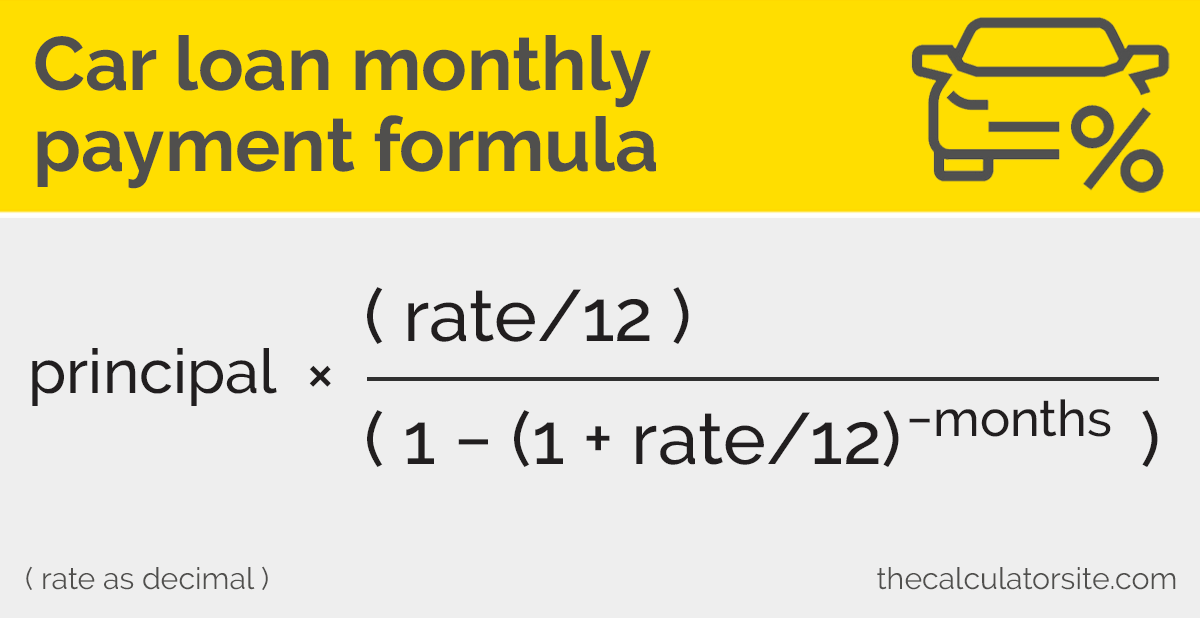
- Convert Annual Rate to Monthly Rate: Divide your APR by 12.
- Example: If your APR is 6%, your monthly rate is 0.06 / 12 = 0.005.
- Calculate Monthly Interest: Multiply your current outstanding principal balance by the monthly rate.
- Example: If your principal balance is $20,000 and your monthly rate is 0.005, the interest for that month is $20,000 × 0.005 = $100.
This $100 is the portion of your monthly payment that goes towards interest in that particular month. The remainder of your monthly payment will then reduce your principal balance. The next month, the interest will be calculated on the new, lower principal balance, which is why less and less of your payment goes to interest over time, and more goes to principal.
Amortization Schedule Explained
An amortization schedule is a table detailing each payment made on a loan, showing how much of each payment goes toward interest and how much goes toward reducing the principal balance. This schedule reveals the true cost of your loan over its lifetime.
Here’s how an amortization schedule works conceptually:
- Early Payments: In the initial months of your car loan, a larger portion of your monthly payment is allocated to interest. This is because your principal balance is at its highest, and therefore, the interest accrued on that balance is also highest.
- Later Payments: As you continue to make payments, the principal balance gradually decreases. Consequently, less interest accrues each month, and a progressively larger portion of your monthly payment is applied to the principal.
- Total Interest Paid: By summing up the interest portions of all your monthly payments, you arrive at the total interest paid over the life of the loan. This total can be significantly more than you might initially anticipate, especially with longer loan terms or higher interest rates.
While creating a full amortization schedule manually is tedious, understanding its mechanics is vital. It highlights why paying off your loan early (if there are no prepayment penalties) can save you substantial amounts in interest.
Using Online Car Loan Calculators
For practical, day-to-day use, online car loan calculators are by far the most efficient and accurate tools. These calculators perform the complex amortization calculations instantly.
You typically input:
- Loan Amount (Principal): The total amount you need to borrow.
- Interest Rate (APR): The annual percentage rate offered by the lender.
- Loan Term (Months): The duration over which you plan to repay.
The calculator will then instantly output:

- Estimated Monthly Payment: The fixed amount you’ll pay each month.
- Total Interest Paid: The sum of all interest payments over the loan term.
- Total Cost of Loan: The principal plus the total interest.
Many reputable financial websites, bank websites, and even automotive sites offer these free tools. They are invaluable for comparing different loan scenarios (e.g., how a higher down payment or a shorter term affects your monthly payment and total interest).
Spreadsheet Software (Excel/Google Sheets)
For those who prefer a hands-on approach or need to perform more detailed financial modeling, spreadsheet software like Microsoft Excel or Google Sheets can be used to create your own amortization schedule. Functions like PMT (Payment), IPMT (Interest Payment), and PPMT (Principal Payment) can quickly generate the necessary figures for each period. This method offers the highest degree of customization and allows for ‘what-if’ scenarios, such as the impact of making extra payments. While more advanced, it provides a powerful way to visualize and understand your loan’s breakdown thoroughly.
Factors Influencing Your Car Loan Interest Rate
The interest rate you receive on a car loan is not arbitrary; it’s a carefully calculated assessment of risk by the lender. Several key factors contribute to how lenders determine your specific rate. Understanding these can help you position yourself for the best possible offer.
Credit Score
Your credit score is arguably the single most important factor. It’s a numerical representation of your creditworthiness, reflecting your history of borrowing and repaying debt.
- Excellent Credit (720+ FICO): Individuals with high credit scores are seen as low-risk borrowers. They demonstrate a strong history of timely payments and responsible credit management, leading lenders to offer them the lowest available interest rates.
- Good/Fair Credit (620-719 FICO): Borrowers in this range may still qualify for competitive rates but might not get the absolute best offers.
- Poor Credit (Below 620 FICO): Those with lower credit scores are considered higher risk. Lenders compensate for this perceived risk by charging significantly higher interest rates, often leading to substantial increases in the total cost of the loan.
Loan Term
The length of time you take to repay the loan also influences the rate:
- Shorter Terms (e.g., 36 or 48 months): Generally come with slightly lower interest rates. Lenders perceive less risk over a shorter period. While monthly payments are higher, you pay significantly less total interest.
- Longer Terms (e.g., 72 or 84 months): Often carry slightly higher interest rates. The extended repayment period increases the lender’s exposure to potential economic changes or borrower default. Although monthly payments are lower, the prolonged interest accumulation means a much higher total cost.
Down Payment
Making a substantial down payment reduces the principal amount you need to borrow.
- Larger Down Payment: Reduces the lender’s risk because you have more equity in the vehicle from day one. This often translates to a better interest rate and a lower monthly payment. It also makes you less likely to be “upside down” (owing more than the car is worth) early in the loan term.
- No Down Payment / Small Down Payment: Increases the loan-to-value (LTV) ratio, meaning the lender is financing a larger portion of the car’s value. This can result in a higher interest rate, as the lender takes on more risk.
Debt-to-Income Ratio (DTI)
Your DTI is a measure of your monthly debt payments divided by your gross monthly income. Lenders use this to assess your ability to manage additional debt.
- Low DTI: Indicates you have ample income to cover your existing debts and the new car loan payment, making you a more attractive borrower and potentially qualifying you for lower rates.
- High DTI: Suggests you might be overextended, increasing the perceived risk for the lender, which can lead to higher interest rates or even loan denial.
Market Conditions & Lender Type
Broader economic factors play a role:
- Federal Reserve Interest Rates: When the Fed raises or lowers its benchmark rates, it influences the rates offered by lenders across the board.
- Competition: The competitive landscape among banks, credit unions, and dealership financing arms can also drive rates up or down. Shopping around is key.
- Lender Type: Credit unions often offer slightly lower rates than traditional banks or dealership financing due to their non-profit cooperative structure.
Vehicle Age and Type
- New Cars: Generally qualify for lower interest rates because they hold their value better initially, reducing lender risk.
- Used Cars: Rates on used car loans are often higher due to the faster depreciation and increased risk of mechanical issues.
- Specialty/Older Vehicles: Very old or collector cars, or those with perceived reliability issues, might command higher rates or require specialized financing.
Strategies to Secure a Lower Interest Rate
Being proactive and informed can significantly impact the interest rate you receive on your car loan, ultimately saving you money over the life of the loan. Implement these strategies to put yourself in the best financial position.
Improve Your Credit Score
Since your credit score is paramount, investing time in improving it can yield substantial rewards.
- Pay Bills On Time: This is the single most important factor. Set up auto-payments or reminders to ensure you never miss a due date.
- Reduce Existing Debt: Pay down credit card balances and other revolving debt to lower your credit utilization ratio (the amount of credit you’re using versus the amount available).
- Check Your Credit Report Regularly: Obtain a free copy of your credit report from each of the three major bureaus (Equifax, Experian, TransUnion) annually. Dispute any errors or inaccuracies, as these can negatively impact your score.
- Avoid New Credit Applications: Don’t apply for new credit cards or loans just before seeking a car loan, as multiple hard inquiries can temporarily lower your score.
Shop Around for Lenders
Never accept the first loan offer you receive, especially from a dealership.
- Get Pre-Approved: Before you even set foot in a dealership, apply for pre-approval from multiple financial institutions:
- Banks: Your current bank might offer competitive rates.
- Credit Unions: Often known for offering some of the lowest interest rates due to their member-focused structure.
- Online Lenders: Many online platforms specialize in car loans and can provide quick pre-approvals.
- Compare Offers: Gather pre-approval letters with specific interest rates and terms. This allows you to walk into the dealership with leverage, knowing what a good rate looks like. Dealerships often have their own financing options and may be willing to match or even beat a pre-approved rate to secure your business.
Make a Substantial Down Payment
A larger down payment directly reduces the amount you need to borrow, which, in turn, lessens the lender’s risk and can lead to a more favorable interest rate.
- Reduce Principal: Less principal means less interest accrues over the loan term.
- Improve Loan-to-Value (LTV): A lower LTV ratio (loan amount relative to the car’s value) is attractive to lenders and can unlock better rates.
- Avoid Negative Equity: A good down payment helps prevent you from owing more on the car than it’s worth, especially early in the loan when depreciation is highest. Aim for at least 10-20% if possible.
Choose a Shorter Loan Term (If Affordable)
While a longer loan term means lower monthly payments, it almost always results in paying significantly more interest overall.
- Balance Payments and Total Cost: If your budget allows, opt for the shortest loan term possible (e.g., 36 or 48 months). This often comes with a slightly lower interest rate and dramatically reduces the total interest paid.
- Higher Monthly Payments: Be realistic about what you can comfortably afford each month. Don’t overextend yourself, but understand the financial trade-offs.
Negotiate with the Dealership
Even if you have pre-approval, always be prepared to negotiate the financing terms at the dealership.
- Use Your Pre-Approval as Leverage: Show them your best pre-approval rate and see if they can beat it. Dealerships often have relationships with various lenders and may have access to special financing offers or incentives.
- Separate Loan and Car Price Negotiation: Ideally, negotiate the car’s purchase price first. Once that’s settled, then discuss financing. This prevents the dealership from “burying” a higher interest rate by seemingly offering a lower car price.
By understanding how car loan interest rates are calculated and, more importantly, what influences them, you empower yourself to make smarter financial decisions. The process of buying a car doesn’t have to be intimidating. With careful preparation, diligent research, and strategic negotiation, you can secure a loan that aligns with your financial goals, saving you money and ensuring a more satisfying ownership experience.
aViewFromTheCave is a participant in the Amazon Services LLC Associates Program, an affiliate advertising program designed to provide a means for sites to earn advertising fees by advertising and linking to Amazon.com. Amazon, the Amazon logo, AmazonSupply, and the AmazonSupply logo are trademarks of Amazon.com, Inc. or its affiliates. As an Amazon Associate we earn affiliate commissions from qualifying purchases.