
Purchasing a car is one of the most significant financial decisions many individuals make, second only perhaps to buying a home. For most, this involves securing a car loan, and understanding the true cost of that loan is paramount to making an informed choice. This is where the Annual Percentage Rate (APR) comes into play. Often confused with the interest rate, APR is a more comprehensive measure, encapsulating not just the interest you pay but also various fees associated with the loan. Knowing how to calculate or, more realistically, effectively understand and verify your car loan’s APR empowers you to compare offers, negotiate better terms, and ultimately save thousands of dollars over the life of your loan. This guide will demystify APR, break down its components, and show you how to accurately assess the total cost of borrowing for your next vehicle.
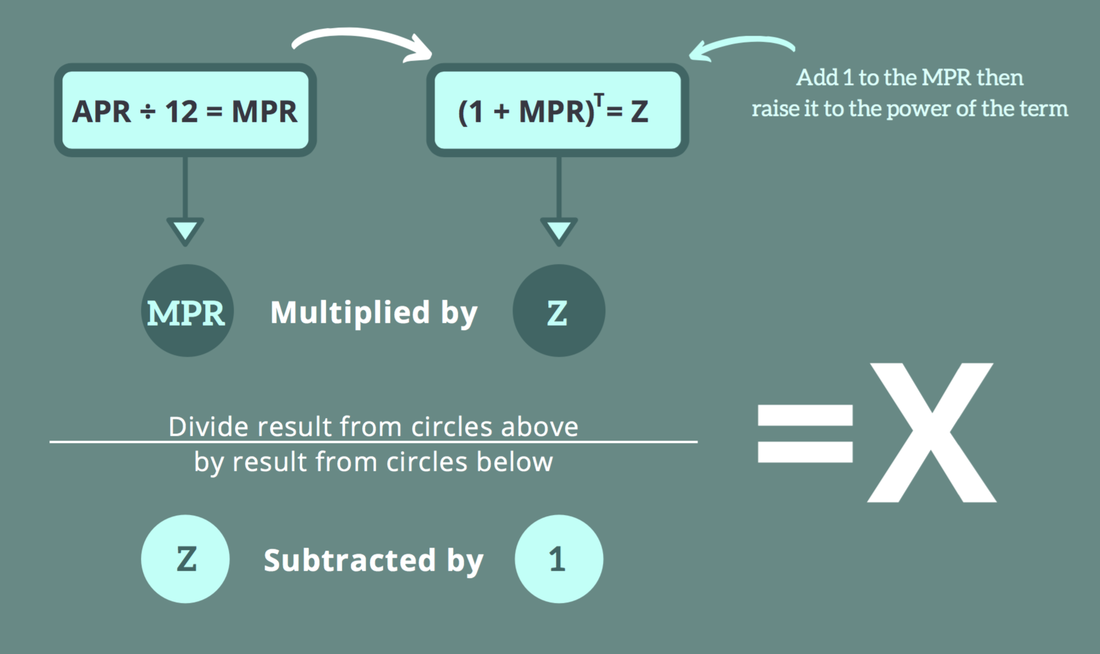
Understanding APR: More Than Just Interest
When you take out a car loan, you’re not just paying back the money you borrowed; you’re also paying for the privilege of borrowing it. This “privilege” comes with a price tag, and APR is the standardized way to express that cost annually as a percentage of the loan amount. It’s a crucial metric because it provides a complete picture, unlike a simple interest rate.
What is APR? Defining the Total Cost of Borrowing
At its core, the Annual Percentage Rate (APR) represents the actual yearly cost of funds over the term of a loan. It includes not only the nominal interest rate but also any additional charges or fees that are directly tied to originating the loan. These could include origination fees, documentation fees, processing fees, or even certain insurance premiums (if required by the lender as a condition of the loan). The goal of APR is to provide a single, all-encompassing percentage that allows consumers to make apples-to-apples comparisons between different loan offers, regardless of how lenders structure their fees. Without APR, a lender could advertise a very low interest rate but load the loan with high fees, making it seem cheaper than it actually is.
Why APR Matters: Impact on Your Monthly Payments and Total Cost
The APR directly influences two critical aspects of your car loan: your monthly payment and the total amount you will repay over the life of the loan. A higher APR means a higher overall cost of borrowing, which translates into larger monthly installments and a greater sum paid back to the lender by the time the loan is fully amortized.
Consider two hypothetical car loans of $25,000 over 60 months:
- Loan A: 5% interest rate with $500 in fees.
- Loan B: 5.5% interest rate with no fees.
Without looking at the APR, Loan A might seem more attractive due to the lower interest rate. However, once fees are factored into the APR calculation, Loan A’s effective annual cost might be higher than Loan B’s, despite the seemingly lower interest. Understanding APR helps you quickly identify which loan is genuinely cheaper, ensuring you don’t fall for deceptive advertising that highlights a low interest rate while burying expensive fees.
Key Components of APR: Interest Rate and Additional Fees
To truly grasp APR, it’s important to dissect its constituent parts:
- The Interest Rate: This is the primary component and represents the percentage charged by the lender for borrowing the principal amount. It’s usually expressed annually. For car loans, interest is typically calculated using a simple interest method, meaning interest accrues only on the outstanding principal balance.
- Additional Fees: These are the charges levied by the lender for processing and securing the loan. Common fees can include:
- Origination Fees: A fee charged by the lender for processing a new loan application.
- Documentation Fees (Doc Fees): Charged by the dealership or lender for preparing the paperwork associated with the loan.
- Application Fees: Fees to simply apply for the loan, regardless of approval.
- Underwriting Fees: A charge for the process of evaluating and assuming the risk of a loan.
- Credit Report Fees: Sometimes passed on to the borrower for pulling their credit history.
It’s crucial to distinguish between fees that are always included in the APR (like lender-imposed origination fees) and those that may or may not be, depending on state law or lender policy (like some dealership processing fees or third-party charges). The Truth in Lending Act (TILA) mandates that lenders disclose the APR to ensure transparency about the total cost of credit.
The Essentials for APR Calculation
While a precise, manual APR calculation can be complex due to the iterative nature of the underlying formulas, understanding the inputs required is vital for verifying the APR provided by your lender or using online calculators effectively. Gathering the correct information is the first and most crucial step.
Gathering Your Loan Information: Principal, Interest Rate, and Loan Term
To calculate or verify APR, you’ll need three fundamental pieces of information from your loan offer:
- Principal Loan Amount: This is the actual amount of money you are borrowing. If you’re buying a car for $30,000 and making a $5,000 down payment, your principal loan amount is $25,000. It’s important to differentiate this from the total purchase price of the car.
- Nominal Interest Rate: This is the stated percentage rate on the loan before any fees are added. It’s what lenders often advertise prominently. Ensure you have the annual rate.
- Loan Term (in months or years): This is the duration over which you will repay the loan. Common terms for car loans range from 36 to 84 months. The longer the term, the lower your monthly payments will be, but generally, the higher the total interest and fees paid, and potentially a higher APR if fees are fixed.
Having these details accurately helps you build the foundation for any APR assessment.
Identifying All Fees: Origination, Documentation, and Other Charges
Beyond the principal and interest, a significant part of the APR equation comes from the various fees attached to the loan. Diligently identify and sum up all loan-related fees that are charged by the lender as a condition of the loan.
- Origination Fees: These are usually a percentage of the loan amount or a flat fee charged by the lender for setting up the loan.
- Documentation Fees (Doc Fees): Often a flat fee charged by the dealership or lender for handling the paperwork. While sometimes these are included in the APR, sometimes they are not if they are considered “third-party” charges not retained by the lender directly as part of the credit extension. Always ask for clarification.
- Processing or Underwriting Fees: These cover the administrative costs of processing your application and assessing your creditworthiness.
- Credit Report Fees: The cost associated with pulling your credit history.
It’s important to scrutinize your loan disclosure documents (like the Truth in Lending Act disclosure) for a complete list of these charges. Don’t hesitate to ask your loan officer or dealership finance manager for a detailed breakdown of every single fee included in your loan and whether it contributes to the APR calculation.
Differentiating Simple vs. Compound Interest for Auto Loans
Most car loans use simple interest. This means that interest is calculated only on the remaining principal balance of the loan. As you make payments, a portion goes to interest and a portion to principal, and the amount of interest you pay gradually decreases over time as your principal balance shrinks. This is in contrast to compound interest, where interest is calculated on the principal and on the accumulated interest from previous periods. While compound interest is common in credit cards and some mortgages, it’s generally not the standard for auto loans. Understanding this distinction is crucial for manually estimating your interest costs, as it simplifies the calculation (though the full APR still requires accounting for fees).
Step-by-Step Manual Calculation of APR
While modern financial calculators and online tools offer the most accurate and convenient way to determine APR, understanding the underlying principles and a conceptual manual approach can provide valuable insight. This section aims to demystify the process, acknowledging the complexity of a truly precise manual calculation without specialized software.
The Conceptual Formula: Total Cost of Credit Annually
The fundamental idea behind APR is to take all the costs of borrowing (interest + fees), convert them into an annual figure, and express that as a percentage of the original loan amount.
Here’s a simplified, conceptual breakdown to understand the components, even if a true manual calculation is iterative:
- Calculate Total Interest Paid: Using an amortization schedule (which you can generate online with your principal, interest rate, and term) or a simple loan calculator, determine the total amount of interest you will pay over the life of the loan.
- Example: For a $25,000 loan at 5% interest over 60 months, a calculator would show total interest paid is approximately $3,300.
- Sum Up All Loan-Related Fees: Add up every fee identified in your loan disclosure that is included in the APR calculation.
- Example: If you have an origination fee of $250 and a documentation fee of $150, your total fees are $400.
- Determine Total Cost of Credit: This is the sum of your total interest paid and your total fees.
- Example: $3,300 (total interest) + $400 (total fees) = $3,700.
- Calculate Annualized Cost of Credit: Divide the Total Cost of Credit by the loan term in years.
- Example: $3,700 / 5 years (for a 60-month loan) = $740 per year.
- Estimate APR (Simplified): Divide the Annualized Cost of Credit by the Principal Loan Amount and multiply by 100.
- Example: ($740 / $25,000) * 100 = 2.96%.
Important Note: The APR calculated this way is a very simplified estimate. The actual APR calculation involves more complex financial mathematics that accounts for the time value of money and the exact timing of payments, typically requiring an iterative method or specialized financial calculators. The example above is illustrative to show what components contribute, not to provide a precisely accurate APR value that would meet regulatory standards.
Why Manual Calculation Can Be Tricky: The Amortization Factor

The primary reason a perfectly accurate manual APR calculation is difficult without specialized tools is the concept of amortization and the timing of cash flows. The true APR is the discount rate that equates the present value of all future payments (principal, interest, and fees) to the initial loan amount (principal received). This often involves solving for ‘r’ in a complex polynomial equation, which is best handled by financial calculators or software.
For car loans, because payments are typically made monthly, and interest is calculated on the declining balance, the “effective” annual rate becomes more intricate when fees are introduced at the outset. The simplified approach above does not fully account for the precise impact of upfront fees over the loan term in the same way a financial institution’s APR calculation would. Therefore, while understanding the conceptual steps is valuable, relying on professional tools or the lender’s disclosed APR (which they are legally obligated to provide) is generally the most practical and accurate approach.
Leveraging Tools for Accurate APR Calculation
Given the complexities of precise APR calculation, especially when dealing with varying fee structures and amortization schedules, relying on specialized tools is not only practical but highly recommended for accuracy.
Online APR Calculators: Your Best Bet for Precision
The most accessible and reliable method for calculating or verifying your car loan APR is through online APR calculators. Numerous reputable financial websites, bank portals, and consumer protection agencies offer these tools.
When using an online calculator, you’ll typically input:
- The principal loan amount.
- The nominal interest rate.
- The loan term in months or years.
- The total amount of loan-related fees.
The calculator will then process these inputs and provide you with an accurate APR, often alongside a full amortization schedule. This allows you to immediately see how the fees impact the overall annual cost compared to just the interest rate. Always use calculators from trusted sources to ensure the accuracy of the underlying algorithms.
Loan Amortization Schedules: Unpacking Your Payments
An amortization schedule is a table detailing each payment made on a loan, showing how much of each payment goes toward interest and how much goes toward reducing the principal balance. While not a direct APR calculator, an amortization schedule is an invaluable tool for understanding the mechanics of your loan and verifying components that contribute to the APR.
You can often generate a basic amortization schedule using online calculators by inputting your principal, interest rate, and loan term. Analyzing this schedule helps you:
- See Total Interest Paid: Summing the interest column reveals the total interest cost over the loan’s life.
- Understand Payment Allocation: Observe how early payments are heavily weighted towards interest, while later payments prioritize principal reduction.
- Verify Monthly Payments: Ensure the calculated monthly payment matches what your lender has quoted.
By combining the total interest from an amortization schedule with your loan fees, you get a clear picture of the full cost of credit, which then forms the basis for the APR.
Consulting Your Lender: The Definitive Source
Ultimately, the most definitive source for your car loan’s APR is the lender itself. Under the Truth in Lending Act (TILA), lenders are legally required to disclose the APR to consumers before they sign any loan agreement. This disclosure is typically presented in the form of a Loan Estimate or a similar document, clearly stating the APR, total interest paid, and total payment amount.
Always request and meticulously review these disclosure documents. If the APR quoted by your lender differs significantly from what you’ve estimated using online calculators (after carefully accounting for all fees), ask for a detailed explanation. This conversation can highlight any overlooked fees, clarify misinterpretations, or even uncover discrepancies that need correction. Don’t be afraid to ask questions until you fully understand every aspect of your loan’s cost.
Beyond Calculation: Strategies for a Lower APR
Understanding how to calculate APR is empowering, but the ultimate goal is often to secure the lowest possible APR. Several strategies can significantly impact the rate you’re offered, leading to substantial savings over the life of your car loan.
Boosting Your Credit Score: The Foundation of Favorable Rates
Your credit score is arguably the most significant factor lenders consider when determining your APR. A higher credit score (generally 700+) indicates to lenders that you are a low-risk borrower, making them more willing to offer lower interest rates and, consequently, a lower APR.
Strategies to improve your credit score include:
- Paying bills on time: Payment history is the most important factor in credit scoring.
- Reducing existing debt: Especially revolving credit like credit cards.
- Maintaining a low credit utilization ratio: Keep credit card balances well below your credit limits.
- Avoiding new credit applications: Each hard inquiry can temporarily lower your score.
- Checking your credit report for errors: Dispute any inaccuracies that could be dragging your score down.
Even a small improvement in your credit score can translate into a noticeable reduction in your APR, saving you hundreds or thousands of dollars.
Making a Substantial Down Payment: Reducing Borrowed Principal
A larger down payment directly reduces the principal loan amount. When you borrow less money, the lender’s risk is lower, which can make them more inclined to offer a better APR. Moreover, a smaller principal means you’ll pay less interest over the life of the loan, even if the APR remains the same.
For example, on a $30,000 car, a $5,000 down payment means you finance $25,000. A $10,000 down payment reduces the financed amount to $20,000. Not only will your monthly payments be lower with a larger down payment, but the total interest accrued over the loan term will also be significantly less, and you might qualify for a more attractive APR.
Shopping Around for Lenders: Comparing Offers is Key
Never settle for the first loan offer you receive, even if it’s from your existing bank or the dealership. Different lenders have different lending criteria, risk assessments, and fee structures, which means their APRs can vary widely for the same borrower.
It’s wise to:
- Get pre-approved from multiple lenders: Check with banks, credit unions, and online lenders. Credit unions, in particular, often offer competitive rates.
- Compare the APRs directly: Thanks to TILA, all lenders must provide you with the APR, making direct comparisons straightforward.
- Use these offers as leverage: If you have a strong pre-approval from one lender, you can use it to negotiate a better deal with another, including the dealership’s finance department.
The time you invest in shopping around can yield significant savings over the life of your loan.
Negotiating Fees: Every Dollar Saved Counts
While some fees are non-negotiable, many others can be reduced or waived, especially by the dealership. Remember, these fees contribute to your overall cost of credit and, thus, to your APR.
When reviewing your loan offer:
- Question every fee: Ask for an explanation for each charge.
- Negotiate specific fees: Items like documentation fees or processing fees might be negotiable, particularly if you’re a strong buyer or if the dealership wants to close the deal.
- Be aware of “add-ons”: Dealerships might try to package optional add-ons (like extended warranties or rust protection) into your loan. While these might be valuable, ensure you want them and understand their cost before they inflate your principal and potentially your APR.
Every dollar you save on fees is a dollar that doesn’t accrue interest and doesn’t contribute to a higher APR, putting more money back in your pocket.

Empowering Your Car Loan Decisions
Understanding how to calculate or, more accurately, how to identify and verify the APR on a car loan is a fundamental skill for any savvy consumer. The APR is not just a number; it’s a comprehensive reflection of the true annual cost of borrowing, encompassing both the nominal interest rate and all applicable loan fees. By grasping its components, utilizing reliable online tools, diligently reviewing lender disclosures, and strategically working to improve your financial profile, you empower yourself to make informed decisions that can lead to significant savings. Don’t let confusing financial jargon deter you; take control of your car loan and drive away with the best possible deal.
aViewFromTheCave is a participant in the Amazon Services LLC Associates Program, an affiliate advertising program designed to provide a means for sites to earn advertising fees by advertising and linking to Amazon.com. Amazon, the Amazon logo, AmazonSupply, and the AmazonSupply logo are trademarks of Amazon.com, Inc. or its affiliates. As an Amazon Associate we earn affiliate commissions from qualifying purchases.