
Tax season is often met with a mixture of anxiety and resignation. For many, the complexity of the tax code leads to a reluctant willingness to pay hundreds of dollars for professional software or tax preparation services just to ensure everything is done correctly. However, in the modern financial landscape, the “tax on filing your taxes” is increasingly becoming optional. Whether you are a student with a simple W-2, a freelancer navigating 1099s, or a middle-class family looking to optimize credits, there are numerous ways to file your federal and state returns for exactly zero dollars.

Navigating these options requires a bit of financial literacy and a clear understanding of where the “marketing free” ends and “actually free” begins. This guide explores the most reliable tools and programs available today, helping you keep more of your hard-earned money where it belongs—in your pocket.
Understanding the Landscape of Free Tax Filing
The tax preparation industry is worth billions, largely driven by the fear of audits and the perceived difficulty of tax forms. However, the IRS and various non-profit organizations have made significant strides in providing accessible filing pathways for the average taxpayer. Before diving into specific tools, it is essential to understand why these options exist and how to determine which one fits your specific financial situation.
Why Pay to File? The Rise of Free Solutions
For decades, the standard path for many was to buy a boxed software package or visit a retail tax office. As digital literacy increased, the IRS began partnering with software companies to provide free services to lower-to-middle-income earners. More recently, a push for a government-run direct filing system has spurred even more competition, leading to a “golden age” of free tax tools. Today, if your tax situation is relatively straightforward, paying a filing fee is often an unnecessary expense.
Identifying Your Filing Status and Eligibility
Not every “free” offer is created equal. Most free services are segmented by income levels or the complexity of the return. For example, some platforms offer free federal filing but charge for state returns. Others are free only if you don’t have investments or self-employment income. To find the right tool, you first need to aggregate your income sources: Are you a standard employee? Do you own a home? Do you have a side hustle? Knowing these answers will prevent you from getting halfway through a digital return only to hit a “paywall” for a specific form.
The IRS Free File Program: A Partnership for Taxpayers
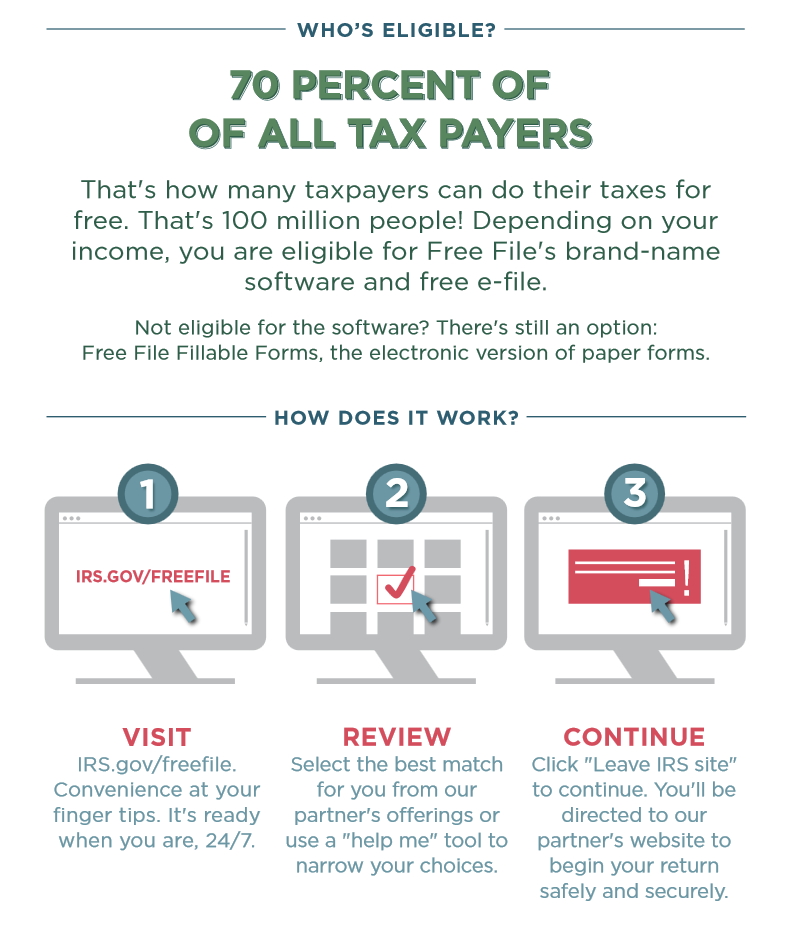
One of the most underutilized resources in personal finance is the IRS Free File program. This is a public-private partnership between the IRS and several brand-name tax software providers. The goal is to provide high-quality, full-featured tax preparation software at no cost to those who qualify.
How the IRS Free File System Works
Instead of going directly to a software website, you start at the official IRS.gov website. From there, you use a lookup tool to see which software providers offer you a free return based on your age, income, and state of residence. Because these companies have a contract with the IRS, they are prohibited from “upselling” you on additional services if you stay within the Free File boundaries. This is distinct from the “Free Editions” you see advertised on TV, which often have many more restrictions.
Eligibility Requirements and Income Thresholds
The primary gatekeeper for IRS Free File is the Adjusted Gross Income (AGI) limit. For the most recent tax year, taxpayers with an AGI of $79,000 or less qualify for the program. This covers approximately 70% of all U.S. taxpayers. If you fall under this threshold, you can typically file both your federal and state returns for free, including more complex forms like the Schedule C for small business owners, provided the specific software partner supports it.
Top Software Options for $0 Filing Fees
If you earn more than the IRS Free File limit or simply prefer a more modern user interface, there are private-sector tools that offer “truly free” filing. These tools have disrupted the market by offering features that traditional giants like TurboTax usually reserve for their paid tiers.
Cash App Taxes: Fully Free Federal and State
Formerly known as Credit Karma Tax, Cash App Taxes has become a favorite in the personal finance community. It is one of the few platforms that offers completely free federal and state filing with no income limits and no exclusions for complex forms. Whether you have capital gains from stock trading or income from a rental property, Cash App Taxes allows you to file without a fee. The trade-off is that you must have a Cash App account, and they use the service as a “loss leader” to bring users into their financial ecosystem.
FreeTaxUSA: The Reliable Budget-Friendly Veteran
While the name sounds like a late-night infomercial, FreeTaxUSA is highly respected by tax experts. Their model is simple: Federal filing is always 100% free for everyone, regardless of income or complexity. They make their money by charging a small, flat fee for state returns (usually around $15). For many, this is a preferred trade-off because the software is incredibly robust, covering almost every tax scenario, including K-1s, depreciation, and complex deductions that other “free” tools might skip.
Big Name “Free Editions”: When Are They Actually Free?
Companies like TurboTax and H&R Block offer “Free Editions,” but users should exercise caution. These versions are typically only free for “simple returns”—meaning a W-2 and the standard deduction. If you have student loan interest, unemployment income, or any form of 1099 income, these “Free Editions” will often prompt you to upgrade to a paid version halfway through the process. Unless your situation is incredibly basic, the IRS Free File versions of these same brands are usually a better deal.
IRS Direct File: The New Frontier in Digital Tax Preparation
In a historic move, the IRS has launched a pilot program called “Direct File.” This is a significant shift in American tax policy, as it allows taxpayers to file their returns directly with the government, bypassing third-party software companies entirely.
What is the Direct File Pilot Program?
Direct File is a mobile-friendly, interview-based tool developed by the IRS. It guides users through their tax obligations much like commercial software but without the profit motive. It is designed to be clear, secure, and integrated directly into the IRS systems, which can lead to faster processing and fewer transcription errors.
Is Direct File Right for You?
As of its initial rollout, Direct File is limited to certain states (those without state income tax or those that have integrated their systems) and specific types of income. It currently handles W-2 income, Social Security benefits, and unemployment compensation. If you live in a participating state and your income is relatively standard, Direct File represents the future of tax filing: a public utility that costs the taxpayer nothing to use.
Specialized Programs for Human-Led Assistance
Not everyone is comfortable using software to navigate the tax code. For those who prefer a human touch but cannot afford a CPA, there are government-funded programs that provide free, professional tax preparation.
VITA: Volunteer Income Tax Assistance
The VITA program offers free tax help to people who generally make $64,000 or less, persons with disabilities, and limited English-speaking taxpayers. These are not just casual volunteers; they are IRS-certified individuals who understand the nuances of the tax code. VITA sites are often located in community centers, libraries, and schools. They are particularly adept at helping taxpayers claim the Earned Income Tax Credit (EITC) and the Child Tax Credit.
TCE: Tax Counseling for the Elderly
The TCE program offers free tax help for all taxpayers, particularly those who are 60 years of age and older. It specializes in questions about pensions and retirement-related issues unique to seniors. Much of this work is done through the AARP Foundation’s Tax-Aide program, which operates thousands of sites across the country during tax season.
Strategies to Ensure Your Free Filing is Successful
Filing for free is only a win if it is done accurately. Errors can lead to delayed refunds or, worse, penalties and interest. To make the most of free tools, you must approach the process with organization and diligence.
Gathering Necessary Documentation Before You Start
The most common reason people abandon free software for a paid professional is frustration caused by missing paperwork. Before you log in, create a “Tax Folder” (digital or physical) and ensure you have:
- W-2s from all employers.
- 1080-INT forms for interest earned.
- 1099-NEC or 1099-K forms for side hustles.
- Form 1098-T for tuition payments.
- Records of any estimated tax payments made throughout the year.
- Your AGI from last year’s return (required for identity verification).
Common Pitfalls to Avoid in Free Tax Software
When using free software, be wary of “add-ons.” Many platforms will try to sell you “Audit Defense,” “Refund Advance Loans,” or “Expert Review.” While these can be valuable in specific niches, they often negate the “free” aspect of the service. If you have followed the instructions and used a reputable tool like those found via IRS Free File, the software’s internal checks are usually sufficient for a standard return. Additionally, always double-check your bank routing and account numbers; an error here can delay a “free” refund by weeks.
In conclusion, filing taxes for free is not just a possibility—for most Americans, it is a right that is finally becoming accessible through technology and government initiatives. By choosing the right tool for your income level and complexity, you can navigate tax season with confidence, ensuring that your financial health is protected from unnecessary fees.
aViewFromTheCave is a participant in the Amazon Services LLC Associates Program, an affiliate advertising program designed to provide a means for sites to earn advertising fees by advertising and linking to Amazon.com. Amazon, the Amazon logo, AmazonSupply, and the AmazonSupply logo are trademarks of Amazon.com, Inc. or its affiliates. As an Amazon Associate we earn affiliate commissions from qualifying purchases.