
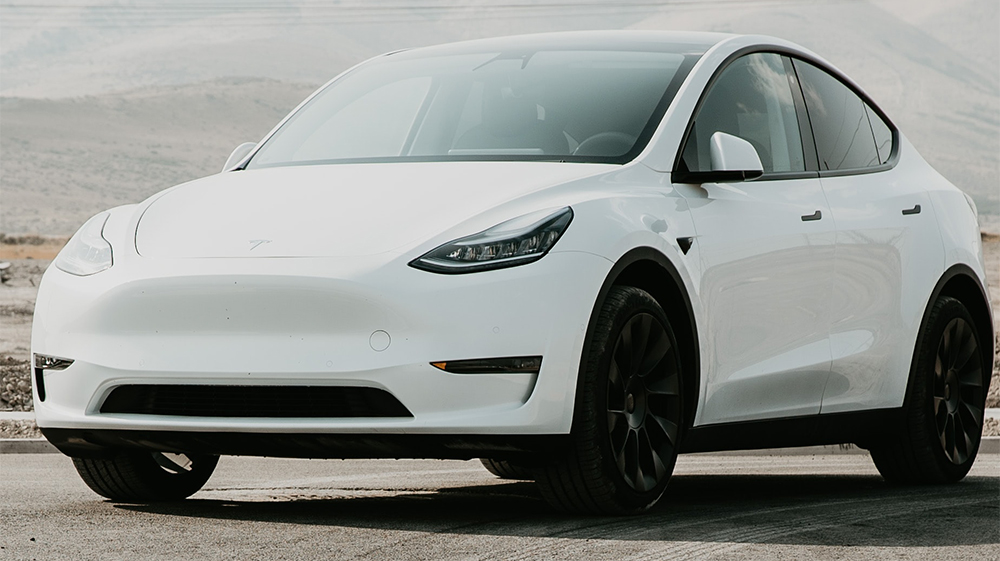
When one asks, “What does a Tesla look like?” the answer is rarely just a description of a silhouette or a paint color. To truly understand the visual identity of a Tesla, one must look past the sleek curves and examine the technological imperatives that dictate its form. In the world of automotive engineering, Tesla has pioneered a “first principles” approach where design is a servant to physics, software, and electronic efficiency.
A Tesla looks the way it does because it is a computer on wheels, optimized for a world where drag is the enemy of range and software is the soul of the driving experience. This article explores the technological underpinnings that define the Tesla aesthetic, from aerodynamic efficiency to the minimalist, software-defined cockpit.

Aerodynamics and the Physics of Range
In the internal combustion era, car design was often a compromise between cooling a hot engine and achieving aesthetic appeal. For Tesla, the primary technological constraint is the battery. Because energy density in batteries is still a premium compared to liquid fuel, every millimeter of a Tesla’s exterior is sculpted to minimize air resistance.
The Pursuit of the Lowest Drag Coefficient
The “look” of a Tesla is characterized by a teardrop-like fluidity. This is most evident in the Model S and Model 3, which boast some of the lowest drag coefficients (Cd) in the production car world. The Model S Plaid, for instance, achieves a Cd of approximately 0.208.
To achieve this, Tesla’s engineering team utilizes advanced Computational Fluid Dynamics (CFD) and extensive wind-tunnel testing. This technology dictates the sloping roofline, the tapered rear, and the specific curvature of the front fascia. These aren’t just stylistic choices; they are technological solutions to the problem of “range anxiety.” By reducing drag, Tesla ensures that the vehicle requires less energy to maintain high speeds, directly translating to more miles per charge.
The Death of the Front Grille
Perhaps the most striking visual difference between a Tesla and a traditional car is the lack of a front grille. Traditional cars need massive openings to feed air to a radiator to cool an exploding engine. A Tesla’s electric powertrain generates significantly less heat and utilizes a much more efficient thermal management system.
The “faceless” look of a Tesla is a tech-driven statement. By closing off the front end, Tesla engineers eliminate a major source of turbulence. The air is instead guided over the hood and around the sides, maintaining a laminar flow that keeps the vehicle pinned to the road while slicing through the atmosphere.
The Sensor Suite: Cameras as Design Elements
While traditional luxury cars emphasize chrome accents or ornate lights, a Tesla’s exterior is punctuated by high-tech sensors. The visual identity of a Tesla is inextricably linked to its “Tesla Vision” system—the hardware array that enables Autopilot and Full Self-Driving (FSD) capabilities.
Integrated Vision Hardware
If you look closely at a Tesla, you will notice subtle glass-covered housings on the B-pillars, the front fenders, and behind the rearview mirror. These are the “eyes” of the car. Unlike other manufacturers who often use bulky LiDAR pucks mounted on the roof, Tesla has integrated eight high-resolution cameras into the bodywork.
This integration represents a technological philosophy: the belief that vision-based AI is sufficient for autonomous navigation. The placement of these cameras dictates certain design aspects, such as the height of the pillars and the angle of the windshield, ensuring the AI has a 360-degree field of view with zero blind spots.
The Hidden Nature of Ultrasonic and Radar Hardware
In its quest for a “clean” tech look, Tesla has moved toward a vision-only approach, removing ultrasonic sensors and radar from newer models. This technological shift has physical consequences for what the car looks like. The bumpers of newer Teslas are smooth, devoid of the small circular cutouts required for traditional parking sensors. This creates a seamless, monolithic appearance that reinforces the brand’s commitment to a software-first architecture where the “brain” of the car does the heavy lifting through pixels rather than acoustic waves.
Minimalism and the Software-Defined Interior

To step inside a Tesla is to enter a space that feels more like a Silicon Valley boardroom than a cockpit. The visual language here is dictated by the transition from mechanical controls to a software-defined interface.
The Central Command Center: Replacing Buttons with UI
The most defining feature of a Tesla interior is the central touchscreen—a 15-inch or 17-inch display that controls nearly every function of the vehicle. From a technological standpoint, this allows the interior to look incredibly “empty.” There are no knobs for volume, no switches for windshield wipers, and no traditional air vents.
The vents themselves are a marvel of hidden technology. Instead of manual plastic slats, Tesla uses a “Linear Airflow System” consisting of two intersecting planes of air. By adjusting the speed of these airflows via the screen, the user can move the air in any direction. This technological innovation allowed designers to create a dashboard that is a single, uninterrupted horizontal line, contributing to the airy, futuristic look that defines the brand.
Over-the-Air (OTA) Updates: A Living Interior
A Tesla looks different over time because its “look” is partly digital. Through Over-the-Air (OTA) updates, the User Interface (UI) on the screen changes, introducing new layouts, dark modes, or specialized “Easter eggs.” Unlike a traditional car, where the dashboard is static from the day it leaves the factory, a Tesla’s visual identity evolves. This software-centric design means the physical interior must remain neutral and minimalist to act as a blank canvas for the ever-evolving software that powers the vehicle.
Structural Innovation: The Chassis and Battery Integration
The “look” of a Tesla—specifically its proportions—is a direct result of its unique structural technology. Traditional cars are built around an engine and a transmission tunnel. Teslas are built around a “skateboard.”
The Skateboard Platform and Low Center of Gravity
Because the battery pack is located at the very bottom of the vehicle between the axles, the car has a naturally low center of gravity. This allows for a shorter hood (since there is no engine) and a more spacious cabin relative to the car’s footprint. The “frunk” (front trunk) is a visual byproduct of this electric-only architecture. This shift in proportions—a long wheelbase with short overhangs—is a hallmark of Tesla’s tech-first design, providing better handling and increased safety while creating a distinctive silhouette.
Giga-Casting: The Tech Behind the Shell
Tesla has pioneered the use of “Giga-presses”—massive casting machines that can produce large sections of the car’s frame as a single piece of aluminum. This technological breakthrough affects the look of the car by reducing the number of panel gaps and seams.
By casting the rear and front underbody as single units, Tesla increases structural rigidity and reduces weight. Visually, this translates to a more cohesive and solid appearance. When you look at the underside or the structural pillars of a Tesla, you are seeing the result of one of the most advanced manufacturing processes in the history of the automotive industry.
The Future of the Look: Functional Brutalism and the Cybertruck
No discussion of what a Tesla looks like would be complete without addressing the Cybertruck. While the S, 3, X, and Y models follow a philosophy of “organic efficiency,” the Cybertruck introduces “functional brutalism” driven by material technology.
The Cybertruck looks the way it does because it is wrapped in Ultra-Hard 30X Cold-Rolled stainless steel. This material is so hard that it cannot be stamped into complex curves using traditional automotive presses; it would break the machines. Therefore, the design must be composed of flat planes and sharp angles.
This is the ultimate example of tech-driven design: the car’s look is a direct consequence of its exoskeleton material. The lack of paint, the triangular silhouette, and the light-bar headlights are not just “styling”—they are the only logical way to build a vehicle out of that specific aerospace-grade alloy. It represents a pivot from “aerodynamic flow” to “structural indestructibility,” showing that as Tesla’s hardware tech evolves, so too will its visual identity.
Conclusion
What does a Tesla look like? It looks like a solution to a complex set of engineering problems. It is the visual manifestation of a drag-coefficient equation, a manifestation of a vision-based AI system, and a testament to the power of software-defined minimalism.
Tesla has successfully moved the needle of automotive design away from decorative excess and toward functional purity. Every curve is there to guide the wind; every camera is there to see the world; and every empty space in the interior is there to focus the driver on the digital experience. In the end, a Tesla looks like the future of technology—efficient, integrated, and unapologetically modern.
aViewFromTheCave is a participant in the Amazon Services LLC Associates Program, an affiliate advertising program designed to provide a means for sites to earn advertising fees by advertising and linking to Amazon.com. Amazon, the Amazon logo, AmazonSupply, and the AmazonSupply logo are trademarks of Amazon.com, Inc. or its affiliates. As an Amazon Associate we earn affiliate commissions from qualifying purchases.