
The burden of student debt has become a defining characteristic of the modern financial landscape. With total student loan debt in the United States exceeding $1.7 trillion, millions of borrowers find themselves navigating a complex web of interest rates, repayment terms, and shifting federal policies. For many, the monthly payment is not just a line item in a budget; it is a significant barrier to achieving major life milestones like homeownership, starting a family, or investing for retirement.
Lowering student loan payments is rarely a one-size-fits-all endeavor. It requires a nuanced understanding of the differences between federal and private loans, as well as a strategic approach to various repayment programs. Whether you are looking for immediate cash flow relief or a long-term strategy to minimize the total interest paid over the life of the loan, several pathways exist to bring your monthly obligations in line with your financial reality.
1. Leveraging Federal Income-Driven Repayment (IDR) Plans
For those with federal student loans, Income-Driven Repayment (IDR) plans are the most effective tools for lowering monthly payments. These plans are designed to make debt manageable by capping monthly payments at a percentage of your discretionary income.
The Evolution of the SAVE Plan
The Saving on a Valuable Education (SAVE) plan represents a significant shift in the federal repayment landscape. Replacing the older REPAYE plan, the SAVE plan increases the income exemption from 150% to 225% of the poverty line. For many borrowers, this adjustment alone can drop monthly payments to $0. Furthermore, the SAVE plan prevents “interest ballooning.” If your calculated payment doesn’t cover the monthly interest, the government waives the remaining interest, ensuring your balance never grows as long as you make your required payments.
Choosing Between PAYE and IBR
While the SAVE plan is often the most generous, older programs like Pay As You Earn (PAYE) and Income-Based Repayment (IBR) remain relevant for specific borrowers. These plans typically cap payments at 10% to 15% of discretionary income. The primary advantage of these legacy plans is the “payment cap”; unlike some versions of IDR, your payment will never exceed what you would have paid under a Standard 10-year Repayment Plan, regardless of how much your income increases. This provides a safety net for high earners who still want the protection of an IDR plan.
The Impact of Family Size and Filing Status
One of the most overlooked aspects of lowering IDR payments involves tax strategy. For married borrowers, filing taxes separately rather than jointly can sometimes lower the calculated monthly student loan payment. This is because most IDR plans (especially SAVE and PAYE) will only look at the individual borrower’s income if they file separately. However, this must be balanced against the potential loss of tax credits and deductions associated with joint filing. Consulting with a financial advisor is crucial when making this determination.
2. Pursuing Federal Forgiveness and Subsidy Programs
Lowering a payment is a temporary fix, but eliminating the debt entirely through forgiveness is the ultimate goal. Several federal programs offer a path to lower payments that eventually lead to a zero balance.
Public Service Loan Forgiveness (PSLF)
PSLF is perhaps the most powerful tool for borrowers working in the non-profit or government sectors. If you work full-time for a qualifying employer, your remaining federal loan balance is forgiven tax-free after 120 qualifying monthly payments. To maximize the benefit of PSLF, the strategy is to lower your monthly payments as much as possible using an IDR plan. By paying the minimum required amount over ten years, you maximize the amount that is eventually forgiven, effectively lowering the “total cost” of the loan.
Teacher Loan Forgiveness and Specialized Grants
For educators, the Teacher Loan Forgiveness Program offers up to $17,500 in debt relief after five consecutive years of teaching in a low-income school or educational service agency. Similarly, healthcare professionals, specifically those working in Health Professional Shortage Areas (HPSAs), can access the National Health Service Corps (NHSC) Loan Repayment Program. These programs do not just lower the payment; they provide lump-sum credits toward the principal, which can be used to “re-amortize” or “recast” the loan to lower future monthly obligations.
State-Specific Repayment Assistance
Beyond federal programs, many states offer their own Loan Repayment Assistance Programs (LRAPs). These are often targeted at specific professions such as lawyers, doctors, or social workers who agree to work in underserved rural or urban areas. These state grants effectively act as a subsidy, providing the borrower with the funds necessary to cover their monthly payments, thereby reducing their out-of-pocket financial burden.
3. Strategic Private Refinancing and Consolidation

For borrowers who do not qualify for federal IDR plans—or those who hold private student loans—refinancing is often the primary mechanism for lowering monthly payments.
When to Seek a Lower Interest Rate
Refinancing involves taking out a new loan with a private lender to pay off your existing student debt. The goal is to secure a lower interest rate, which directly reduces the amount of interest that accrues each month. For borrowers who have improved their credit scores or increased their income since graduation, refinancing can lead to savings of hundreds of dollars per month. However, it is vital to remember that refinancing federal loans into private ones means permanently forfeiting federal protections, such as IDR plans and forgiveness programs.
Extending the Repayment Term
Another way refinancing lowers payments is by extending the repayment term. Moving from a 10-year term to a 15-year or 20-year term will significantly decrease your monthly cash outflow. While this strategy increases the total interest paid over the life of the loan, it is a viable “defensive” financial move for those who need to free up cash flow for other immediate needs, such as high-interest credit card debt or emergency savings.
The Role of a Co-signer
Private lenders heavily weigh credit scores and debt-to-income ratios. Borrowers who find it difficult to qualify for a lower rate on their own may benefit from adding a creditworthy co-signer. A co-signer with a strong financial profile can help unlock the lowest possible interest rates, significantly lowering the monthly payment compared to what the borrower could achieve solo. Many lenders also offer a “co-signer release” option after a certain number of on-time payments, providing an exit strategy for the co-signer once the borrower’s credit has matured.
4. Tactical Financial Adjustments for Immediate Relief
Sometimes, the need for a lower payment is urgent and temporary. In these cases, specific tactical moves can provide immediate breathing room without requiring a permanent change to the loan structure.
Deferment and Forbearance
Federal and many private lenders offer deferment or forbearance, which allows you to temporarily stop making payments or reduce your payment amount for a set period. This is typically used during times of economic hardship, medical leave, or returning to school. While interest may still accrue—particularly on unsubsidized loans—this provides immediate relief during a financial crisis. It should be used sparingly, however, as it can extend the life of the loan and increase the total balance due to interest capitalization.
The Autopay Discount
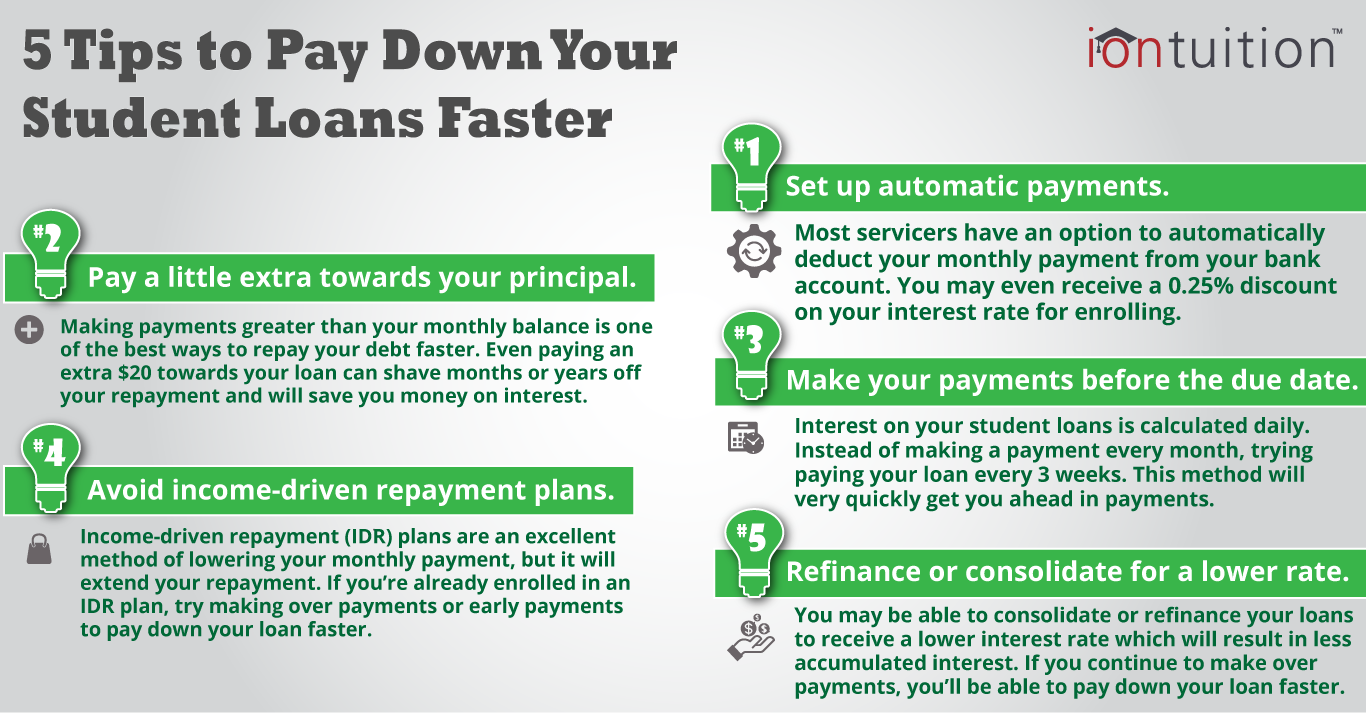
Almost all student loan servicers offer a 0.25% interest rate reduction if you sign up for automatic debit payments. While a quarter of a percentage point may seem negligible, on a large balance, it can shave a noticeable amount off the monthly interest charge. More importantly, it ensures that you never miss a payment, protecting your credit score and ensuring you remain eligible for other payment-lowering programs.
Employer Student Loan Contributions
A growing trend in corporate benefits is the student loan repayment assistant (SLRA). Under the CARES Act and subsequent extensions, employers can contribute up to $5,250 per year toward an employee’s student loans on a tax-free basis. This benefit is a direct reduction in the borrower’s financial burden. If your employer offers this, it is essentially “free money” that can be used to meet your monthly payment obligations, effectively lowering your personal out-of-pocket cost to zero or near-zero.
5. Long-Term Optimization and Budgetary Integration
Managing student loan payments is not just about the loans themselves; it is about how they fit into your broader financial ecosystem.
The “Waterfall” Method of Payment Management
If you have multiple student loans with varying interest rates, you can lower your total monthly obligation over time by focusing on the “Avalanche Method.” By paying the minimum on all loans and directing any extra cash toward the loan with the highest interest rate, you reduce the rate at which interest accumulates. As individual loans are paid off, your required monthly minimum payment drops, providing a natural and permanent reduction in your debt service obligations.
Re-amortization After Principal Payments
If you receive a windfall—such as a tax refund, bonus, or inheritance—applying it to the principal of your student loan is a wise move. However, simply paying down the principal doesn’t usually change your required monthly payment; it only shortens the term. To lower the monthly payment, you must ask your lender about “re-casting” or “re-amortizing” the loan. This process recalculates your monthly payment based on the new, lower balance and the remaining time on the original term.
Integrating Loans into a Wealth-Building Strategy
Ultimately, the goal of lowering student loan payments is to redirect capital toward assets that grow in value. If your student loan interest rate is 4% but you can earn 7% in a diversified index fund, lowering your loan payment to the absolute minimum makes mathematical sense. By utilizing IDR plans or extended terms to keep payments low, you can leverage the difference to build an investment portfolio. This “Money” mindset shifts the perspective of student loans from a burden to be eliminated at all costs to a low-interest liability that can be strategically managed as part of a sophisticated financial plan.
aViewFromTheCave is a participant in the Amazon Services LLC Associates Program, an affiliate advertising program designed to provide a means for sites to earn advertising fees by advertising and linking to Amazon.com. Amazon, the Amazon logo, AmazonSupply, and the AmazonSupply logo are trademarks of Amazon.com, Inc. or its affiliates. As an Amazon Associate we earn affiliate commissions from qualifying purchases.