
Meta Platforms, Inc., formerly known as Facebook, Inc., represents one of the most significant architectural shifts in the history of the modern internet. While the public often associates the company primarily with social media, Meta has evolved into a diversified technology conglomerate focused on the intersection of social connection, artificial intelligence, and spatial computing. The rebranding in late 2021 was not merely a cosmetic change; it signaled a fundamental pivot toward the “Metaverse”—a collective virtual shared space created by the convergence of virtually enhanced physical reality and physically persistent virtual space.
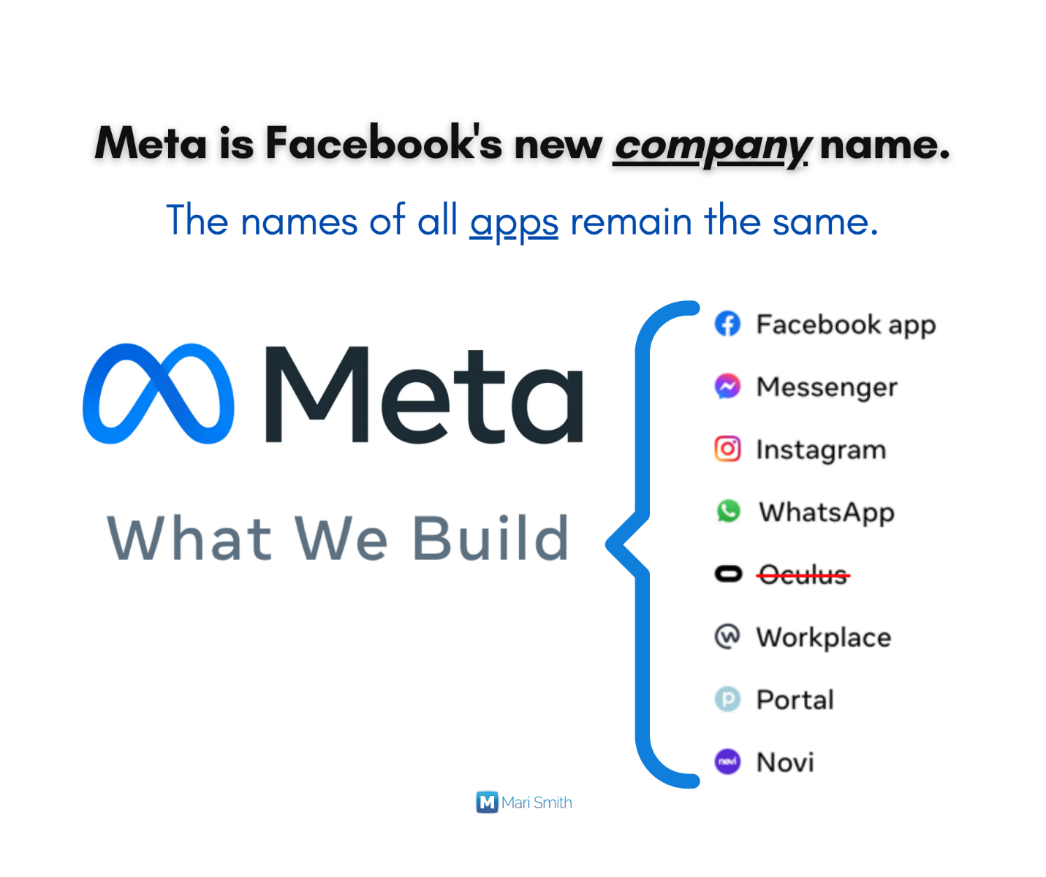
To understand what Meta Platforms is today, one must look beyond the blue logo of its flagship app. It is a massive ecosystem comprised of sophisticated software layers, cutting-edge hardware development through its Reality Labs division, and an increasingly dominant position in the open-source artificial intelligence community.
The Core Software Ecosystem: A Multi-Platform Synergy
At its foundation, Meta Platforms operates the world’s most extensive social software infrastructure. This “Family of Apps” serves as the primary gateway through which billions of users interact with the digital world. However, from a technical perspective, these are no longer isolated applications; they are integrated components of a singular data and identity ecosystem.
The Social Graph and Interoperability
The technical brilliance of Meta’s software suite—Facebook, Instagram, Messenger, and WhatsApp—lies in the “Social Graph.” This is a complex mapping of individuals and their relationships, interests, and behaviors. Over the last decade, Meta has moved toward a unified back-end infrastructure that allows for seamless cross-platform communication. For example, the integration of Messenger and Instagram DM services demonstrated a shift toward a consolidated messaging protocol, optimizing server efficiency and user experience.
WhatsApp and the Shift to Business Messaging
While Facebook and Instagram focus on content discovery and social networking, WhatsApp represents Meta’s foray into high-security, end-to-end encrypted communication tech. Beyond simple messaging, WhatsApp is evolving into a platform for “conversational commerce.” By implementing robust API tools, Meta allows developers to build automated customer service bots and payment flows directly within the encrypted environment, turning a simple chat app into a complex business software tool.
Algorithmic Content Delivery
One of Meta’s most significant technological assets is its recommendation engine. Moving away from chronological feeds, the company pioneered the use of machine learning to predict user engagement. These algorithms process trillions of data points in real-time to curate content, a process that has become even more sophisticated with the rise of “Reels.” This short-form video tech relies on deep learning to analyze video pixels and audio cues, ensuring that the content delivery system remains competitive in a high-bandwidth, mobile-first world.
Reality Labs: The Hardware and Spatial Computing Frontier
The most ambitious arm of Meta Platforms is Reality Labs. This division is tasked with moving the company beyond the constraints of the 2D screen (smartphones and PCs) and into the realm of spatial computing. This involves a massive investment in both virtual reality (VR) and augmented reality (AR).
The Quest Series and Standalone VR
The Meta Quest series has redefined the VR hardware market by popularizing “standalone” headsets. Unlike early VR tech that required tethering to high-end PCs, the Quest utilizes mobile processing power (customized Qualcomm Snapdragon chips) and “Inside-Out Tracking.” This technology uses high-resolution cameras on the headset to map the physical environment and track hand movements without the need for external sensors. The recent push into Mixed Reality (MR) via the Quest 3 introduces “Passthrough” technology, which uses high-fidelity color cameras to overlay digital objects onto the user’s real-world environment.
Augmented Reality and Wearable Tech
Meta’s vision for the future of tech isn’t limited to immersive headsets. The company is heavily invested in “Smart Glasses,” developed in partnership with EssilorLuxottica (Ray-Ban Meta). These devices represent a feat of miniaturization, packing cameras, open-ear speakers, and AI-integrated microphones into a standard eyeglass frame. The long-term goal is “Project Nazaré,” a pair of fully holographic AR glasses that would use optical waveguides to project digital displays directly onto the user’s field of vision, potentially replacing the smartphone entirely.
Haptics and Neural Interfaces
Beyond visuals, Meta is researching how we will interact with digital worlds. This includes haptic feedback—gloves or controllers that simulate the sensation of touch—and more impressively, electromyography (EMG). Meta is developing wristbands that read the electrical signals sent from the brain to the muscles in the hand. This would allow a user to control a digital interface with subtle finger movements, essentially creating a “neural link” for navigating spatial computing environments without physical buttons.

The Intelligence Layer: Meta’s AI Revolution
While the Metaverse remains a long-term goal, Meta’s current technological dominance is being reinforced by its aggressive pursuit of Artificial Intelligence. Meta is not just using AI to power its apps; it is positioning itself as the foundational layer for the global AI developer community.
Llama: The Open-Source LLM Strategy
Perhaps the most disruptive move in recent tech history was Meta’s release of Llama (Large Language Model Meta AI). Unlike competitors who keep their models behind proprietary “black boxes,” Meta has released the weights of its models to the public and research communities. This open-source strategy has accelerated AI development globally. Llama has become a standard for developers who want to build custom AI tools without the high costs of closed-source alternatives. By fostering an open ecosystem, Meta ensures that its architecture remains the industry standard.
Generative AI and Creator Tools
Meta is integrating generative AI directly into its software stack. For creators, this means tools that can automatically expand the background of a photo, generate high-quality stickers from text prompts, or even create “AI personas” for business interaction. Behind the scenes, these tools are powered by massive GPU clusters. Meta has invested billions in building some of the world’s most powerful AI supercomputers, such as the AI Research SuperCluster (RSC), to train the next generation of multimodal models that can understand text, image, and video simultaneously.
MTIA: Custom Silicon for AI
To reduce reliance on external chipmakers and optimize performance, Meta has begun designing its own custom silicon. The Meta Training and Inference Accelerator (MTIA) is a family of chips specifically designed for Meta’s unique AI workloads. By controlling the hardware-software stack, Meta can process AI-driven recommendations and generative tasks with significantly higher energy efficiency and lower latency than general-purpose processors.
Infrastructure and Security in the Digital Frontier
Supporting Meta’s massive software and hardware ambitions is a global network of data centers and undersea cables that represent some of the most advanced digital infrastructure on the planet.
Data Center Innovation and Sustainability
Meta operates dozens of massive data center campuses globally. These are not just warehouses for servers; they are marvels of civil and mechanical engineering. Meta uses “Outdoor Air Cooling” and liquid cooling technologies to maintain the massive server arrays required for AI training. Furthermore, the company has designed its own “Open Compute Project” hardware, sharing its designs for efficient servers and racks with the industry to drive down costs and energy consumption across the entire tech sector.
Connectivity and Global Internet Access
Meta has invested heavily in subsea cables, such as the 2Africa project, which is one of the longest subsea cable systems in the world. These technical investments ensure that the global internet has the bandwidth required to handle the high-data demands of VR and 4K video streaming. By building the “pipes” of the internet, Meta secures the stability of its own ecosystem.
Digital Security and Privacy Engineering
In the modern tech landscape, security is a core component of the product. Meta employs thousands of engineers dedicated to “Privacy-Enhancing Technologies” (PETs). This includes moving toward “On-Device Processing,” where AI tasks are handled on the user’s phone or headset rather than in the cloud, minimizing data exposure. Additionally, the company utilizes differential privacy—a mathematical technique that allows for the analysis of large datasets without compromising the identity of individual users.
The Future Trajectory of Meta Platforms
Meta Platforms is no longer a “social media company.” It is a foundational technology firm building the next major computing platform. Its strategy is three-pronged: dominate the current mobile software landscape, lead the transition to spatial computing hardware, and provide the open-source intelligence that powers the next generation of AI applications.
As we move toward the late 2020s, the distinction between our physical and digital lives will continue to blur. Whether through a pair of smart glasses that translate foreign languages in real-time or a VR environment that allows for remote collaboration, Meta’s technical infrastructure will likely be the medium through which these experiences occur. The company’s evolution from a simple web directory to a builder of worlds represents the peak of modern technological ambition. For the tech-savvy observer, Meta Platforms is less about “likes” and “shares” and more about the fundamental architecture of human connection in the 21st century.
aViewFromTheCave is a participant in the Amazon Services LLC Associates Program, an affiliate advertising program designed to provide a means for sites to earn advertising fees by advertising and linking to Amazon.com. Amazon, the Amazon logo, AmazonSupply, and the AmazonSupply logo are trademarks of Amazon.com, Inc. or its affiliates. As an Amazon Associate we earn affiliate commissions from qualifying purchases.