
For decades, Intel was the undisputed sovereign of the semiconductor world. It was more than just a technology company; it was a cornerstone of the American economy, a blue-chip dividend growth engine, and the gold standard for institutional investors. The “Intel Inside” stickers were a badge of market dominance that translated into consistent quarterly earnings beats and a fortress-like balance sheet.
However, the last few years have told a different story. Intel’s stock price has languished while the rest of the semiconductor sector—driven by the AI boom—has soared to record highs. Once a trillion-dollar aspiration, Intel now finds itself fighting to maintain a market capitalization that is a fraction of its rivals. This article examines the financial missteps, the capital allocation errors, and the shifting market dynamics that have transformed Intel from a market leader into a turnaround play.

The Cost of Stagnation: A Decade of Misaligned Capital Allocation
Intel’s current financial predicament did not happen overnight. It is the result of nearly a decade of prioritizing short-term shareholder returns over long-term capital expenditure (CapEx) and research and development (R&D). During the mid-2010s, while competitors were pivoting toward mobile and specialized high-performance computing, Intel remained focused on its lucrative but maturing PC and server CPU markets.
The Share Buyback Trap
Between 2011 and 2021, Intel spent tens of billions of dollars on share buybacks. From a financial engineering perspective, this was intended to prop up earnings per share (EPS) and provide immediate value to shareholders. However, in hindsight, these billions were diverted away from the critical manufacturing transitions required to maintain the “Moore’s Law” pace. While Intel was rewarding investors with dividends and buybacks, competitors like TSMC were aggressively reinvesting their cash flows into 5nm and 3nm process nodes. This resulted in a technical “debt” that eventually manifested as a massive financial liability when Intel’s manufacturing process stalled at 10nm.
Missing the Mobile and AI Inflection Points
From a business finance perspective, missing a market shift is the most expensive mistake a firm can make. Intel famously passed on the opportunity to manufacture chips for the original iPhone, a decision that cost them entry into the most profitable consumer electronics market in history. More recently, Intel’s financial forecasting failed to anticipate the velocity of the Artificial Intelligence (AI) revolution. By the time NVIDIA had established a monopoly on GPU-based AI training, Intel was still trying to optimize general-purpose CPUs. The result was a missed revenue stream that now accounts for trillions in market valuation for its competitors.
The Competitive Erosion: Losing the Margin War
In the world of investing, gross margins are the ultimate indicator of a company’s “moat.” For years, Intel enjoyed gross margins north of 60%, a testament to its pricing power. Today, those margins have compressed significantly, signaling a loss of competitive advantage and a shift in the power balance of the semiconductor industry.
The Resurgence of AMD and the X86 Battle
Intel’s most direct competitor, AMD, underwent one of the most successful corporate turnarounds in history. By adopting a “fabless” model—outsourcing the actual manufacturing to TSMC—AMD was able to offer superior performance-per-watt at lower price points. This forced Intel into a defensive posture. To maintain market share in the data center and consumer PC segments, Intel had to engage in aggressive pricing strategies, which effectively cannibalized its own profit margins. For investors, the sight of Intel’s operating income shrinking while AMD’s revenue grew was a clear signal to rotate capital out of the incumbent.
The Apple Divorce and Revenue Volatility
The loss of Apple as a customer was a significant financial blow to Intel’s client computing group. When Apple transitioned to its own “M-series” silicon, it didn’t just lose Intel a high-volume buyer; it proved to the market that Intel’s architecture was no longer the performance leader in the laptop space. This loss of revenue necessitated a restructuring of Intel’s financial outlook, forcing the company to look for new, albeit riskier, ways to monetize its massive fabrication facilities.
The Foundry Gamble: A High-Stakes Financial Pivot
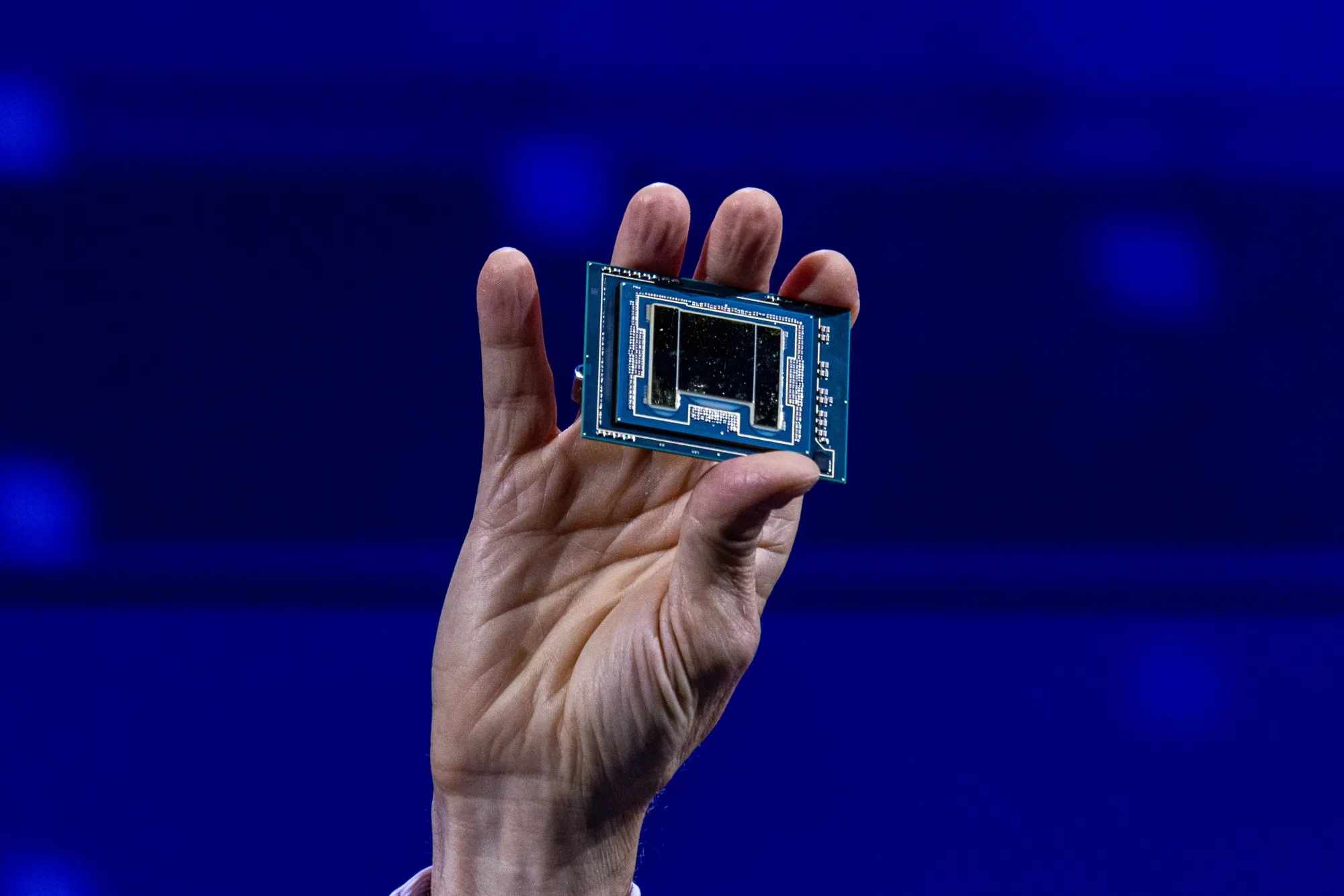
Under the leadership of CEO Pat Gelsinger, Intel has embarked on an ambitious strategy known as IDM 2.0 (Integrated Device Manufacturing). This plan involves Intel opening its doors to manufacture chips for other companies, directly competing with TSMC. While strategically sound, the financial implications are staggering.
The Massive CapEx Requirements
Building a modern semiconductor fab costs upwards of $20 billion. Intel is currently building multiple sites across the United States and Europe. This requires a level of capital expenditure that has put immense strain on the company’s free cash flow. In 2023 and 2024, Intel’s financial statements revealed the true cost of this transition: the company was forced to cut its legendary dividend—a move that alienated many long-term “income” investors—and seek external financing through “Semiconductor Co-Investment Programs” with firms like Brookfield Asset Management and Apollo.
Leveraging the CHIPS Act and Government Subsidies
Intel’s financial survival is now inextricably linked to industrial policy. The U.S. CHIPS and Science Act has earmarked billions in grants and loans for Intel to shore up domestic chip production. From a business finance standpoint, these subsidies are critical; they act as a de-facto “margin buffer” for the company’s expensive manufacturing pivot. However, relying on government funding introduces a layer of political risk and regulatory oversight that Intel has not had to navigate in the past.
Investment Outlook: Value Play or Value Trap?
For the modern investor, Intel represents one of the most polarizing cases in the market. Its valuation metrics, such as the Price-to-Book (P/B) ratio, have frequently dipped to levels unseen in decades, often trading at a significant discount compared to the broader Philadelphia Semiconductor Index (SOX).
Analyzing the Balance Sheet and Cash Burn
The primary concern for institutional investors is the company’s cash burn. Transitioning from a product-focused company to a foundry-focused service provider is a multi-year journey. During this period, Intel must balance the need for massive infrastructure investment with the reality of declining revenue in its core segments. Analysts are closely watching the “Foundry” segment’s operating losses, which have reached billions of dollars per year as the company scales up.
The Risks of Execution
The bull case for Intel rests on the successful execution of its “five nodes in four years” roadmap. If Intel can regain transistor density leadership by 2025/2026, it could capture a significant portion of the external foundry market, which is currently a near-monopoly held by TSMC. However, the bear case is rooted in history: Intel has a track record of manufacturing delays. If the company fails to deliver on its technological promises, the billions spent on new factories will become “stranded assets,” leading to massive write-downs and further erosion of shareholder equity.
Conclusion: The Long Road to Recovery
What happened to Intel is a cautionary tale of how quickly financial dominance can evaporate in a fast-moving industry. By prioritizing short-term financial engineering over long-term innovation, the company allowed its competitors to leapfrog its technology. Today, Intel is no longer the “safe” blue-chip investment it once was; it is a high-stakes corporate turnaround.
The path forward for Intel requires a delicate balance of fiscal discipline and aggressive capital investment. The suspension of the dividend and the implementation of significant layoffs (over 15% of its workforce) demonstrate that management is finally treating the situation with the necessary urgency. For the financial world, the question is no longer whether Intel is a leader, but whether its massive gamble on becoming the “foundry for the world” will pay off before its cash reserves run dry. Whether Intel recovers or continues its slide, its story will remain a definitive case study in business finance for decades to come.
aViewFromTheCave is a participant in the Amazon Services LLC Associates Program, an affiliate advertising program designed to provide a means for sites to earn advertising fees by advertising and linking to Amazon.com. Amazon, the Amazon logo, AmazonSupply, and the AmazonSupply logo are trademarks of Amazon.com, Inc. or its affiliates. As an Amazon Associate we earn affiliate commissions from qualifying purchases.