
Tax season is often viewed with a mixture of trepidation and confusion. For many, the primary source of anxiety isn’t necessarily the payment itself, but the daunting task of identifying, collecting, and organizing the correct documentation. In the realm of personal finance, tax literacy is a cornerstone of wealth management. Understanding which forms you need is the first step toward ensuring compliance, avoiding IRS penalties, and—most importantly—maximizing your potential refund.
As the financial landscape evolves with the rise of the gig economy, digital assets, and complex investment vehicles, the “standard” tax return has become a thing of the past. Whether you are a traditional employee, a freelance entrepreneur, or an active investor, your tax filing requirements will vary significantly. This guide breaks down the essential forms required to navigate the tax season with professional precision.
The Foundation of Filing: Essential Personal Income Forms
Before you can claim deductions or calculate credits, you must accurately report your total income. The IRS receives copies of most of these forms from your employers and financial institutions, making it imperative that your records match theirs to avoid red flags or audits.
The W-2: For Traditional Employees
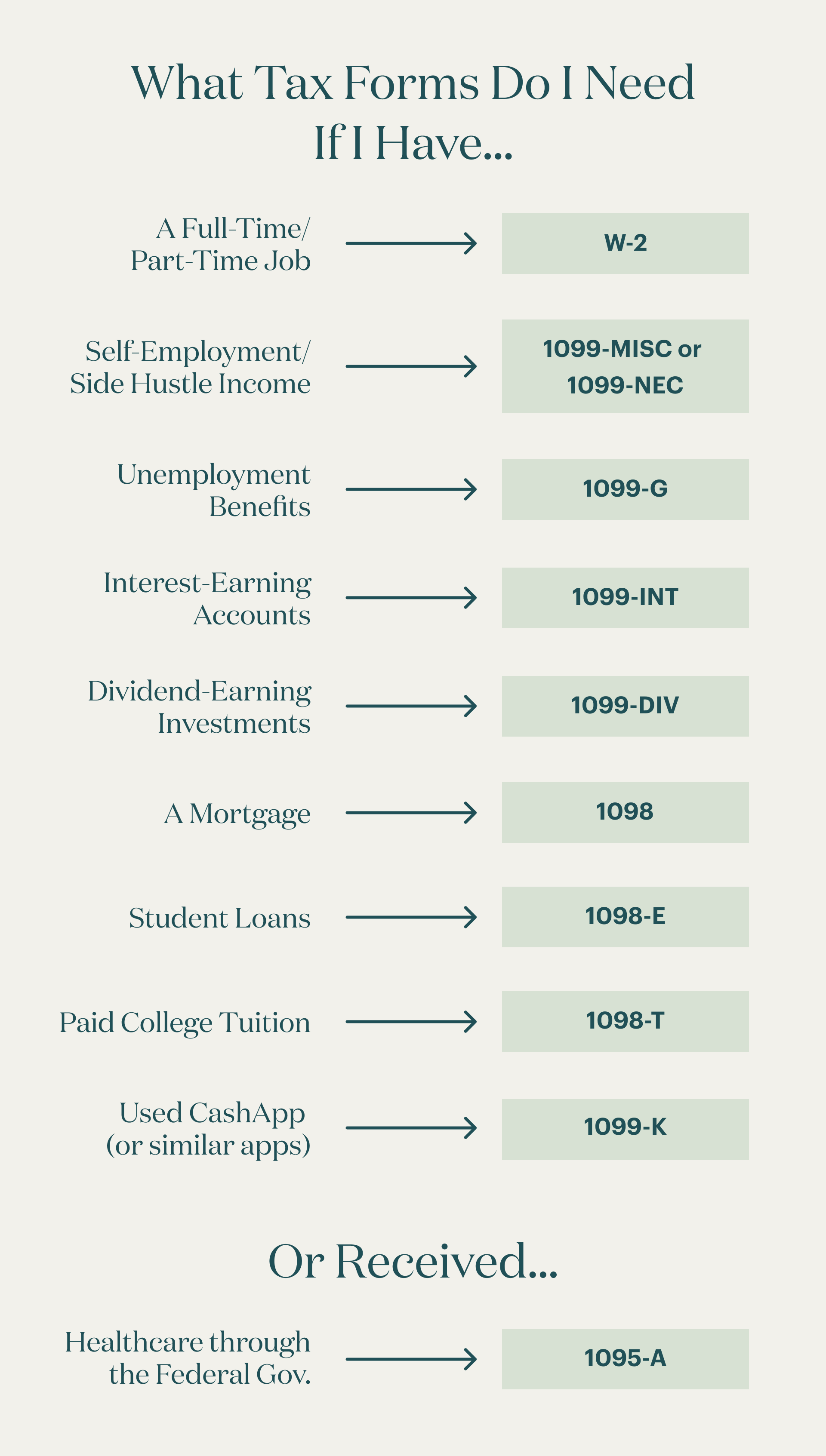
The Form W-2, Wage and Tax Statement, remains the most common document in the American tax system. If you worked as a full-time or part-time employee, your employer is required to provide this by January 31st. It outlines your total earnings, federal and state tax withholdings, and contributions to Social Security and Medicare. From a financial planning perspective, your W-2 is a roadmap of your annual earnings and a reflection of your withholding strategy.
The 1099 Series: The Gig Economy and Beyond
For those involved in “Money” niches like side hustles or freelance consulting, the 1099 series is vital.
- 1099-NEC: This form is used to report non-employee compensation. If you performed contract work and earned $600 or more from a single client, you should receive this.
- 1099-K: With the growth of digital payment platforms like Venmo, PayPal, and Etsy, the 1099-K has become increasingly relevant. It tracks third-party network transactions.
- 1099-MISC: While many freelance roles moved to the 1099-NEC, the MISC form is still used for rent, prizes, or other miscellaneous income.
Interest and Dividends: Reporting Passive Income
Growing your wealth through savings and stocks necessitates the use of forms that track passive income. The 1099-INT reports interest earned on savings accounts or CDs, while the 1099-DIV tracks distributions from stocks and mutual funds. Even if you reinvest your dividends, they are usually considered taxable income in the year they were paid, making these forms essential for accurate reporting.
Maximizing Deductions and Credits: The Paperwork for Savings
The goal of every taxpayer should be to minimize their “effective tax rate.” This is achieved by identifying legal deductions and tax credits that reduce your overall liability. To do this, you need specific forms that validate your financial claims.
The Choice Between Standard and Itemized Deductions
The majority of taxpayers take the standard deduction, but for those with significant expenses, itemizing on Schedule A (Form 1040) can lead to higher savings. You will need documentation for medical expenses, state and local taxes (SALT), and charitable contributions. In the context of personal finance, tracking these expenses throughout the year is a hallmark of disciplined money management.
Education and Student Loans
The cost of education is a significant financial burden, but the IRS offers relief through specific credits.
- Form 1098-T: Provided by educational institutions, this form allows you to claim the American Opportunity Tax Credit (AOTC) or the Lifetime Learning Credit (LLC).
- Form 1098-E: If you are paying off student loans, this form reports the interest you’ve paid. Because student loan interest is often an “above-the-line” deduction, it can reduce your adjusted gross income (AGI) even if you don’t itemize.
Homeownership and Mortgage Interest
For many, a home is their largest financial asset. Form 1098 (Mortgage Interest Statement) allows homeowners to deduct the interest paid on their mortgage. In a high-interest-rate environment, this deduction can result in thousands of dollars in tax savings, significantly impacting your annual cash flow and investment capacity.
Specialized Forms for Investors and Business Owners

For individuals who treat their finances as a business—or those who actually run one—the standard 1040 is only the beginning. Sophisticated financial strategies require more complex reporting structures to ensure that capital gains and business losses are handled correctly.
Capital Gains and Losses: Schedule D and Form 8949
If you sold stocks, bonds, or real estate during the year, you must report these transactions. Form 8949 is used to list the details of each sale, including the “cost basis” (what you paid) and the sale price. The totals are then transferred to Schedule D. Understanding these forms is crucial for “tax-loss harvesting,” a strategy where you sell losing investments to offset the gains from winners, thereby reducing your total tax bill.
Self-Employment and Small Business: Schedule C
If you operate as a sole proprietor or a single-member LLC, Schedule C is where you report your business profit or loss. This is one of the most powerful tools in the “Money” category because it allows you to deduct business expenses—such as home office costs, travel, and equipment—directly from your gross income. Effective use of Schedule C requires meticulous record-keeping but offers the greatest opportunity for tax optimization.
Partnerships and S-Corps: The Schedule K-1
For those invested in partnerships, S-corporations, or certain trusts, the Schedule K-1 is the relevant document. Unlike a W-2, which reports wages, a K-1 reports your share of the entity’s income, deductions, and credits. These forms often arrive later in the tax season (sometimes as late as March or April), so investors in these vehicles should plan their filing timeline accordingly.
The Final Submission: Choosing the Right Return Form
Once you have gathered your income statements (W-2s, 1099s) and your deduction proofs (1098s, receipts), you must bring them all together on the main return document. In the modern tax era, the IRS has moved toward a more modular approach to filing.
Form 1040: The Individual Tax Return
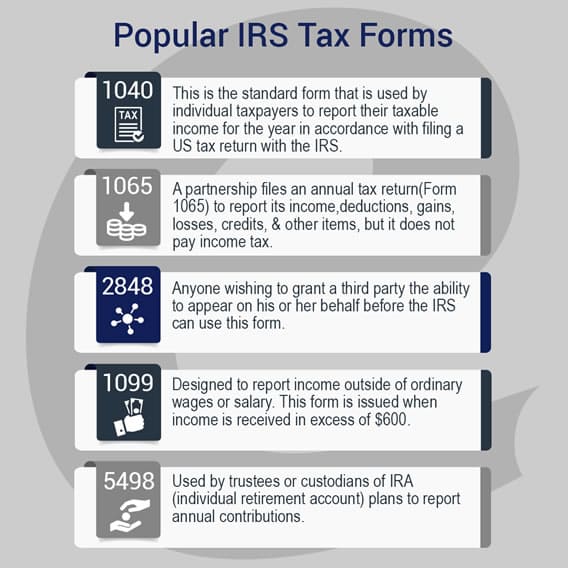
Form 1040 is the “U.S. Individual Income Tax Return.” It is the primary document used by all individual taxpayers. While it was redesigned several years ago to appear shorter, it now relies on a series of additional “Schedules” to handle specific financial situations.
- Schedule 1: Used for additional income (like alimony or business income) and adjustments to income (like educator expenses or IRA deductions).
- Schedule 2: Used if you owe “additional taxes,” such as the Alternative Minimum Tax (AMT) or self-employment tax.
- Schedule 3: Used to claim non-refundable credits other than the child tax credit or the credit for other dependents.
Form 4868: The Extension
In the world of business and finance, timing is everything. If you find that you cannot gather all necessary forms by the April deadline, Form 4868 allows you to apply for an automatic six-month extension. It is important to note, however, that an extension to file is not an extension to pay. You must still estimate your tax liability and pay any owed amount by the original deadline to avoid interest charges.
Digital Tools and Strategic Record-Keeping
Successful financial management is rarely about a single moment in April; it is about the systems you build throughout the year. The modern taxpayer has access to a variety of financial tools that simplify the collection and filing of these forms.
Leveraging Financial Software
Most online income earners and investors utilize software to track their cash flow. Tools that sync with your bank accounts can automatically categorize expenses, making the preparation of Schedule C or Schedule A much simpler. When it comes time to file, using reputable tax software can help ensure that you haven’t missed any forms based on a questionnaire about your life events (e.g., “Did you get married?” or “Did you sell crypto?”).
The Importance of the “Tax Folder”
Whether physical or digital, maintaining a centralized repository for tax forms is a best practice. As forms arrive via mail or email in January and February, they should be immediately filed. This prevents the “missing form” syndrome, which is a leading cause of filing errors and delayed refunds.
When to Consult a Professional
While software is excellent for straightforward returns, complex financial situations—such as owning rental property, having foreign bank accounts, or managing a high-net-worth portfolio—often warrant a professional CPA or tax strategist. A professional doesn’t just fill out the forms; they provide “tax planning,” which is the forward-looking strategy of structuring your finances to minimize future tax burdens.
Conclusion: Mastery Over the Forms
Filing taxes is more than a legal obligation; it is an annual audit of your financial health. By understanding the specific forms required—from the foundational W-2 to the strategic Schedule C—you move from a position of confusion to one of control. In the “Money” niche, knowledge is the greatest asset. When you know exactly which forms you need, you can navigate tax season with the confidence of a seasoned investor, ensuring that you keep more of what you earn and build a stronger financial future.
aViewFromTheCave is a participant in the Amazon Services LLC Associates Program, an affiliate advertising program designed to provide a means for sites to earn advertising fees by advertising and linking to Amazon.com. Amazon, the Amazon logo, AmazonSupply, and the AmazonSupply logo are trademarks of Amazon.com, Inc. or its affiliates. As an Amazon Associate we earn affiliate commissions from qualifying purchases.