
Travel is often one of the most significant line-item expenditures in a household budget, yet it remains one of the most volatile. For the financially conscious individual, the quest for cheap airfare is not merely about finding a “deal”; it is an exercise in market analysis, capital management, and the optimization of loyalty assets. In the modern economy, airfare pricing is a sophisticated dance of algorithms and real-time supply-and-demand metrics. To consistently secure the lowest prices, one must look beyond the search bar and understand the underlying financial principles that govern the aviation industry.
This guide approaches the challenge of affordable travel through the lens of personal finance and strategic investing. By treating travel as a series of calculated financial moves, you can significantly lower your cost of living while increasing your “return on lifestyle.”
The Financial Framework of Airfare Pricing
To beat the system, one must first understand how the system prices its inventory. Airlines do not use fixed pricing; instead, they employ a practice known as yield management or revenue management. This is a variable pricing strategy based on anticipating and influencing consumer behavior to maximize profits.
Understanding Dynamic Pricing Models
Dynamic pricing is the reason your flight cost can fluctuate by hundreds of dollars within a single hour. Airlines use sophisticated software to monitor “load factors”—the percentage of available seats filled—and adjust prices accordingly. If a flight is filling up faster than historical averages suggest, the price for the remaining seats will climb. Conversely, if a flight is underperforming, the airline may trigger a “fare sale” to liquidate inventory. From a personal finance perspective, your goal is to identify these dips in the market and execute a purchase when the price is at its floor.
The Role of Supply and Demand in Fare Fluctuations
Airfare is a commodity, much like oil or gold, and its value is dictated by the principles of scarcity. Demand peaks during holidays, summer months, and major global events. However, there is also “artificial demand” created by business travel cycles. Business travelers often book last-minute and are less price-sensitive, which is why fares typically skyrocket within 14 to 21 days of departure. By booking outside of these high-demand windows, you are essentially engaging in a form of market arbitrage—securing the same “product” (the seat) at a fraction of the price paid by your fellow passengers.
Error Fares: The Financial Windfall of Travel
Occasionally, a glitch in an airline’s Global Distribution System (GDS) or a human data-entry error leads to “error fares”—extraordinarily low prices that are unintended. These might include a trans-Atlantic flight for $150 or a business class seat for the price of economy. For the disciplined saver, error fares represent a high-yield opportunity. While airlines are not always legally required to honor these fares, many do for the sake of brand reputation. Monitoring these requires specialized financial tracking tools or newsletters, but the “ROI” on an error fare can be the single greatest savings event in a traveler’s year.
Leveraging Financial Tools and Credit Arbitrage
In the world of personal finance, cash is not always the most efficient way to pay for a flight. One of the most powerful strategies for reducing airfare costs involves the strategic use of credit card rewards and the mastery of the “points and miles” ecosystem.
Maximizing Credit Card Reward Points and Miles
The most savvy travelers treat credit card points as a secondary currency. Rather than paying for a $1,200 flight out of a savings account, they utilize “Sign-up Bonuses” (SUBs) from premium travel credit cards. A single sign-up bonus can often cover the cost of a round-trip international flight. The key to this financial maneuver is to ensure that you are never paying interest; if you carry a balance, the interest charges will quickly outpace the value of the rewards earned. When used correctly, credit cards allow you to “arbitrage” your everyday spending into free or heavily discounted travel.
The Concept of “Travel Hacking” as a Side Hustle
Travel hacking is the practice of using legal financial maneuvers to gain travel perks and free flights. This can include “manufactured spending” (meeting credit card spend requirements through refundable purchases or gift cards), though this requires high financial literacy and risk management. More commonly, it involves “transfer partner” optimization. Instead of booking a flight through a bank’s travel portal (where points are worth a fixed 1 cent to 1.5 cents each), you can transfer those points to an airline partner where they might be worth 3 to 5 cents each. This “leveraging” of points is one of the most effective ways to make expensive airfare affordable.

Utilizing Cashback Portals and Financial Extensions
Beyond points, there is the simple world of cashback. Before making any purchase, the financially literate traveler uses portals like Rakuten or TopCashback to earn a percentage of their purchase back in cash. When combined with a credit card that earns rewards, this creates a “double-dip” scenario. Furthermore, browser extensions that track price history can tell you if the current price is a true low or an artificial peak, allowing you to time your capital deployment perfectly.
Strategic Budgeting and Timing for Travel Savings
Timing is the most critical variable in the cost of airfare. Just as an investor looks for the right “entry point” in a stock, a traveler must look for the right entry point for a flight.
The 21-Day Rule and Booking Windows
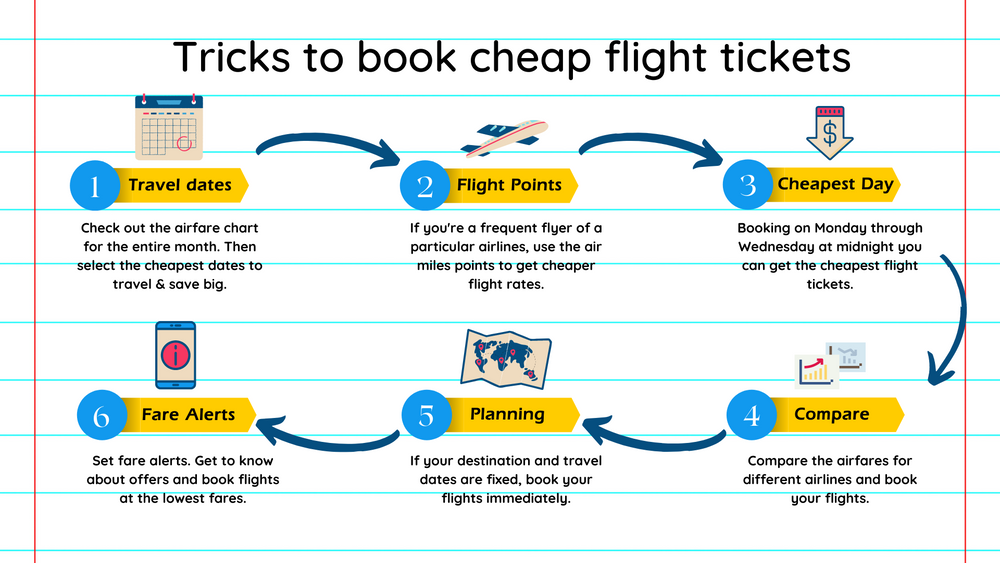
Historical data suggests that for domestic flights, the “sweet spot” for booking is typically between one and three months in advance. For international travel, it is often two to six months. The “21-day rule” is a staple of airline revenue management; prices almost universally rise exactly three weeks before a flight to capture the high-margin business traveler. By planning your budget and your schedule in advance, you avoid the “urgency tax” that airlines levy on late-comers.
Flexibility as a Financial Asset
In personal finance, liquidity is an asset; in travel, flexibility is an asset. If you are rigid about your dates and destinations, you are a “price taker.” If you are flexible, you become a “price maker.” Using tools that allow you to search “Everywhere” or view a whole month of prices enables you to find the “cheapest day to fly.” Often, flying on a Tuesday or Wednesday instead of a Sunday can save 30-50% on the total fare. Shifting your travel by just 48 hours can result in hundreds of dollars in savings, which can then be redirected into your investment portfolio or emergency fund.
The “Hidden City” and “Positioning Flight” Strategies
Advanced financial strategies in travel include “Hidden City Ticketing” and “Positioning Flights.” A positioning flight is a cheap, short-haul flight you take to a major hub where a long-haul flight is significantly cheaper. For example, it might be $400 cheaper to fly from New York to London than from your local regional airport. If a flight from your local airport to New York is only $100, you have saved $300 by “positioning” yourself. Hidden city ticketing involves booking a flight with a layover in your actual destination and simply walking away at the layover. While this carries some risk with airline terms of service, it is a classic example of exploiting market inefficiencies to save capital.
Minimizing Hidden Costs and Maximizing ROI
The “sticker price” of a flight is rarely the final cost. To truly master the money side of airfare, one must account for the total cost of ownership of that ticket.
Deciphering Ancillary Fees and Surcharges
Low-cost carriers (LCCs) like Spirit, Ryanair, or Frontier often advertise remarkably low base fares—sometimes as low as $15. However, their business model relies on “unbundling” services. Seat assignments, carry-on bags, and even water may incur fees. A $50 flight on an LCC can quickly become a $150 flight, whereas a $120 flight on a full-service carrier might include those amenities for free. When budgeting, always calculate the “All-In Cost.” Professional travelers use a spreadsheet to compare the base fare plus expected fees across different airlines to find the true lowest cost.
Long-term Financial Planning for Frequent Travelers
If you travel frequently for business or leisure, you should view your travel expenses over a multi-year horizon. This involves “Status Matching” and “Mileage Runs.” Sometimes, spending an extra $100 today to reach the next tier of a loyalty program can yield thousands of dollars in value the following year through free checked bags, lounge access (which saves money on airport food), and complimentary upgrades. This is a form of capital expenditure now for operational savings later.
The Opportunity Cost of Airfare
Finally, always consider the opportunity cost. If spending 10 hours of your time to save $50 on a flight results in you being exhausted and unproductive the next day, the “true cost” of that cheap airfare is high. Your time has a financial value. The goal is to optimize the intersection of monetary cost and personal well-being. By applying these financial principles—understanding market dynamics, leveraging credit assets, and strategic timing—you turn the act of buying a plane ticket from a stressful expense into a calculated, high-value acquisition.
By treating airfare as a market to be analyzed rather than a bill to be paid, you can unlock a world of travel that is both expansive and fiscally responsible. Cheap airfare is not a matter of luck; it is a matter of financial strategy.
aViewFromTheCave is a participant in the Amazon Services LLC Associates Program, an affiliate advertising program designed to provide a means for sites to earn advertising fees by advertising and linking to Amazon.com. Amazon, the Amazon logo, AmazonSupply, and the AmazonSupply logo are trademarks of Amazon.com, Inc. or its affiliates. As an Amazon Associate we earn affiliate commissions from qualifying purchases.