
The question “what is the biggest bank in the world?” might seem straightforward, yet its answer is anything but static or simple. In the intricate tapestry of global finance, measuring “bigness” is less about a single definitive metric and more about a multi-faceted assessment of influence, scale, and financial might. While one might initially think of iconic Western names like JPMorgan Chase or HSBC, the financial landscape has dramatically shifted, especially over the last two decades. Today, the titans of the banking world often hail from unexpected corners, their sheer size having profound implications for global economies, financial stability, and the future of commerce. Understanding who holds the crown, and by what measure, provides critical insights into global economic power dynamics, capital flows, and the inherent risks and opportunities within the international financial system.
Defining “Biggest”: Metrics for Financial Might
Determining the “biggest” bank is a complex exercise because different metrics highlight distinct aspects of a financial institution’s scale and impact. There isn’t a universally agreed-upon singular measure, and each provides a unique lens through which to view a bank’s dominance.
Total Assets Under Management
Perhaps the most common and often cited metric for determining a bank’s size is its total assets under management (AUM). This figure represents the aggregate value of all assets that a financial institution manages on behalf of its clients, along with its own balance sheet assets. It includes loans, investments, cash, and other financial instruments. A higher AUM signifies greater financial capacity, the ability to absorb larger financial shocks, and a more extensive reach into various markets. Banks with colossal asset bases can command lower borrowing costs, undertake massive lending operations, and participate in complex global financing deals that smaller institutions simply cannot. For many, this is the gold standard for comparing the sheer scale of financial power.
Market Capitalization
While assets reflect a bank’s balance sheet strength, market capitalization offers a perspective based on investor confidence and the market’s perception of its future earnings potential. Calculated by multiplying the bank’s current share price by the total number of outstanding shares, market cap reflects the total value of a company as determined by the stock market. A high market capitalization suggests that investors view the bank as stable, profitable, and having strong growth prospects. However, market cap can be volatile, fluctuating with market sentiment, economic news, and geopolitical events. It provides insight into the “worth” of a bank as a publicly traded entity rather than its operational or balance sheet size.
Revenue and Profitability
Revenue and profitability are crucial indicators of a bank’s operational success and efficiency. High revenues indicate a strong ability to generate income from various banking activities such as lending, investment banking, asset management, and trading. Profitability, often measured by net income or return on equity (ROE), shows how effectively a bank converts its revenues into actual profits after expenses and taxes. While a bank might have massive assets, if it struggles to generate substantial revenue or maintain healthy profit margins, its “bigness” might be more about historical scale than current financial health. Consistently strong profits enable banks to reinvest in technology, expand operations, and return value to shareholders, underpinning sustainable growth.
Global Reach and Employee Count
Beyond purely financial metrics, global reach and employee count speak to a bank’s operational footprint and human capital. A bank with operations across numerous countries and continents, serving diverse client bases from retail customers to multinational corporations, possesses immense influence. This global presence often comes with a commensurate number of employees – ranging from tens of thousands to hundreds of thousands – spread across branches, offices, and trading floors worldwide. While not a direct measure of financial value, an expansive global network and a large, skilled workforce signify a bank’s capacity to execute complex transactions, navigate varied regulatory environments, and provide services on an unparalleled international scale, making it a critical aspect of its overall “bigness.”
The Reigning Giants: A Look at the Contenders
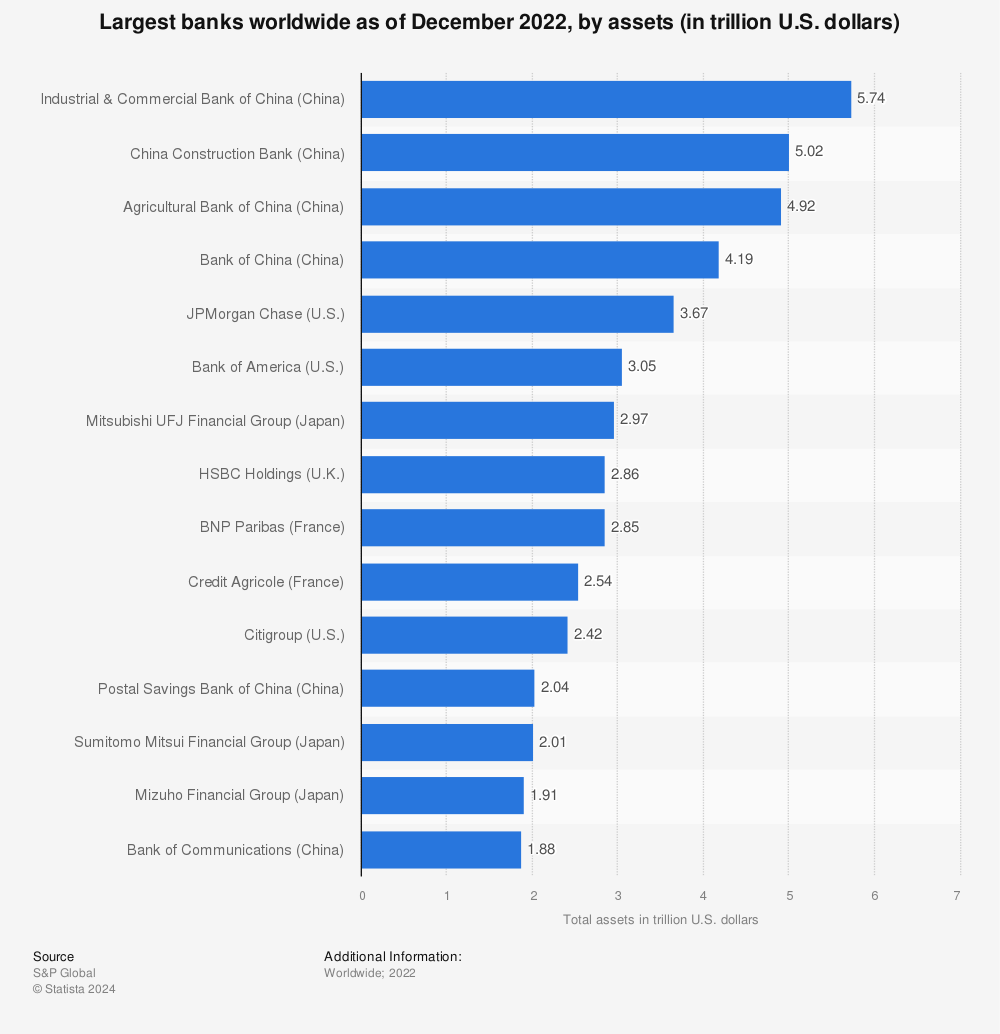
When we aggregate these metrics, a clear picture emerges, though the specific ranking can shift based on the chosen yardstick and the date of measurement. Over the past decade, a significant power shift has occurred, with Asian banks, particularly those from China, dominating the top ranks by asset size.
The Usual Suspects: China’s “Big Four”
By almost any measure of total assets, the four largest banks in the world consistently hail from China. These are:
- Industrial and Commercial Bank of China (ICBC): Frequently topping the list, ICBC boasts assets that dwarf many national economies. Its immense scale is fueled by China’s vast domestic market, strong government backing, and its role in financing infrastructure and state-owned enterprises. It has a formidable presence in retail, corporate, and investment banking.
- China Construction Bank (CCB): As its name suggests, CCB has played a pivotal role in financing China’s rapid urbanization and infrastructure development. It remains a crucial player in housing loans and corporate banking, with a growing international footprint.
- Agricultural Bank of China (ABC): Primarily focused on supporting China’s agricultural sector and rural development, ABC has a massive branch network extending deep into the country’s interior. Despite its niche origin, it has diversified significantly and is now a global financial powerhouse.
- Bank of China (BOC): The most internationalized of China’s “Big Four,” BOC has a long history and a strong presence in foreign exchange and international trade finance. It serves as a key conduit for China’s global economic engagement.
These banks benefit from a massive domestic population, high savings rates, and strategic state ownership, allowing them to accumulate vast asset bases and wield significant influence.
European Powerhouses
Europe is home to several banks with a long and storied history of global financial operations, despite often ranking behind the Chinese giants in pure asset terms.
- HSBC Holdings plc: Headquartered in London but with deep roots in Asia, HSBC is a truly global bank with a massive international network. It excels in commercial banking, wealth management, and global markets, serving a diverse client base across dozens of countries. Its strength lies in its ability to bridge East and West.
- BNP Paribas: France’s largest bank and a leading player in Europe, BNP Paribas has a strong presence across retail banking, corporate and institutional banking, and international financial services. It boasts a robust balance sheet and a diversified business model, making it a cornerstone of European finance.
- Crédit Agricole Group: Another French banking giant, Crédit Agricole is known for its strong retail banking presence in France and its international operations, particularly in asset management and insurance.
North American Leaders
North American banks, particularly those from the United States, are renowned for their innovation, sophisticated capital markets operations, and significant market capitalization.
- JPMorgan Chase & Co.: Consistently ranking among the top globally by market capitalization and a strong contender by assets, JPMorgan Chase is a colossus in investment banking, asset management, and commercial banking. Its vast consumer banking network complements its prowess in global financial markets.
- Bank of America: A leading financial institution in the U.S. and globally, Bank of America offers a comprehensive range of banking, investing, asset management, and other financial and risk management products and services. Its strength lies in its extensive retail presence and its robust global banking and markets division.
- Wells Fargo & Company: Although it has faced challenges in recent years, Wells Fargo remains a significant player, especially in U.S. consumer and commercial banking, known for its extensive branch network.
Other Key Players
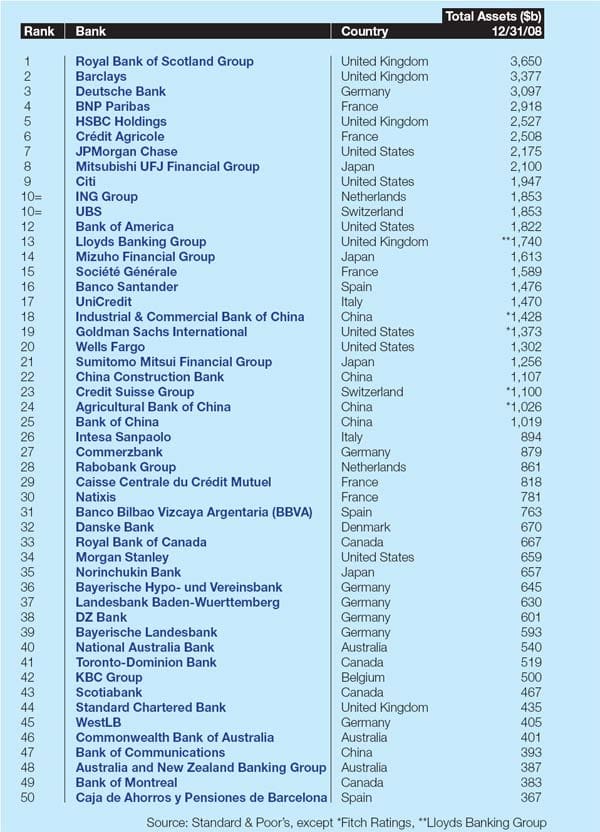
Beyond these primary regions, other significant global banks include Mitsubishi UFJ Financial Group (MUFG) from Japan, which is a key player in Asian and international finance, and Citigroup from the U.S., with its vast global network and strong focus on institutional clients. These banks, while perhaps not always topping the “biggest” lists by every metric, hold immense power and influence within their respective markets and globally.
Beyond Bragging Rights: Why Size Matters in Banking
The sheer size of these global financial behemoths isn’t just a matter of prestige; it has profound implications for national economies, global markets, and the everyday lives of individuals and businesses.
Economic Stability and Systemic Risk
The concept of “too big to fail” is intimately linked to the world’s largest banks. Their interconnectedness within the global financial system means that the failure of one could trigger a cascade of defaults, leading to a broader economic crisis. Consequently, these banks are subject to stricter regulations, higher capital requirements, and intense scrutiny from national and international regulatory bodies. While this oversight aims to mitigate systemic risk, the very scale of these institutions means they inherently pose a significant threat to stability if mismanaged or faced with severe economic headwinds. Their resilience, or lack thereof, directly impacts global financial health.
Lending Capacity and Global Projects
Massive asset bases enable the biggest banks to undertake lending on an unprecedented scale. They can finance multi-billion-dollar infrastructure projects, provide syndicated loans to multinational corporations, and support large-scale government initiatives that no smaller bank could manage. This capacity is vital for driving economic growth, fostering international trade, and enabling significant capital investments across diverse industries, from renewable energy to technology and manufacturing. Their ability to mobilize and deploy vast amounts of capital is a critical engine for global economic development.
Competitive Advantage and Market Influence
The largest banks enjoy significant competitive advantages. Their scale often translates into lower costs of capital, allowing them to offer more competitive rates on loans and investments. They possess immense resources to invest in cutting-edge technology, cybersecurity, and global talent, enabling them to stay ahead of the curve. Furthermore, their extensive networks and relationships give them unparalleled access to markets, clients, and information, allowing them to influence market trends, set industry standards, and drive innovation. This market influence extends to shaping financial products, services, and even regulatory dialogues.
Regulatory Scrutiny and Compliance Burden
With great size comes great responsibility, and equally, great regulatory scrutiny. The biggest banks face an enormous compliance burden, navigating a complex web of national and international regulations designed to prevent financial crime, protect consumers, and ensure financial stability. This includes stringent capital adequacy rules (like Basel III), anti-money laundering (AML) directives, data privacy laws (like GDPR), and consumer protection statutes. The cost of compliance, including investments in technology, personnel, and reporting, is substantial, often running into billions of dollars annually. While challenging, this regulatory environment is intended to safeguard the global financial system from the risks inherent in institutions of such immense scale.
The Future of Banking: Shifting Tides and Emerging Challenges
The landscape of global banking is not static. It is continually shaped by technological innovation, evolving geopolitical dynamics, and changing societal expectations. The “biggest” banks of tomorrow may look different from today’s giants.
Digital Transformation and FinTech Disruption
Digital transformation is reshaping banking at an unprecedented pace. Large banks are investing heavily in FinTech, artificial intelligence (AI), blockchain, and cloud computing to enhance efficiency, improve customer experience, and fend off disruption from nimble tech startups. The challenge for these established giants is to innovate quickly while managing their vast legacy systems and complex organizational structures. The future will see intensified competition from pure-play digital banks and embedded finance solutions that leverage technology to offer financial services in new, more accessible ways.
Geopolitical Shifts and Regulatory Environments
Geopolitical tensions, trade disputes, and shifts in global power dynamics directly impact international banking. Banks must navigate a fragmented regulatory environment where rules and enforcement can vary significantly from one jurisdiction to another. The rise of protectionism, the weaponization of finance (e.g., sanctions), and the increasing influence of emerging economies will continue to reshape where capital flows, what types of transactions are permissible, and which banks can operate effectively in different regions. Adapting to these geopolitical complexities will be crucial for maintaining global reach.
Sustainability and ESG Considerations
Environmental, Social, and Governance (ESG) factors are no longer peripheral but central to banking strategy. The biggest banks are under growing pressure from investors, regulators, and the public to finance sustainable projects, reduce their own carbon footprint, promote diversity and inclusion, and operate ethically. This involves re-evaluating lending portfolios, developing green financial products, and integrating ESG criteria into risk management and investment decisions. Banks that lead in sustainability will likely attract more capital and talent, enhancing their long-term viability and influence.

The Rise of Non-Bank Financial Institutions
The traditional banking sector is facing increasing competition from non-bank financial institutions (NBFIs), including investment funds, insurance companies, shadow banks, and even large tech companies offering financial services. These entities often operate with less regulatory oversight and can innovate rapidly, capturing market share in areas like payments, lending, and asset management. The biggest banks must find ways to collaborate with, compete against, and sometimes acquire these new players to maintain their dominance and relevance in an increasingly diverse financial ecosystem.
In conclusion, while China’s “Big Four” consistently hold the top spots in terms of assets under management, the definition of the “biggest bank” remains dynamic and multifaceted. It encompasses not just balance sheet strength but also market valuation, profitability, global reach, and the ability to adapt to a rapidly changing world. These financial behemoths play an indispensable role in global economics, acting as arteries through which capital flows, but their sheer size also presents unique challenges and responsibilities. As technology advances and geopolitical landscapes shift, the hierarchy of global banking will undoubtedly continue to evolve, making the question of “who is the biggest” an ongoing and fascinating financial narrative.
aViewFromTheCave is a participant in the Amazon Services LLC Associates Program, an affiliate advertising program designed to provide a means for sites to earn advertising fees by advertising and linking to Amazon.com. Amazon, the Amazon logo, AmazonSupply, and the AmazonSupply logo are trademarks of Amazon.com, Inc. or its affiliates. As an Amazon Associate we earn affiliate commissions from qualifying purchases.