
Tax season is often met with a mixture of anxiety and procrastination. However, when viewed through the lens of personal finance and wealth management, filing your taxes is one of the most significant financial events of the year. It is more than just a legal obligation; it is a comprehensive audit of your annual financial health. Understanding how to navigate the complexities of the tax code allows you to optimize your cash flow, maximize your savings, and ensure that you are not overpaying the government.
In this guide, we will break down the tax-filing process into manageable, strategic steps. By shifting your perspective from “compliance” to “financial optimization,” you can transform a stressful chore into a powerful tool for long-term wealth building.

1. Establishing the Foundation: Documentation and Organization
The quality of your tax return is entirely dependent on the quality of your record-keeping. Before you open any forms or software, you must gather the financial data that reflects your year. In the world of personal finance, organization is the primary defense against errors that could trigger audits or result in missed refunds.
Gathering Essential Income Statements
The IRS requires documentation for every dollar earned. For most employees, this begins with the Form W-2, which outlines your total earnings and the taxes already withheld by your employer. However, in the modern “gig economy,” many individuals also receive various 1099 forms.
Common forms include the 1099-NEC for non-employee compensation (freelancing), the 1099-INT for interest earned in savings accounts, and the 1099-DIV for dividends earned through investments. If you sold stocks or cryptocurrency, you would also need your 1099-B, which tracks capital gains and losses. Collecting these early ensures that your reported income matches what the IRS has on file, preventing costly discrepancies.
Determining Your Filing Status
Your filing status is a fundamental pillar of your tax structure. It determines your tax brackets and your standard deduction amount. While it may seem straightforward, choosing the wrong status can be a costly mistake.
The five statuses—Single, Married Filing Jointly, Married Filing Separately, Head of Household, and Qualifying Surviving Spouse—each have specific criteria. For example, “Head of Household” often provides more favorable tax rates and a higher standard deduction than filing as “Single,” but you must pay more than half the cost of keeping up a home for a qualifying person. Evaluating your life situation through these categories is the first step in calculating your true tax liability.
2. Strategic Reductions: Maximizing Deductions and Credits
In the realm of money management, the goal is to reduce your “taxable income.” The lower this number, the lower the percentage of tax you owe. This is achieved through two primary mechanisms: deductions and credits.
Standard vs. Itemized Deductions
The “Standard Deduction” is a flat dollar amount that reduces the income you’re taxed on. For the vast majority of taxpayers, the standard deduction is the most efficient choice because it requires no extra paperwork. However, “Itemizing” becomes financially beneficial when your individual deductible expenses—such as mortgage interest, state and local taxes (SALT) up to $10,000, medical expenses exceeding 7.5% of your adjusted gross income (AGI), and charitable contributions—exceed the standard deduction amount.
A savvy financial approach involves a “bunching strategy,” where you consolidate charitable donations or elective medical procedures into a single year to surpass the standard deduction threshold, thereby maximizing your tax savings over a two-year period.
Leveraging Tax Credits for Dollar-for-Dollar Savings
While deductions lower the income you are taxed on, tax credits are even more valuable because they reduce your actual tax bill dollar-for-dollar. From a personal finance perspective, credits are the ultimate prize.
The Child Tax Credit (CTC) and the Earned Income Tax Credit (EITC) are well-known, but many taxpayers overlook the American Opportunity Tax Credit (AOTC) for education or the Lifetime Learning Credit (LLC). Additionally, energy-efficient home improvements can qualify for the Residential Clean Energy Credit. Identifying which credits you are eligible for is essential to ensuring you aren’t leaving money on the table.
3. Navigating Complex Income: Investments and Side Hustles
As you progress in your financial journey, your income streams likely become more diverse. Managing the tax implications of diverse revenue streams is what separates basic filing from sophisticated financial planning.
Reporting Freelance and Business Income
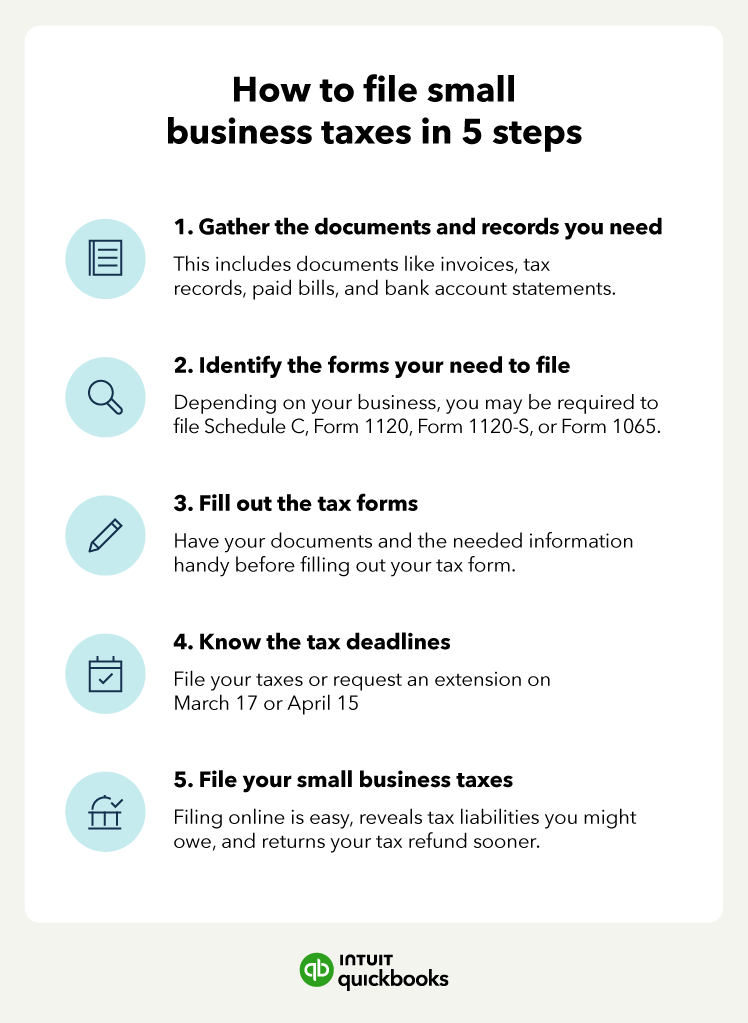
If you earn money outside of a traditional W-2 job, you are essentially a small business owner in the eyes of the IRS. This requires filing a Schedule C. The advantage here is the ability to deduct “ordinary and necessary” business expenses. This includes a portion of your home internet, office supplies, marketing costs, and even a percentage of your home expenses if you have a dedicated home office.
The key to maximizing “Money” in this niche is meticulous tracking of expenses throughout the year. Every dollar spent on your business that is not deducted is essentially a lost opportunity to lower your tax burden. Remember, however, that you must also account for self-employment tax, which covers Social Security and Medicare contributions usually split between employer and employee.
Capital Gains and Investment Income
Your investment portfolio is another area where tax strategy is paramount. When you sell an asset for more than you paid for it, you realize a capital gain. Short-term capital gains (assets held for less than a year) are taxed at your ordinary income rate, which can be as high as 37%. Long-term capital gains (assets held for over a year) are taxed at significantly lower rates—0%, 15%, or 20%—depending on your income.
Strategic investors often engage in “tax-loss harvesting.” This involves selling underperforming investments at a loss to offset the gains from other investments, thereby reducing the total tax owed. This is a prime example of how understanding “how to do your taxes” is actually a core component of investment management.
4. The Execution: Filing Methods and Deadlines
Once the data is gathered and the strategies are identified, the next step is the actual filing. The method you choose should be based on the complexity of your financial life and your comfort level with tax law.
DIY Software vs. Professional CPAs
For a single individual with one W-2 and no dependents, modern tax software is often sufficient. These platforms use a “wizard” interface to ask questions and populate forms. However, as your net worth grows or your income sources multiply (e.g., rental properties, K-1s from partnerships, or complex stock options), the value of a Certified Public Accountant (CPA) or Tax Attorney increases.
A professional does more than just fill out forms; they provide tax planning advice that can save you thousands of dollars in future years. From a business finance perspective, paying for professional tax preparation is often a deductible expense for business owners, making it a wise investment in your financial security.
Timelines, Extensions, and Payments
The standard deadline for federal income tax returns is April 15th. However, life happens. If you cannot meet the deadline, you can file for an automatic six-month extension. It is a common financial misconception that an extension gives you more time to pay. In reality, an extension only gives you more time to file. You must still estimate your tax liability and pay that amount by the April deadline to avoid interest and penalties. Effective cash flow management involves setting aside a portion of your income throughout the year so that the final “settle-up” in April doesn’t cause a financial crisis.
5. Post-Filing Strategy: Planning for the Year Ahead
Doing your taxes shouldn’t end when you hit “submit.” The most successful individuals use the tax return as a diagnostic tool to improve their financial position for the following year.
Adjusting Your Withholdings
If you received a massive tax refund, it might feel like a windfall, but from a financial perspective, it means you gave the government an interest-free loan all year. You could have used that money to pay down high-interest debt or invest in the market. Conversely, if you owed a large sum, you may be subject to underpayment penalties.
The solution is to adjust your Form W-4 with your employer. By fine-tuning your withholdings, you can ensure that you keep more of your paycheck every month while still meeting your tax obligations. This is a fundamental aspect of proactive personal finance.

Maximizing Retirement Contributions
One of the most effective ways to lower next year’s tax bill is to contribute to tax-advantaged retirement accounts. Contributions to a traditional 401(k) or IRA reduce your taxable income dollar-for-dollar in the year you make them. For business owners, options like a SEP IRA or a Solo 401(k) allow for even larger contributions.
By integrating tax planning with retirement planning, you create a virtuous cycle: you pay less in taxes today while building a larger nest egg for tomorrow. This holistic view of “money” is what turns the annual chore of doing your taxes into a cornerstone of financial freedom.
aViewFromTheCave is a participant in the Amazon Services LLC Associates Program, an affiliate advertising program designed to provide a means for sites to earn advertising fees by advertising and linking to Amazon.com. Amazon, the Amazon logo, AmazonSupply, and the AmazonSupply logo are trademarks of Amazon.com, Inc. or its affiliates. As an Amazon Associate we earn affiliate commissions from qualifying purchases.