
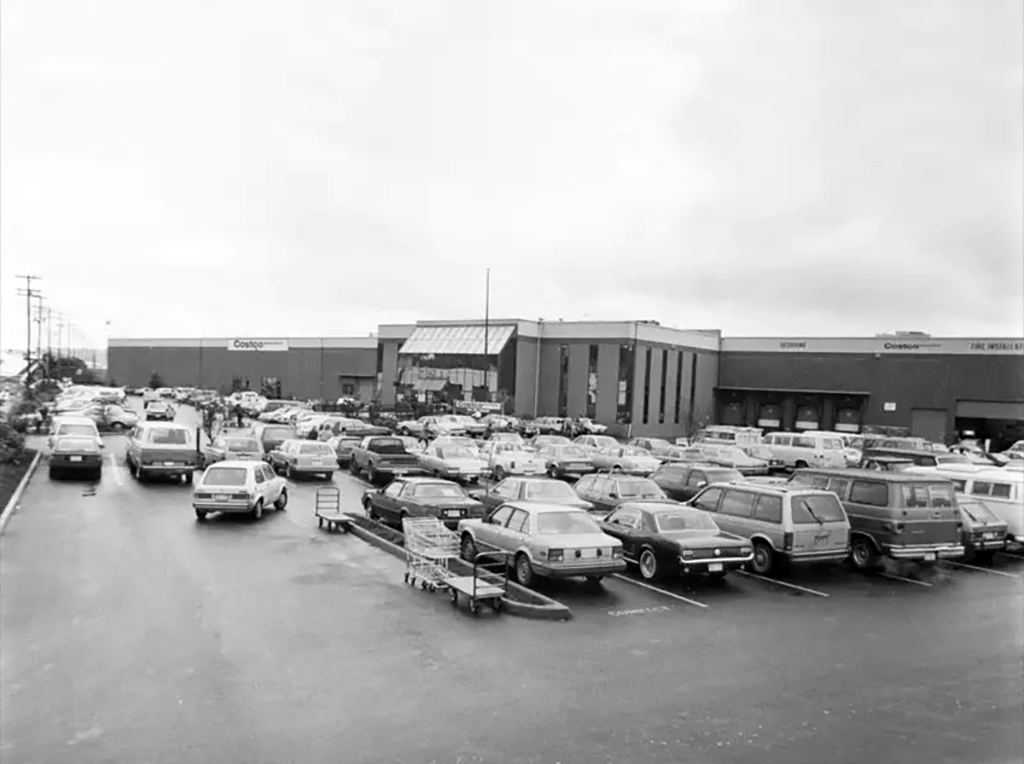
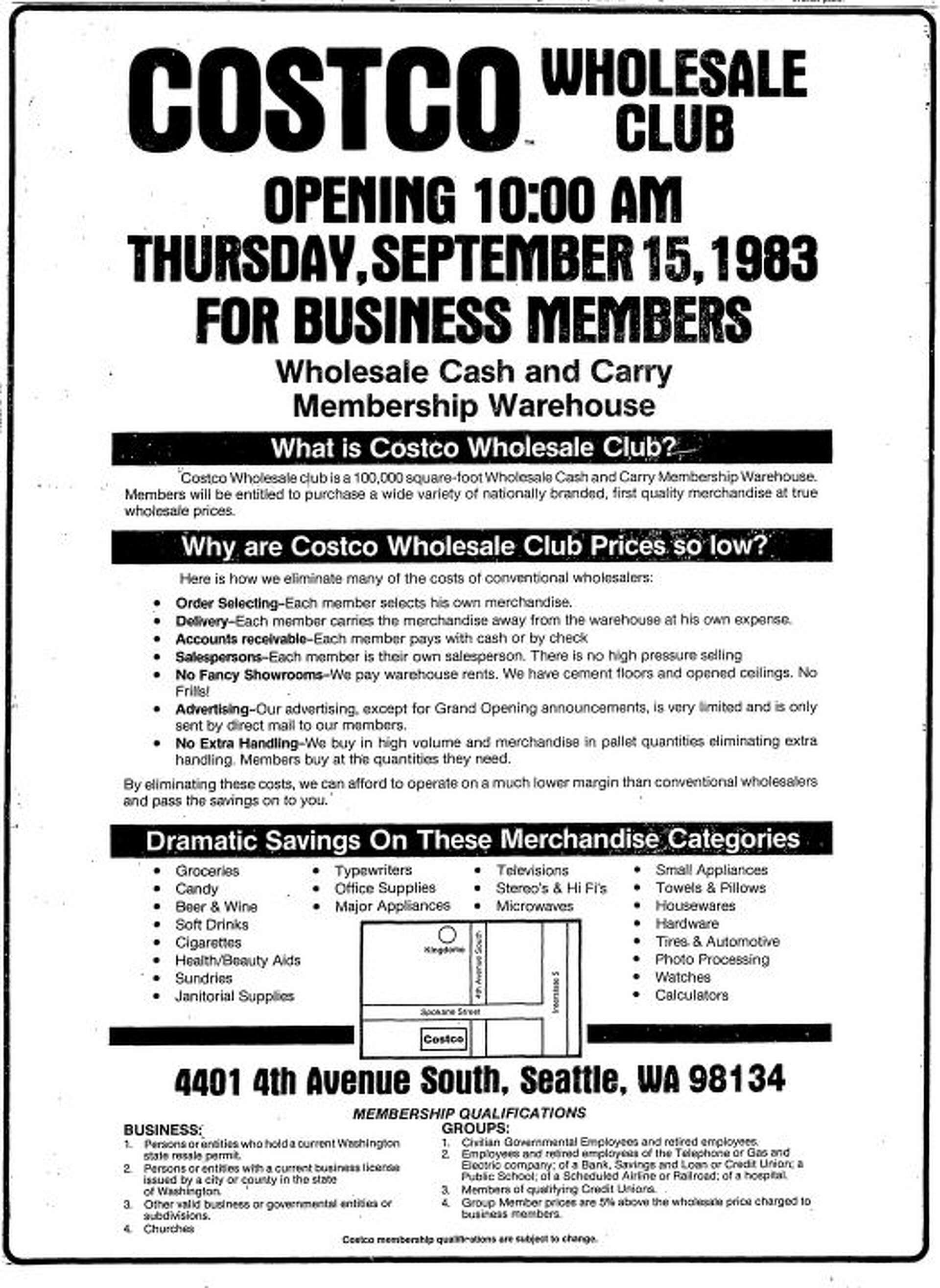
When investigating the question of when Costco was established, one uncovers more than just a date on a calendar; one discovers the birth of a revolutionary financial model that fundamentally altered the landscape of American business finance. While the first Costco warehouse opened its doors in Seattle, Washington, on September 15, 1983, the DNA of the company traces back to a unique philosophy of capital efficiency and low-margin, high-volume operations.
Founded by James (Jim) Sinegal and Jeffrey H. Brotman, Costco was not merely a retail outlet but a bold experiment in fiscal discipline. In the four decades since its inception, the company has evolved from a single warehouse into a global powerhouse, consistently outperforming the broader market and setting a gold standard for institutional and individual investors alike.
The Historical Foundations: 1983 and the Price Club Merger
To understand the financial trajectory of Costco, one must look at the climate of the early 1980s. At the time, traditional retail was dominated by high-markup department stores and inefficient supply chains. Sinegal, who had trained under the legendary Sol Price at FedMart, envisioned a leaner operation.
The Seattle Beginning: Sinegal and Brotman’s Vision
In 1983, Sinegal and Brotman opened the first Costco location with a specific financial mandate: keep overhead lower than any competitor. By charging a membership fee, they shifted the company’s profit center away from the individual product margin and toward a recurring revenue model. This was a radical departure from the retail norms of the era, where profit was traditionally squeezed out of every transaction.
The 1993 Merger: Consolidating the Warehouse Model
While Costco was growing in the Northwest, Sol Price’s “Price Club” was dominating the Southwest. In 1993, the two companies merged to form PriceCostco. This merger was a pivotal moment in corporate finance, as it allowed the combined entity to achieve massive economies of scale. Eventually, the company rebranded back to Costco, but the merger provided the liquidity and market share necessary to compete with burgeoning giants like Walmart’s Sam’s Club.
The Membership Model: A Masterclass in Recurring Revenue
The most significant aspect of Costco’s financial identity is its membership-based revenue stream. From a business finance perspective, this model provides a level of predictability and stability that is the envy of the retail world.
Negative Working Capital: The Financial Engine
One of the most sophisticated elements of Costco’s financial strategy is its management of working capital. Costco often sells its inventory before it even has to pay its vendors. Because the company maintains a high inventory turnover rate—moving products off the shelves in a matter of days—it generates cash from sales immediately. This “negative cash conversion cycle” means Costco effectively operates using its suppliers’ capital, allowing it to reinvest in expansion or buybacks without taking on significant high-interest debt.
Breaking the Retail Rulebook: Low Margins, High Volume
In standard retail, a 25% to 50% markup is common. Costco, however, caps its markups at approximately 14% to 15%. To a traditional financial analyst, this might seem like a recipe for thin profits. However, Costco offsets these low margins with an incredibly high volume of sales per square foot. By focusing on a limited selection of Stock Keeping Units (SKUs)—roughly 4,000 compared to a typical supermarket’s 30,000—Costco maximizes purchasing power and minimizes the costs associated with inventory management and waste.
The Kirkland Signature Strategy: Scaling Private Label Profitability

A core component of Costco’s corporate identity and financial health is its private label, Kirkland Signature. Launched in 1995, Kirkland Signature has become a case study in brand equity and margin optimization.
Quality vs. Cost: The Economics of Brand Trust
From a financial standpoint, private labels are typically higher-margin products because they eliminate the middleman and advertising costs associated with national brands. However, Costco’s strategy was different: they ensured that Kirkland products were of equal or better quality than national brands while pricing them at least 20% lower. This creates “member value,” which reinforces the membership renewal rate—currently hovering around 90% globally. This high renewal rate is the bedrock of Costco’s valuation, as it represents guaranteed future cash flow.
Vertical Integration and Supply Chain Efficiency
Costco’s financial success is also tied to its aggressive vertical integration. A prime example is their $450 million poultry processing plant in Nebraska. By owning the supply chain for their famous rotisserie chickens, Costco can maintain the $4.99 price point—a “loss leader” that drives foot traffic—while controlling costs that would otherwise be subject to market volatility. This level of capital expenditure (CapEx) shows a long-term commitment to cost leadership that many short-term-focused public companies struggle to emulate.
Costco as an Investment Powerhouse: Analyzing the Stock (COST)
For those looking at Costco through the lens of personal finance and investing, the company’s stock (NASDAQ: COST) has been a phenomenal performer. Its history of capital allocation makes it a favorite among “quality” and “growth at a reasonable price” (GARP) investors.
Dividend Growth and Special Payouts
Costco is known for a conservative yet rewarding dividend policy. While its yield might appear modest on the surface, the company has a unique history of issuing large “special dividends.” For example, the $15-per-share special dividend announced in late 2023 returned significant capital to shareholders, demonstrating the company’s massive cash reserves and commitment to shareholder value. This “lumpy” return of capital allows the company to maintain flexibility during leaner times while rewarding long-term holders during periods of excess liquidity.
Resilience in Inflationary Markets
In periods of high inflation, Costco’s business model acts as a natural hedge. Because of its massive scale, it can negotiate better terms with suppliers than almost any other retailer. When prices rise, consumers become more “value-conscious,” driving them toward the bulk-buy savings that Costco offers. This defensive quality makes the stock a staple in many retirement portfolios and institutional funds, as it tends to exhibit lower volatility than more discretionary retail stocks.
The Future of Warehouse Business Finance
As we look beyond the 1983 establishment date, the question becomes how Costco will sustain its financial dominance in a digital-first economy.
Digital Expansion and International Capital Allocation
Costco has been slower than competitors like Amazon or Walmart to embrace e-commerce, but this was a deliberate financial choice. Shipping heavy bulk items is expensive and erodes margins. However, the company is now strategically investing in “Costco Logistics” to handle big-ticket items like appliances and furniture. Furthermore, their international expansion—particularly into China—represents a massive growth runway. The opening of the Shanghai store in 2019 showed that the membership model translates across cultures, offering a high Return on Invested Capital (ROIC) in emerging markets.
Sustaining Growth in a Saturated Market
The challenge for Costco moving forward is maintaining its growth rate as the U.S. market reaches saturation. The company’s financial strategy focuses on increasing “wallet share” among existing members. By expanding services into travel, insurance, and even healthcare (such as their partnership for low-cost outpatient visits), Costco is transforming from a warehouse into a comprehensive financial ecosystem for the consumer.
In conclusion, when Costco was established in 1983, it wasn’t just the start of a new retail chain; it was the implementation of a sophisticated financial framework. Through the use of membership fees as primary profit, the mastery of negative working capital, and a disciplined approach to markups, Costco has built a financial fortress. For investors and business students alike, the Costco story is a powerful reminder that in the world of money, sometimes the simplest models—executed with relentless discipline—are the most profitable.
aViewFromTheCave is a participant in the Amazon Services LLC Associates Program, an affiliate advertising program designed to provide a means for sites to earn advertising fees by advertising and linking to Amazon.com. Amazon, the Amazon logo, AmazonSupply, and the AmazonSupply logo are trademarks of Amazon.com, Inc. or its affiliates. As an Amazon Associate we earn affiliate commissions from qualifying purchases.