
In the world of retail investing and corporate finance, the number of locations a company operates is more than just a logistical statistic; it is a primary indicator of market penetration, capital expenditure efficiency, and future revenue potential. When asking “how many Costcos in the US,” an investor is really asking about the scale of a financial fortress. As of early 2024, Costco Wholesale Corporation operates approximately 600 warehouses across the United States, a figure that represents the backbone of a business model that has consistently outperformed the S&P 500 and redefined the concept of “sticky” consumer revenue.
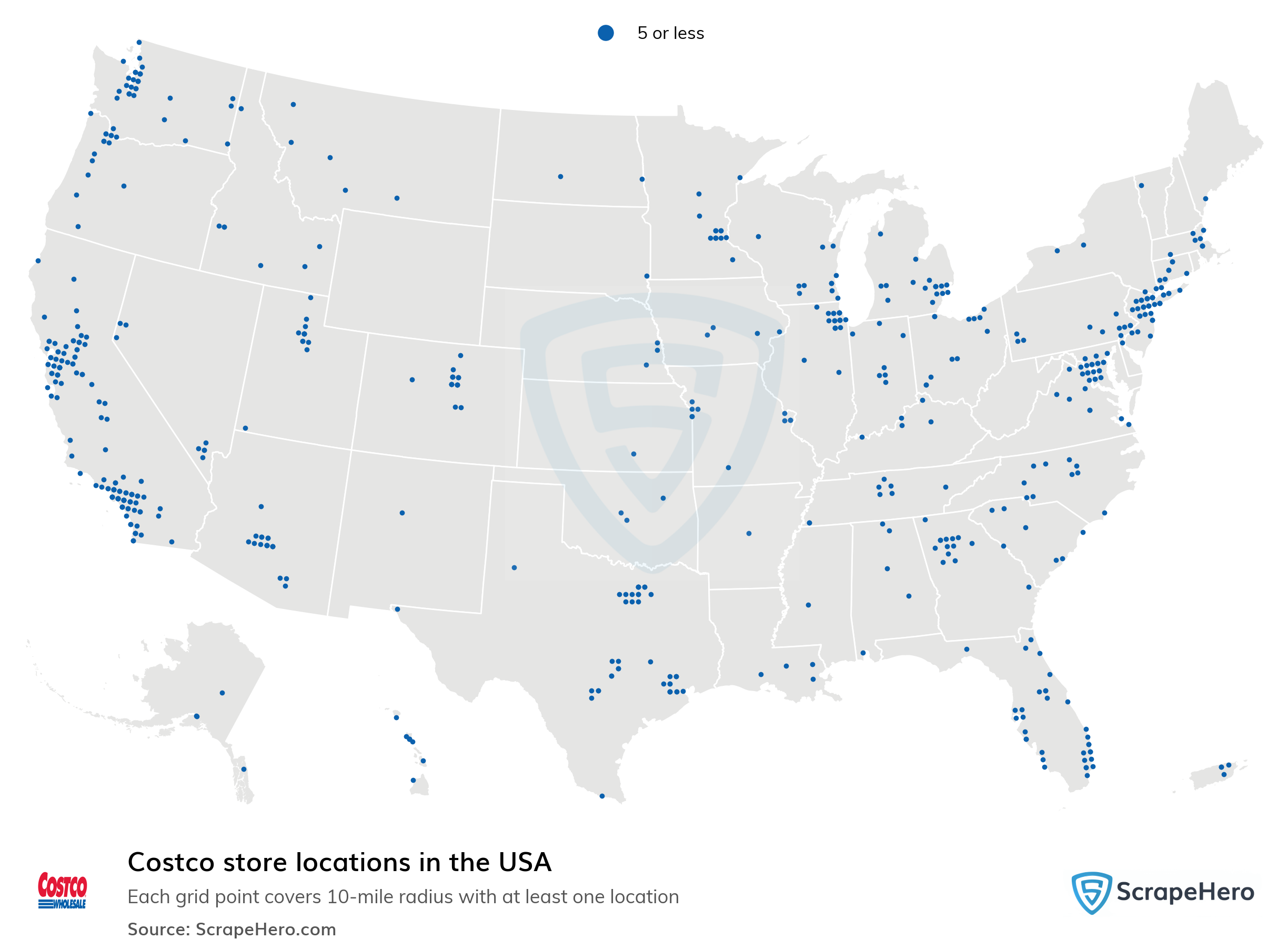
Understanding the distribution and growth of these locations offers a masterclass in business finance. Unlike traditional retailers that rely on high margins and high volume, Costco operates on a membership-based model where the physical warehouse serves as the anchor for recurring, high-margin subscription income.
The Economics of Scale: Why Location Count Drives the Bottom Line
The sheer number of Costco warehouses in the US is the engine behind its massive purchasing power. With 600 locations, Costco can negotiate with suppliers from a position of immense strength, often dictating price points that competitors cannot match. This is the essence of “economies of scale” in action.
Membership Fees as a High-Margin Revenue Stream
While the number of warehouses is impressive, the real financial story lies in the membership fees collected at those locations. In the fiscal year 2023, Costco generated over $4.6 billion in membership fee revenue. Because this revenue has almost no associated cost of goods sold, it flows directly to the bottom line, often accounting for the majority of the company’s operating income.
The strategy is simple but brilliant: use the physical locations to provide goods at near-cost prices (rarely marking up products more than 14-15%), which incentivizes consumers to pay the annual membership fee. The more warehouses there are in the US, the larger the pool of potential members, and the more stable the company’s net income becomes.
The “Treasure Hunt” Experience and Same-Store Sales Growth
In financial reporting, “Same-Store Sales” (or comparable warehouse sales) is a critical metric. Costco has consistently posted positive growth in this area, even during economic downturns. The physical footprint of 600+ warehouses facilitates a “treasure hunt” atmosphere that cannot be replicated online. This psychological pricing and merchandising strategy drives foot traffic, ensuring that the capital invested in building each warehouse yields a high Return on Investment (ROI).
Geographic Dominance: Strategic Growth in the US Market
The distribution of Costco warehouses across the United States reveals a highly calculated real estate and financial strategy. Costco does not simply build where there are people; they build where there is high-income density and sustained purchasing power.
Regional Concentration vs. Untapped Markets
A significant portion of US Costcos are concentrated in affluent coastal regions, with California alone housing over 130 locations. This concentration is a deliberate financial choice. By saturating high-income markets, Costco maximizes the average spend per member. However, for investors looking at future growth, the “white space” on the map—the regions where Costco has yet to establish a presence—represents the next frontier for capital deployment.
The company’s ability to successfully enter mid-sized markets and maintain its high average sales per warehouse (often exceeding $250 million per location) suggests that the ceiling for US expansion is higher than many analysts previously estimated.

The Real Estate Strategy: Owning vs. Leasing
From a balance sheet perspective, Costco’s approach to its physical locations is conservative and value-oriented. Unlike many retailers that are burdened by high-interest leases, Costco owns the land and the buildings for a significant majority of its US warehouses.
This asset-heavy approach provides several financial advantages:
- Depreciation Benefits: Real estate ownership allows for significant depreciation deductions, which helps manage tax liabilities.
- Asset Appreciation: As the land around these warehouses develops, the value of Costco’s real estate portfolio increases.
- Operational Control: Owning the sites allows for long-term renovations and additions (like gas stations and car washes) without the need for landlord approval or increased rent.
Costco as an Investment: Analyzing the “COST” Stock Performance
When we quantify how many Costcos are in the US, we are looking at the tangible assets that back the “COST” ticker symbol. For decades, Costco has been a darling of Wall Street, known for its low volatility and consistent dividend growth.
Dividend Growth and Special Payouts
Costco’s financial health is so robust that it does not just pay a regular quarterly dividend; it is famous for its “Special Dividends.” When the company accumulates excess cash—often driven by the steady growth of new warehouse openings and membership renewals—it returns that value to shareholders. In early 2024, the company paid a special dividend of $15 per share, a move that signaled immense confidence in its domestic cash flow. This ability to return capital is a direct result of the disciplined expansion of its US warehouse count.
Resilience in Inflationary Environments
Investors often look to Costco as an “inflation hedge.” During periods of rising prices, the value proposition of bulk buying becomes even more attractive to consumers. The 600+ US locations act as a buffer for the middle-class American family’s budget. From a business finance perspective, this translates to high “Inventory Turnover”—a metric that measures how quickly a company sells and replaces its stock. Costco’s turnover rates are among the highest in the industry, which minimizes the risk of capital being tied up in stagnant merchandise.
The Future of Expansion: How Many Costcos Are Left to Build?
A common question among financial analysts is whether Costco is nearing a saturation point in the US. If there are already 600 locations, is there room for 800? 1,000? The answer lies in the company’s evolving logistics and digital integration.
E-commerce Integration and Last-Mile Logistics
The physical warehouse count is no longer just about where people shop; it is increasingly about where products are distributed. Costco uses its US locations as de facto fulfillment centers for its growing e-commerce business. By leveraging the existing footprint of 600 warehouses, Costco can facilitate “Big & Bulky” delivery and “Buy Online, Pick Up in Warehouse” (BOPIS) services without the massive overhead of building separate distribution hubs. This dual-use of physical space maximizes the efficiency of every square foot of real estate on the balance sheet.
Market Saturation Risks and International Diversification
While the US remains the primary driver of revenue, the company is increasingly looking at international markets to replicate its domestic success. However, the “Costco effect” in the US is far from over. The company continues to identify new “fill-in” locations in existing markets where high demand leads to overcrowding in current warehouses. By opening a second or third location in a high-traffic zone, Costco can actually increase the total regional membership count and improve the customer experience, further securing its market share.

Conclusion: The Financial Significance of the Warehouse Count
The question of “how many Costcos in the US” is ultimately a question about the scale of a proven financial machine. With approximately 600 locations, Costco has established a dominant presence that provides a unique combination of high-margin membership income, massive purchasing power, and a loyal customer base that views the membership as an essential utility rather than a luxury.
For the personal financier or the corporate investor, these 600 locations represent more than just places to buy bulk goods; they represent a diversified portfolio of high-performing real estate assets and a recurring revenue stream that is among the most reliable in the global economy. As Costco continues to strategically add 20 to 30 warehouses globally each year, with a significant focus on the US, its financial moat only grows deeper. The warehouse count is not just a number—it is a testament to a business model that prioritizes long-term value over short-term gains, making it a cornerstone of the modern retail financial landscape.
aViewFromTheCave is a participant in the Amazon Services LLC Associates Program, an affiliate advertising program designed to provide a means for sites to earn advertising fees by advertising and linking to Amazon.com. Amazon, the Amazon logo, AmazonSupply, and the AmazonSupply logo are trademarks of Amazon.com, Inc. or its affiliates. As an Amazon Associate we earn affiliate commissions from qualifying purchases.