
For millions of Americans, Social Security represents the cornerstone of retirement security. It is the primary source of guaranteed, inflation-adjusted income that lasts for a lifetime. However, despite its importance, the system remains a “black box” for many. Understanding what your benefit will be involves more than a simple glance at a statement; it requires a deep dive into how the government calculates your earnings, how your age at filing affects your monthly check, and how your current financial decisions can either bolster or diminish your future security.

As you approach retirement, the question “What will my Social Security benefit be?” becomes central to your broader personal finance strategy. To answer this accurately, we must break down the mechanics of the Social Security Administration’s (SSA) formulas and the strategic variables within your control.
Decoding the Math: How the Social Security Administration Determines Your Payout
The Social Security benefit calculation is not based on your final salary or your total contributions. Instead, it is a complex process designed to replace a portion of your pre-retirement income based on your highest-earning years.
The 35 Highest-Earning Years
The foundation of your benefit is your work history. The SSA looks at your entire career and selects the 35 years in which you earned the most, adjusted for inflation. If you have worked for fewer than 35 years, the SSA enters a “zero” for every missing year. These zeros can drastically reduce your Average Indexed Monthly Earnings (AIME), which is the first step in the benefit calculation. For those in the middle of their careers, understanding this “35-year rule” is vital; working just a few more years to replace low-earning years from your youth can significantly move the needle on your future monthly checks.
Indexed Earnings and AIME
To ensure that wages earned in 1990 are comparable to wages earned in 2024, the SSA uses an indexing factor. This adjusts your historical earnings to reflect changes in general wage levels that occurred during your working years. Once your top 35 years of indexed earnings are summed, they are divided by 420 (the number of months in 35 years) to arrive at your Average Indexed Monthly Earnings. This figure represents the baseline upon which your actual benefit is built.
The Primary Insurance Amount (PIA) and Bend Points
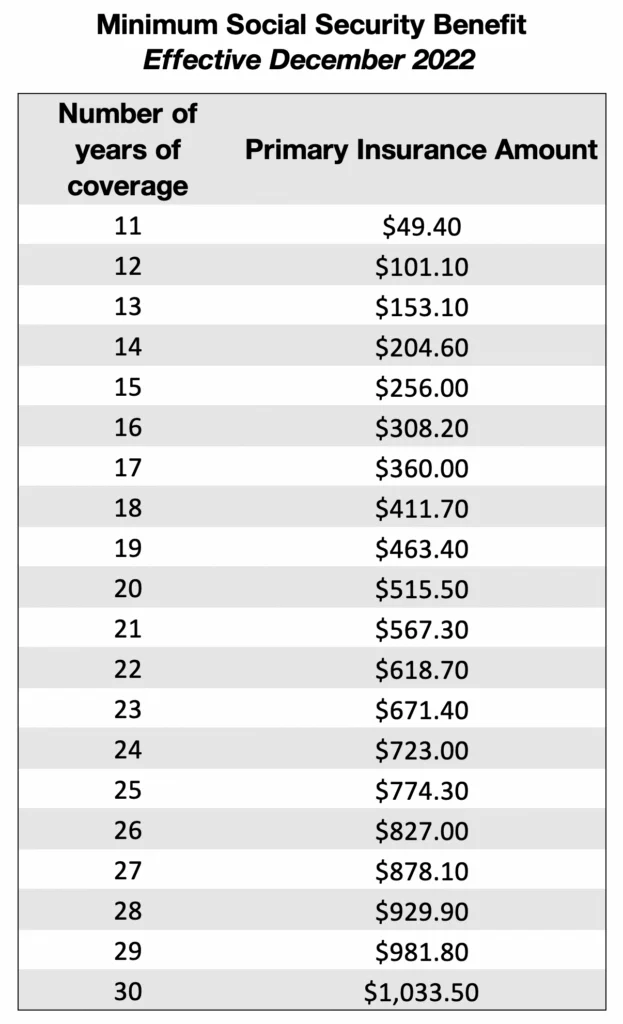
Social Security is a progressive system. This means it is designed to replace a higher percentage of income for lower-earners than for higher-earners. To do this, the SSA applies a formula to your AIME using “bend points.” For example, in 2024, the formula might take 90% of the first $1,174 of your AIME, 32% of earnings between $1,174 and $7,078, and only 15% of earnings above that. The resulting total is your Primary Insurance Amount (PIA), which is the benefit you receive if you claim at exactly your Full Retirement Age (FRA).
Timing is Everything: The Role of Full Retirement Age (FRA)
While the PIA is your “baseline” benefit, the actual amount you receive depends heavily on when you choose to start collecting. The “Full Retirement Age” is the age at which you are entitled to 100% of your calculated benefit.
Identifying Your Full Retirement Age
For those born between 1943 and 1954, the FRA is 66. For those born in 1960 or later, the FRA has shifted to 67. If you were born in the years between, your FRA increases by two months for every year. Knowing this specific date is the most important factor in your retirement timeline because claiming even a few months early can result in a permanent reduction in your monthly income.
The Cost of Claiming Early at 62
You can begin taking Social Security as early as age 62, but there is a steep price to pay. If your FRA is 67 and you claim at 62, your benefit is permanently reduced by 30%. This reduction is prorated monthly; for every month you claim before your FRA, your check gets slightly smaller. For many, the “early bird” approach is tempting, especially if they have health concerns or immediate financial needs, but from a long-term personal finance perspective, it often results in leaving hundreds of thousands of dollars on the table over a lifetime.
The Power of Patience: Delayed Retirement Credits
On the flip side, the SSA rewards those who wait. For every year you delay claiming beyond your FRA—up until age 70—your benefit increases by 8% annually. This is known as a Delayed Retirement Credit. If your FRA is 67 and you wait until 70, you will receive 124% of your PIA. There are very few financial instruments or investments that offer a guaranteed, inflation-adjusted 8% annual return, which is why financial planners often recommend that healthy individuals with other assets delay Social Security as long as possible.
Strategic Ways to Increase Your Future Benefits

Your future benefit is not set in stone. There are several proactive steps you can take within the realm of your personal finances to maximize what the government owes you.
Boosting Your Current Income
Since your benefit is tied to your 35 highest-earning years, any increase in your income today (up to the taxable maximum, which is $168,600 in 2024) will directly impact your retirement. Negotiating a raise, pursuing a promotion, or even taking on a high-paying side hustle can replace a lower-earning year from your past and increase your AIME.
Working Beyond 35 Years
If you have a 40-year career, the SSA will automatically drop the five lowest-earning years. For many professionals, their highest earnings come at the end of their careers. By working just two or three years longer in your 60s, you might be able to replace years from your 20s when you were making entry-level wages. This “replacement effect” can provide a surprising boost to your PIA calculation.
Leveraging Spousal and Survivor Benefits
Social Security is not just an individual benefit; it is a family protection plan. If you are married, you may be eligible for a spousal benefit that is worth up to 50% of your spouse’s PIA. This is particularly beneficial if one spouse stayed at home or earned significantly less. Furthermore, survivor benefits allow a widow or widower to “step into” the higher of the two checks if a spouse passes away. Planning as a couple—often by having the higher earner delay benefits until 70 to lock in the largest possible survivor benefit—is a critical component of advanced financial planning.
The Impact of Taxes and Other Reductions
It is a common misconception that your Social Security check is “pure profit.” In reality, various factors can shave off significant portions of your monthly payment.
The Retirement Earnings Test
If you claim benefits before your FRA and continue to work, you may be subject to the Retirement Earnings Test. In 2024, if you earn more than $22,320, the SSA will withhold $1 in benefits for every $2 you earn above that limit. While these withheld benefits are eventually returned to you in the form of a higher monthly check once you reach FRA, the immediate “tax” on your earnings can disrupt your cash flow and tax planning.
Combined Income and Federal Taxes
Depending on your total “combined income” (adjusted gross income + nontaxable interest + half of your Social Security benefits), you may have to pay federal income taxes on your benefits. If you file a joint return and your combined income is between $32,000 and $44,000, you may pay tax on 50% of your benefits. If it’s over $44,000, up to 85% of your benefits may be taxable. Managing your withdrawals from 401(k)s and IRAs is essential to keep your combined income below these thresholds when possible.
Medicare Part B Premiums
Most retirees have their Medicare Part B premiums deducted directly from their Social Security checks. As healthcare costs rise, these premiums can take a larger bite out of your benefit. When estimating your “net” Social Security benefit, it is vital to account for these deductions to avoid a shortfall in your monthly budget.
Utilizing Financial Tools for Precise Projections
Because the variables are so numerous, you should never guess what your benefit will be. Precise tools and data are available to help you model different scenarios.
The “my Social Security” Online Account
The first step for every American should be creating an account on the official SSA website. This portal provides your “Social Security Statement,” which shows your entire earnings history. It is crucial to verify this data; if an employer failed to report your wages correctly twenty years ago, your benefit will be lower than it should be. The statement also provides personalized estimates for claiming at 62, FRA, and 70.
Online Calculators and Scenario Modeling
For a more nuanced view, especially for couples, third-party financial tools and SSA’s “Detailed Calculator” can model complex scenarios. These tools can help you determine the “break-even point”—the age at which the total cumulative value of waiting for a higher check surpasses the total value of taking a smaller check early. For most people, the break-even age is in the late 70s or early 80s.
Integrating Social Security into Your Total Portfolio
Finally, your Social Security benefit should not be viewed in isolation. It is one piece of a “three-legged stool” that includes personal savings (401(k), IRA) and potentially a pension. By understanding exactly what your benefit will be, you can determine how much you need to withdraw from your investment portfolio each year to maintain your desired lifestyle. If your projected Social Security benefit is lower than expected, it serves as a signal to increase your current savings rate or adjust your retirement date.
In conclusion, your Social Security benefit is a dynamic figure, influenced by your work history, the timing of your claim, and your tax situation. By taking an active interest in these calculations today, you can transition from uncertainty to a position of financial strength, ensuring that your “golden years” are supported by a maximized and reliable income stream.
aViewFromTheCave is a participant in the Amazon Services LLC Associates Program, an affiliate advertising program designed to provide a means for sites to earn advertising fees by advertising and linking to Amazon.com. Amazon, the Amazon logo, AmazonSupply, and the AmazonSupply logo are trademarks of Amazon.com, Inc. or its affiliates. As an Amazon Associate we earn affiliate commissions from qualifying purchases.