
For millions of Americans, Social Security represents the cornerstone of a stable retirement. It is not merely a government program but a vital financial asset—an inflation-indexed annuity that provides a guaranteed floor of income for life. However, despite its importance, a significant portion of the workforce remains in the dark about exactly how much they will receive when they finally hang up their hats.
Understanding your projected Social Security benefit is essential for effective financial planning. Without this number, it is impossible to determine your “retirement gap”—the difference between your expected expenses and your guaranteed income. This guide provides a comprehensive deep dive into the mechanics of Social Security, the tools available to find your specific numbers, and the strategic decisions that can significantly increase your monthly check.

Understanding the Foundation of Social Security Calculations
Before you look up your specific number, it is helpful to understand the “how” behind the calculation. The Social Security Administration (SSA) does not simply look at your last paycheck; it uses a complex formula designed to replace a portion of your pre-retirement income based on your entire career.
The Role of Your Earnings History (AIME)
Your benefit is based on your Average Indexed Monthly Earnings (AIME). To calculate this, the SSA looks at your career earnings and “indexes” them to account for changes in average wages over time. This ensures that $20,000 earned in 1985 is weighted appropriately against $80,000 earned in 2023. By normalizing these figures, the SSA can see your true purchasing power across your working life.
The “35 Highest-Earning Years” Rule
One of the most critical aspects of the Social Security formula is that it calculates your average based on your 35 highest-earning years. If you have worked for 40 years, the SSA will drop the five lowest-earning years from the calculation. Conversely, if you have only worked for 25 years, the SSA will fill the remaining 10 years with zeros. These zeros can drastically pull down your average monthly benefit, which is why financial advisors often recommend working at least 35 years to maximize your “Money” niche financial health.
The Impact of Inflation: Cost-of-Living Adjustments (COLA)
Unlike many private pensions, Social Security benefits are designed to keep pace with inflation through Cost-of-Living Adjustments (COLA). This is a crucial component of your long-term financial security. When you are looking at your estimated benefits today, remember that the actual dollar amount you receive in 10 or 20 years will likely be higher to reflect the rising cost of goods and services, ensuring your standard of living remains relatively stable.
Primary Methods to Estimate Your Monthly Payment
Technology has made it easier than ever to access your personal financial data. You no longer have to wait for a paper statement to arrive in the mail once a year; you can access real-time projections with a few clicks.
Using the Official “my Social Security” Account
The most accurate way to find out how much you will receive is to create a “my Social Security” account at the official SSA website (ssa.gov). This portal provides a personalized “Social Security Statement” that uses your actual recorded earnings history. It provides estimates for various scenarios: if you retire at age 62, at your Full Retirement Age (FRA), or at age 70. This tool is the gold standard for personal finance planning because it eliminates guesswork.
The Social Security Administration’s Online Calculators
If you aren’t comfortable creating an account yet, or if you want to run “what-if” scenarios (such as “What if I earn $150,000 for the next five years?”), the SSA offers several calculators.
- The Quick Calculator: Provides a rough estimate based on your current earnings and age.
- The Online Calculator: Offers a more detailed projection by allowing you to manually input your earnings history.
- The Detailed Calculator: A downloadable program for those who want a granular look at the math, including various fringe scenarios.
Reviewing Your Social Security Statement
While the digital portal is preferred, the SSA still mails paper statements to workers aged 60 and older who do not have an online account. This statement is a powerful financial document. It lists your year-by-year earnings. It is vital to review this for errors; if an employer failed to report your income correctly 20 years ago, your future benefit will be lower than it should be. Correcting these errors early is a key step in protecting your financial future.
Key Factors That Influence Your Benefit Amount
Finding your “number” is only the first step. The next step is understanding how your choices can change that number. Social Security offers a significant amount of flexibility, but that flexibility comes with financial trade-offs.
The Crucial Choice: Filing at 62 vs. Full Retirement Age (FRA)
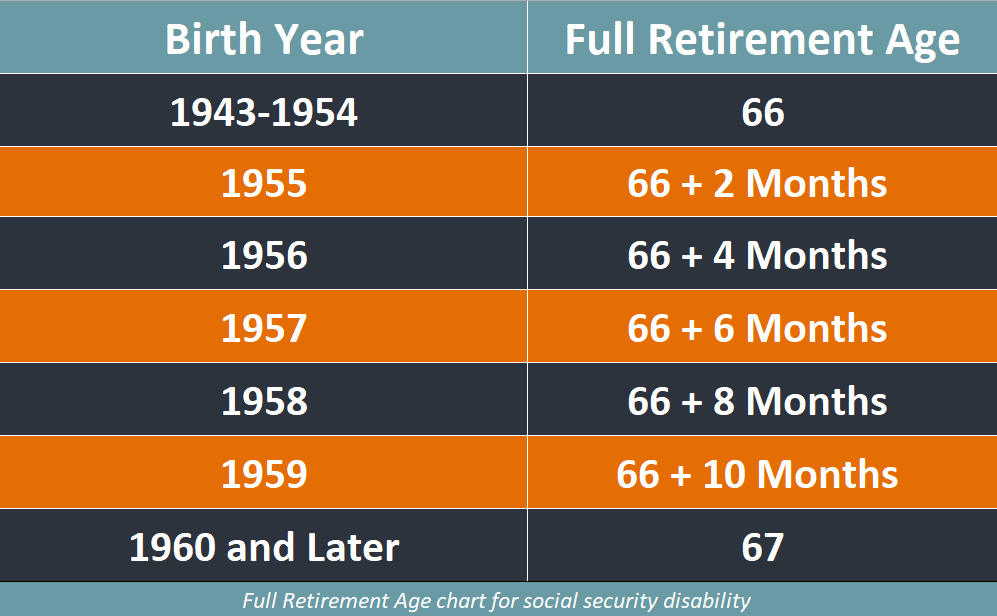
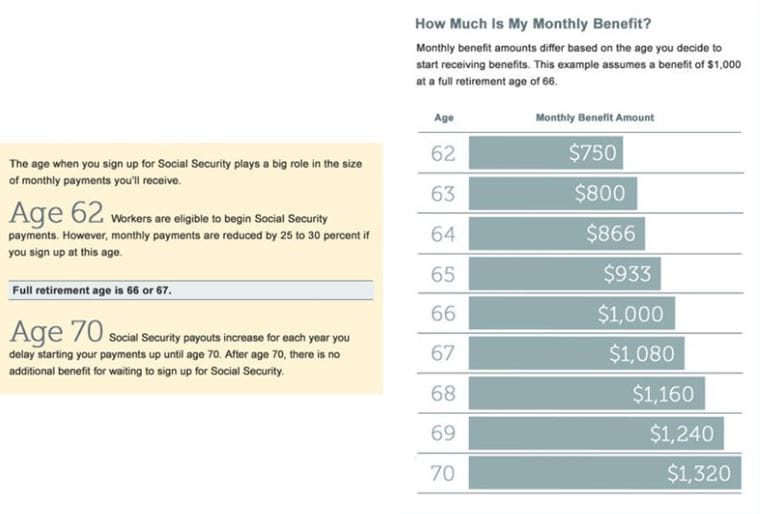
You can begin taking Social Security as early as age 62, but there is a permanent “penalty” for doing so. For those born in 1960 or later, the Full Retirement Age is 67. If you claim at 62, your monthly benefit is reduced by about 30% compared to what you would have received at 67. From a personal finance perspective, claiming early is often a choice made out of necessity or poor health, whereas waiting until FRA ensures you receive 100% of your earned benefit.
The Power of Patience: Delayed Retirement Credits
If you don’t need the money at age 67, you can choose to delay your benefits. For every year you wait past your FRA (up to age 70), your benefit increases by 8% per year. This is a guaranteed return that is virtually impossible to find in the private investment market. By waiting until 70, you could receive 124% of your base benefit. This “longevity insurance” is one of the most effective ways to bolster a retirement portfolio against the risk of outliving your savings.
How Continued Work Impacts Your Benefits Before FRA
If you choose to claim benefits while still working and you have not yet reached your FRA, you may be subject to the “Earnings Test.” For 2024, if you earn over a certain threshold ($22,320), the SSA will withhold $1 in benefits for every $2 you earn above that limit. While this money isn’t “lost”—it is recalculated into your benefit once you reach FRA—it can cause a significant short-term cash flow crunch if you aren’t prepared for it.
Advanced Considerations: Beyond Your Own Earnings
Social Security is not just for the individual worker; it is designed to support families. Understanding these auxiliary benefits is a critical part of a comprehensive household financial strategy.
Spousal and Survivor Benefits: What You Need to Know
A spouse who has little or no work history can still receive up to 50% of the higher-earning spouse’s benefit. Furthermore, in the event of a spouse’s death, the survivor can inherit the deceased spouse’s full benefit amount (if it is higher than their own). This makes the decision of when the “primary breadwinner” claims Social Security even more important, as it determines the floor of income for the surviving spouse for the rest of their life.
Taxation of Social Security: The “Provisional Income” Factor
A common misconception in personal finance is that Social Security is tax-free. In reality, if your “provisional income” (your Adjusted Gross Income + tax-exempt interest + 50% of your Social Security benefits) exceeds $25,000 for individuals or $32,000 for couples, a portion of your benefits (up to 85%) may be subject to federal income tax. Factoring these taxes into your retirement budget is essential to ensure you don’t end up with less spendable income than you anticipated.
Strategic Planning for a Secure Financial Future
Knowing how much you will receive is the data point; how you use that data is the strategy. To truly achieve financial independence, Social Security must be viewed as one piece of a larger puzzle.
Integrating Social Security with 401(k)s and IRAs
Financial planners often suggest using Social Security to cover your “fixed” expenses (housing, utilities, food) while using your private investments (401(k), IRA, brokerage accounts) for “discretionary” spending (travel, hobbies). If your projected Social Security benefit is $2,500 but your fixed costs are $3,500, you now have a clear target for how much you need to draw from your personal savings each month.
Dealing with Potential Future Shortfalls
There is much discussion in the media about the Social Security Trust Fund’s solvency. Current projections suggest that by the mid-2030s, the fund may only be able to pay out roughly 77% to 80% of scheduled benefits if Congress does not intervene. While it is unlikely the program will disappear entirely, conservative financial planning involves stress-testing your retirement plan. What would your lifestyle look like if your Social Security check was 20% smaller than the current estimate? Having a “Plan B” or a slightly higher personal savings rate can provide peace of mind in the face of political uncertainty.
In conclusion, finding out how much Social Security you will receive is a foundational step in mastering your money. By utilizing the SSA’s online tools, understanding the 35-year rule, and strategically timing your claim, you can maximize this government-guaranteed asset. Retirement planning is not a one-time event but an ongoing process of adjustment and optimization. The sooner you identify your projected benefits, the more time you have to bridge any gaps and build a future defined by financial freedom rather than financial stress.
aViewFromTheCave is a participant in the Amazon Services LLC Associates Program, an affiliate advertising program designed to provide a means for sites to earn advertising fees by advertising and linking to Amazon.com. Amazon, the Amazon logo, AmazonSupply, and the AmazonSupply logo are trademarks of Amazon.com, Inc. or its affiliates. As an Amazon Associate we earn affiliate commissions from qualifying purchases.