
For millions of Americans, Social Security represents the cornerstone of retirement planning. It is the steady, inflation-adjusted stream of income that provides a safety net after decades of labor. However, the question “How much will I get?” is rarely met with a simple, one-size-fits-all answer. Your future benefit is a moving target, influenced by your career earnings, the age at which you choose to stop working, and even the legislative environment of the time.
Understanding the mechanics behind these payments is essential for any savvy financial plan. Whether you are decades away from retirement or standing on the threshold of your golden years, deciphering the Social Security formula allows you to make informed decisions that could result in hundreds of thousands of dollars in additional lifetime income.
The Foundation: How the Social Security Administration Calculates Your Benefit
At its core, Social Security is a social insurance program funded by payroll taxes. The amount you receive is directly tied to what you contributed during your working life. However, the calculation is more nuanced than a simple percentage of your total contributions.
Your 35 Highest-Earning Years
The Social Security Administration (SSA) looks at your entire work history, but they don’t count every single year. Instead, they identify your 35 highest-earning years. If you worked for 40 years, the lowest five years are dropped. If you worked for fewer than 35 years, the remaining years are averaged in as zeros. This is a critical point: every year you work less than 35 years significantly drags down your average and, consequently, your monthly check.
Average Indexed Monthly Earnings (AIME)
Before calculating your average, the SSA “indexes” your past earnings. This means they adjust your historical wages to account for inflation and changes in standard of living over time. A dollar earned in 1990 is weighted differently than a dollar earned in 2023. Once your 35 highest years are indexed, they are summed and divided by 420 (the number of months in 35 years) to arrive at your Average Indexed Monthly Earnings (AIME).
The Primary Insurance Amount (PIA) and “Bend Points”
The SSA then applies a progressive formula to your AIME to determine your Primary Insurance Amount (PIA). This formula is designed to provide a higher “replacement rate” for lower-income workers than for higher-income workers. The formula uses “bend points”—specific dollar thresholds that change annually.
For example, in a typical year, you might receive 90% of the first few hundred dollars of your AIME, 32% of the next few thousand, and 15% of the earnings above that. This progressive structure ensures that while higher earners get a larger check in absolute terms, lower earners get a check that covers a larger percentage of their previous income.
The Impact of Timing: Deciding When to File
Once your PIA is calculated, the actual amount that hits your bank account depends heavily on when you choose to start receiving benefits. You can claim as early as age 62 or as late as age 70.
Understanding Full Retirement Age (FRA)
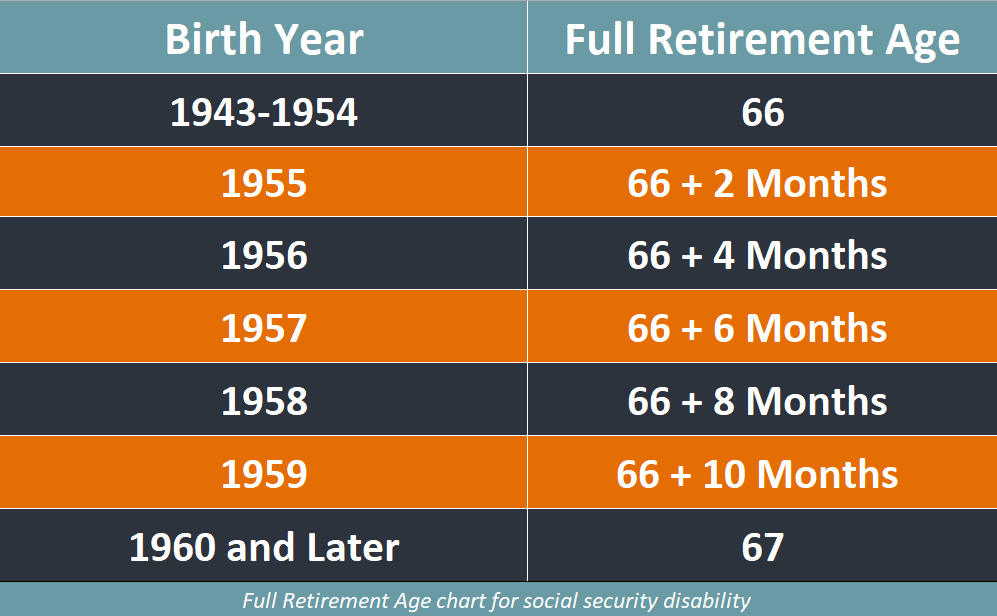
Your Full Retirement Age (FRA) is the age at which you are entitled to 100% of your calculated PIA. For those born in 1960 or later, the FRA is 67. If you were born earlier, your FRA might be 66 and a few months. Filing exactly at your FRA ensures you receive the standard benefit amount without any reductions or credits.
The Cost of Early Retirement
You can opt to take Social Security as early as age 62, but there is a permanent “penalty” for doing so. If your FRA is 67 and you file at 62, your monthly benefit is reduced by approximately 30%. This reduction is actuarially calculated to account for the fact that you will likely receive checks for a longer period. While filing early provides immediate cash flow, it locks in a lower monthly payment for the rest of your life.
The Power of Delayed Retirement Credits
Conversely, for every month you delay filing beyond your FRA (up until age 70), your benefit increases by about 2/3 of 1%, or roughly 8% per year. If your FRA is 67 and you wait until 70, you will receive 124% of your PIA. This is one of the most effective ways to “buy” a guaranteed, inflation-linked annuity. For many, waiting until age 70 provides a significantly higher standard of living in their later years, acting as a hedge against longevity.
External Factors Influencing Your Social Security Check
Beyond your earnings and timing, several external variables can impact the net amount you actually receive. It is important to look at the “net” benefit rather than just the “gross” estimate.
Cost-of-Living Adjustments (COLA)
Social Security is one of the few retirement income sources that includes an automatic Cost-of-Living Adjustment (COLA). Each year, the SSA reviews the Consumer Price Index for Urban Wage Earners and Clerical Workers (CPI-W). If prices have risen, benefits are increased to maintain purchasing power. In years of high inflation, these adjustments can be substantial, providing a vital shield against the rising cost of healthcare and housing.
The Tax Implications of Social Security
Many retirees are surprised to find that their Social Security benefits may be taxable. Whether you pay taxes depends on your “combined income,” which is the sum of your adjusted gross income, non-taxable interest, and half of your Social Security benefits.
- If you file as an individual and your combined income is between $25,000 and $34,000, you may pay income tax on up to 50% of your benefits.
- If it exceeds $34,000, up to 85% of your benefits may be taxable.
Understanding these thresholds is vital for tax-efficient withdrawal strategies from your 401(k) or IRA.
Spousal and Survivor Benefits
Social Security is not just an individual benefit; it is a family benefit. If you are married, you may be eligible for a spousal benefit worth up to 50% of your spouse’s PIA, provided that amount is higher than your own earned benefit. Additionally, survivor benefits allow a surviving spouse to inherit the higher of the two checks the couple was receiving. This makes the decision of when the “high earner” files particularly important, as their choice dictates the survivor’s income for years to come.
How to Estimate Your Future Benefit
You don’t have to guess what your benefit will be. The Social Security Administration provides several tools to help you project your future income based on real-time data.
Creating a “my Social Security” Account
The most accurate way to see your projected benefit is to create a “my Social Security” account on the official SSA.gov website. Once logged in, you can view your Social Security Statement. This document lists your recorded earnings for every year you’ve worked. It is crucial to review this periodically; if an employer failed to report your income correctly, your future benefit will be lower than it should be.
Using the Online Retirement Estimator
The SSA’s online estimator allows you to “plug and play” with different scenarios. You can see how much your check would change if you retired at 62 versus 67 or 70. You can also input different future earnings estimates. If you plan to take a lower-paying job or stop working entirely five years before you claim, the estimator can show you the impact of those “zero-earning” years on your final check.
Manual Calculation vs. Professional Financial Tools
While the SSA tools are excellent, they often assume you will continue earning at your current rate until retirement. If you are a business owner or have fluctuating income, you might benefit from specialized financial planning software. These tools can integrate Social Security projections with your investment portfolio, providing a holistic view of your retirement readiness and helping you identify the optimal month to file.
Strategies to Maximize Your Lifetime Payout
Maximizing Social Security is about more than just waiting until age 70. It requires a strategic approach to your entire financial life.
Boosting Your 35-Year Average
If you have fewer than 35 years of work, even a part-time job can replace a “zero” in your calculation and boost your benefit. Similarly, if you are currently in your peak earning years, working an extra year or two can replace low-earning years from your youth, incrementally increasing your AIME and your final check.
The “File and Suspend” Legacy and Modern Coordination
While old loopholes like “File and Suspend” have mostly been closed by Congress, coordination remains key for couples. Often, it makes sense for the lower-earning spouse to claim early to provide some cash flow, while the higher-earning spouse delays until age 70. This maximizes the total lifetime payout and ensures the highest possible survivor benefit.
Balancing Social Security with Other Assets
The decision of when to take Social Security should not be made in a vacuum. Sometimes, it makes sense to draw down a taxable brokerage account or a traditional IRA earlier to allow your Social Security benefit to grow. Since Social Security is inflation-protected and tax-advantaged compared to some other income sources, “spending down” other assets to delay filing can be a brilliant long-term move.
In conclusion, while the question of “how much” you will get from Social Security starts with your earnings history, the final answer is determined by your strategy. By understanding the formula, timing your filing correctly, and accounting for taxes and COLA, you can transform Social Security from a mysterious government check into a powerful, optimized pillar of your financial future.
aViewFromTheCave is a participant in the Amazon Services LLC Associates Program, an affiliate advertising program designed to provide a means for sites to earn advertising fees by advertising and linking to Amazon.com. Amazon, the Amazon logo, AmazonSupply, and the AmazonSupply logo are trademarks of Amazon.com, Inc. or its affiliates. As an Amazon Associate we earn affiliate commissions from qualifying purchases.