
Deciding when to claim Social Security benefits is one of the most critical financial decisions an individual will make during their lifetime. For many, the milestone of age 62 represents the first opportunity to exit the workforce and begin drawing from the system they have contributed to for decades. However, claiming early is not a simple decision; it involves a complex calculation of lifetime earnings, retirement age thresholds, and potential long-term financial trade-offs.
Understanding how much you will receive at age 62 requires a deep dive into the Social Security Administration’s (SSA) formulaic approach to benefits. While the allure of early liquidity is strong, it is essential to weigh the immediate cash flow against the permanent reduction in monthly income.

The Mechanics of Social Security: How Early Benefits Are Calculated
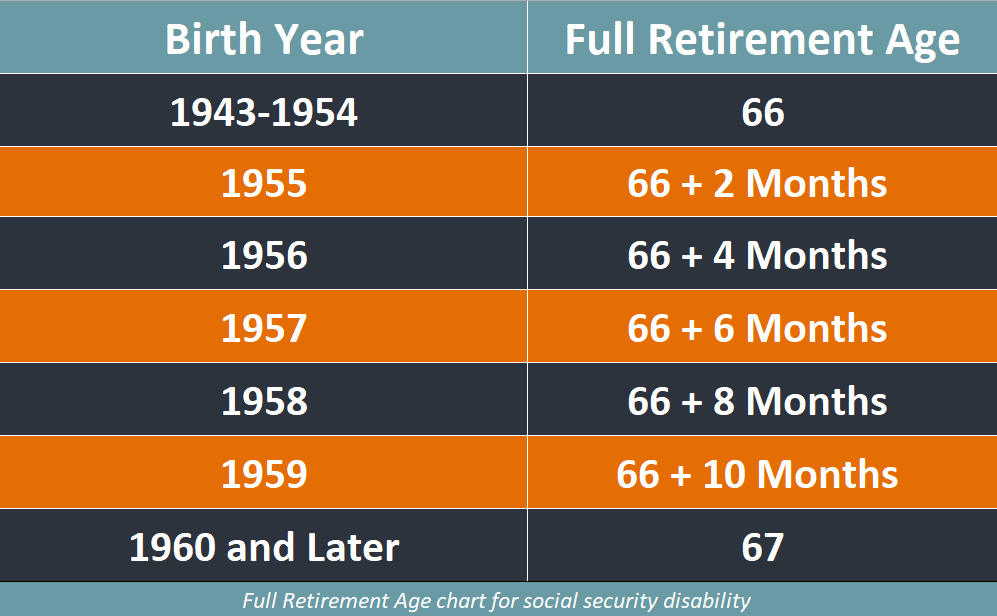
The amount of Social Security you receive at age 62 is rooted in your “Full Retirement Age” (FRA) and your “Primary Insurance Amount” (PIA). The FRA is the age at which you are entitled to 100% of your calculated benefit, and for anyone born in 1960 or later, that age is 67. Claiming at 62 means you are requesting benefits 60 months ahead of schedule.
Calculating Your Primary Insurance Amount (PIA)
To determine your benefit at 62, the SSA first calculates your PIA. This is done by looking at your highest 35 years of earnings, adjusted for inflation (indexed). They take the average of these indexed monthly earnings to find your AIME (Average Indexed Monthly Earnings). The SSA then applies a progressive formula to this average—using “bend points”—to determine your base benefit. If you have fewer than 35 years of work history, the SSA fills in the remaining years with zeros, which can significantly lower your PIA and, consequently, your check at age 62.
The Permanent Reduction Factor
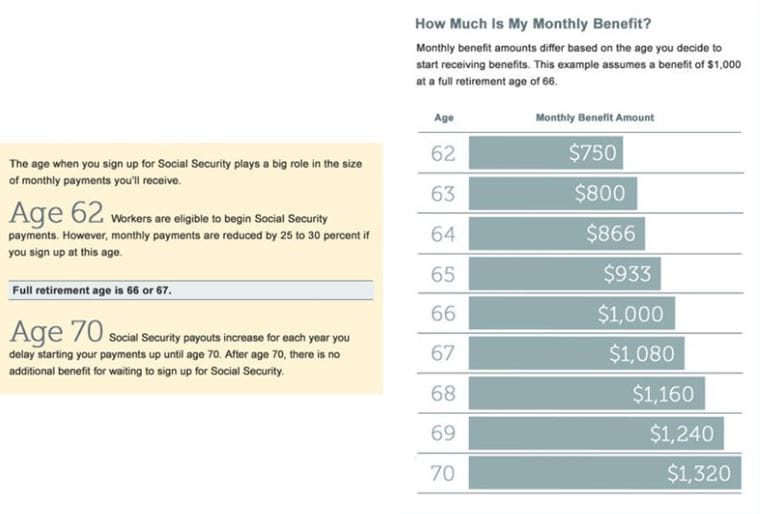
When you claim at age 62, your benefit is reduced by a specific percentage for every month you claim prior to your FRA. For those with an FRA of 67, claiming at 62 results in a permanent 30% reduction in monthly benefits. This reduction is broken down as follows: 5/9 of 1% for each month up to 36 months, and 5/12 of 1% for each additional month. Essentially, if your benefit at 67 would have been $2,000, your benefit at 62 would drop to approximately $1,400. This reduction is not temporary; it stays with you for the rest of your life, including any cost-of-living adjustments (COLA) which will be applied to that smaller base amount.
Critical Factors Influencing Your Monthly Benefit
While the age of filing is the primary lever for your benefit amount, several other variables influence the final number that appears in your bank account. Your earnings history is the foundation, but how the SSA treats that history and how external economic factors like inflation play a role cannot be overlooked.
The 35-Year Average Earnings Rule
Social Security is designed to replace a portion of your career average earnings. Because the SSA uses a 35-year window, your “peak” earning years are vital. If you had a decade of low earnings early in your career but transitioned to a high-paying executive role later, those higher-earning years will displace the lower ones. If you retire at 62 but only have 30 years of work history, the inclusion of five “zero-earning” years will drag down your average. Conversely, working even a few more years before 62 to replace low-earning years from your youth can lead to a higher benefit, even if you still choose to claim early.
Cost-of-Living Adjustments (COLA)
Once you begin receiving benefits at 62, your payments are not stagnant. They are adjusted annually via the Cost-of-Living Adjustment (COLA), which is based on the Consumer Price Index for Urban Wage Earners and Clerical Workers (CPI-W). While COLA helps protect your purchasing power against inflation, it is important to remember that a 3% COLA on a $1,400 benefit (early claim) is $42, whereas a 3% COLA on a $2,000 benefit (FRA claim) is $60. Over twenty or thirty years of retirement, this compounding difference becomes a significant factor in your total financial security.
Strategic Considerations: To Claim Early or Wait?
The decision to take Social Security at 62 is rarely about the numbers alone; it is about your overall financial ecosystem, including your health, your savings, and your lifestyle goals. Understanding the “break-even” point and the impact on family members is a vital part of this strategic assessment.
The Break-Even Analysis
A break-even analysis calculates the age at which the total cumulative benefits of waiting to claim Social Security exceed the total cumulative benefits of claiming at age 62. Generally, the break-even age for waiting until 67 (versus claiming at 62) is around age 77 or 78. If you believe you will live well into your 80s or 90s, waiting usually results in a much higher total lifetime payout. However, if you have health concerns or a family history of shorter lifespans, taking the money at 62 might be the most rational financial choice, as it ensures you receive the maximum total value before passing.
Spousal and Survivor Benefit Implications
Your decision to claim at 62 does not just affect you; it can have a profound impact on a surviving spouse. If you were the higher earner in the household and you claim early, you are effectively “locking in” a lower survivor benefit for your spouse. Upon your death, a surviving spouse is entitled to the higher of their own benefit or your benefit. By taking a 30% reduction at age 62, you are potentially leaving your spouse with a much smaller monthly check for the remainder of their life. This makes the age 62 decision a family-wide financial planning issue rather than an individual one.
Managing Taxes and the Retirement Earnings Test
Many individuals choose to take Social Security at 62 while continuing to work part-time or even full-time. This path requires a nuanced understanding of how the government treats “early” income, as it can lead to unexpected tax bills or a temporary withholding of benefits.
The Retirement Earnings Test (RET)
If you claim Social Security at 62 but continue to earn income above a certain threshold, the SSA will temporarily withhold a portion of your benefits. In 2024, the limit is $22,320. For every $2 you earn above that limit, the SSA withholds $1 of your benefits. It is important to note that this is not a permanent loss; the SSA will recalculate your benefit at your Full Retirement Age to account for the months they withheld. However, in the short term, this can result in a significant cash-flow surprise for those who thought they could “double dip” with a full salary and an early Social Security check.
Income Tax on Social Security Benefits
A common misconception is that Social Security benefits are tax-free. In reality, depending on your “provisional income” (which includes half of your Social Security benefits plus your other adjusted gross income and tax-exempt interest), you may owe federal income tax on up to 85% of your benefits. If you are 62 and drawing from a 401(k) or traditional IRA alongside your Social Security, you may easily cross the thresholds ($25,000 for individuals, $32,000 for couples), leading to a higher tax burden. Proper tax planning is essential to ensure that your net “take-home” benefit at age 62 meets your actual living expenses.
Conclusion: Crafting Your Retirement Roadmap
Determining “how much” you will get at 62 is the beginning of a larger financial conversation. While the math shows a significant reduction—roughly 30% compared to waiting for your Full Retirement Age—the “correct” choice depends on your unique circumstances. If you have high-interest debt, poor health, or no other retirement savings, the early liquidity of an age-62 claim can be a lifeline. Conversely, if you are still earning well and have longevity on your side, the “guaranteed return” of waiting for a larger check is one of the best investment moves you can make.
Before filing at 62, it is highly recommended to use the tools provided on the Social Security Administration’s website to view your actual “Statement of Earnings.” This document provides a personalized estimate based on your real-world work history. Combined with a comprehensive look at your private investments, tax liabilities, and long-term health needs, you can move forward with a strategy that maximizes your financial well-being throughout your golden years.
aViewFromTheCave is a participant in the Amazon Services LLC Associates Program, an affiliate advertising program designed to provide a means for sites to earn advertising fees by advertising and linking to Amazon.com. Amazon, the Amazon logo, AmazonSupply, and the AmazonSupply logo are trademarks of Amazon.com, Inc. or its affiliates. As an Amazon Associate we earn affiliate commissions from qualifying purchases.